

The best refrigerator is the one that fits your kitchen and makes your regular groceries easy to find. A generous capacity helps when you cook for a crowd, but cabinet width, freezer layout, and shelf arrangement can matter just as much. An oversized fridge that blocks a walkway can be a worse purchase than a smaller model with a sensible interior.
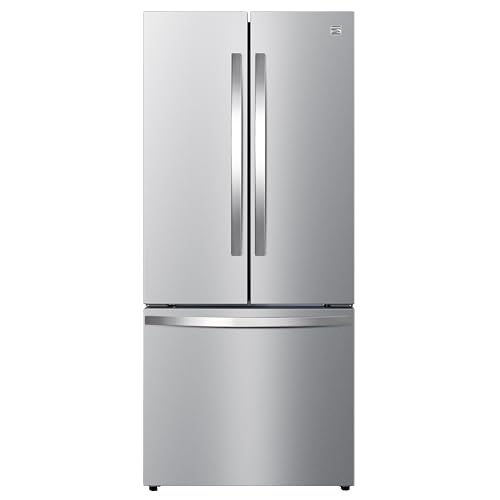
For a household with room for a full-size French-door refrigerator, the Kenmore 26.6-cubic-foot model is our overall recommendation. Its adjustable glass shelves, internal ice and water dispenser, and fingerprint-resistant finish cover several everyday priorities. Other homes will be better served by a traditional top freezer, a narrow bottom freezer, or an apartment-size refrigerator.
Below, eight recommendations cover those different needs. The comparisons draw on published product details and public guidance about energy use and food storage. They assess design and suitability; they do not establish measured cooling performance, noise levels, or long-term reliability. Start with the dimensions you can accommodate, then compare the features you will actually use.
Our Eight Refrigerator Picks
- Best overall: Kenmore 26.6 cu. ft. French Door Refrigerator.
- Best for water-pitcher convenience: Midea MRS25I7BST 24.5 cu. ft. Side-by-Side Refrigerator.
- Best everyday bottom freezer: Kenmore 22.3 cu. ft. Bottom Freezer Refrigerator.
- Best straightforward side-by-side: Element 21.4 cu. ft. Side-by-Side Refrigerator.
- Best large-capacity refrigerator: Kenmore 29 cu. ft. Side-by-Side Refrigerator.
- Best small apartment refrigerator: Frigidaire Platinum Series 7.5 cu. ft. Refrigerator/Freezer.
- Best narrow French-door refrigerator: Kenmore 17.5 cu. ft. Counter-Depth French Door Refrigerator.
- Best budget full-size refrigerator: Kenmore 18.1 cu. ft. Top Mount Refrigerator.
Compare the Best Refrigerators
Capacity below means advertised total storage, including the freezer. Width is the stated appliance width, rather than the opening required for installation. Leave room for the clearances specified in the individual manual.
| Refrigerator | Best fit | Total capacity | Stated width | Selected features |
|---|---|---|---|---|
| Kenmore French Door | General family use | 26.6 cu. ft. | 36 inches | Internal ice and water dispenser; adjustable glass shelves; ENERGY STAR certified |
| Midea MRS25I7BST | Water-pitcher convenience | 24.5 cu. ft. | Confirm dimensions | Counter-depth; AutoFill water pitcher; stainless finish |
| Kenmore Bottom Freezer | Fresh-food access | 22.3 cu. ft. | 31 inches | Ice maker; crispers; LED lighting; ENERGY STAR certified |
| Element Side-by-Side | Traditional vertical storage | 21.4 cu. ft. | Confirm dimensions | Frost-free; tempered glass shelves; LED lighting |
| Kenmore Large Side-by-Side | Bulk shopping | 29 cu. ft. | 36 inches | Ice and water dispenser; Accela Chill and Accela Freeze |
| Frigidaire Platinum Series | Small apartments | 7.5 cu. ft. | 21.5 inches | Two-door refrigerator/freezer; stainless finish |
| Kenmore Counter-Depth French Door | Narrow kitchen openings | 17.5 cu. ft. | 30 inches | Ice maker; adjustable shelving; ENERGY STAR certified |
| Kenmore Top Mount | Everyday value | 18.1 cu. ft. | 30 inches | Adjustable shelves; gallon door bins; ENERGY STAR certified |
Only specifically stated features appear in this comparison. Missing dimensions or energy information should be checked before purchase, particularly when replacing an appliance inside an existing cabinet opening.
Best Overall: Kenmore 26.6 cu. ft. French Door Refrigerator
This Kenmore offers a useful combination of substantial storage and familiar conveniences. Its 26.6-cubic-foot capacity makes it a reasonable starting point for households that regularly refrigerate several days of meals, while adjustable glass shelving allows the interior to change as the grocery load changes. The 36-inch width suits a larger kitchen opening, provided the full installation dimensions work.
The French-door arrangement is especially appealing if you often store wide serving dishes or several meal containers together. Opening both upper doors gives access across the fresh-food compartment. That layout can make more sense than a side-by-side for cooks who value shelf width more than having frozen food arranged vertically.
Features That Matter
- Capacity and size: 26.6 cubic feet with a stated 36-inch width.
- Storage: Adjustable glass shelving.
- Conveniences: Internal ice and water dispenser and Accela Chill.
- Finish: Fingerprint-resistant stainless steel.
- Energy information: Listed as ENERGY STAR certified.
The internal dispenser is a practical choice for someone who wants access to ice and water while keeping those functions inside the appliance. Consider how often you refill bottles, how the dispenser fits your containers, and whether the household prefers opening the refrigerator for water. A dispenser’s location can affect daily convenience as much as its presence.
Accela Chill is another listed feature, but the available details do not establish a cooling time or a temperature-recovery advantage. Treat it as a convenience setting to learn about in the manual. It does not replace checking food-storage temperatures with an appliance thermometer.
Advantages and Tradeoffs
The strongest reasons to choose this model are its total capacity, flexible shelving, and combination of an internal dispenser with a fingerprint-resistant exterior. Those features address common kitchen routines without making connected controls the reason for the purchase.
The main limitation is physical scale. A refrigerator this wide needs both a suitable opening and a clear route into the house. Its advertised capacity also combines refrigerator and freezer storage; it should not be read as 26.6 cubic feet of fresh-food space. Check the compartment breakdown if your shopping is weighted heavily toward either frozen groceries or fresh produce.
Who Should Choose It?
Consider this model if your current refrigerator feels crowded after an ordinary shopping trip and your kitchen accommodates a 36-inch appliance. It is particularly appealing for a household that wants adjustable storage and an included dispenser in one package.
Before ordering, compare your largest regular containers with the usable shelf space shown in the product documentation. A wide cabinet can still have storage interruptions from bins, shelves, and ice-making equipment. Confirm the water connection requirements, too, and include any installation work in the purchase budget. If the space or total capacity is more than you need, the smaller Kenmore bottom freezer offers a different balance.

Pros
- Spacious 26.6 cu ft capacity with full-width pantry drawer and humidity-controlled crispers
- Internal water dispenser maintains clean exterior lines while providing filtered water
- Accela Chill and Accela Freeze technology rapidly cools new groceries
- Fingerprint-resistant stainless steel finish reduces visible smudges and cleaning frequency
- Energy Star certified with quiet inverter compressor for lower energy bills
Cons
- No customer reviews yet to confirm real-world performance and reliability
- Ice maker produces only 3 lbs daily, which may be insufficient for large families or frequent entertaining
- 255-pound weight requires professional installation and careful floor load consideration
This Kenmore hits the sweet spot between generous capacity and smart design. The 26.6 cubic feet gives you room for weekly Costco runs without playing refrigerator Tetris, while the internal water dispenser keeps your kitchen looking clean and modern instead of cluttered with an exterior dispenser bulge.
The Accela Chill feature is genuinely useful when you bring home groceries on a hot day or need to quickly cool drinks for unexpected guests. The fingerprint-resistant finish means your stainless steel actually looks like stainless steel instead of a smudge museum, and the humidity-controlled crispers help produce last through the week instead of wilting by Wednesday.
If you want serious storage capacity and thoughtful organization without sacrificing your kitchen's visual flow, this one delivers.
Styles it works with: Modern Farmhouse, Contemporary, Transitional, Minimalist
Best placed in: Medium to large kitchens with 36-inch refrigerator opening, open-concept kitchen layouts where the sleek exterior matters, remodel projects replacing older 33-36 inch models
May not suit: Galley kitchens under 10 feet wide where door swing clearance is tight, homes with narrow doorways or tight stairwells that complicate 255-pound delivery, renters who cannot modify built-in cabinetry spacing
Buy it if:
- You have a family of 4-6 and need serious storage without exterior dispenser bulk
- You want fingerprint-resistant stainless that actually resists fingerprints in a busy kitchen
- You are replacing an older 33-36 inch model and want better organization and energy efficiency
Consider waiting if:
- You want to see verified customer reviews confirming ice maker performance and long-term reliability
- A holiday sale could bring the $1799 price down another 10-15 percent
Skip it if:
- Your kitchen opening is smaller than 36 inches or you lack clearance for French door swing
- You need more than 3 lbs of ice daily for regular entertaining or large household
Check the latest price and availability on Amazon before it sells out.
Best for Water-Pitcher Convenience: Midea MRS25I7BST
The Midea MRS25I7BST makes its case with a specific convenience: an AutoFill water pitcher. For a household that brings a pitcher to the table or frequently fills several glasses, that can be more useful than a refrigerator screen or an elaborate control panel. The pitcher is the main reason this 24.5-cubic-foot side-by-side earns its place here.
The model is described as counter-depth and has a stainless finish. Counter-depth construction is worth considering when the front of a deep refrigerator would intrude into the kitchen’s main traffic route. It still requires a careful dimension check; the name alone does not establish how far its doors and handles project beyond your counters.
Features That Matter
- Capacity: 24.5 cubic feet of combined storage.
- Configuration: Side-by-side refrigerator and freezer.
- Cabinet style: Listed as counter-depth.
- Convenience: AutoFill water pitcher.
- Finish: Stainless steel.
Side-by-side storage offers a different kind of access from French doors. Fresh and frozen items occupy separate vertical sections, allowing you to organize both categories across multiple heights. The tradeoff is the width available inside each section. Anyone who regularly freezes broad trays or refrigerates large platters should check their dimensions against the shelves.
Advantages and Tradeoffs
The pitcher and counter-depth description give this refrigerator a clear purpose: convenient chilled-water service in a kitchen where projection matters. Its advertised capacity is also substantially greater than the apartment-size options in this guide.
The specifications available here do not establish a full set of exterior dimensions or an energy certification. Neither should be inferred from the brand or cabinet style. Also check the pitcher’s working capacity, cleaning directions, and water-supply requirements in the exact model’s documentation. AutoFill describes a feature, rather than evidence of any particular contaminant-removal performance.
Who Should Choose It?
This is a sensible candidate for someone who already uses a water pitcher daily and prefers a side-by-side interior. Picture where the pitcher will go during dinner, how you will clean it, and whether its placement leaves enough room for your other drinks.
If the pitcher would mostly sit untouched, choose on cabinet fit and interior layout instead. A convenience feature earns its keep by simplifying an existing habit. It is less valuable when it asks the household to develop an entirely new one.

Pros
- Counter-depth profile creates seamless look with surrounding cabinetry
- Autofill pitcher system is easier to install than built-in water lines
- Fingerprint-resistant finish maintains appearance in high-traffic kitchens
- Generous 24.5 cu ft capacity in a standard 36-inch width
- Side-by-side access reduces bending and improves visibility
Cons
- No customer reviews yet to validate long-term reliability
- Counter-depth models typically offer less capacity than standard-depth units of the same width
- Autofill pitcher requires manual refilling, unlike through-door dispensers
The Midea MRS25I7BST solves one of the biggest kitchen design frustrations: refrigerators that stick out past your counters. This counter-depth model sits flush with standard 24-inch cabinets, creating that high-end built-in look without the custom price tag. The autofill water pitcher is particularly clever for renters or anyone who does not want to run a water line, you just fill the pitcher from your sink and it dispenses chilled water inside.
At 24.5 cubic feet, it offers surprisingly generous storage for a counter-depth unit. The side-by-side layout puts everything at eye level, so you are not digging through stacked frozen items or bending low for fresh produce. The fingerprint-resistant stainless means your fridge stays presentable even when the kids grab snacks between hand-washing.
If you want a streamlined kitchen profile without losing practical storage space, this one delivers.
Styles it works with: Modern Farmhouse, Contemporary, Transitional, Minimalist
Best placed in: Standard kitchen alcove with 36-inch width opening, open-concept kitchen where profile matters, galley kitchen with facing counters
May not suit: Kitchens requiring more than 25 cubic feet of storage, homes where refrigerator needs to accommodate specialized door storage bins, renters who cannot modify cabinetry depth to match counter-depth units
Buy it if:
- You are renovating a kitchen and want the built-in look without custom cabinet pricing
- Your refrigerator currently sticks out past your counters and disrupts your kitchen flow
- You prefer filling a pitcher over installing a water line through cabinetry
Consider waiting if:
- You want to see verified customer reviews before purchasing a newer model
Skip it if:
- You need more than 25 cubic feet of storage for a large household
- You require through-door water and ice dispensing on the exterior
Check the latest price and availability on Amazon before it sells out.
Best Everyday Bottom Freezer: Kenmore 22.3 cu. ft. Refrigerator
The Kenmore 22.3-cubic-foot bottom freezer is a strong option for people who reach for refrigerated ingredients throughout the day. Its layout puts the fresh-food compartment above the freezer, which can make routine items easier to see without bending toward the bottom of a top-freezer refrigerator. Whether that is comfortable depends on the user’s height and reach.
At a stated 31 inches wide, this model also gives shoppers an alternative to the 36-inch refrigerators in our comparison. That narrower cabinet may be useful in an existing kitchen, though width alone cannot establish a fit. Height, depth, ventilation, and the space needed to open the refrigerator door remain part of the decision.
Features That Matter
- Capacity and width: 22.3 cubic feet; 31 inches wide.
- Layout: Bottom freezer with an included ice maker.
- Interior: Adjustable glass shelving, crisper drawers, and LED lighting.
- Finish: Fingerprint-resistant stainless steel.
- Energy information: Listed as ENERGY STAR certified.
Adjustable glass shelves are useful when your storage needs alternate between tall containers and shorter stacks. Crisper drawers provide designated produce storage, while LED lighting helps illuminate the interior. The feature list does not establish shelf-load limits, the number of adjustment positions, or independently controlled humidity settings, so check those details if they are priorities.
Advantages and Tradeoffs
This refrigerator’s appeal is the combination of a moderate cabinet width, meaningful total capacity, an ice maker, and everyday organization features. It offers a fresh-food-first layout without requiring the width of our overall pick.
The same arrangement places frozen groceries lower down. Someone who uses the freezer repeatedly while preparing meals may prefer a side-by-side, particularly if bending or reaching into a lower compartment is inconvenient. Check the freezer’s opening style and internal arrangement before deciding; the bottom-freezer label does not describe every basket or shelf.
There is also a single-door consideration. A narrower refrigerator can still need substantial space for its main door to swing. A nearby wall, island, or dining table may interfere even when the closed cabinet fits neatly in the opening.
Who Should Choose It?
Choose this model if fresh ingredients dominate your daily cooking and you want a full-size refrigerator with a narrower stated width. It may also suit a household moving up from a small apartment fridge while retaining a relatively constrained kitchen footprint.
Make a short inventory of what currently gets lost: produce at the back, leftovers below eye level, or frozen food in a crowded compartment. This layout addresses the first two problems through positioning and organization, but the benefit depends on how you arrange the shelves. Confirm the exact compartment capacities and ice-maker installation requirements before purchase. Those details are more useful than assuming every bottom freezer has the same storage balance.

Pros
- Spacious 22.3 cu ft capacity in a standard 31-inch width
- Inverter compressor technology for quieter operation and better temperature consistency
- Built-in ice maker eliminates the need for ice trays
- Adjustable glass shelves and flexible bin organization
- Energy-efficient with Eco Mode for extended absences
Cons
- No customer reviews yet to confirm real-world performance
- Bottom-freezer design requires bending to access frozen items frequently
- Ice maker capacity of 3.5 lbs per day may not meet high-volume entertaining needs
This Kenmore brings together the features that matter most in daily kitchen life: quiet operation, consistent cooling, and storage that actually makes sense. The inverter compressor runs so much quieter than traditional models that you will not hear it kick on during dinner conversations, and it keeps temperatures steady so your produce stays crisp longer.
The fingerprint-resistant stainless steel is one of those small details that makes a big difference when you have kids grabbing snacks or guests milling around during parties. Instead of looking smudged by noon, it stays clean-looking all day. The built-in ice maker is not flashy, but it is the kind of convenience you notice every single time you reach for a cold drink and do not have to refill trays.
If you want a full-size refrigerator that fits a standard-depth space without sacrificing storage or adding constant noise to your kitchen, this one delivers.
Styles it works with: Modern Farmhouse, Transitional, Contemporary, Classic Kitchen
Best placed in: Main kitchen against a standard-depth cabinet run, garage kitchen for extra storage, finished basement kitchenette
May not suit: Compact apartments with galley kitchens under 100 square feet, homes where the primary cook has mobility concerns that make bottom-freezer access difficult, renters who cannot justify a large appliance investment
Buy it if:
- You are replacing an old refrigerator that is noisy or struggles to maintain consistent temperatures
- You need a full-size fridge that fits flush with standard-depth counters
- You entertain regularly and want ice on demand without manual refills
- You are tired of wiping fingerprints off stainless steel every day
Consider waiting if:
- You want to see verified customer reviews before committing to a new appliance at this price point
- You are waiting for a specific finish option beyond stainless steel
Skip it if:
- You need a counter-depth model that sits completely flush with cabinetry
- You prefer top-freezer or side-by-side configurations for easier frozen food access
- Your budget is under $1,200 and you can find similar capacity with fewer features
Check the latest price and availability on Amazon before it sells out.
The Kenmore 22.3 cu ft bottom-freezer refrigerator is engineered for homeowners who need serious storage capacity without expanding their kitchen footprint. At 31 inches wide and standard depth, it slides into the same space as older models while delivering modern conveniences like a built-in ice maker and inverter compressor technology.
Storage and Organization: Five adjustable glass shelves and five clear bins provide flexible space for everything from sheet cakes to gallon milk jugs. The two crisper drawers keep produce separated and fresh, while the two-tier freezer organizes frozen goods vertically so items do not disappear under frost buildup. The gallon door bin is particularly useful for families who go through milk or juice quickly.
Performance Features: The inverter compressor is the standout technology here. Unlike traditional compressors that cycle on and off, this one adjusts speed continuously to maintain precise temperatures. The result is quieter operation, less temperature fluctuation, and lower energy consumption. The ENERGY STAR certification and Eco Mode reinforce the efficiency focus, which translates to measurable savings on monthly utility bills.
Daily Convenience: The built-in ice maker produces up to 3.5 pounds per day, enough for regular household use and small gatherings. Enhanced LED lighting eliminates dark corners, and the fingerprint-resistant stainless steel finish stays presentable without constant maintenance. These are the features you appreciate every time you open the door, not just on installation day.
Considerations: This model launched without customer reviews, so real-world performance data is not yet available. The bottom-freezer configuration requires bending for frozen items, which may not suit everyone. And while 3.5 pounds of ice per day covers typical needs, households that entertain frequently or fill large coolers regularly may want higher capacity.
The Kenmore 22.3 cu ft refrigerator balances capacity, efficiency, and everyday convenience in a standard-depth design. It is a solid choice for homeowners upgrading from older models who value quiet operation and flexible storage over cutting-edge smart features.
Best Straightforward Side-by-Side: Element 21.4 cu. ft. Refrigerator
The Element 21.4-cubic-foot refrigerator is worth considering if you like the vertical organization of a side-by-side and want to focus on basic storage features. Its stated equipment includes frost-free operation, tempered glass shelves, and LED interior lighting. A stainless finish completes a familiar full-size appliance package.
This configuration suits shoppers who want both refrigerated and frozen food distributed across several levels. Instead of treating the freezer as a lower compartment, a side-by-side gives it its own tall section. It can be convenient to keep frequently used frozen ingredients at an accessible height while separating them from longer-term storage.
Features That Matter
- Capacity: 21.4 cubic feet of combined storage.
- Configuration: Side-by-side.
- Defrost description: Frost-free.
- Interior: Tempered glass shelving and LED lighting.
- Finish: Stainless.
The frost-free description is useful for buyers comparing models with different defrost arrangements. Follow the manual for cleaning and maintenance, and keep the interior vents clear. It should not be interpreted as a promise that frost can never appear if a door is left ajar or an operating problem develops.
Advantages and Tradeoffs
The strongest reason to choose this refrigerator is the layout itself, supported by a short, practical feature list. It is a plausible alternative to a French-door model for someone who values separate vertical storage more than a broad fresh-food shelf.
The narrower compartments inherent to this arrangement require attention. Measure the pizza boxes, food-storage bins, or roasting pans that you routinely refrigerate or freeze. A total-capacity number will not tell you whether one particular container can sit flat.
The available specifications do not establish an ice or water dispenser, exact exterior dimensions, adjustable shelf positions, or an energy certification. Verify any feature that would determine your purchase rather than assuming it comes with the configuration.
Who Should Choose It?
Consider the Element if your groceries divide naturally between fresh and frozen items and you prefer to organize each category by shelf. A household buying smaller packages frequently may find the layout more useful than one storing broad catering trays.
Before committing, check the refrigerator/freezer capacity split and study the interior arrangement. Look for places to group breakfast food, ingredients for dinners, and frozen staples. If the shelves match those routines, a straightforward design can be a better fit than a more elaborate refrigerator whose extra features you rarely use.

Pros
- Spacious 21.4 cu ft capacity suitable for family grocery storage
- Side-by-side design provides easy visibility and access to both compartments
- Frost-free system eliminates manual defrosting maintenance
- Clean, logoless stainless finish coordinates with any kitchen decor
- LED lighting throughout both compartments
Cons
- No customer reviews yet to verify long-term reliability or temperature consistency
- Brand has limited market presence compared to established appliance manufacturers
- No water or ice dispenser included at this price point
This Element refrigerator strikes a practical balance for homeowners who need serious storage without the premium price tag of major brands. The side-by-side configuration means no more crouching to dig through bottom freezer drawers, and the 21.4 cu ft capacity genuinely accommodates a week's worth of groceries for a family of four. The logoless stainless finish is surprisingly thoughtful - it allows the fridge to disappear into your kitchen rather than announce itself, especially helpful if you're mixing appliance brands during a gradual kitchen update.
What makes this work for real homes is the frost-free operation and LED lighting throughout. You won't be chipping ice or peering into dark corners to find the butter. The tempered glass shelves feel sturdy, and the crisper drawer does its job keeping produce fresh longer. It's not trying to be a smart appliance or wow you with touchscreens, just reliably keep food cold while looking clean and modern.
If you want dependable full-size refrigeration that blends with your existing kitchen without spending $2,000+, this one delivers.
Styles it works with: Modern Farmhouse, Contemporary, Transitional, Minimalist
Best placed in: Full-size kitchens with standard 36-inch appliance openings, open-concept kitchen-dining areas where a clean appliance line matters, remodeled kitchens mixing new and existing stainless appliances
May not suit: Compact or galley kitchens under 100 square feet where a narrower French door model would save floor space, homes needing through-the-door water and ice access, kitchens with non-standard cabinet depths where a counter-depth model is required for a built-in look
Buy it if:
- You need full-size refrigeration under $1,200 and want side-by-side convenience over a top-freezer model
- You're replacing a single appliance in a kitchen with mixed stainless brands and want a logoless front
- You prefer easy access to both fresh and frozen foods without bending to bottom freezers
Consider waiting if:
- You want to see verified customer reviews on temperature performance and build quality before committing
- A model with through-the-door water and ice is a must-have feature for your household
Skip it if:
- You need a counter-depth refrigerator for a built-in kitchen design
- Your household requires a larger capacity above 24 cu ft for bulk shopping or large families
Check the latest price and availability on Amazon before it sells out.
Best Large-Capacity Refrigerator: Kenmore 29 cu. ft. Side-by-Side
With 29 cubic feet of advertised capacity, this Kenmore is the largest refrigerator in our eight selections. It is aimed at the practical problem of storing a large grocery load: family-size packages, multiple drink containers, leftovers, and a substantial supply of frozen food. Its 36-inch width puts it in the same nominal width category as our overall pick.
The important distinction is its side-by-side interior. More total storage does not create the same shelf shape as a French-door refrigerator. If the main reason for upgrading is to fit large serving platters, compare the actual interior widths before assuming the biggest capacity will solve the problem.
Features That Matter
- Capacity and width: 29 cubic feet; 36 inches wide.
- Configuration: Side-by-side refrigerator/freezer.
- Conveniences: Space-saving ice and water dispenser.
- Storage and controls: Adjustable glass shelving, Accela Chill, and Accela Freeze.
- Finish: Fingerprint-resistant stainless steel.
The adjustable shelving gives you a way to accommodate changing package heights. That matters in a large refrigerator, where an inefficient shelf arrangement can waste useful space even when the overall capacity looks generous. Before loading it, decide which shelves will hold short containers and which need clearance for taller groceries.
Accela Chill and Accela Freeze are listed features, but no quantified performance advantage is established here. Follow the operating instructions for their intended use. Similarly, the space-saving dispenser description does not tell you the ice output, storage-bin capacity, or water filtration performance.
Advantages and Tradeoffs
The strongest advantages are substantial total storage, an included ice and water dispenser, and adjustable shelves. For a household that makes fewer, larger shopping trips, these are relevant conveniences rather than purely decorative additions.
The main tradeoff is accommodating the appliance and managing its interior well. Check the cabinet depth, delivery route, and door clearance in addition to width. An existing refrigerator opening should be measured again, especially if new flooring, trim, or counters have changed it since the previous appliance was installed.
Large capacity also deserves a realistic check against your habits. If groceries already go unused at the back of a smaller fridge, extra space alone may not help. Clear groupings and visible storage are still necessary. The available details do not establish an ENERGY STAR certification or annual electricity consumption for this exact selection.
Who Should Choose It?
This is the clearest choice here for a household that needs the highest advertised capacity and likes side-by-side access. Compare the freezer share with your actual frozen-food needs, and confirm that the dispenser’s water connection can be installed in the planned location.
If you rarely fill your current refrigerator, move down to a more appropriately sized model. Buy the additional space because you can describe what will go there, rather than because it is available.

Pros
- Extra-large 29 cu. ft. capacity ideal for families and meal preppers
- Fast cooling technology prevents temperature spikes when adding groceries
- In-door ice maker maximizes freezer storage space
- Fingerprint-resistant finish reduces visible smudges and streaks
- Enhanced LED lighting illuminates every corner
Cons
- No customer reviews yet to verify real-world performance and reliability
- At 36 inches wide, requires careful measurement for tight kitchen spaces
- Ice production limited to 3 lbs per day, may not meet high-demand households
This Kenmore side-by-side brings serious capacity without the bulk of a French door model. The 29 cubic feet give you room for bulk shopping trips, meal prep containers, and those oversized party platters, while the fingerprint-resistant stainless steel means your fridge looks pristine even with kids grabbing snacks all day.
What sets this one apart is the combination of Accela Chill and the Multi-Flow Air System. Your groceries cool down fast after a shopping trip, and the consistent airflow means no more frozen lettuce in the back or warm spots near the door. The in-door ice maker is a thoughtful touch, tucking the mechanism into the freezer door so you get full shelf space for frozen pizzas and bulk meat.
If you want a spacious, family-friendly refrigerator with smart cooling features without the premium price of luxury brands, this one delivers.
Styles it works with: Modern Farmhouse, Transitional, Contemporary, Classic American
Best placed in: Open-concept kitchens with island layouts, galley kitchens with at least 48 inches of clearance for door swing, spacious eat-in kitchens where the side-by-side format allows two people to access food simultaneously
May not suit: Compact apartments or condos with less than 36 inches of width available, kitchens with low overhead cabinets that restrict the 70-inch height, households needing more than 3 lbs of ice daily for entertaining
Buy it if:
- You have a family of four or more and do weekly bulk grocery shopping
- You want filtered water and ice without losing freezer storage space
- You prefer side-by-side access over bending down to a bottom freezer drawer
- You need fingerprint-resistant stainless steel that stays looking clean
Consider waiting if:
- You want to see verified customer reviews before committing to this model
- You're hoping for a promotional discount during major shopping holidays
Skip it if:
- Your kitchen space allows less than 36 inches width or 70 inches height clearance
- You regularly host large gatherings requiring more than 3 lbs of ice per day
- You prefer French door or bottom-freezer configurations for easier access to fresh food
Check the latest price and availability on Amazon before it sells out.
Best Small Apartment Refrigerator: Frigidaire Platinum Series 7.5 cu. ft.
The Frigidaire Platinum Series refrigerator/freezer fills a different role from the full-size models above. It has 7.5 cubic feet of advertised storage and a stated cabinet size of 21.5 inches wide, 23 inches deep, and 55.5 inches high. Those dimensions make it a candidate for a small apartment kitchen or another space where a conventional full-size refrigerator is impractical.
Its two-door refrigerator/freezer arrangement is also relevant. A compact refrigerator with separate access to its freezer can serve different needs from a small single-door beverage fridge. This model belongs on the shortlist when both refrigerated and frozen groceries need a place in a limited footprint.
Features That Matter
- Capacity: 7.5 cubic feet total.
- Dimensions: 21.5 inches wide by 23 inches deep by 55.5 inches high.
- Configuration: Two-door refrigerator/freezer combo.
- Series and finish: Platinum Series; stainless finish.
The dimensions describe the appliance, rather than a fully prepared installation space. You still need the manufacturer’s required ventilation and door-opening clearance. Also check whether the stated depth includes projecting components, since even a small appliance can interfere with a walkway or nearby cabinet.
Advantages and Tradeoffs
The primary advantage is a small stated footprint with both refrigerator and freezer storage. It provides an alternative for a person who cannot accommodate a 30-inch or wider appliance and wants more grocery storage than a typical desktop drinks cooler.
Capacity is the main compromise. This is less than half the total storage of the smallest full-size Kenmore in this guide. A household that shops for an entire week, stores large amounts of produce, or freezes meals in batches may need a different solution, even if the compact cabinet is attractive.
The available product details do not establish the compartment capacity split, shelf adjustability, defrost method, energy certification, or suitability for an unconditioned garage. Verify those points in the exact model’s documentation. An apartment-size description tells you the intended scale, not permission to install it in every possible location.
Who Should Choose It?
Consider this model for a small household with limited kitchen space and a grocery routine built around modest quantities. To assess the fit, separate a normal shopping list into refrigerated and frozen items. Then think about container shapes: a few tall bottles, a large pot of leftovers, or a stack of meal boxes can consume a small compartment quickly.
Someone who cooks frequently in small batches may be more comfortable with this capacity than someone who rarely shops but buys in bulk. The distinction is the storage pattern, rather than a fixed number of occupants. Leave room for air circulation instead of planning to use every visible gap.
For a secondary refrigerator, identify its job before purchasing. Extra drink storage and occasional leftovers are different needs from overflow frozen groceries. This two-door model may be useful for the former combination, but its suitability for a particular freezer load depends on the actual compartment dimensions. Choose it because the compact proportions solve a clear space problem, with a realistic plan for the food you expect it to hold.

Pros
- Generous 7.5 cu ft capacity offers real meal-prep storage for singles or couples
- Full freezer compartment with separate door, unlike many compact models
- Premium stainless finish elevates the look beyond typical dorm fridge aesthetics
- Adjustable shelving and reversible door provide genuine flexibility
- Front leveling legs and rear castors simplify installation and moving
Cons
- Zero customer reviews means unproven reliability and performance in real homes
- At 75 pounds and 55.5 inches tall, it requires two people to move safely
- No mention of Energy Star certification or estimated annual operating cost
This Frigidaire hits a sweet spot that most compact refrigerators miss. You get legitimate storage capacity (7.5 cu ft is enough for a week of groceries for one or two people) without sacrificing counter space or dominating a small kitchen. The separate freezer compartment is the real standout because it means you can actually stock frozen vegetables, ice cream, and meal-prep containers instead of choosing between a few ice cube trays or no freezer at all.
The platinum stainless steel finish is where Frigidaire clearly aimed above the typical dorm-fridge market. This looks like it belongs in a grown-up kitchen or a stylish studio apartment, not a college residence hall. The chrome handles and trim details give it an almost retro-luxe vibe that could work in modern, industrial, or even mid-century spaces.
If you want apartment-sized refrigeration that doesn't look or feel like a compromise, this one delivers.
Styles it works with: Modern Industrial, Mid-Century Modern, Contemporary Minimalist, Studio Apartment Aesthetic
Best placed in: Studio apartment kitchenettes, basement or garage beverage stations, home office snack zones, in-law suite or ADU kitchens
May not suit: Homes needing full-size refrigeration for families of three or more, tight spaces under 24 inches wide, renters restricted to specific appliance colors by lease terms
Buy it if:
- You live alone or with one other person in an apartment or ADU and need real refrigeration, not a glorified beverage cooler
- You want a second fridge for a basement, garage, or office that looks intentional, not leftover
- You need flexible shelving and a reversible door to fit an awkward kitchen layout
Consider waiting if:
- You want to see verified customer reviews confirming noise levels and energy efficiency before committing
- A color other than stainless steel would better match your existing appliances
Skip it if:
- You need to refrigerate groceries for three or more people on a regular basis
- Your space requires a unit narrower than 21.5 inches or shorter than 55.5 inches
Check the latest price and availability on Amazon before it sells out.
The Frigidaire Platinum Series 7.5 cu ft refrigerator occupies an interesting middle ground in the compact appliance market. It offers substantially more capacity than the 3-4 cu ft mini fridges common in dorm rooms, yet fits spaces where a full-size 18-20 cu ft refrigerator would overwhelm the room or violate apartment restrictions.
Storage capacity and organization: The 7.5 cu ft interior divides between a main refrigerator compartment and a separate top-mounted freezer with its own door. Removable glass shelves in the fridge section let you reconfigure the layout to accommodate tall bottles, takeout containers, or a whole pizza box. The transparent crisper drawer keeps produce visible and accessible, while a full-width door bin provides convenient storage for condiments, beverages, or frequently grabbed items. The freezer compartment offers enough space for frozen meals, ice cream, and a few ice cube trays, which is a genuine advantage over single-door compact models that sacrifice freezer capacity entirely.
Design and finish quality: The platinum stainless steel exterior with chrome trim and handles clearly targets buyers who want their compact refrigerator to look like a deliberate design choice rather than a space-saving compromise. The finish coordinates well with stainless steel ranges, microwaves, and dishwashers in modern or industrial-style kitchens. At 55.5 inches tall and 21.5 inches wide, it presents more like a slim traditional refrigerator than an oversized mini fridge.
Flexibility and installation: The reversible door accommodates both left and right-hand opening, which matters significantly in tight kitchens or studios where door swing direction affects traffic flow. Two front-mount adjustable leveling legs stabilize the unit on uneven floors, while two rear castors enable you to roll the refrigerator away from the wall for cleaning or to reposition it without lifting 75 pounds of appliance.
Practical considerations: Frigidaire describes the operation as quiet, which is essential for studio apartments, home offices, or bedrooms where compressor noise would disrupt work or sleep. The adjustable thermostat and interior lighting in both compartments provide the basic controls you expect from any functional refrigerator. However, the product listing does not mention Energy Star certification or provide estimated annual energy costs, which leaves a gap in the information budget-conscious buyers typically want before purchasing an appliance that runs 24/7.
The missing element: This refrigerator currently has zero customer reviews, which means prospective buyers have no verified information about real-world reliability, actual noise levels, temperature consistency, or long-term durability. For a $380 appliance purchase, that absence of social proof is notable.
Best Narrow French-Door Refrigerator: Kenmore 17.5 cu. ft. Counter-Depth
This Kenmore is an appealing compromise for someone who wants French doors in a narrower kitchen opening. It combines a stated 30-inch width with a counter-depth description and 17.5 cubic feet of total capacity. It belongs on the shortlist when a broad 36-inch model would force an unwanted change to the cabinetry.
The French-door layout provides two upper doors rather than a single wide refrigerator door. That changes how the appliance opens into the room, though the complete door-swing requirements still need checking. A nearby wall can affect drawer access even when the doors open far enough to retrieve a drink.
Features That Matter
- Capacity and width: 17.5 cubic feet; 30 inches wide.
- Cabinet style: Counter-depth French door.
- Conveniences: Ice maker and Accela Chill.
- Storage and finish: Adjustable shelving and fingerprint-resistant stainless steel.
- Energy information: Listed as ENERGY STAR certified.
Adjustable shelving is useful in a refrigerator where every shelf position matters. Think through the heights of your regular containers before deciding how much space the cabinet provides in practice. A broad-looking shelf divided by tall bottles may not hold the same meal-prep arrangement as your current refrigerator.
Advantages and Tradeoffs
The combination of a narrow stated width and counter-depth construction is the main advantage. The included ice maker, fingerprint-resistant finish, and stated energy certification add familiar conveniences without moving up to one of the larger cabinets in our comparison.
The tradeoff is reduced total capacity. This model holds less advertised volume than the 18.1-cubic-foot top-freezer Kenmore, despite its different door arrangement. Choose it for the layout and fit, rather than assuming that French doors automatically mean more storage.
Counter-depth also requires more than a label check. Compare the full depth, handle projection, hinge clearance, and freezer access with the actual room. Confirm the refrigerator/freezer capacity split and water connection requirements before ordering.
Who Should Choose It?
This refrigerator suits a shopper who has a constrained kitchen footprint but strongly prefers French-door access. It is particularly worth comparing with the Kenmore top mount if both fit: the decision becomes one of shelf access, compartment shape, and convenience features.
If you are moving from a larger refrigerator, review what currently occupies the shelves. Reducing capacity works best when it follows a deliberate change in shopping or storage habits. A neater exterior fit is valuable, but it should leave enough usable interior room for an ordinary week.
Pros
- Counter-depth profile fits flush with standard cabinets for a premium built-in appearance
- Accela Chill feature quickly brings groceries down to safe storage temperature
- Two-tier freezer drawer keeps frozen items organized and prevents smaller packages from getting lost
- Bright LED lighting illuminates every corner without the heat and energy waste of old bulbs
- ENERGY STAR certified with inverter compressor for efficient, quieter operation
Cons
- No customer reviews yet to verify real-world reliability and performance claims
- Listed dimensions of 10x10x10 inches appear to be placeholder data, not actual appliance measurements
- Counter-depth design reduces interior capacity compared to standard-depth models at this price point
This Kenmore hits the sweet spot for kitchens that need modern style without a luxury price tag. The counter-depth design gives you that expensive built-in look while the 17.5 cubic feet of space handles real family grocery loads. The fingerprint-resistant finish is genuinely useful if you have kids or just hate constantly wiping down stainless steel.
What makes this one stand out is the combination of practical features: a factory-installed ice maker that actually works out of the box, gallon door bins that fit today's oversized containers, and LED lighting that makes midnight snack runs easier. The multi-flow air system is a nice touch that keeps berries fresh in the crisper while your leftovers stay cold on the top shelf.
If you want a French door refrigerator that looks high-end without sacrificing everyday storage and convenience, this one delivers.
Styles it works with: Modern Farmhouse, Transitional, Contemporary, Minimalist
Best placed in: Mid-sized to large kitchens with standard 30-inch cabinet openings, open-concept kitchen-dining spaces where a clean sightline matters, remodel projects replacing older standard-depth refrigerators
May not suit: Compact apartments or galley kitchens under 100 square feet where a narrower or top-freezer model would save walking space, households that bulk-buy frozen foods and need maximum freezer capacity, kitchens with non-standard cabinet depths where measurements must be verified before purchase
Buy it if:
- You are remodeling a kitchen and want a built-in look without custom panels or cabinet modifications
- Your family goes through a lot of ice and you are tired of refilling trays or buying bags
- You need reliable cooling with ENERGY STAR savings but your budget stops short of premium brands
Consider waiting if:
- You want to see verified customer reviews and real-world performance feedback before committing to a new appliance
- A holiday sale might drop the price closer to $1,299 in the next few months
Skip it if:
- You need a standard-depth model with 20+ cubic feet for large grocery hauls or a big household
- Your kitchen has custom or non-standard cabinet depths and you have not confirmed fitment measurements
Check the latest price and availability on Amazon before it sells out.
Best Budget Full-Size Refrigerator: Kenmore 18.1 cu. ft. Top Mount
The Kenmore 18.1-cubic-foot top-mount refrigerator is our value-oriented full-size pick. It emphasizes basic storage: adjustable shelving, crisper drawers, gallon door bins, and LED lighting. Its stated 30-inch width is useful for shoppers who want a conventional kitchen refrigerator without moving into a wider cabinet category.
The freezer sits above the refrigerator compartment. That familiar arrangement can work well if you want frozen staples within easy reach and are comfortable using the lower part of the refrigerator for fresh food. Consider the placement of your most frequently used ingredients before choosing it solely for its straightforward appearance.
Features That Matter
- Capacity and width: 18.1 cubic feet; 30 inches wide.
- Configuration: Top-mount freezer.
- Organization: Adjustable shelving, crisper drawers, and gallon door bins.
- Interior and finish: LED lighting; white exterior.
- Energy information: Listed as ENERGY STAR certified.
The gallon bins are a useful organizational feature, although storage location should still reflect the food involved. A bin that physically accommodates a container is not necessarily the preferred place for every perishable. Keep food-storage instructions in mind as you arrange the interior.
Advantages and Tradeoffs
This model’s strength is providing a conventional full-size capacity with several practical features. Adjustable shelves help separate tall packages from shorter containers; produce drawers create a designated storage area; and the white finish offers a different look from the stainless selections above.
Its configuration also fits a broader efficiency consideration. ENERGY STAR’s refrigerator buying guidance says top-freezer models tend to use less energy than bottom-freezer or side-by-side designs. That is a category-level observation, so compare the exact models’ annual energy figures before deciding which costs less to operate.
The main ergonomic tradeoff is the lower fresh-food compartment. If you repeatedly reach for ingredients throughout the day, a bottom freezer may better match your routine. The available details also do not establish an included ice maker, a water dispenser, or reversible hinges. Confirm any of those requirements before purchase.
Who Should Choose It?
Consider this Kenmore if you want full-size grocery storage, a 30-inch stated width, and a feature list focused on ordinary kitchen use. It is a more appropriate starting point for a primary household refrigerator than choosing a compact model merely to reduce the initial expense.
Value still depends on the complete purchase. Check delivery, installation, disposal arrangements, and the seller’s return conditions. Then verify that the cabinet fits and that the interior handles your regular grocery load. A sensible refrigerator budget should leave room for the services needed to make the appliance usable on arrival.

Pros
- Standard 30-inch width fits most kitchen spaces and garage setups
- Adjustable shelving accommodates tall bottles and wide platters
- ENERGY STAR certification cuts electricity usage
- Quiet inverter compressor won't disrupt nearby living spaces
- Clear crisper drawers and door bins make inventory visible at a glance
Cons
- No customer reviews yet to confirm long-term reliability or noise levels
- White exterior may show smudges and fingerprints more than stainless finishes
- Top-mount design requires bending to access lower fridge shelves frequently
This Kenmore delivers the essentials without overcomplicating things. The edge-to-edge glass shelves slide to fit everything from sheet cakes to standing wine bottles, and the gallon-size door bins mean you won't be playing Tetris every time you shop. The inverter compressor keeps things quiet, which matters if this is going in a garage near a bedroom or in an open-plan kitchen where every hum counts.
We appreciate the two humidity-controlled crispers. They're clear, so you'll actually see that bag of spinach before it turns to mush, and the adjustable humidity settings give leafy greens and berries a fighting chance. LED lighting throughout means no more dark corners or burnt-out bulbs to replace.
If you want a dependable fridge that fits a standard 30-inch space without the learning curve of smart features or the premium of stainless steel, this one delivers.
Styles it works with: Transitional, Farmhouse, Classic American, Budget-Conscious Modern
Best placed in: Standard 30-inch kitchen openings, garage or basement kitchenette, rental property or starter home kitchen
May not suit: High-end kitchens with built-in panel-ready appliances, homes where white appliances clash with existing stainless or black finishes, buyers who need French doors or bottom-mount freezer access
Buy it if:
- You're replacing an old fridge in a standard 30-inch opening and want plug-and-play simplicity
- You need reliable cold storage for a garage, basement, or rental property
- You're on a budget but still want ENERGY STAR efficiency and adjustable shelving
Consider waiting if:
- You want customer reviews to confirm noise levels and long-term durability before committing
- A stainless steel finish is coming soon and you'd prefer it over white
Skip it if:
- You need a counter-depth model or a French door layout for easier access
- You're outfitting a kitchen with all stainless or black appliances and need a matching finish
Check the latest price and availability on Amazon before it sells out.
How to Choose the Best Refrigerator
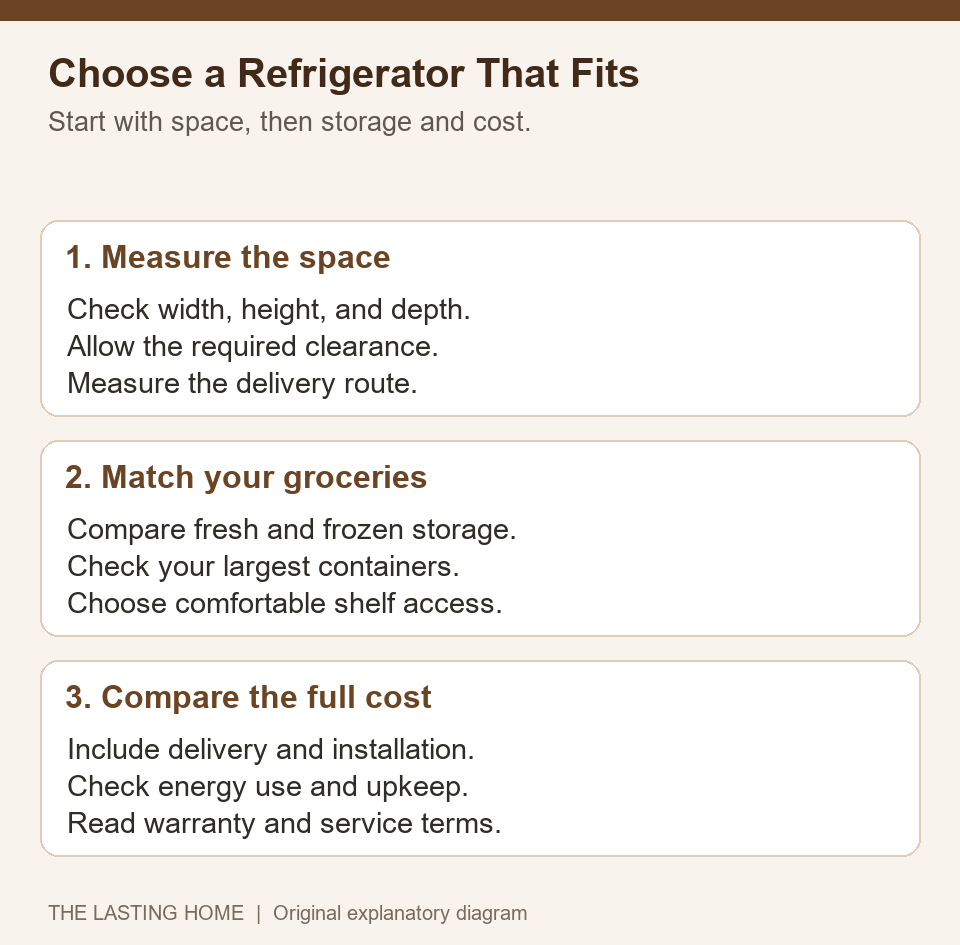
Begin with three decisions: what will physically fit, how you store fresh and frozen food, and which conveniences justify their cost. Working through them in that order helps prevent a standout feature from distracting you from an unsuitable cabinet or interior.
Choose a suitable cabinet and interior before paying for extra convenience features.
Budget for the Whole Purchase
Compare the delivered and installed cost of refrigerators that meet the same basic needs. A compact appliance and a full-size kitchen refrigerator serve different purposes, even when both appear in a search for an affordable fridge. Decide on the necessary storage first.
Then account for delivery access, installation, an appropriate water connection where needed, and removal of the old appliance. Ask what the delivery service includes and whether stairs, restricted access, or door removal change the arrangements. Also review the return process for a damaged appliance and the time allowed to report a problem.
Features such as dispensers and automatic ice makers deserve a place in the budget if you use them regularly. Include replacement filters when the exact model requires them. For a simpler refrigerator, check which accessories are included rather than assuming you can add a particular ice maker later.
Choose a Refrigerator Type Around Your Routine
Top-freezer refrigerators put frozen food above the main refrigerator. They are a sensible starting point for straightforward storage and may suit people who use frozen ingredients frequently. The fresh-food compartment extends lower, so consider how comfortably you can reach the items you use most.
Bottom-freezer refrigerators move fresh food higher. That can be helpful when you reach for vegetables, leftovers, and drinks more often than frozen groceries. Check how the lower compartment opens and how easily its storage areas can be accessed.
Side-by-side refrigerators divide fresh and frozen storage vertically. They can make it easier to group both kinds of food at several heights, but each section has limited width. Measure broad containers and check the compartment split instead of comparing total capacity alone.
French-door refrigerators provide two upper doors and a freezer below. The broad fresh-food layout is appealing for larger dishes, though the actual shelf arrangement still determines usable space. Check whether both doors need opening to reach frequently used drawers.
Counter-depth refrigerators describe a cabinet-depth approach rather than a single door configuration. They can reduce projection into a kitchen, but doors, handles, hinges, and required rear clearance affect the installed depth. Compare full dimensions with your counters and walkway.
Match Capacity to Your Grocery Habits
Household size is a starting point, not a complete sizing formula. Two people who batch-cook and shop infrequently may need more room than a larger household that buys small quantities several times a week. Count beverages, leftovers, produce, and frozen food separately.
Look at your current refrigerator immediately after a normal shopping trip. Note what fits comfortably, what gets hidden, and which compartment fills first. This gives you a more useful comparison than moving automatically to a larger advertised capacity.
Leave room to organize food and keep vents unobstructed. The FDA’s food-storage guidance advises against packing the refrigerator or freezer so tightly that air cannot circulate. Buying enough space to arrange groceries sensibly matters more than filling every available gap.
Inspect Shelves, Drawers, and Door Bins
An adjustable shelf is useful only if the available positions work for your containers. Compare tall bottles, food boxes, and wide cookware with the actual interior dimensions. Also check whether moving one shelf creates an awkward space elsewhere.
For drawers, consider both access and purpose. A produce bin should hold the groceries you usually buy, and a wide drawer should open without colliding with a nearby wall or cabinet. Do not assume every crisper has humidity adjustment or every drawer has separate temperature control.
Check the freezer layout with the same care. Baskets, shelves, ice bins, and narrow door storage change how easily packages can be grouped. The goal is to see what you own and retrieve it without repeatedly rearranging everything around it.
Pick a Finish You Can Maintain
Choose a finish in the exact model being purchased. Similar product families may have different colors or coatings, and a stainless appearance does not establish a particular construction or magnetic surface. Fingerprint-resistant finishes may reduce visible marks, but they still need appropriate cleaning.
Follow the manufacturer’s directions for exterior cleaners, shelves, bins, seals, and dispenser components. Avoid assuming a cleaner suitable for an older appliance is suitable for a new coating. Confirm care instructions before using abrasives or removing parts for cleaning.
Decide Which Extra Features Are Worth Having
Ice makers and water dispensers can simplify everyday routines, but they require compatible installation and ongoing care. Check where water is accessed, which container sizes fit, what maintenance is required, and whether replacement parts or filters are readily available for the exact model.
Fast-cooling modes, alarms, and connected controls should be evaluated by their documented functions. A named cooling feature does not establish a measured temperature advantage, and a smart-sounding name does not establish Wi-Fi connectivity. None of the recommendations here depends on an unverified app feature.
Give basic usability equal attention. Door operation, shelf flexibility, lighting, and comfortable reach can matter every day. An appealing feature is worth choosing when you can explain the task it will make easier.
Measure the Opening and Delivery Route
Record the opening’s width, height, and depth at its tightest points. Account for baseboards, uneven flooring, overhead cabinets, and nearby trim. Compare those measurements with the exact appliance’s installation instructions, including required ventilation and space for plumbing or a power connection.
Then check the doors in motion. You need room to open the refrigerator and freezer, access drawers, and move comfortably past the appliance. The Federal Trade Commission’s appliance-shopping advice specifically calls for space to open doors fully and provide ventilation.
Finally, measure the route from the delivery entrance to the kitchen. Include narrow doorways, turns, stairs, and landings. Confirm any necessary appliance-door removal with the delivery service rather than planning an improvised solution on arrival.
Compare Energy Use by Exact Model
ENERGY STAR certification is useful information, but it is not a complete estimate of the electricity bill. A refrigerator’s capacity and configuration also matter. ENERGY STAR recommends choosing an appropriately sized refrigerator, noting that larger refrigerators generally consume more energy.
Use the exact model’s annual electricity consumption to compare similar candidates. The FTC explains that EnergyGuide operating costs are estimates based on typical use and a national average energy price. Your local electricity rate and use will affect the actual expense.
Avoid treating a missing certification statement as proof that a model lacks certification; verify it. Equally, do not assume a refrigerator qualifies because another model from the same brand does. Keep the comparison tied to the appliance you will receive.
Check Warranty Terms and Local Service
A familiar brand name is one consideration, but a useful purchase decision needs model-specific information. Read the warranty for covered components, labor, exclusions, and service arrangements. A reference to extended component coverage may not mean all repair costs receive the same coverage.
Check who handles service in your area and how to request it. Confirm the model number on your order, invoice, and warranty documents. For marketplace purchases, also establish the seller’s delivery and damage-reporting procedures. Those practical details are easier to clarify before a refrigerator is in the kitchen.
Our Recommendation
The Kenmore 26.6-cubic-foot French-door refrigerator is the best starting point here for a household that wants substantial storage, adjustable shelves, and an internal ice and water dispenser. The Kenmore 22.3-cubic-foot bottom freezer offers a narrower alternative, while the 18.1-cubic-foot top mount is our pick for straightforward full-size value.
For a small kitchen, compare the Frigidaire apartment model with the narrow Kenmore French door according to the groceries you need to store. For larger loads, look closely at the 29-cubic-foot Kenmore’s compartment layout. Let cabinet fit and food-storage needs settle the shortlist before a convenience feature settles the final choice.
Refrigerator FAQs
Which Refrigerator Brand Is Most Reliable?
The information available for these selections does not establish a reliability ranking. Compare the exact model, warranty coverage, local service options, and documented repair information when available. Read reviews for the same model and configuration, and distinguish delivery damage from operating problems. A brand’s reputation alone cannot predict the experience with an individual refrigerator.
What Temperature Should a Refrigerator Be?
The FDA recommends a refrigerator temperature of 40°F or below. Use an appliance thermometer to check it periodically. A numbered dial may indicate a control setting rather than the temperature inside, so consult the manual and verify the result instead of relying on the dial number alone.
What Temperature Should a Freezer Be?
The FDA recommends 0°F for freezer storage. Check the freezer separately from the refrigerator compartment. Follow the appliance’s instructions for temperature adjustments, and allow the specified stabilization time before assessing a change. A small internal freezing compartment should not automatically be treated as equivalent to a separate freezer; check its intended use.
How Do You Know When to Replace a Refrigerator?
Consider replacement when the appliance no longer maintains the required storage temperatures, repair options are impractical, or its capacity and layout no longer meet your needs. Seek a qualified service diagnosis for an operating problem. There is no supported lifespan guarantee for these selections, and age alone does not establish the value of a repair. Compare the repair estimate with the complete cost and suitability of a replacement.
How Much Clearance Does a Refrigerator Need?
Use the exact model’s installation instructions for the required side, rear, and overhead clearance. Also allow room for hinges, handles, plumbing connections, and fully opened doors or drawers. There is no single clearance figure that can be safely applied to every refrigerator in this guide. Counter-depth and apartment-size models still need their specified installation space.
How We Chose These Refrigerators
These recommendations compare published product specifications with distinct household needs. The main considerations were total capacity, door configuration, stated width or dimensions, shelf flexibility, included conveniences, finish, and expressly stated energy certification. Each category identifies a reason to consider the model rather than a universal winner for every kitchen.
The overall selection balances substantial storage with adjustable shelving and an internal dispenser. The other picks address narrower spaces, bottom-freezer access, side-by-side organization, larger grocery loads, pitcher convenience, and full-size value. A compact apartment model is evaluated for its small footprint, rather than being treated as an interchangeable substitute for a family-size refrigerator.
We use FDA guidance for food-storage temperatures and federal energy information to explain buying considerations. Product descriptions establish listed features; they do not establish measured cooling uniformity, sound levels, ice output, repair frequency, or service life. Those limitations are why this guide avoids performance scores and owner-review generalizations.
Before ordering, confirm the exact configuration and current documentation, especially dimensions, compartment capacities, installation requirements, warranty terms, and included accessories. Similar-looking refrigerators can differ in ways that change whether they work in your home.




Write Your Review
No reviews yet. Be the first to share your experience!