

A chilly home office doesn’t always need the same heating setup as the rest of the house. A portable heater can make an occupied room more comfortable, but the best small space heaters differ in how quickly they deliver warmth, how much space they occupy, and how much attention their controls require.
The Amazon Basics oil-filled radiator is our starting point for someone who prefers straightforward controls and warmth without a fan. Its oscillating ceramic sibling suits shorter sessions when moving warm air matters more. The alternatives below cover digital controls, cabinet designs, a slim panel, and another compact ceramic option. These are researched recommendations based on product information, rather than our own room-heating measurements.
Before You Buy a Small Space Heater
Find a workable location before comparing products. A heater with a small body still needs clearance from furniture and other combustible materials. If the only available spot is beside a curtain or beneath hanging bedding, buying a smaller model doesn’t resolve the placement problem.
The CPSC’s portable-heater guidance calls for at least 3 feet of separation from combustible materials and direct connection to a suitable wall outlet. Include that operating area in your plan, along with the manufacturer’s instructions for the particular heater.
Then decide whether you want quick warmth during a short session or a steadier heat source while you remain in the room. A fan-driven ceramic heater and an oil-filled radiator can both have a 1,500-watt maximum, yet feel quite different in use. Their controls, airflow, and warm-up behavior may matter more than their similar power ratings.
Small Space Heater Comparison
| Model | Design | Listed maximum power | Main reason to consider it | Main compromise |
|---|---|---|---|---|
| Amazon Basics manual radiator | Seven oil-filled fins | 1,500 watts | Simple thermostat and three heat settings | Less immediate than fan-delivered warmth |
| Amazon Basics oscillating ceramic | Compact fan heater | 1,500 watts | Oscillation in a small housing | Fan sound and manual controls |
| AirNmore Comfort Deluxe | Cabinet-style infrared | 1,500 watts | Remote and two heat settings | A larger body to accommodate |
| Dreo portable ceramic | Digital fan heater | 1,500 watts | Thermostat, remote, and timer | More settings to learn |
| Dr Infrared DR-968 | Cabinet-style infrared | 1,500 watts | A substantial freestanding format | Not the smallest option to move or store |
| DeLonghi HCX9115E | Convection panel | 1,500 watts | Slim panel with freestanding or wall installation | Wall installation needs planning |
| Heat Storm cabinet heater | Infrared cabinet | 1,500 watts | Digital thermostat and remote | Cabinet styling takes visible space |
| Lasko compact ceramic | Personal fan heater | 1,500 watts | Compact body with a listed tip-over switch | Fewer digital conveniences |
These are feature comparisons, not measured room coverage or heating-speed results. Compare the exact model and offer before ordering; similar names can identify different controls, finishes, or safety features.
Our Heater Picks
Amazon Basics Oil-Filled Radiator: For Straightforward Warmth
The manual-control Amazon Basics radiator has seven oil-filled fins, three heat settings, and an adjustable thermostat. The selected offer also lists tip-over and overheat protection. Its appeal is a familiar, uncomplicated layout for someone who wants to choose a heat level and make small thermostat adjustments.

Pros
- Completely silent operation makes it ideal for light sleepers and quiet work environments
- Continues radiating heat after power-off, reducing energy cycling and lowering heating costs
- ETL safety certification with built-in tip-over and overheat shutoff
- Portable design with smooth-rolling wheels and carrying handle
- Simple manual controls require no app, Wi-Fi or complicated setup
Cons
- Takes longer to warm a cold room compared to fan-forced or ceramic heaters
- 15.4 pounds makes it heavier than most ceramic space heaters
- No remote control or programmable timer for automated heating schedules
Oil-filled radiators have been a reliable heating solution for decades, and Amazon Basics brings that proven technology into a modern, budget-friendly package. The seven wavy fins heat up gradually and hold warmth long after you turn the dial down, so your room stays cozy without the constant cycling noise of a fan heater.
What sets this model apart is how quiet it runs. There is no whirring fan, no clicking thermostat relay every few minutes. You can place it beside your bed or desk and forget it is even there. The caster wheels make it easy to roll from your home office during the day to your bedroom at night, heating only the spaces you occupy.
If you want steady, silent warmth without the dry air blast of a ceramic heater, this one delivers.
Styles it works with: Modern Minimalist, Industrial, Scandinavian, Contemporary
Best placed in: Bedroom corner beside nightstand, home office under desk, living room next to reading chair
May not suit: Large open-plan spaces over 300 square feet where heat-up time becomes impractical, homes with toddlers who might pull on the cord or tip the unit despite the shutoff feature
Buy it if:
- You need silent supplemental heat for a bedroom, nursery or home office
- You prefer gradual, long-lasting warmth over instant blast heating
- You want a portable heater you can move between rooms without hassle
Consider waiting if:
- You need a specific color or finish to match existing decor and only black is currently stocked
Skip it if:
- You need to heat a room quickly in under 10 minutes
- You require smart home integration, remote control or programmable timers
Check the latest price and availability on Amazon before it sells out.
An oil-filled radiator heats the fluid sealed inside its metal body. That body then gives off warmth as it heats, rather than relying on a fan to direct a stream of hot air. The result is a different heating experience from a small ceramic fan unit, especially when you’re sitting quietly in the same room.
Allow time for the radiator to warm up. If you want an immediate burst of air at the start of a brief desk session, a ceramic model may be a more natural fit. The radiator becomes more appealing when you’re comfortable with a gradual start and prefer avoiding continuous fan sound.
Its heat retention doesn’t create free energy. The warmth released after the element cycles off was put into the oil and casing earlier. Choose this design for its delivery of heat and controls, rather than assuming it uses less electricity than every other heater at the same power setting.
The fins can become hot, so plan the location and keep the required area clear. Shutoff features are useful backup protections; they don’t change the need for supervision. This is the version to consider if simple manual operation matters more than a remote, screen, or programmed schedule.
Amazon Basics Oscillating Ceramic Heater: For Short Sessions
The oscillating Amazon Basics ceramic heater is a smaller-body alternative to the radiator. Its selected listing specifies a thermostat, overheat and tip-over protection, and a 1,500-watt maximum. The current dimensions are 7.52 inches deep by 6.34 inches wide by 9.45 inches high.

Pros
- Compact 9.5-inch height fits under desks and beside furniture
- Ceramic heating reaches comfortable temperature fast
- Safety shutoffs protect against common heater accidents
- Low price makes it accessible for renters and students
Cons
- No customer reviews yet to confirm real-world performance
- 1500W output suits only small personal spaces, not whole rooms
- Basic thermostat may cycle on and off frequently
This little heater punches above its weight for anyone dealing with drafty corners or chilly home offices. The oscillation feature is the real win here, spreading warmth across your workspace instead of heating just your shins. At 3 pounds and under 10 inches tall, you can tuck it beside your desk, move it to the bedroom at night, or set it in the bathroom while you get ready without tripping over a bulky appliance.
The safety features give you peace of mind if you have pets or tend to forget to turn things off. Tip it over and it stops. Gets too hot and it stops. The 43dB noise level means it hums quietly in the background rather than drowning out your TV or Zoom calls.
If you want reliable spot heating for personal spaces without paying premium brand prices, this one delivers.
Styles it works with: Modern Minimalist, Contemporary, Scandinavian, Budget-Conscious Rentals
Best placed in: Home office desk corners, beside reading chairs, small bedrooms under 150 sq ft, bathroom vanity areas during morning routines
May not suit: Open-concept living areas or rooms over 200 sq ft where you need whole-space heating, homes with very young children who might knock it over despite safety features, design-focused spaces where basic black plastic stands out
Buy it if:
- You need quick warmth in a home office, bedroom, or bathroom under 150 sq ft
- You rent and cannot install permanent heating solutions
- You want a portable backup heater to move between rooms as needed
Consider waiting if:
- You want to see verified customer reviews before buying since this has zero reviews currently
Skip it if:
- You need to heat a large living room or open floor plan over 200 sq ft
- You want a decorative heater that blends into upscale interiors
Check the latest price and availability on Amazon before it sells out.
The fan moves warmed air away from the heating element, while oscillation changes the direction of that airflow. That can be useful when two nearby seating positions would otherwise need you to turn the heater by hand. It doesn’t establish how evenly an entire room will warm.
The compact size helps with carrying and storage, but it shouldn’t encourage cramped placement. Check the manual’s approved operating surface and clearance requirements before deciding where to use it. Papers, draped cables, and a blanket beside a desk can occupy space that looked empty at first glance.
Manual controls keep the interface straightforward. They also mean you shouldn’t expect a precise digital room-temperature display or remote operation unless the exact offer lists them. If adjusting the heater from a chair is a priority, one of the remote-equipped models may suit you better.
Choose this model for a small housing, a familiar control layout, and moving airflow during an occupied-room session. Choose the oil-filled radiator instead if fan sound is the compromise you’d most like to avoid. The two models serve different routines even though both advertise the same maximum wattage.
AirNmore Comfort Deluxe: For Remote-Control Operation
The AirNmore Comfort Deluxe uses a cabinet-style format and a copper PTC heating design. Its selected offer lists high and low settings, a remote control, and a 1,500-watt maximum. The practical attraction is adjusting the heater without repeatedly walking over to the controls.

Pros
- Safe cool-touch design ideal for families with children and pets
- Copper PTC heating requires no bulb maintenance or replacements
- Includes convenient remote control for easy operation
- ETL safety certified with two-year manufacturer warranty
- No exposed heating elements eliminates common safety hazards
Cons
- No customer reviews yet to verify real-world performance and reliability
- Premium price point at $295 compared to basic space heaters
- Limited color option with only black available
The AirNmore Comfort Deluxe solves the biggest concern families have with space heaters: safety. Its cool-touch exterior means you can place it in your living room or bedroom without constantly worrying about curious toddlers or playful pets getting burned. The copper PTC technology is a smart upgrade from traditional bulb-based heaters because you will never need to hunt down replacement bulbs or deal with sudden heating failures mid-winter.
What really sets this apart is the attention to everyday convenience. The remote control means you can adjust the heat from across the room, and the compact size fits neatly beside a couch or nightstand without dominating your space. The two-year warranty is twice what most competitors offer, showing the manufacturer stands behind their product.
If you want reliable supplemental heat that prioritizes safety without sacrificing performance, this one delivers.
Styles it works with: Modern, Contemporary, Minimalist, Transitional
Best placed in: Living room corner near seating area, beside the bed as a nighttime heater, home office under desk, basement family room
May not suit: Homes seeking decorative statement pieces as the design is purely functional; renters who cannot accommodate the 16.75-inch height in tight spaces; shoppers on a strict budget looking for basic heating only
Buy it if:
- You have young children or pets and need a heater that stays cool to the touch
- You are tired of replacing heating bulbs and want maintenance-free operation
- You value remote control convenience and want to adjust heat without getting up
- You want a longer warranty than the standard one-year coverage most heaters offer
Consider waiting if:
- You need to see verified customer reviews before committing to this price point
- You are watching for seasonal sales in late winter or early spring
Skip it if:
- Your budget is under $150 and you need basic heat without premium safety features
- You need a specific color to match your decor and black will not work
- You require a heater with oscillating or fan-forced air distribution
Check the latest price and availability on Amazon before it sells out.
The AirNmore Comfort Deluxe infrared space heater positions itself as a premium safety-focused heating solution for households that cannot compromise on protection around children and pets. Its copper PTC heating technology represents a meaningful upgrade over traditional coil or bulb-based systems, delivering consistent 1500W warmth without the maintenance burden of replaceable components.
Design and Build: The 16.5 x 13 x 16.75 inch black cabinet is compact enough to tuck beside furniture while substantial enough to feel stable. The cool-touch exterior is the standout safety feature, allowing placement in high-traffic areas without the constant supervision required by exposed-element heaters.
Performance: With 1500W capacity and high/low settings, this heater handles small to large rooms according to the manufacturer. The infrared heating method warms objects and people directly rather than just circulating air, which can feel more comfortable and efficient in well-insulated spaces.
Convenience: The included remote control eliminates the need to walk across the room for adjustments. The copper PTC technology requires no bulb replacements, reducing long-term maintenance and unexpected mid-season failures.
Warranty and Safety: ETL safety certification and a two-year warranty provide above-average protection for this price category. The absence of exposed heating elements addresses the most common space heater safety concern.
Value Consideration: At $295, this heater commands a premium over basic models. The lack of customer reviews means buyers are taking the manufacturer's claims on trust. The investment makes sense for households prioritizing safety features and long-term reliability over initial cost savings.
The cabinet format is worth considering when you prefer a freestanding unit that looks more substantial than a small fan heater. Measure the intended location rather than relying on a product photograph to judge its footprint. Clearance around the operating heater is additional to the body’s own dimensions.
Treat infrared and PTC as descriptions of heating technology, rather than evidence that this model costs less to run than every alternative. What you’ll notice depends on how the heater delivers warmth, where it sits, and how its controls cycle during use. No single label settles those questions.
The remote is useful if the approved location is a short distance from your chair. It doesn’t make a hidden or hard-to-inspect location suitable, and it shouldn’t be used as a reason to leave a portable heater operating unattended. Keep the controls accessible and follow the instructions for switching it off.
This is an alternative for someone who values a cabinet design and remote control enough to accommodate a larger body. A compact ceramic model is easier to justify when storage space is tight or the heater needs to move frequently between rooms. Verify the current offer’s full dimensions and settings before choosing between them.
Dreo Portable Ceramic Heater: For Digital Controls
The selected Dreo portable heater lists a digital thermostat, five modes, a remote control, and a 12-hour timer. Its 1,500-watt PTC ceramic design places it in the compact fan-heater category, with more control options than the manual Amazon Basics ceramic model.

Pros
- Precise 1-degree thermostat increments give you finer temperature control than most heaters in this price range
- 34dB noise level is genuinely quiet and suitable for bedrooms and home offices
- ETL certification plus multiple redundant safety features including tilt sensor and overheat protection
- Remote control and 12-hour timer add real convenience for daily use
- Compact and portable with a carry handle, easy to move between rooms
Cons
- No oscillation on this model unlike several other heaters in the DREO lineup, so heat dispersal relies entirely on the funnel design
- At 10 inches tall it is one of the smaller units in the DREO range, which may limit effectiveness in large open-plan spaces
- Zero published customer reviews at time of writing makes it harder to validate real-world performance claims
If you have ever had a space heater that sounded like a hairdryer on full blast or took forever to warm a cold bedroom, the DREO flips both of those frustrations. The PTC ceramic element with its heat funnel design gets warmth moving into the room fast, and the brushless motor keeps things remarkably quiet at 34dB, which is soft enough to use while sleeping or on a video call.
What really stands out for a home setting is the thermostat precision. Being able to dial in 68 or 71 degrees exactly, rather than guessing between a low and high switch, makes a real difference in comfort and in how often the heater cycles on and off. Pair that with the 12-hour timer and remote and you have a heater that fits around your routine rather than demanding attention.
The compact size and carry handle mean it genuinely travels between the bedroom, home office, and living room without hassle, and the clean digital display does not look out of place in a modern interior. If you want steady, quiet warmth with precise control without paying a premium price, this one delivers.
Styles it works with: Minimalist, Scandinavian, Modern, Contemporary
Best placed in: Beside a bed on the floor for overnight heating, under a desk in a home office, or in a small living room corner as a supplemental heat source
May not suit: Large open-plan living spaces where a single 1500W output may struggle to maintain temperature; homes with very young toddlers who are mobile on the floor, though the safety features do mitigate risk considerably
Buy it if:
- You work from home and need a quiet, targeted heat source for a home office or bedroom that will not disrupt calls or sleep
- You want precise thermostat control to keep a specific room at an exact temperature without running the central heating for the whole house
- You need a portable heater you can move between several rooms throughout the day without a dedicated spot for it
Consider waiting if:
- You prefer to read verified customer reviews before buying, since this listing currently has no published reviews to draw from
Skip it if:
- You need to heat a large open-plan space over 200 square feet where a single 1500W non-oscillating unit is unlikely to distribute heat evenly
- You specifically need an oscillating heater to spread warmth across a wide room, as this model does not oscillate
Check the latest price and availability on Amazon before it sells out.
A digital thermostat can make it easier to repeat a setting you liked on a previous day. The displayed value is a control setting or sensor reading, however, rather than proof that every part of the room has reached the same temperature. Where the heater senses air and how the room circulates it still matter.
The remote is convenient when the heater has a suitable location away from your immediate workspace. The timer can help end an occupied heating session, but a long available timer range isn’t a recommendation to run a portable heater while sleeping or away from the room.
The listing also advertises a low sound figure. Treat that as the manufacturer’s claim under its stated conditions, rather than a directly comparable result beside a different brand’s measurement. If a steady fan sound would bother you during reading or calls, consider whether a fanless radiator is the better design choice.
Choose Dreo when repeatable settings and remote operation would simplify your routine. Choose a manual model if you prefer fewer buttons and rarely change settings. More modes are useful when they solve a real control problem; they aren’t a substitute for a suitable location or a heat output that matches the room’s needs.
Dr Infrared DR-968: For a Cabinet-Style Setup
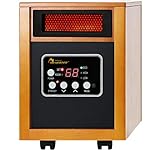
The DR-968 is a 1,500-watt portable space heater in a cherry-finish cabinet. It’s an option for someone who prefers this substantial freestanding format to a small exposed radiator or a narrow ceramic housing. The choice is partly about how the heater will occupy a visible place in the room.
Pros
- Dual heating technology provides both radiant warmth and air circulation for faster, more even heating
- Premium wood cabinet design looks like furniture rather than industrial heating equipment
- Comprehensive safety features including UL certification and PTFE-free construction
- Exceptionally quiet at 39 dB, suitable for bedrooms and quiet workspaces
- Remote control and wide temperature range (50-85°F) offer convenient personalized comfort
Cons
- 19-pound weight makes it less portable than lighter plastic models
- Cherry wood finish may not match all decor styles or color schemes
- No customer reviews available yet to verify real-world performance and reliability
The DR-968 solves the biggest frustration with most space heaters: they either look terrible or sound like a jet engine. This one does neither. The cherry wood cabinet actually looks like a piece of furniture you would choose for your living room, and at 39 decibels, it runs quieter than a library whisper.
What sets it apart is the dual heating system. The infrared quartz element gives you that immediate radiant warmth you feel on your skin, like sitting in a patch of sunlight, while the PTC system circulates heated air to warm the whole room. You get 60% more heat output than single-element heaters at the same 1500 watts, which means your space warms up faster and stays comfortable longer.
If you want effective whole-room heating without sacrificing your home's aesthetic or dealing with constant fan noise, this one delivers.
Styles it works with: Traditional, Craftsman, Transitional, Rustic
Best placed in: Living room corner near seating area, bedroom beside dresser or nightstand, home office under desk or beside workspace
May not suit: Ultra-modern or minimalist spaces where the wood grain and traditional styling might feel out of place; small apartments where the 19-pound weight and 17-inch height make frequent moving difficult
Buy it if:
- You need supplemental heat for a room up to 1000 sq ft and want something that looks like furniture
- You work from home or sleep with a heater running and need whisper-quiet operation
- You have children or pets and need comprehensive safety features including tip-over and overheat protection
Consider waiting if:
- You prefer to see verified customer reviews before purchasing a heating product
- You want to compare against other wood finish options that might better match your existing furniture
Skip it if:
- You need a lightweight portable heater to move frequently between multiple rooms
- Your decor is contemporary or Scandinavian and a wood-grain traditional design would clash
Check the latest price and availability on Amazon before it sells out.
Start with the exact dimensions and weight in the current product information. Cabinet designs can be less convenient to lift into a closet than their photographs suggest. If you expect to move the heater every day, consider the route, thresholds, and storage space as carefully as the operating position.
The same 1,500-watt rating appears on several smaller models here. A larger cabinet doesn’t, by itself, establish that the heater can warm a larger room. Insulation, ceiling height, drafts, starting temperature, and the thermostat’s behavior affect the result.
Don’t borrow features from a similarly named DR-968H or another Dr Infrared model. A suffix can identify additional equipment, and a listing for a different unit may include a humidifier or controls that aren’t part of the offer you’ve selected. Confirm the model number and included remote or accessories directly.
This is the cabinet-style alternative to compare when you have a permanent-looking place for a portable heater during occupied sessions. A smaller ceramic unit makes more sense if the main priority is easy carrying. For either design, the operating space and instructions matter more than a decorative finish that happens to match the furniture.
DeLonghi HCX9115E Panel Heater: For a Slim Profile
The DeLonghi HCX9115E is a 1,500-watt convection panel with a timer and options for freestanding or wall-mounted installation. The selected offer is the asphalt-gray version. Its broad, slim shape gives it a different room-planning role from the cabinet heaters and upright oil-filled radiator.

Pros
- Dual fan system improves heat distribution compared to standard convection heaters
- Wall-mount option saves floor space and creates a clean, built-in look
- Eco Plus function reduces energy waste by optimizing heat and power settings automatically
- Anti-freeze mode protects pipes in cold weather without manual monitoring
- Lightweight at 15.8 lbs with a handle for easy room-to-room portability
Cons
- No customer reviews available to verify real-world performance and reliability
- At 32 inches wide, it may be too large for small bedrooms or tight spaces
- Higher price point compared to basic space heaters without dual fan or Eco Plus features
The De'Longhi HCX9115E brings serious heating power in a package that actually looks good on your wall or tucked beside furniture. The slim asphalt gray panel blends into modern and transitional interiors without the clunky tower-heater vibe, and the dual fan upgrade means you feel warmth faster instead of waiting for convection currents to do all the work.
What sets this apart is the Eco Plus mode. It reads the room temperature and dials back power automatically, so you stay comfortable without watching the electric meter spin. The anti-freeze setting is a quiet hero for anyone with a basement workshop, mudroom, or second home, kicking on before pipes get dangerously cold.
If you want efficient, programmable heat that mounts out of the way or moves when you need it without sacrificing a clean aesthetic, this one delivers.
Styles it works with: Modern, Scandinavian, Minimalist, Industrial
Best placed in: Living room accent wall, bedroom beside nightstand, basement workshop or laundry room, home office under a window
May not suit: Small bedrooms under 150 square feet where the 32-inch width dominates the wall, homes needing a heater that blends into ornate traditional or farmhouse decor, renters who cannot wall-mount and have limited floor space
Buy it if:
- You want a heater that wall-mounts for a built-in look or stands on feet when you need portability
- Energy savings matter and you prefer a heater that adjusts power automatically instead of running full blast
- You need anti-freeze protection for a basement, garage, or vacation home in a cold climate
Consider waiting if:
- You want to read verified customer feedback before committing at this price point
Skip it if:
- You need a compact heater under 24 inches wide for a small bedroom or tight corner
- Your budget is under $100 and you do not need wall-mount or Eco Plus features
Check the latest price and availability on Amazon before it sells out.
The reason to consider a panel is the shape, rather than a promise of more heat from the same electricity. It may suit a room where a broad wall area is available but a projecting cabinet would interrupt movement. Check the exact installed depth and clearance requirements before assuming it can fit behind or beneath furniture.
Wall mounting is an installation choice, not permission to place the heater anywhere a picture would hang. Follow the manufacturer’s mounting instructions, use suitable fixings, and check the location of the power connection. Don’t improvise a hidden extension lead because the nearest outlet is inconvenient.
For freestanding use, assemble the supports as directed and use the approved orientation. A slim body still needs to remain stable, and the timer doesn’t replace being present while a portable heater operates.
Choose this model if a panel layout solves a specific space problem. Choose a smaller ceramic heater if you expect to carry it frequently, or an oil-filled radiator if you prefer that style of heat delivery. The useful comparison is the complete installed arrangement, including supports or brackets and the space the instructions require around it.
Heat Storm Cabinet Infrared Heater: For a Visible Living-Room Spot
The selected Heat Storm cabinet heater lists a 1,500-watt maximum, digital thermostat, remote control, and washable filter. Its beige cabinet format makes it an option to compare when the heater will remain visible in a living space during the heating season.

Pros
- Patented HMS technology preserves room humidity instead of drying out the air
- Dual wattage settings (750W/1500W) provide flexibility for different heating needs
- Portable design with optional casters makes it easy to move between rooms
- Digital display and remote control offer convenient temperature management
- Compact cabinet design fits well in smaller spaces
Cons
- No customer reviews yet to confirm real-world heating performance and reliability
- Only heats 300 sq ft effectively as a primary source in well-insulated rooms
- Single beige color option may not match all decor styles
This Heat Storm heater solves one of the biggest complaints about space heaters: that bone-dry air that leaves you reaching for lotion every five minutes. The patented HMS technology works with your room's natural humidity to deliver warmth that doesn't strip moisture from the air. That means you stay comfortable without the side effects of traditional electric heat.
The cabinet design looks more like furniture than a utility appliance, and at just 15 inches tall, it tucks into corners without becoming the room's focal point. The digital thermostat takes the guesswork out of temperature control, and the remote means you can adjust settings without leaving your spot on the couch. The optional casters are a practical touch for anyone who wants to move heat from the living room during the day to the bedroom at night.
If you want portable supplemental heat that won't dry out your home without constantly monitoring a dial, this one delivers.
Styles it works with: Modern Farmhouse, Transitional, Contemporary, Minimalist
Best placed in: Living room corner beside a reading chair, bedroom against a wall near the closet, home office under a desk, finished basement seating area
May not suit: Homes with very young children who might touch hot surfaces, rooms larger than 300 sq ft that need primary heating, spaces where beige cabinetry clashes with existing furniture finishes
Buy it if:
- You need supplemental heat in a well-insulated room up to 300 sq ft
- Dry winter air irritates your skin, sinuses, or respiratory system
- You want a heater you can move between rooms without heavy lifting
- You prefer setting a specific temperature rather than guessing with low/medium/high settings
Consider waiting if:
- You want to see verified customer reviews confirming heating performance and durability
- You need a color other than beige to match your current furniture
Skip it if:
- You need to heat a large open-concept space over 300 sq ft as the primary heat source
- You require a heater with safety certifications clearly listed for insurance purposes
Check the latest price and availability on Amazon before it sells out.
Appearance can help narrow a shortlist, but it shouldn’t decide the operating location. A finish that blends with a side table doesn’t mean the heater can sit beside upholstery or disappear behind a curtain. Plan the required clear area first, then decide which cabinet you prefer to look at.
The digital thermostat and remote are useful conveniences for someone who wants to repeat a setting or adjust it from a nearby chair. Expect the heater’s sensor location to affect the reading; a display doesn’t establish identical temperatures throughout a large or drafty room.
The washable filter also creates a maintenance task. Follow the exact instructions for removing, cleaning, drying, and refitting it, and don’t operate the heater with parts missing unless the manual explicitly permits that arrangement. Avoid assuming another Heat Storm model uses the same filter or procedure.
This is a choice for a household that has the space for a cabinet and values remote operation. If the heater will spend much of its time in storage, a simpler compact model may be easier to live with. Compare the current dimensions, settings, and included equipment before deciding that the cabinet format earns its extra room.
Another Compact Option: Lasko With a Listed Tip-Over Switch
This compact Lasko offer lists a thermostat, two heat settings, a fan-only mode, overheat protection, and a tip-over switch. It’s a model to compare if you want a small ceramic heater with familiar controls and don’t need a digital screen or remote.

Pros
- 1500W ceramic heating element effectively warms personal spaces up to 100 sq. ft.
- Manual thermostat dial eliminates the need for apps, remotes, or battery replacements
- Lightweight 3-pound build with carry handle makes room-to-room transport effortless
- Fan-only mode extends usefulness into warmer months for air circulation
- Comprehensive safety features meet rigorous ETL testing standards
Cons
- Manual controls require you to walk to the unit for adjustments rather than remote operation
- Limited to small spaces under 100 sq. ft., insufficient for heating larger living areas
- No reviews yet to confirm real-world performance and reliability
This little Lasko heater solves the cold desk problem without overheating the entire room or wrestling with complicated smart controls. The ceramic element delivers genuine warmth within minutes, and the built-in thermostat keeps things steady so you are not constantly adjusting. At just over 9 inches tall, it tucks onto a desk corner or nightstand without claiming valuable surface space.
What sets this apart is the practical design for real life: cool-touch housing so you will not burn your hand moving it, a 6-foot cord that actually reaches where you need it, and a tip-over switch that cuts power if someone knocks it over. The fan-only mode means you can use it year-round for air circulation, not just winter heating.
If you want reliable personal warmth that follows you from your home office to the bedroom without complicated setup or safety concerns, this one delivers.
Styles it works with: Modern Minimalist, Scandinavian, Contemporary Home Office, Transitional Bedroom
Best placed in: Desktop beside monitor, nightstand near the bed, small home office floor space, bathroom vanity counter
May not suit: Open-concept living rooms requiring whole-space heating, homes needing remote control convenience, spaces larger than 100 sq. ft. where focused heating is insufficient
Buy it if:
- You need targeted warmth at your desk or bedside without heating unused rooms
- You prefer simple manual controls over app-dependent smart devices
- You want a portable heater that moves easily between home office, bedroom, and bathroom
Consider waiting if:
- You want to see customer reviews confirming long-term reliability before purchasing
Skip it if:
- You need to heat spaces larger than 100 sq. ft. or entire living areas
- Remote control operation from across the room is essential to your comfort setup
Check the latest price and availability on Amazon before it sells out.
Pay close attention to the exact listing. Lasko sells several compact heaters with similar appearances, and one model’s features shouldn’t be assumed for another. The tip-over switch is specifically named in this selected offer; verify that feature in the current product documentation before purchase.
A shutoff triggered by a fall is a backup feature. The better operating setup is one that keeps the heater stable and away from traffic in the first place. Keep its cord clear of routes where it could be pulled, and follow the manufacturer’s approved placement instructions.
The fan-only mode may be useful when you want airflow without selecting a heat setting. It doesn’t establish the noise level, and a compact fan isn’t necessarily a substitute for the room fan you use in warmer weather.
Choose this alternative when a straightforward compact unit fits the routine better than a cabinet or radiator. The Amazon Basics oscillating ceramic model adds a different airflow option; the Dreo adds digital conveniences. Compare those actual differences, along with the full safety and care instructions, instead of choosing solely from the smallest product photograph.
How We Researched These Heaters
We compared the selected Amazon offers by heater design, rated power, controls, stated protective features, and the practical space required for use. The comparison distinguishes a manual radiator from a remote-equipped version and a freestanding heater from a panel that supports a particular installation method.
We haven’t measured heating speed, room-temperature uniformity, sound levels, thermostat accuracy, or electrical consumption for these models. Claims such as a specific coverage area or low sound figure need their operating conditions to be meaningful, so they haven’t been presented as our own results.
Current guidance from public energy and product-safety authorities also informs the buying advice. Heater technology can change how warmth is delivered without changing the basic electricity-to-heat relationship. Protective features can reduce particular risks without making a portable heater suitable for unattended use.
Before buying or using a heater, check the model number, instructions, and the CPSC recall database. A familiar brand name or a retailer’s product page isn’t a substitute for checking the particular unit. Keep the manual available for placement, maintenance, and storage instructions throughout ownership.
Protective features also need to be read precisely. Overheat protection responds to a temperature condition in the appliance; a tip-over switch responds to a change in position. One doesn’t necessarily imply the other. A lock on the controls is another separate feature, intended to limit changes to settings rather than to create a physical barrier around hot surfaces. Compare the features actually stated for the model instead of treating a general safety phrase as a complete specification.
What to Consider When Choosing a Small Heater
Fan and Ceramic Designs
A fan-driven heater moves air across a heating element and out into the room. Ceramic models use a ceramic heating element, often described as PTC in product information. Their compact size and moving airflow can suit shorter occupied sessions when you want to feel warmth without waiting for a large radiator body to heat.
Consider where the air will travel and whether fan sound will interrupt your work. Oscillation changes its direction; it doesn’t guarantee even temperatures in every corner. Check how the controls behave when the thermostat cycles and whether the selected heat setting is suitable for the room.
Convection and Panel Designs
Convection describes heat carried by moving air. A panel shape can make a heater easier to accommodate along a suitable wall, but it doesn’t remove installation or clearance requirements. Some designs use fans as well, so read the particular model’s description instead of assuming that every panel is silent.
Compare both operating and storage dimensions. A slim panel may project less into a room while occupying more width than a compact ceramic housing.
Infrared Cabinet Designs
Infrared heating involves radiant heat reaching surfaces and people. Portable cabinet heaters may combine radiant elements with moving air, controls, and filters. The complete design matters more than the infrared label alone.
Check the recommended placement and the way the manufacturer describes heat delivery. Don’t assume that a cabinet heater is suitable for an entire open-plan floor simply because the listing mentions a large coverage area. The conditions in your room may be very different.
Oil-Filled Radiators
An oil-filled electric radiator warms a sealed fluid and metal body. It can provide warmth without a continuously running fan, although thermostat clicks and other operating sounds may still occur. The warmer body also takes time to cool after switching off.
That gradual behavior is the main trade-off. It can be appealing during an occupied afternoon in one room, but less useful when you want quick warm air for a brief visit. Follow the instructions for moving and storing the heater, particularly while its surfaces are hot.
Micathermic Alternatives
Micathermic heaters use a heating assembly associated with mica and can combine radiant and convection effects. The category doesn’t automatically identify a particular shape, fan arrangement, installation method, or level of heat output.
If you’re comparing one with the models here, use the same questions: what is its rated power, how does it deliver warmth, which controls are included, and what does the manual require for placement? A different technology name shouldn’t replace those checks.
Your Heating Needs
Room area is only part of the decision. A well-insulated room with a normal ceiling and closed windows loses heat differently from a drafty room with a high ceiling. Existing central heat and the temperature outside also influence what a portable heater can accomplish.
Avoid treating a simple watts-per-square-foot rule as a coverage guarantee. Use manufacturer guidance as a starting point and consider whether the room has a larger problem, such as an open window gap or a failed heating system. A portable heater is supplemental equipment, rather than an automatic solution to every cold-room problem.
Also consider the electrical demand. At 120 volts, a 1,500-watt load draws approximately 12.5 amps. That calculation explains why the power connection deserves attention, but it isn’t permission to add the heater to any circuit with a matching-looking outlet. Follow the appliance instructions and have an electrician assess uncertain wiring, repeated breaker trips, or a damaged or overheating outlet. Don’t solve a power problem by adding an extension cord.
Energy Use and Running Cost
Natural Resources Canada explains that electric resistance heaters convert their input electricity to heat at the point of use. A ceramic, infrared, or oil-filled design doesn’t create extra heat energy simply because of its label.
Calculate running cost from actual energy use. A 1,500-watt heater operating continuously uses 1.5 kilowatt-hours in one hour. At an illustrative electricity rate of $0.20 per kilowatt-hour, that hour costs $0.30. Your rate and thermostat cycling change the result.
Savings depend on the wider heating plan. Warming an occupied room may help if it lets you reduce other heating appropriately, but adding a portable heater while leaving everything else unchanged adds electricity use. Lower settings and shorter operating periods reduce consumption; stored heat released later was paid for earlier.
For a monthly planning example, two continuous hours per day at 1,500 watts would use 90 kilowatt-hours over 30 days. At the same illustrative rate, that is $18. A thermostat that cycles off reduces the actual total, while a colder room may keep the element on longer. Use your bill’s electricity rate and realistic operating hours rather than a product listing’s broad money-saving language.
Noise and Controls
A fanless radiator removes continuous fan sound from the comparison, but isn’t a guarantee of complete silence. Fan-heater sound depends on the design, selected mode, and the room. Manufacturer decibel claims need matching measurement conditions before they can be compared directly.
Choose controls you can read and use comfortably. A digital thermostat makes a setting easier to repeat; a manual dial may be simpler for someone who wants fewer buttons. Remote controls and timers are conveniences rather than permission to leave a portable heater unattended.
Understand What the Thermostat Changes
A heat setting and a thermostat setting are different controls. A lower heat setting can reduce the element’s power draw. A thermostat can switch heating on and off around a sensed temperature. The exact behavior depends on the model, so check whether the fan continues running, whether the display stays lit, and how the heater resumes after cycling.
Start with a comfortable setting rather than assuming the highest thermostat value will warm the room faster. On a heater that is already operating at full output, raising the target temperature doesn’t increase its rated maximum power. It can simply keep the heater running for longer. Read the manual to understand how its modes interact before relying on labels such as Eco or Auto.
When a Portable Heater Is Useful
A portable heater can make sense when one occupied room needs supplemental warmth, when you want a heating design suited to a particular workspace, or when a simple control change would make a room more comfortable. Portability also lets you put the equipment away when the season changes.
It is less helpful when there’s no suitable location or power connection. Check the room layout and the reason the room is cold before choosing a product. Fixing a draft or addressing a central-heating fault may be more useful than buying a more elaborate portable unit.
Tips for Using a Space Heater
The CPSC’s current portable-heater safety sheet provides the operating habits that matter across heater types. Apply those alongside the model’s own instructions.
- Keep combustible materials at least 3 feet away and observe any additional clearances in the manual.
- Use a suitable wall outlet directly. Avoid extension cords and power strips.
- Keep the heater stable, visible, and clear of traffic and exit routes.
- Turn it off before leaving the room or going to sleep.
- Stop using it if the plug or outlet becomes hot, and have the problem assessed.
A timer, thermostat, overheat cutoff, or tip-over switch doesn’t replace these habits. Keep children and pets away from the operating heater, inspect the cord before use, and let hot parts cool before moving or storing the unit. Use only the cleaning and maintenance procedures permitted by the manufacturer.
Frequently Asked Questions
Can a Small Space Heater Run All Night?
No. Turn a portable heater off before going to sleep. The CPSC’s guidance doesn’t make an exception for an oil-filled radiator simply because it has a thermostat or lacks a fan. A timer and automatic shutoffs don’t replace being awake and present.
Which Type Uses the Least Electricity?
The one drawing less power for less time uses less electricity. Compare wattage, thermostat cycling, and operating duration. A heater running continuously at 1,500 watts uses 1.5 kilowatt-hours per hour, regardless of whether the heating design is ceramic, infrared, or oil-filled.
What Features Should a Safer Heater Have?
Look for appropriate independent safety certification and protective features such as overheat and tip-over shutoffs, then verify them for the exact model. Correct placement, direct wall power, supervision, and recall checks remain necessary. No portable heater should be treated as risk-free because its listing includes safety language.

Write Your Review
No reviews yet. Be the first to share your experience!