

> Editorial Note: I’m Erin Schwartz, and I cover home decor with a bias toward what actually works in a real room. The guidance here weighs scale, layout, and materials against Apartment Therapy and Wirecutter coverage rather than styling a space that nobody lives in.
The blind comes back too wide and won’t drop into the frame, and the culprit is almost always a single width reading on a window that isn’t square. Inside mount blinds sit inside the opening, so a fraction of an inch decides whether they fit or bind. These guides cover the rest of the window: window curtain rods, bay window curtains, small window curtains, how to clean window blinds, how to clean window tracks, and how to measure a tv.
Check the Frame Depth Before Anything Else
Measure the frame depth first, because a shallow frame can’t hold an inside mount at all. Most standard blinds need at least 2 inches of flat, unobstructed depth from the front of the frame to any crank, latch, or trim behind it. Lay a tape flat on the sill and read from the window face out to the frame edge.
If the depth falls short, you have two paths. A partial inside mount works down to about 5/8 inch on some slim blinds, though the headrail will stick out past the frame. Below that, an outside mount on the wall or trim is the only reliable option, and it overlaps the frame edges to block more side light in the bargain.
Note any obstruction inside the frame too. Window cranks, handles, and alarm sensors eat into the usable depth, and a blind that clears the frame but hits a crank still won’t operate. Measure to the face of that obstruction, not the glass behind it, so the reading reflects the space the headrail actually has.

Measure Width at Three Heights
Measure the width at the top, middle, and bottom of the frame, then record the narrowest of the three. Windows drift out of square as a house settles, and the three readings often differ by 1/4 inch or more. Using the narrowest ensures the blind clears the tightest point instead of jamming against it.
Measure the exact inside width edge to edge with a steel tape, and do not round or make any deductions yourself. Inside mount orders expect the tight opening measurement, and the factory subtracts a standard 1/4 to 1/2 inch for clearance. If you deduct too, the blind ends up with a wide light gap on both sides.
A rigid steel tape is the tool here, not a cloth one. Fabric tapes sag across a 36-inch span and read long, which is the exact error that makes an inside blind too wide to seat. Hook the tape on one edge and pull it taut so the blade lies dead flat against the sill before you read the number.
Measure Height and Note the Sill
Measure the height at the left, center, and right of the frame, and record the longest for an inside mount. Read from the top inside edge, where the headrail will sit, down to the sill. Taking the longest ensures the blind covers the full opening even if the frame leans, since a short reading leaves bare glass at the bottom.

Decide how the bottom rail should meet the sill. A blind measured to the sill sits flush; some homeowners subtract 1/4 inch so the rail never scrapes. Wirecutter notes that leaving the factory deduction alone is safer than adding your own, since double-deducting is the top cause of returns.
Write every number as width by height, in that order. Reverse them and the blind ships rotated 90 degrees, useless for the opening you measured. Label each set with the room and window on a quick sketch so a second window’s numbers never blur into the first.
What You’ll Need
A dependable steel tape is the whole job, so these picks are ranked by owner rating and cover rigid tapes for the frame plus a soft tape for curved openings. Grab a rigid tape for the actual measurement. The soft tape suits arches and specialty shapes.
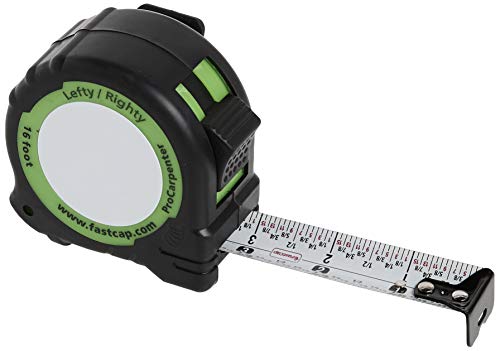
Pros
- Dual-direction reading saves time when measuring from tight corners
- Built-in sharpener and notepad eliminate the need for separate tools
- Durable rubber boot protects against job site drops
Cons
- Zero customer reviews make it difficult to verify real-world performance
- Green color may not appeal to all users
- At this price point, competing brands offer proven track records
This isn't your typical tape measure. FastCap designed it for pros who are tired of flipping their tape around in cramped spaces or hunting for a pencil when they need to mark a cut. The dual-direction reading means you can pull from either side and still read the numbers right-side up, which is genuinely useful when you're wedged behind a water heater or measuring inside a cabinet.
The built-in pencil sharpener and erasable notepad sound gimmicky until you've used them. Being able to sharpen your carpenter pencil without walking back to your toolbox, or jotting a quick measurement on the tape case itself, adds up to real time savings over a full day of work. The rubber boot and reinforced blade show this tape was built to take a beating.
If you want a measuring tape that keeps pace with fast-paced projects without making you hunt for accessories, this one delivers.
Styles it works with: This is a professional tool, not a decorative item. It works in any workshop, garage, or tool storage setup regardless of design style.
Best placed in: Tool belt, workshop pegboard, garage tool chest, or kitchen junk drawer for home repairs.
May not suit: Casual homeowners who measure once a year may find the professional features unnecessary. The green color may clash with color-coded tool organization systems.
Buy it if:
- You're a contractor or tradesperson who measures dozens of times per day
- You frequently work in tight spaces where flipping a tape is awkward
- You want your pencil sharpener and notepad integrated into one tool
Consider waiting if:
- You want to see verified customer reviews before purchasing
- You prefer a different color for your tool collection
Skip it if:
- You only need a tape measure for occasional picture hanging or furniture assembly
- You need a longer tape for large outdoor projects or construction framing
Check the latest price and availability on Amazon before it sells out.


Starrett Adhesive Tape Measure Stix - 6 Foot Self-Stick Ruler for Workbenches, Tables & Craft Surfaces
Pros
- Strong permanent adhesive works on wood, metal, and laminate surfaces
- Durable steel construction with protective coating stands up to workshop use
- Can be trimmed to exact size needed for custom workspaces
- Eliminates fumbling with handheld tape measures during cuts
- Clear, easy-to-read graduations in standard imperial measurements
Cons
- Permanent adhesive means you cannot easily reposition once applied
- Only available in 6-foot length which may be too short for larger work surfaces
- Right-to-left orientation requires adjustment if you typically read left to right
If you have a workshop, craft room, or dedicated project space, this adhesive tape measure changes how you work. Instead of constantly picking up and setting down a tape measure, you get instant reference measurements right on your table surface. It stays put while you slide materials across it, mark cuts, or line up assembly work.
The steel construction means it will not stretch or warp like cheaper alternatives, and the polyurethane coating protects it from scratches, sawdust, and general workshop wear. You can cut it to fit your exact table width, which is perfect for smaller workbenches or craft tables where a full 6 feet is too much.
If you want permanent measuring reference built into your workspace without constantly reaching for a tape measure, this one delivers.
Styles it works with: Industrial workshop spaces, modern craft rooms, functional home offices, maker spaces
Best placed in: Workshop benches, craft tables, sewing tables, garage workstations, drafting tables, DIY assembly areas
May not suit: Homes without dedicated workshop or craft space, renters who cannot make permanent modifications to furniture, or anyone who needs measurements longer than 6 feet on a single surface
Buy it if:
- You do regular woodworking, sewing, or craft projects that require repeated measurements
- You have a dedicated workbench or table that will not be moved or repurposed
- You are tired of your tape measure sliding around or getting buried under materials mid-project
Consider waiting if:
- You need a measuring solution you can easily remove or reposition later
Skip it if:
- Your work surface is longer than 6 feet and you need continuous measurement
- You work on temporary or portable surfaces that change locations frequently
Check the latest price and availability on Amazon before it sells out.

The NBTOOL 120-inch soft tape with a suction cup leads at a 4.7 rating, useful for holding one end solo. The FastCap ProCarpenter 16-foot reverse tape, the Mengduxd mini leather tape, and the Starrett 6-foot tape sticks all sit at 4.7 as well, with the Starrett handy for taping directly along a frame. The Komelon 10-foot Touch Lock power tape rounds out the set at 4.6.
Frequently Asked Questions
How much depth do inside mount blinds need?
At least 2 inches of flat frame depth for most standard blinds. Some slim blinds mount as shallow as 5/8 inch, but the headrail will protrude. Below that, an outside mount is the fit.
Do I subtract anything from my inside mount measurements?
No. Record the exact tight opening for width and the full drop for height. The factory subtracts a standard 1/4 to 1/2 inch for clearance. If you deduct too, the blind ends up too small.
Why measure the width in three places?
Because window frames go out of square as houses settle, so the top, middle, and bottom can differ by 1/4 inch or more. For inside mounts you use the narrowest so the blind clears the tightest spot.
Width or height first for blinds?
Width first, always. The industry standard is width by height, so reversing the order ships a blind turned sideways. Confirm the order before you submit the numbers.
What if my window frame is too shallow?
Switch to an outside mount. Fixed to the wall or trim above the window, it needs no interior depth and overlaps the frame edges, which also blocks more light along the sides.
Can I use a cloth tape measure for blinds?
It depends, but a steel tape is far safer. Cloth tapes sag and read long over a wide opening, and that error makes inside blinds too wide. Use cloth only for curved or arched windows.
How do obstructions affect the measurement?
They reduce usable depth. Cranks, handles, and alarm sensors sit inside the frame and can block a blind that otherwise fits. Measure to the obstruction, not the glass, when one is present.
Bottom Line
Measuring for inside mount blinds comes down to three habits: confirm at least 2 inches of frame depth, take width at three heights and use the narrowest, and record the exact opening without deducting anything yourself. Always note width before height so the blind arrives oriented correctly. If your frame is shallower than 2 inches or a crank eats the depth, switch to an outside mount rather than forcing a blind that won’t seat or operate.





Write Your Review
No reviews yet. Be the first to share your experience!