

> Editorial Note: I’m Erin Schwartz, and I cover home decor with a bias toward what actually works in a real room. The guidance here weighs scale, layout, and materials against Apartment Therapy and Wirecutter coverage rather than styling a space that nobody lives in.
The most common bay window mistake is treating two or three angled panes like one flat wall and buying a single straight rod that refuses to follow the bend. A bay has corners, so the bay window curtains you pick and the window curtain rods behind them both have to turn. Before you drill anything, it helps to settle how high to hang curtains, to understand how small window curtains behave on the short returns, whether door window curtains logic applies to a walk-through bay, and how you’ll how to clean window tracks once panels hang close to the sill.
What rod works for a bay window’s angled sections?
You have three rod options for a bay: a single bendable rod, straight rods joined by adjustable corner connectors, or three separate rods, one per pane. A bendable rod curves in one continuous line and looks cleanest, but it limits you to lighter panels because it flexes under weight. Corner connectors let you use standard rods and hardware while still following the angle, which is the pick most bays want.
Three separate rods is the fallback when the angles are steep or the reveals are shallow, one rod per pane. It reads busier and leaves gaps at the corners, so save it for deep bays where a connected rod can’t sit flush. Apartment Therapy makes the same call: connected hardware first, separate rods only when the geometry forces it. Whatever you choose, buy the return brackets that let the rod finish against the wall so light doesn’t leak down the sides.
How do you measure each section and the total drop?
Measure every pane of the bay separately, then add the widths for total rod length, because a bay is never symmetrical enough to guess. Run your tape across each section and note the return depth on both ends. The standard rule holds here: mount the rod 4 to 6 inches above the window frame, and size panels so the set finishes 8 to 12 inches wider than the glass for full stack-back.
For the drop, measure from where the rod will sit down to your target hem, not from the frame. The Spruce recommends a hem that just kisses the floor or sits about half an inch above it for panels that clear the ground. Bay windows often carry a bench or a radiator under the glass, so a sill-length or apron-length drop is common too. Three numbers per pane: width, return, and drop.
Should you mount inside or outside the window frame?
Outside mount is the safer choice for most bays because the angled reveals rarely give inside brackets enough flat, square depth to bite into. Mounting on the wall above and beside the frame also lets you follow the standard 4-to-6-inch lift and the wider stack, both of which an inside mount kills. Inside mount only works when each pane is deep and the trim is plumb.
Find the framing before you drill. Bay windows sit inside a built-out header and jamb, so there’s usually solid wood behind the trim, but the wall between panes can be hollow. Hit a stud or the window’s own framing where you can, and back up any into-drywall bracket with an anchor rated above the loaded panel weight. Heavier blackout panels pull harder at the corners, so that’s where a stripped anchor shows up first.
How do you hang panels so they clear the crank and stack cleanly?
Hang the panels so they stack toward the corners and clear any crank, latch, or sill obstruction when open. Many bay windows are casement-style with a crank handle that sticks out, so a floor-length panel that pools over it will snag every time you open the glass. If a bench or radiator sits below, size the hem to stop just above it rather than fighting the obstruction.
Push the stack to the outer edges and the corners so the glass reads full and open during the day. Rings or clips help panels glide past a connector joint without catching. When you set panel width, remember the 8-to-12-inch overage exists so the fabric parks off the glass, not on it. Check the pull once before you trim anything.
Should you layer sheers with blackout panels?
Layer sheers with blackout panels when you want daytime privacy plus full darkness at night, which is exactly what a light-flooded bay usually needs. A double rod, or a connected rod run with two bracket channels, lets a sheer sit in front while the blackout layer hangs behind. Bays face outward and catch light from three directions, so the front sheer softens glare without shutting the room down.
The blackout layer does the heavy lifting after dark. If you skip sheers, pick a panel that already blends privacy and blackout in one, and accept that a single layer gives you either soft light or full dark, not both on demand. Wirecutter’s window-treatment guidance favors two thinner layers over one heavy one in rooms you actually live in, and a bay window living room is that room.
What You’ll Need
These five panels cover the common bay setups by length and light control, and every rating below is the live owner average. The two H.VERSAILTEX picks are both 108-inch linen: the first is a standard light-filtering panel for tall floor-length bays, while the second is a 100% blackout grommet version for the same drop when you need full dark. The KOUFALL (4.5) and Mrs.Naturall (4.5) are 63-inch panels for apron-length bays, and the Pitalk (4.4) is a 48-inch back-tab option for a sill or bench bay.


H.VERSAILTEX 100% Blackout Linen Curtains 100x108 Green Bay Wide Panel Grommet Top Energy Saving Thermal Insulated
Pros
- True 100% blackout with GLOBAL RECYCLED STANDARD certification
- Extra-wide 100-inch width covers expansive windows with fewer panels
- White backing instead of gray looks cleaner from outside
- Energy-saving thermal insulation reduces heating and cooling costs
- Easy care with machine washable fabric
Cons
- No customer reviews yet to verify long-term durability
- Very long 108-inch drop may require hemming for standard 8-foot ceilings
- Limited to one green color option in this specific size
This curtain solves the frustrating problem of trying to cover wide windows or patio doors without ending up with a visible center seam. At 100 inches wide, it spans most large openings in one clean sweep, and the green tone adds a sophisticated, calming presence to bedrooms or living spaces without feeling too bold.
The white backing is a standout detail. Most blackout curtains use a gray or silver coating that looks dull from the street. This one keeps your home's exterior looking intentional and polished. Inside, the faux linen texture feels soft and drapes beautifully, not stiff like vinyl-backed options.
If you want true darkness for better sleep or daytime naps without the hassle of multiple panels or ugly backings, this one delivers.
Styles it works with: Modern Farmhouse, Scandinavian, Coastal, Transitional
Best placed in: Master bedroom over sliding glass doors, living room picture window, home office with bright morning sun
May not suit: Homes with standard 8-foot ceilings unless you're willing to hem or puddle the fabric; rooms needing multiple colors or patterns to match existing decor
Buy it if:
- You have a wide window or sliding door and want to avoid seams down the middle
- You're a light sleeper or shift worker who needs complete darkness during the day
- You want your home to look polished from the outside with a clean white backing
Consider waiting if:
- You're hoping for customer photos or reviews to confirm how the green looks in real rooms
Skip it if:
- Your window is narrower than 80 inches and you'd be paying for excess fabric
- You need a standard 84 or 96-inch length for typical ceiling heights
Check the latest price and availability on Amazon before it sells out.

Pros
- Effective light blocking for the price point
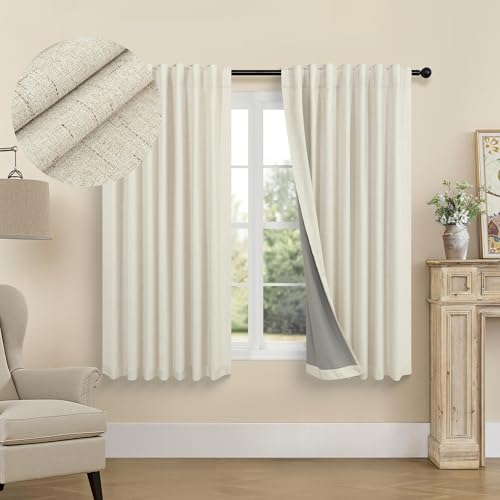
- Neutral cream beige works with existing decor
- Thermal properties help with heating and cooling costs
- Easy to hang and machine washable
Cons
- Light blocking performance varies by color and time of day
- Limited customer reviews make long-term durability unclear
- May require ironing after washing to remove wrinkles
These KOUFALL curtains hit the sweet spot between function and affordability. The triple-weave blackout fabric actually works, blocking enough light for afternoon naps or sleeping in on weekends without the stiffness of cheaper options. The cream beige color is that perfect warm neutral that feels intentional in a living room but not too precious for a kid's bedroom.
What makes these stand out is the thermal insulation. You'll notice your room stays cooler when the afternoon sun hits, and in winter, they help keep warmth from escaping through drafty windows. The grommets slide smoothly on most rods, and tossing them in the wash when needed takes zero effort.
If you want solid light control and energy savings without spending $60 on designer drapes, this one delivers.
Styles it works with: Modern Farmhouse, Transitional, Scandinavian, Coastal
Best placed in: Living room windows facing the street, bedroom windows for sleep quality, dining room to reduce glare during meals
May not suit: Homes needing complete blackout for shift workers (darker colors work better), rooms with dramatic or bold color schemes where cream feels too safe, renters who can't install curtain rods
Buy it if:
- You need light control on a budget and cream beige works with your existing furniture
- Your energy bills spike in summer or winter and you want an affordable way to insulate windows
- You're staging a rental or guest room and need neutral, functional window treatments fast
Consider waiting if:
- You need a specific length other than 63 inches and want to see if more sizes become available
Skip it if:
- You work night shifts and need 100% blackout (go with charcoal or black curtains instead)
- You have oversized bay windows wider than 120 inches total and need seamless coverage
Check the latest price and availability on Amazon before it sells out.

Pros
- Jacquard weaving adds genuine texture and depth, not just printed pattern
- Taupe color is versatile and hides minor stains better than white or cream
- Semi-blackout strikes a balance between privacy and natural light
- Grommet rings glide easily and look clean and modern
- Machine washable for easy care
Cons
- Only 50% blackout, so not suitable if you need complete darkness for sleep
- Limited color options may not work with bold or colorful decor schemes
- No reviews yet to confirm long-term durability or color fastness after washing
These curtains hit that sweet spot between looking expensive and being actually affordable. The jacquard weaving gives them a tactile, dimensional quality you just don't get with flat printed fabrics. Run your hand over them and you feel the texture. Hang them in your living room and they instantly make the space feel more pulled together.
The taupe colorway is what interior designers call a chameleon neutral. It works with warm woods, cool grays, crisp whites, and even bolder accent colors. Whether your style leans modern farmhouse or clean Scandinavian, these blend right in. And because they block about half the light, you get privacy and sun control without making the room feel like a cave.
If you want curtains that look custom and curated without the custom price tag or total blackout, this one delivers.
Styles it works with: Modern Farmhouse, Scandinavian, Transitional, Minimalist
Best placed in: Living room picture windows, bedroom side windows, home office where you need focus without darkness
May not suit: Homes needing complete blackout for shift workers or nurseries, rooms with very warm or jewel-toned color schemes, spaces with high ceilings over 9 feet where 63-inch length will look short
Buy it if:
- You want curtains that look more expensive than they are
- You need to soften sunlight in a living room without blocking it entirely
- You're decorating with neutrals and want texture over pattern
- You have standard 8-foot ceilings and want a clean, tailored look
Consider waiting if:
- You're hoping for additional color options to match a specific palette
- You want to see customer photos of how they look in real homes first
Skip it if:
- You need true blackout curtains for sleeping or media rooms
- Your windows are taller than standard and require 84-inch or 96-inch lengths
- You prefer bold colors or dramatic patterns over subtle neutrals
Check the latest price and availability on Amazon before it sells out.
Pros
- True blackout performance blocks 100% of sunlight and UV rays for complete privacy
- Thermal insulation reduces energy costs and maintains comfortable room temperature year-round
- Three hanging styles (back tab, rod pocket, clip rings) offer installation flexibility
- Thick 250gsm fabric drapes well while staying lightweight and easy to handle
- Neutral beige color and linen texture complement boho, farmhouse, and rustic decor styles
Cons
- Only 48 inches long, which limits use to smaller windows or non-standard placements
- No customer reviews yet to validate long-term durability and wash performance
- Cannot iron the back coating, which may make wrinkle removal challenging
These curtains solve a common decorating problem: finding blackout coverage for shorter windows without paying custom prices. The 48-inch length is perfect for bay windows, bathroom windows, or bedroom windows above furniture where standard 84 or 96-inch panels would pool on the floor.
The linen-look texture gives you that expensive farmhouse vibe without the price tag or maintenance headaches of real linen. The thermal coating does double duty by blocking light completely while also cutting down on heat transfer, which means your AC and heating bill gets a break. The beige tone is one of those rare neutrals that actually stays neutral as you change up your throw pillows and wall art over the years.
If you want complete darkness for better sleep without spending twice as much on custom-length real linen drapes, this one delivers.
Styles it works with: Modern Farmhouse, Boho, Shabby Chic, Rustic, Country Cottage
Best placed in: Bay windows in living rooms or dining rooms, bathroom windows for privacy, bedroom windows above headboards or radiators, nursery rooms needing blackout for naps
May not suit: Homes needing floor-length drama in formal spaces, renters who cannot install curtain rods, modern minimalist rooms where the textured linen look feels too casual
Buy it if:
- You have bay windows, bathroom windows, or bedroom windows that measure around 48 inches and standard curtains are too long
- You want complete blackout for better sleep or daytime naps without spending on custom window treatments
- You are decorating in farmhouse, boho, or rustic style and want the linen look without linen prices
Consider waiting if:
- You prefer to see customer reviews and photos before purchasing since this product has no reviews yet
Skip it if:
- Your windows are taller than 48 inches and you need full floor-length coverage
- You need curtains in a color other than beige and cannot wait for additional color options
Check the latest price and availability on Amazon before it sells out.
Frequently Asked Questions
Do I need a special curved rod for a bay window?
No. A bendable rod is convenient for light panels, but straight rods with adjustable corner connectors handle almost every bay and let you use standard, heavier hardware. Separate rods per pane work for steep angles.
How high should I hang bay window curtains?
Mount the rod 4 to 6 inches above the window frame, the same rule as a flat window. Going higher and wider makes the bay feel taller and lets panels stack off the glass for more daylight.
Should bay window curtains touch the floor?
It depends on what sits below. For a clear bay, a hem that just meets the floor or lands half an inch above looks tailored. Over a bench or radiator, stop at apron or sill length instead.
Can I use one long panel across the whole bay?
No. A single panel can’t turn the angled corners without bunching or gapping. Use one panel pair per pane, or per section, so each part of the bay opens and closes on its own.
Inside mount or outside mount for a bay?
Outside mount, in most cases. The angled reveals rarely offer enough square depth for inside brackets, and outside mounting is what lets you lift the rod higher and widen the stack for a fuller look.
How do I keep panels from blocking a crank window?
Push the open stack to the corners and choose a hem that clears the handle. Rings or clips help panels glide past the crank and any connector joint, so the glass still opens fully.
Do bay windows need sheers and blackout both?
It depends on the room. A bay catches light from three sides, so layering a sheer in front of a blackout panel gives daytime privacy plus nighttime darkness. One combined panel works if you only need one.
Bottom Line
For most bay windows, connected straight rods with corner connectors solve the problem: they turn the angles, carry heavier panels, and let you lift the rod 4 to 6 inches high for a fuller stack. Measure each pane separately, mount outside the frame into solid framing, and size panels 8 to 12 inches wider so they park off the glass. If your reveals are shallow or the wall between panes reads hollow, stop and have an installer confirm the anchors before you load blackout panels.



Write Your Review
No reviews yet. Be the first to share your experience!