

> Editorial Note: I’m Lauren Ro, and I write furniture buying guides. The picks here are judged on the specs that predict how a piece ages — frame joinery, foam density, and load ratings — checked against BIFMA and FSC certifications plus aggregated owner reports.
The most expensive mistake in this job isn’t the tub itself. It’s ordering a one-piece unit that won’t fit through the bathroom door, or setting the new tub before the drain lines up underneath it. Replacing a bathtub shower combo is a full weekend of demolition, rough-in plumbing, and finish work, and the sequence matters more than the tool list.
Before you start, sort out the finish. Browse shower tile ideas for the surround, pick a matching best shower system or a rainfall shower head for the valve, and choose a best shower head that fits your water pressure. If you’re keeping the old tub a while longer, how to clean a bathtub buys time, and a best shower bench makes the new space safer once it’s done.
How Do You Shut Off the Water and Drain the Old Tub?
Kill the water supply before you touch anything else. If your fixture has local stops, close them; if not, shut the main and open the tub faucet to bleed the lines until they drip empty. That relieves pressure so nothing sprays when you disconnect the valve.
Next, clear the drain. The tub sits over a P-trap, and you’ll need access to disconnect the drain shoe and overflow, usually through a panel behind the tub wall or from a basement below. If there’s no access panel, plan to cut one. Remove the drain flange with a drain-key wrench, then the overflow cover plate.
Lay down protection. A cast-iron tub can run past 300 pounds, and even a dropped wrench cracks a finished floor. Renovation writeups at Apartment Therapy consistently flag this drain-disconnect step as the one that traps first-timers, because a seized flange strips before it turns. Soak it with penetrating oil, give it ten minutes, and let patience here save the subfloor.
How Do You Remove the Old Tub and Surround?
Free the surround first, then the tub. Score the caulk lines with a utility knife, pry the surround panels off the wall, and expose the tub’s mounting flange nailed or screwed to the studs. Pull those fasteners before you try to lift anything.
The tub itself comes out by material. Acrylic and fiberglass units weigh roughly 70 pounds and slide out with two people once the flange is free. Cast iron is different. It’s heavy enough that most pros break it in place with a sledge or an angle grinder rather than carry it out whole, wearing eye protection because the enamel shatters into shards.
Check the framing once the cavity is open. Rotted studs or a soft subfloor near the old drain are common, and they have to be sistered or replaced before the new unit goes in. A standard alcove opening is about 60 inches long, so confirm your new tub matches before you demo anything you can’t undo.
What Plumbing Rough-In Comes Next?
This is where most DIY jobs stall, so measure twice. The drain has to align with the new tub’s outlet, and drain pipe needs a slope of about 1/4 inch per foot to run right. PVC and ABS pipe carry ASTM ratings stamped on the side, and solvent-weld joints only seal on clean, deburred cuts.
Set the valve height while the wall is open. A shower valve typically roughs in around 48 inches off the finished floor, with the tub spout about 4 inches above the tub rim. Dry-fit everything first. Then glue.
If you’re upgrading to a thermostatic or multi-function valve, confirm the rough-in body matches the trim kit you bought, because valve bodies and trims aren’t universal across brands. Cap and pressure-check the lines before you close the wall. A leak found now is a wet rag. A leak found after tile is a demolition.

How Do You Set and Level the New Unit?
Bed the tub in mortar before you fasten a single flange. Most acrylic and steel tubs need a mortar or plaster base under the bottom so the floor doesn’t flex and crack over time, and the unit has to sit dead level within about 1/8 inch across its length. Shim, check with a spirit level end to end, then set it.
Fasten the flange to the studs per the maker’s pattern, usually screws or roofing nails just above the flange lip, never through it. Reconnect the drain shoe and overflow with fresh gaskets. Hand-tight, then a quarter turn.
Once the tub’s secure and the walls are backed with cement board rated for wet areas, the surround or tile goes up. Keep a consistent gap at the tub-to-wall joint so the caulk has something to hold. That gap is what you’ll seal last, and it’s the seam that fails first when it’s rushed.

How Do You Seal and Caulk the Finished Combo?
Use caulk at the tub-to-wall seam, never grout. Grout is rigid and cracks as the tub flexes with water weight, while 100% silicone stays flexible and waterproof. Fill the tub before you caulk so the joint sets at its widest load point, then run a clean, continuous bead and tool it smooth.
Silicone needs cure time. Most formulas want about 24 hours before the tub sees water again, so plan the last day around it. For anyone who hates freehand caulking with a gun, a self-adhesive caulk tape gives a cleaner, straighter line on the flat tub-to-wall and floor seams.
Cure fully. Then run water and watch every joint for a full cycle before you call it done.
What You’ll Need
These parts only matter once the tub is set and the walls are watertight: a shower valve with trim, plus a caulk tape for the seams you’d rather not freehand. They’re listed here by owner rating.

Pros
- Thermostatic valve maintains consistent temperature and prevents scalding injuries
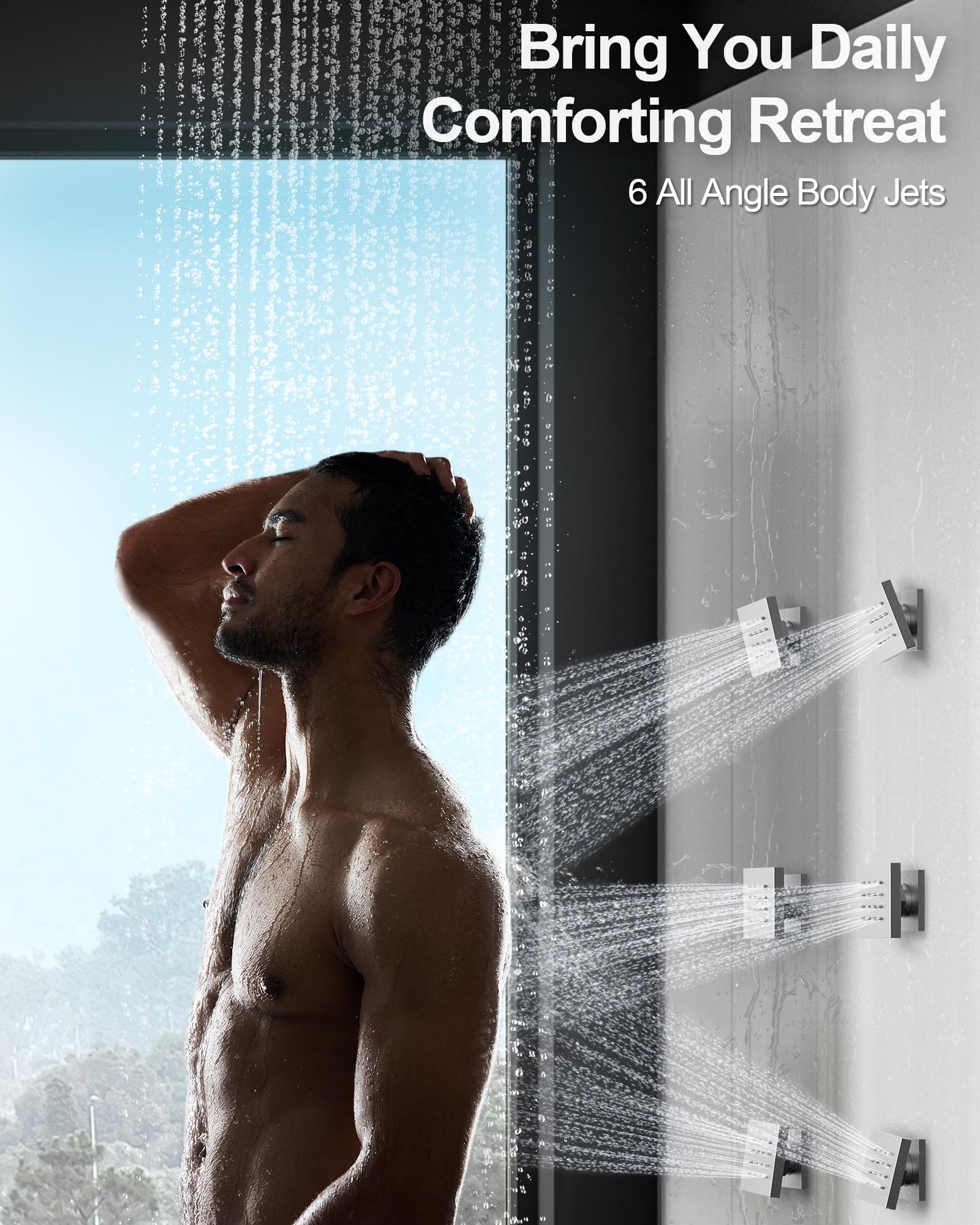
- 16-inch ceiling rain head with 64 LED lighting modes creates luxury spa atmosphere
- Offers 15 different spray combinations between rain head, body jets, and handheld for personalized experience
- Lifetime warranty with free permanent cartridge replacement shows manufacturer confidence
- Brushed nickel finish resists water spots and matches most bathroom fixtures
Cons
- At $1,710 this is a significant investment compared to standard shower systems
- Requires ceiling access for installation which may need professional plumber in older homes
- No customer reviews yet to verify real-world performance and durability
This shower system transforms an ordinary bathroom into a personal spa retreat. The 16-inch ceiling-mounted rain head delivers that luxurious waterfall effect you get at high-end hotels, while the 64 LED color modes let you set the mood whether you need an energizing morning wake-up or a calming evening wind-down. The six adjustable body jets hit all the right spots after a long day, and you can use them alone or combine them with the overhead rain and handheld sprayer for full coverage.
What really sets this apart is the thermostatic valve. If you have kids, elderly family members, or just hate that shock when someone flushes the toilet mid-shower, the temperature lock at 100°F is a game changer. It maintains your preset temp even when water pressure fluctuates, so no more scalding surprises or sudden cold blasts. The brushed nickel finish looks elegant without showing every water spot, and it coordinates beautifully with modern and transitional bathroom styles.
If you want a complete luxury shower experience without booking a spa appointment, this one delivers.
Styles it works with: Modern, Contemporary, Transitional, Spa-Inspired
Best placed in: Master bathroom with ceiling height of at least 8 feet, standalone walk-in shower, luxury bathroom remodel
May not suit: Small bathrooms under 5x7 feet where the 16-inch rain head would overpower the space, rental properties where ceiling installation is not permitted, homes with low water pressure below 20 PSI, vintage or farmhouse bathrooms where the sleek modern look would clash
Buy it if:
- You are doing a full bathroom remodel and want a centerpiece luxury shower system
- You have young children or elderly family members who need consistent safe water temperature
- You want spa-level hydrotherapy at home with multiple spray patterns and body jets
- You have ceiling access for installation or budget for professional plumbing work
Consider waiting if:
- You want to see verified customer reviews first since this is a newer product with no ratings yet
- You are hoping for a sale price as luxury shower systems sometimes get discounted during major shopping events
Skip it if:
- Your budget is under $1,000 for a complete shower system
- You rent your home and cannot make permanent ceiling installations
- Your bathroom has low ceilings under 8 feet where a ceiling-mount rain head would feel cramped
Check the latest price and availability on Amazon before it sells out.

Pros
- Clean installation without chemical odors or drying time
- Generous 3-roll pack covers several sealing projects
- Works on multiple surfaces including tile, porcelain, and laminate
- More forgiving than permanent caulk if you need to reposition
Cons
- Requires a hair dryer for proper adhesion, adding an extra step
- May not hold up as long as silicone caulk in heavy-use showers
- Limited to white color only, which may not match all decor
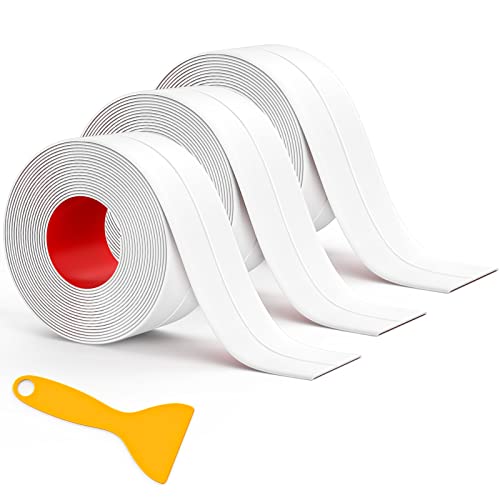
This caulk tape solves one of the most annoying home maintenance tasks: sealing gaps around sinks and tubs without dealing with caulk guns, smoothing tools, and days of drying time. The peel-and-stick design means you can finish a bathroom refresh during naptime or between errands, and the waterproof PVC holds up well against splashes and humidity.
We appreciate that it comes in a 3-pack, so you can tackle the kitchen sink, guest bath, and master shower in one go. The linear profile looks intentional rather than like a patch job, which matters when you are trying to elevate a rental or dated bathroom without a full renovation. The heat-activation step takes an extra minute but creates a bond that actually lasts through daily use.
If you want to seal gaps around fixtures without committing to permanent caulk or hiring help, this delivers a clean finish that holds.
Styles it works with: Modern Farmhouse, Minimalist, Transitional, Contemporary Bathroom
Best placed in: Bathroom sink backsplash, bathtub wall junction, kitchen countertop edges, laundry room utility sink perimeter
May not suit: Homes needing colored caulk to match tile or fixtures, high-traffic commercial bathrooms where permanent silicone is required by code, surfaces that cannot tolerate brief heat exposure during installation
Buy it if:
- You are sealing standard white fixtures and want a fast, no-mess alternative to traditional caulk
- You rent and need a solution that removes cleanly when your lease ends
- You have multiple small sealing projects and want coverage for under ten dollars
Consider waiting if:
- You need a color other than white and want to wait for more options to become available
Skip it if:
- You are sealing a primary shower that gets soaked daily and need maximum longevity from silicone caulk
- You do not have access to a hair dryer or heat gun for proper installation
Check the latest price and availability on Amazon before it sells out.

Pros
- Simple peel-and-stick application saves time versus traditional caulking
- Waterproof seal prevents mold and keeps grout lines looking fresh
- Can be removed and replaced without damaging surfaces
- Works on multiple surfaces including tile, porcelain, and laminate
- Three rolls provide enough material for whole bathroom
Cons
- May not adhere well in cold rooms without hair dryer heating
- Not as permanent or durable as silicone caulk for long-term installations
- White color only - no options to match colored tile or fixtures
This tape solves one of the most annoying bathroom problems: that grimy gap where your tub meets the wall or where your toilet base touches the floor. Instead of wrestling with a caulk gun and making a mess, you just peel off the backing and press it down. The PVC material is actually waterproof, so it keeps moisture from sneaking behind your fixtures and creating mold issues.
What makes this especially clever for home decor lovers is how it keeps your bathroom looking fresh and clean. Those black lines that form around old caulk? This prevents them from starting. Plus, if you are renting or just like changing things up, you can remove it later without leaving residue or damage.
If you want a bathroom that looks recently renovated without the permanent commitment of traditional caulking, this tape delivers.
Styles it works with: Modern, Minimalist, Transitional, Contemporary
Best placed in: Bathroom tub edges, around toilet base, kitchen sink backsplash, countertop seams
May not suit: Homes needing colored or decorative caulk to match tile, spaces with very rough or textured surfaces where tape cannot make full contact, outdoor applications with extreme temperature changes
Buy it if:
- You are renting and need a removable waterproof seal
- You want to refresh bathroom seals without hiring help
- You have multiple small gaps to seal around sinks and toilets
Consider waiting if:
- You need a color other than white to match existing tile
- You are waiting for a sale on a larger quantity pack
Skip it if:
- You need a heavy-duty permanent seal for high-moisture commercial applications
- Your surfaces are too rough or uneven for tape adhesion
Check the latest price and availability on Amazon before it sells out.

Pros
- Includes everything needed: rainfall head, handheld spray, tub spout, and valve
- Solid brass valve and stainless steel construction resist corrosion
- Pressure balance valve prevents temperature spikes and scalding
- Matte black finish hides water spots better than chrome
- Universal fit works with most existing plumbing
Cons
- No customer reviews yet to verify real-world performance
- Installation complexity may require a plumber if you're not experienced
- 10-inch head may be too large for small shower stalls
This AITANI shower system delivers that high-end hotel bathroom feeling without the full remodel. The 10-inch square rainfall head is the real standout - it's large enough to cover your shoulders, and the matte black finish gives any bathroom an instant modern upgrade. We love that it includes the tub spout and handheld spray, so you're not hunting down matching pieces or dealing with mixed finishes.
The air injection technology is clever: it mixes air into the water stream to boost pressure without cranking up your water bill. The handheld has three spray modes, which makes rinsing shampoo, washing pets, or cleaning the shower walls much easier. Everything is brass and stainless steel, so it should hold up better than cheaper plastic alternatives.
If you want a complete bathroom refresh that looks expensive but comes in under $120, this one delivers.
Styles it works with: Modern Farmhouse, Industrial, Contemporary, Minimalist
Best placed in: Master bathroom shower/tub combo, guest bathroom refresh, basement bathroom renovation
May not suit: Small shower stalls under 36 inches wide (the 10-inch head may overwhelm the space), homes with very low water pressure (rainfall heads need decent flow), traditional or vintage-style bathrooms where black fixtures would clash
Buy it if:
- You're updating a full shower/tub combo and want everything to match
- You prefer matte black fixtures and want the modern look without custom ordering
- You're handy with plumbing or have a contractor lined up for install
Consider waiting if:
- You want to see verified customer reviews before committing to this brand
- You're hoping for a sale price closer to $100
Skip it if:
- Your shower stall is under 36 inches wide (the large head won't fit well)
- You have very low home water pressure (rainfall heads need good flow to work properly)
- You only need to replace one component, not the entire system
Check the latest price and availability on Amazon before it sells out.
The two Fixmend rolls look identical but aren’t. One is labeled a caulking strip meant for the tub-to-wall joint, while the other is a sealing strip aimed at the toilet base and flatter floor seams. GRANDJOY’s thermostatic set holds a 5-star rating and KENES a 4.4, with both Fixmend rolls at 4.3. AITANI’s wall set sits lower at 4.2, so read its valve-fit reviews first, since a 4.2 in this category usually points to unit-to-unit variation.
Frequently Asked Questions
Do you need a permit to replace a bathtub shower combo?
Usually yes, if you’re moving or adding plumbing. A like-for-like swap that keeps the drain and valve in place often doesn’t, but rules vary by city, so call your building department before you start.
Can you replace the tub without moving the plumbing?
Often, yes. If the new tub’s drain and overflow line up with the existing rough-in, you reuse the same lines. A different drain location means opening the floor and rerouting, which is where costs climb.
How long does the whole job take?
It depends on materials and skill. A straightforward acrylic swap runs a full weekend for a capable DIYer, while cast-iron removal, tile work, or drain rerouting can stretch it to a week counting cure times.
Should you use caulk or grout at the tub-to-wall seam?
Caulk, always. That joint flexes as the tub fills and empties, and rigid grout cracks under the movement. Use 100% silicone rated for wet areas and let it cure a full 24 hours.
Can one person do this alone?
No, not the tub itself. A fiberglass unit near 70 pounds and any cast-iron tub both need two people to maneuver safely in a tight bathroom. Prep and finish work, you can handle solo.
Do you have to replace the shower valve too?
Not always. If the old valve works and matches your new trim, keep it. But an open wall is the cheapest time you’ll ever have to upgrade, so a thermostatic or pressure-balancing valve is worth it then.
Is a one-piece or three-piece unit better for a remodel?
It depends on access. One-piece units seal best but rarely fit through a standard door, so they suit new construction. Three-piece and multi-panel units are the realistic choice for replacing a combo in a finished home.
Bottom Line
Most replacements come down to one rule: line up the drain before you set the tub, and seal the tub-to-wall seam with flexible silicone, not grout. Get those two right and a weekend swap holds for years. If the job means moving the drain, opening a wall shared with another room, or lifting a cast-iron tub, bring in a licensed plumber for the rough-in and finish the cosmetic work yourself.








Write Your Review
No reviews yet. Be the first to share your experience!