

> Editorial Note: I’m Lauren Ro, and I write furniture buying guides. The picks here are judged on the specs that predict how a piece ages — frame joinery, foam density, and load ratings — checked against BIFMA and FSC certifications plus aggregated owner reports.
The mistake that sinks most of these jobs happens before any cutting: people pick a spot centered over the sink without checking what’s behind the drywall. A recessed cabinet lives inside the wall, so a stud, a pipe, or a wire in the cavity changes everything. If you’re still choosing the unit, compare a recessed medicine cabinet with mirror against a shallow small medicine cabinet, see how the best medicine cabinet picks stack up, weigh a budget medicine cabinet under $150, look at true in wall medicine cabinet options, and plan the interior with how to organize a medicine cabinet before the tools come out.
Recessed vs. Surface-Mounted: Which Are You Installing?
A recessed cabinet sits flush inside the wall cavity; a surface-mounted one bolts onto the wall face and needs no cutting. That single difference decides whether this is a 30-minute screw job or an afternoon with a drywall saw. Recessed units look built-in and steal zero space from a tight bathroom, which is why they’re the standard choice over a pedestal sink.
The trade-off is what lives in the wall. Standard interior walls frame studs 16 inches on center, so a cabinet wider than about 14 inches of clear opening will cross a stud you have to cut and reframe. Surface-mounted models skip that problem entirely. If your wall hides plumbing or an electrical run, a surface mount is the safer call.
Measure the cabinet’s rough-in depth against your wall depth first. A 2×4 wall gives you roughly 3.5 inches of usable cavity, and most recessed cabinets are built to fit inside it. Confirm the number on the box before you open a hole you can’t close cleanly.
What’s Inside the Wall Before You Cut?
Find the studs, pipes, and wires before the saw touches drywall. An electronic stud finder maps the framing, and the newer scanners flag live AC wiring too. Run it across the whole area, not just where you want the cabinet, so you know your options if the first spot is blocked.
The wall behind a sink is the riskiest place to cut blind. Supply lines, a vent stack, and outlet wiring often run through it, and hitting any of them turns a simple install into a plumber’s bill. Turn off the bathroom circuit at the breaker before you probe, and cut a small inspection hole to look inside if the scanner reading is unclear.
Height matters as much as safety. Center the mirror at eye level for the household, which usually puts the cabinet bottom around 48 to 52 inches off the floor. Mark that line with a level, then confirm no plumbing crosses your planned opening.
How Do You Cut and Frame the Opening?
Trace the cabinet’s rough opening on the wall, then cut just inside your line. Hold the cabinet body against the marked height, level it, and pencil the outline. Add the manufacturer’s rough-opening clearance so the box slides in without forcing. A drywall saw handles the straight cuts; a utility knife cleans the corners.
If the opening crosses a stud, you cut the stud and reframe. Score and remove the drywall inside your outline, then cut the exposed stud with a reciprocating or hand saw. This is the step that scares people off, and it shouldn’t: framing repair is routine as long as the wall isn’t load-bearing.
Add horizontal blocking so the cabinet has something to screw into. Cut two short 2×4 pieces to fit between the neighboring studs, one above and one below the opening, and toe-screw them in place flush with the cut edges. That blocking carries the cabinet’s weight and keeps it from racking over time.
How Do You Mount the Cabinet Securely?
Set the box into the opening, level it, and drive screws through the side flanges into the studs or blocking. Slide the cabinet in until the front trim sits flat against the wall. Check level and plumb one more time, because a mirror amplifies even a small tilt. Shim behind the flange if the framing isn’t perfectly square.
Drive the mounting screws through the pre-drilled holes in the cabinet’s sides. Anchor into solid framing, not drywall alone, or the loaded cabinet will pull loose within a season. Most units want at least four screws, two per side, and long enough to bite an inch into the stud.
Then hang the door and set the shelves. Adjustable shelf tracks let you match the spacing to bottles and tubes rather than the factory default, which wastes vertical space. Caulk the seam between the trim and the wall with a mildew-resistant silicone to seal out shower humidity.
What You’ll Need
Below are five cabinets that clear a 4.4-plus owner rating, ordered from the widest recessed units to a hybrid that mounts either recessed or on the surface. Start with #1 or #2 if you want a framed mirror in a standard 16×24 opening. Jump to #5 if you’re not sure your wall can be cut and want the surface-mount fallback.
The Venlus 16×24 and the TEHOME Farmhouse are both black-framed recessed cabinets sized for a 16×24 opening, and both hold a 4.6 rating. The Kohler frameless model runs larger at 20 by 26 inches for a wider wall. The TokeShimi 14×18 is the compact choice with stepless adjustable shelves and a tempered-glass, beveled aluminum frame, rated 4.5. The IDYLLOR is the flexible one at 4.4: its title lists both surface and recessed mounting, so it’s the pick when you can’t commit to cutting.

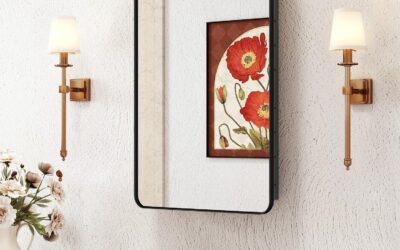
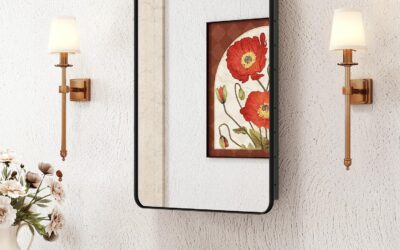
Venlus 16x24 Matte Black Medicine Cabinet with Mirror - Recessed or Surface Mount, Pre-Assembled, Reversible Door
Pros
- Pre-assembled design saves 30-60 minutes of frustrating setup
- High rating of 4.6 stars from 103 reviews suggests reliable quality
- Aluminum body won't warp, peel, or corrode in humid bathroom conditions
- Reversible door and dual installation options fit almost any bathroom layout
- Lead-free, eco-friendly glass is safer and more environmentally responsible
Cons
- Only 2.9 inches deep, so it won't hold wide product containers or multiple rows of items
- Recessed installation requires a 3.3-inch wall cavity, which may not exist in all bathrooms
- Matte black finish shows water spots and fingerprints more easily than white or silver
This Venlus cabinet solves one of the most annoying parts of bathroom upgrades: the assembly process. It shows up at your door fully put together, which means you can focus on the installation itself instead of wrestling with tiny hinges and misaligned shelves. The matte black finish looks sharp against white subway tile or marble countertops, and the magnetic closure gives it a quality feel that cheaper cabinets lack.
The reversible door is a smart touch for real-world bathrooms where the light switch or towel bar determines which way your cabinet needs to swing. You're not locked into a left-hand or right-hand model, so you can adjust on install day without returns or exchanges. The aluminum body handles steam and splashes without the warping or peeling issues you'd get from particle board or cheap metal.
If you want a modern, fuss-free medicine cabinet that installs quickly without sacrificing durability, this one delivers.
Styles it works with: Modern, Contemporary, Industrial, Minimalist
Best placed in: Master bathroom above vanity, guest bath for a polished look, powder room where space is tight
May not suit: Traditional or farmhouse bathrooms that need white or wood finishes, very small powder rooms where 16 inches wide feels too large, homes where you prefer chrome or brushed nickel hardware throughout
Buy it if:
- You're updating to matte black fixtures and want a cabinet that matches your new aesthetic
- You have the wall depth for recessed install or don't mind a slight surface-mount profile
- You value quick setup and would rather pay a bit more than spend an hour assembling a flat-pack cabinet
Consider waiting if:
- You're hoping for a sale below $80 and can wait for seasonal discounts
- You need to see it in person before committing to the matte black finish
Skip it if:
- You need more than 2.9 inches of storage depth for bulky items
- Your bathroom has a white or brushed nickel theme and matte black would clash
Check the latest price and availability on Amazon before it sells out.


Pros
- Mirrored interior and exterior maximizes reflection and light in the bathroom
- Adjustable shelves accommodate various product heights
- Durable anodized aluminum construction holds up in humid conditions
- Generous 108-degree door opening for easy access
- Flexible installation options suit different wall types
Cons
- No customer reviews yet to verify long-term durability
- At 20x26 inches, may be too small for larger bathrooms or shared spaces
- Surface-mount installation requires separate side mirror kit for finished look
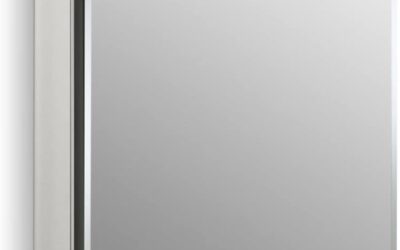
This Kohler cabinet hits that sweet spot between functional storage and clean design. The frameless mirror gives you a high-end look without the bulky frame that can make small bathrooms feel cluttered. Inside, the beveled mirror catches light beautifully, and the adjustable glass shelves mean you are not stuck with fixed heights that waste space.
What really sets this apart is the 108-degree hinge. It sounds technical, but in practice it means you can actually see and reach everything on every shelf without contorting yourself or removing half your products to get to the back. The anodized aluminum construction is not flashy, but it matters in a bathroom where cheaper cabinets start rusting within a year.
If you want a medicine cabinet that looks like it belongs in a remodel without the awkward bulk of cheaper options, this one delivers.
Styles it works with: Modern, Transitional, Minimalist, Contemporary Farmhouse
Best placed in: Guest bathroom above pedestal sink, master bath as secondary storage beside vanity, powder room for streamlined storage
May not suit: Large master bathrooms where a bigger cabinet would better fill the wall space, homes needing primary storage for multiple users (shelves may fill quickly), rustic or vintage-heavy bathrooms where the modern frameless look feels out of place
Buy it if:
- You need bathroom storage that does not visually shrink the space
- You are renovating and want the flexibility to recess or surface-mount depending on your wall type
- You value adjustable shelves over fixed ones that waste vertical space
Consider waiting if:
- You want to see verified customer feedback before committing at this price point
Skip it if:
- You need a larger cabinet for a shared bathroom with multiple daily users
- You prefer a framed or decorative cabinet that adds visual interest as a focal point
Check the latest price and availability on Amazon before it sells out.


Frequently Asked Questions
Can you install a recessed medicine cabinet in any wall?
No. Load-bearing walls, exterior walls with insulation, and walls packed with plumbing or wiring are poor candidates. An interior partition wall with clear stud bays is the safe choice.
How big a hole do I cut for a recessed cabinet?
It depends on the model’s rough-opening spec, not the cabinet’s face size. Trace the body, add the clearance the manufacturer lists, and cut just inside that line so the trim covers the edge.
Do I need to cut a stud to fit the cabinet?
Sometimes. Studs sit 16 inches on center, so any cabinet wider than about 14 inches of clear space crosses one. Cutting and reframing a single stud in a non-load-bearing wall is routine.
How much weight can a recessed cabinet hold?
It depends on how it’s anchored. Screwed into studs or 2×4 blocking, the framing carries the load. Screwed into drywall alone, it pulls loose. Anchor into wood every time.
Can I install a recessed cabinet myself?
Yes, if you’re comfortable cutting drywall and finding studs. The plumbing risk is the real gate. If a stud finder shows pipes or live wiring in your only viable spot, call a pro.
How high should the cabinet go on the wall?
Center the mirror at the household’s eye level, which usually lands the cabinet bottom around 48 to 52 inches off the floor. Mark the line with a level before you cut anything.
Should I caulk around a recessed medicine cabinet?
Yes. Run a bead of mildew-resistant silicone where the trim meets the wall. Bathroom humidity seeps behind unsealed trim and rots the drywall edge over a few seasons.
Bottom Line
Success comes down to one habit: scan the wall before you cut. A stud finder that flags wiring, plus a small inspection hole when the reading is unclear, prevents the plumbing hit that ruins this job. If your only viable spot hides supply lines or a vent stack, stop and either move the cabinet or choose a surface-mount model. Cutting and reframing a single stud in a non-load-bearing interior wall is well within a confident DIYer’s reach.




Write Your Review
No reviews yet. Be the first to share your experience!