

> Editorial Note: I’m Lauren Ro, and I write furniture buying guides. The picks here are judged on the specs that predict how a piece ages — frame joinery, foam density, and load ratings — checked against BIFMA and FSC certifications plus aggregated owner reports.
The real decision isn’t how to refinish a tired dresser. It’s whether to strip it at all. A full strip-and-refinish means chemicals, sanding, and a weekend; a clean-and-restore takes an hour and a rag. Most dull, scratched pieces need the second, not the first. Before you commit, it helps to know glass vs wood coffee table: which is right for you? (2026), what size coffee table do you need? a small-room guide (2026), what size nightstand do you need? a small-room guide (2026), what size bookshelf do you need? a small room guide (2026), and how to decorate a coffee table: 4 rules that actually work (2026).
Do You Have to Strip Furniture to Refinish It?
No, and most people strip when they shouldn’t. Stripping is for pieces where the finish is peeling, alligatored, or so far gone that no cleaning revives it. If the wood underneath is sound and the surface is just dull, scratched, or hazy, a clean-and-restore does the job in a fraction of the time.
Start by cleaning. Mix a few drops of dish soap into warm water, wring the cloth nearly dry, and wipe with the grain. Grease and old wax lift off, and you’ll often find the finish was fine, just filthy. For sticky wax buildup, mineral spirits on a rag cuts it without touching the finish below.
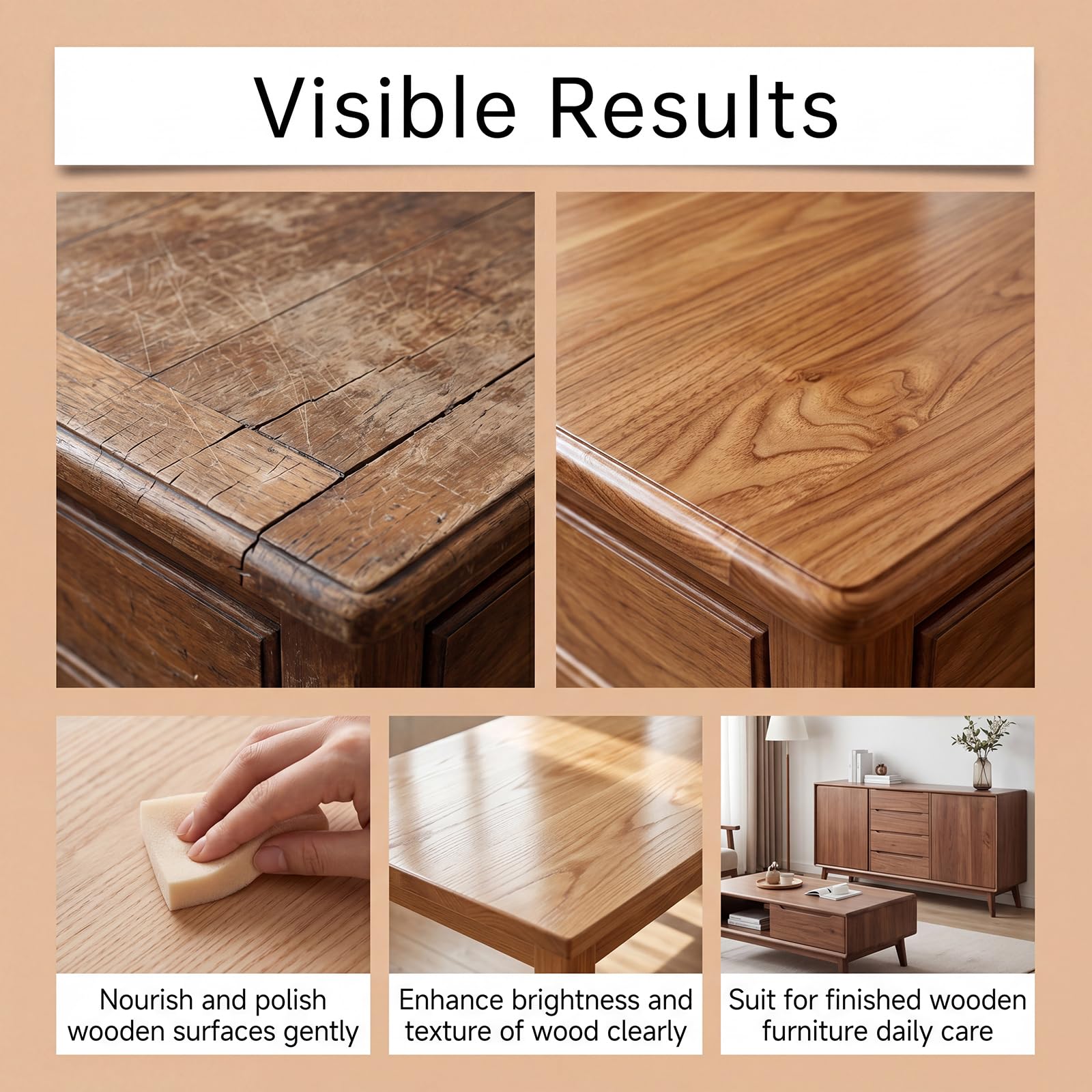
Then decide by damage depth. Surface scratches and dryness respond to a polish or restorer. Cloudy white rings sit in the finish, not the wood, so they usually buff out. Only when bare wood shows, or the old coat flakes off in sheets, does a real strip earn its place. Family Handyman makes the same call: restore first, strip last.
Full Refinish, Step by Step (Strip, Sand, Stain, Seal)
When the finish is truly shot, here’s the sequence. Chemical strippers and oil-based finishes give off fumes, so work in a well-ventilated space, open windows, and wear gloves. One rule that isn’t optional: oil-soaked and stain-soaked rags can spontaneously combust in a pile. Lay them flat outdoors to dry fully before you throw them out. Protect the floor before you start.
Strip. Brush on a paste-type chemical stripper, wait until the old finish bubbles, then lift it with a plastic scraper working with the grain. A second coat catches stubborn spots. Wipe residue with mineral spirits and let it dry.
Sand. Start at 120 grit to flatten and remove stripper haze, then step to 180, then finish at 220. Don’t skip grits; each one erases the scratches from the last. Always sand with the grain. Vacuum, then wipe with a tack cloth so no dust ends up under your finish.
Stain. Wipe stain on with a lint-free rag, let it sit 5 to 15 minutes, then wipe off the excess with the grain. Longer sit means darker color. Let it dry the full time on the can, usually 8 hours, before sealing.
Seal. Brush on thin coats of your chosen finish. Thin is the rule: two or three light coats beat one thick one, which stays gummy and drips. This Old House recommends a light scuff with 320 grit between coats for a glass-smooth result.
How to Fix Scratches and Water Rings Without Refinishing
Most damage is cosmetic and fixes in minutes. Match the repair to the mark.
Light scratches on dark wood disappear with a scratch-cover polish; the pigment settles into the groove and blends it. Wipe on, wait a minute, buff off. For deeper gouges that catch a fingernail, a wax-based fill or a color-matched marker fills the channel first, then you blend the surrounding tone.
White water rings are trapped moisture in the finish. The old trick works: lay a clean cotton cloth over the ring and run a warm iron over it for a few seconds at a time. The heat drives the moisture out. Dark rings are different, because the water reached the wood, and those usually need spot-sanding.
Dryness and dullness aren’t damage at all. A beeswax restorer feeds thirsty wood and brings back depth without adding a hard film. That’s the whole fix for a lot of “ruined” pieces.
Choosing a Finish: Oil vs Poly vs Wax
Three finishes, three trade-offs. Pick by how the piece gets used.
Oil (tung, Danish, linseed) soaks in rather than sitting on top. It gives a warm, low-sheen look and is dead simple to repair — just wipe on more. The catch: it offers the least protection against water and won’t survive a heavily used tabletop.
Polyurethane builds a hard plastic film on the surface. It’s the toughest of the three against water, heat, and scratches, which makes it the right call for dining tables, desks, and anything that takes daily abuse. The downside is repair. You can’t spot-fix it, so a scratch means recoating the whole area.
Wax is the gentlest. It adds a soft glow and light protection, wipes on fast, and refreshes in seconds. But it’s not a barrier finish. Reserve it for low-use pieces or as a top layer over oil. Minwax positions wax as maintenance, not armor, which is good guidance to follow.
When to Restore vs When It’s Not Worth It
Restore when the bones are good. Solid wood with tight joinery, dovetailed drawers, and real thickness is worth every hour. Even badly finished, that piece has decades left, and refinishing costs a few dollars against hundreds for a replacement.
Walk away when the substrate is the problem. Veneer that’s bubbled, cracked, or peeling off particleboard can’t be sanded, because there’s no solid wood underneath to work with. Water-swollen MDF and blown-out joints that won’t re-glue are the same story. You’ll spend a weekend on a piece that fails again in a year.
The honest math: restore if it’s solid and structurally sound, refinish if the wood is good but the coat is dead, and pass if the material itself has failed. A $40 dresser from a big-box store rarely clears that bar. A $40 dresser from an estate sale often does.
Helpful Products
All three below clear a 4.3-star owner rating and match a specific kind of damage, so buy by the problem, not the brand. For scratches on dark wood, a scratch-cover polish hides and blends in one wipe. For dry, dull wood that just needs feeding, reach for the beeswax restorer. For deeper gouges that need color-matching and fill, the 28-piece marker kit does what a polish can’t.

Pros
- Effectively hides minor scratches and surface wear on dark wood
- Works on various wood furniture and flooring types
- Affordable at under $7 for ongoing furniture maintenance
- Compact 8oz size is convenient for storage and application
- Trusted Old English brand with long market history
Cons
- Only works on dark wood tones, not suitable for light or natural finishes
- Results are temporary and require reapplication over time
- Won't fix deep gouges or structural wood damage
This is one of those products you keep under the sink and reach for whenever your wood furniture needs a quick refresh. It is especially good for concealing those annoying surface scratches that happen from everyday use, like marks from sliding a lamp across a side table or scuffs from chair legs on hardwood floors.
What makes it practical for home decor lovers is that it works across different pieces. You can use it on your dining table, then touch up your wood headboard, then finish with your entryway console, all with one bottle. It deepens the wood tone slightly while covering imperfections, so older furniture looks more intentional and cared for.
If you want to maintain the rich look of dark wood furniture without paying for professional refinishing every few years, this one delivers.
Styles it works with: Traditional, Rustic, Vintage, Mid-Century Modern
Best placed in: Dining room for table maintenance, bedroom for wood bed frames and nightstands, home office for desk care, living room for media consoles and side tables
May not suit: Homes with only light wood or blonde finishes, modern spaces with glass and metal furniture, renters who cannot modify existing wood fixtures
Buy it if:
- You have dark wood furniture with visible scratches or fading from sun exposure
- You want an affordable alternative to refinishing or replacing worn pieces
- You maintain antique or vintage furniture and need regular touch-up products
Consider waiting if:
- You are unsure if your wood tone qualifies as dark (test on an inconspicuous area first)
Skip it if:
- Your furniture is light oak, pine, maple, or any blonde wood tone
- You need to repair deep gouges or structural wood damage that requires wood filler
Check the latest price and availability on Amazon before it sells out.

Stylress Beeswax Wood Polish Spray - Natural Furniture Cleaner & Restorer for Cabinets, Floors, Tables - 4 fl oz
Pros
- Natural beeswax formula is safer around kids and pets
- Fine mist nozzle provides even coverage without pooling
- Versatile enough for daily maintenance across all wood furniture
- No residue or sticky feeling after application
- Small 4 oz size is easy to store and control
Cons
- Only 4 fl oz may require frequent repurchasing for large homes
- No customer reviews yet to verify long-term performance
- May not remove deep scratches or significant damage
This is the kind of wood polish that makes routine furniture care feel less like a chore. The natural beeswax formula works gently on wood surfaces, bringing back that soft glow without leaving behind any weird residue or chemical smell. It is especially nice if you have older furniture that is looking a bit tired or scratched up from everyday use.
The spray nozzle makes application genuinely easy. You just mist it on, wipe with a soft cloth, and let it dry. No buffing for twenty minutes or worrying about streaks. It works on everything from your dining table to hardwood floors, which means one bottle handles multiple rooms.
If you want to refresh your wood furniture with something natural and effective without spending an afternoon polishing, this one delivers.
Styles it works with: Modern Farmhouse, Traditional, Rustic, Scandinavian
Best placed in: Kitchen cabinets, dining room tables, bedroom dressers, hardwood floors in living areas
May not suit: Homes needing heavy-duty scratch repair, very large spaces requiring bulk product, buyers wanting scented polish
Buy it if:
- You prefer natural, chemical-free wood care products
- Your furniture needs regular maintenance to prevent drying
- You want one product that works on multiple wood surfaces
- You appreciate easy spray-and-wipe application
Consider waiting if:
- You want to see verified customer reviews before purchasing
- You need a larger size for extensive wood surfaces
Skip it if:
- Your furniture has deep gouges or significant damage needing professional repair
- You prefer heavily scented cleaning products
Check the latest price and availability on Amazon before it sells out.

Pros
- Comprehensive 28-piece set covers all repair scenarios in one purchase
- 12 filler colors plus 8 markers provide excellent wood tone matching options
- Includes all application tools so you can start repairs immediately
- Color mixing capability helps achieve precise furniture matches
- Works on multiple surfaces including floors, furniture, and decorative wood pieces
Cons
- No customer reviews yet to verify real-world performance claims
- May require practice to match wood grain and achieve professional-looking results
- Color mixing takes trial and error to get the exact shade right
If you have木furniture with visible wear and tear, this kit is like having a professional wood repair shop in a box. The 12 filler sticks cover everything from light maple to deep walnut, and the 8 touch-up markers handle surface scratches you can fix in seconds. It is the kind of kit you buy once and keep in your closet for years.
What sets this apart is the completeness. You get the putty, wax, scrapers, brushes, and even sandpaper. No guessing what else you need or making multiple store runs. The ability to blend colors is a game changer when your furniture is that in-between shade that never matches store-bought markers.
If you want to restore furniture and floors to like-new condition without paying for refinishing or replacement, this one delivers.
Styles it works with: Traditional, Farmhouse, Rustic, Mid-Century Modern, Contemporary
Best placed in: Utility closet, garage workshop, under kitchen sink, bedroom dresser drawer for quick access
May not suit: Renters who cannot make furniture repairs, homes with only laminate or painted furniture (not real wood), households that prefer hiring professionals for all repairs
Buy it if:
- You have multiple wood furniture pieces with scratches, nicks, or chips that need touch-ups
- Your wood floors show wear in high-traffic areas and you want to avoid costly refinishing
- You are moving out of a rental and need to fix furniture damage to avoid losing your deposit
- You flip or restore vintage furniture and need a complete color-matching system
Consider waiting if:
- You only have one small scratch and a single touch-up marker would be more economical
- You need to see verified customer reviews and photos before committing
Skip it if:
- Your furniture is laminate, painted, or veneer rather than real wood
- You prefer to hire professionals for all home repairs and refinishing work
Check the latest price and availability on Amazon before it sells out.





Write Your Review
No reviews yet. Be the first to share your experience!