

> Editorial Note: I’m Heather Adams, and I cover sofas, tables, mattresses, and bedding. The picks here are evaluated on the materials layer — foam density, coil gauge, frame construction, and fiber content — against CertiPUR-US, OEKO-TEX, and BIFMA standards.
Side sleeping is hard on your neck for one geometric reason: your shoulder is wider than your head. Lie on your side and gravity pulls your head toward the mattress until something fills the shoulder-to-jaw gap.
Too flat, and the cervical spine bends downhill all night. Too tall, and it bows the other way. Either way, your neck muscles work through what’s supposed to be rest.
The five pillows below close that gap differently. Two are dedicated contours, one adds a hollow channel for your bottom arm, one comes in forgiving queen width, and one wraps firm foam in a softer sell. Our related guides cover the rest of the setup: side sleeper firm pillow for firmer builds than the contours here, best cervical pillow for neck pain for orthopedic shapes beyond side sleeping, why does my pillow give me neck pain to diagnose the stiffness you already have, best cooling pillow if you sleep hot, best mattress for side sleepers for the surface underneath, and best body pillow to keep hips level.
How We Evaluated
Loft came first. Each pillow’s height went up against the shoulder widths it serves, since Sleep Foundation’s positioning guidance puts most side sleepers between 4 and 5 inches of loft.
Shape came second. A true contour with a defined neck ridge holds alignment passively, while a rounded blob asks your muscles to do the work. Foam density came third, because memory foam under 3 pounds per cubic foot tends to flatten within a year.
We weighted cooling covers and odorless foams, noted OEKO-TEX certification where listings disclosed it, and read owner reports the way Wirecutter’s reviewers do: complaint patterns outweigh praise. Every pick clears a 4.0 owner rating.
All five ship molded memory foam cores rather than loose fill, which keeps a contour’s shape honest past month six. Start with #1 for a purpose-built side-sleeper profile.

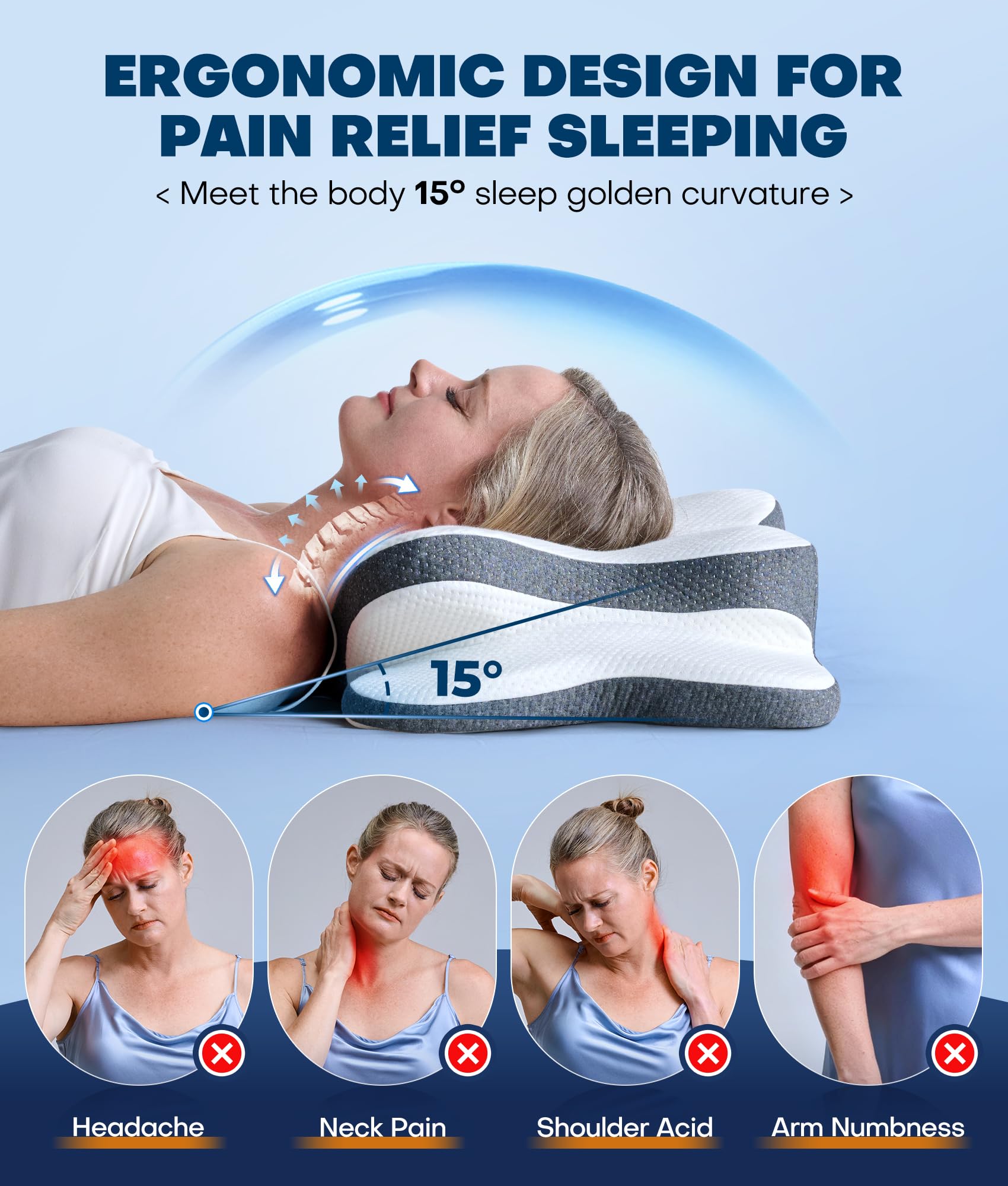
Osteo Cervical Pillow - Ergonomic Memory Foam with Hollow Design for Neck Pain Relief, Adjustable Height, Cooling Case
Pros
- Unique hollow center design provides targeted head cradling and cervical support
- Height adjustability through rotation and removable insert accommodates different body types
- Cooling mesh fabric and odorless memory foam address common pillow complaints
- CertiPUR-US and Oeko-Tex certifications ensure safety and quality standards
- Versatile contour design works across multiple sleep positions
Cons
- Zero verified customer reviews makes it difficult to assess real-world performance and durability
- Requires 48-hour airing period before first use for full expansion
- Comfort highly dependent on individual factors like body shape and neck curve, so results may vary
What caught our attention is that patented hollow center. Most cervical pillows just add contours, but this one actually creates a cradle for your head that's designed to keep your neck in proper alignment all night. If you've been waking up with that stiff, achy feeling or numbness in your arms, the problem is often that your pillow isn't supporting the natural curve of your cervical spine.
The adjustability is genuinely useful. You get two different heights just by flipping it 180 degrees, plus a removable insert at the bottom for even more options. That means you're not stuck buying a new pillow if your needs change or if one family member needs more height than another. The cooling mesh case and odorless memory foam also solve two of the biggest complaints we hear about memory foam pillows.
If you want real cervical support that adapts to your body without spending hundreds on chiropractor visits, this one delivers.
Styles it works with: Modern Minimalist, Scandinavian, Contemporary, Wellness-Focused Interiors
Best placed in: Master bedroom, guest bedroom, home office with daybed
May not suit: Homes where multiple people share pillows frequently, or bedrooms with very soft, plush aesthetic where the structured ergonomic look might feel too clinical
Buy it if:
- You wake up with neck pain, shoulder stiffness, or arm numbness regularly
- You've tried standard pillows and they're either too flat or too high for proper alignment
- You're a hot sleeper or sensitive to chemical smells in foam products
- You sleep in multiple positions and need one pillow that works for side and back sleeping
Consider waiting if:
- You want to read verified customer reviews first, since this product currently has none posted
- You need a pillow immediately and can't wait 48 hours for airing and expansion
Skip it if:
- You prefer very soft, squishy pillows over firm ergonomic support
- You exclusively sleep on your stomach and need an ultra-low profile pillow
Check the latest price and availability on Amazon before it sells out.
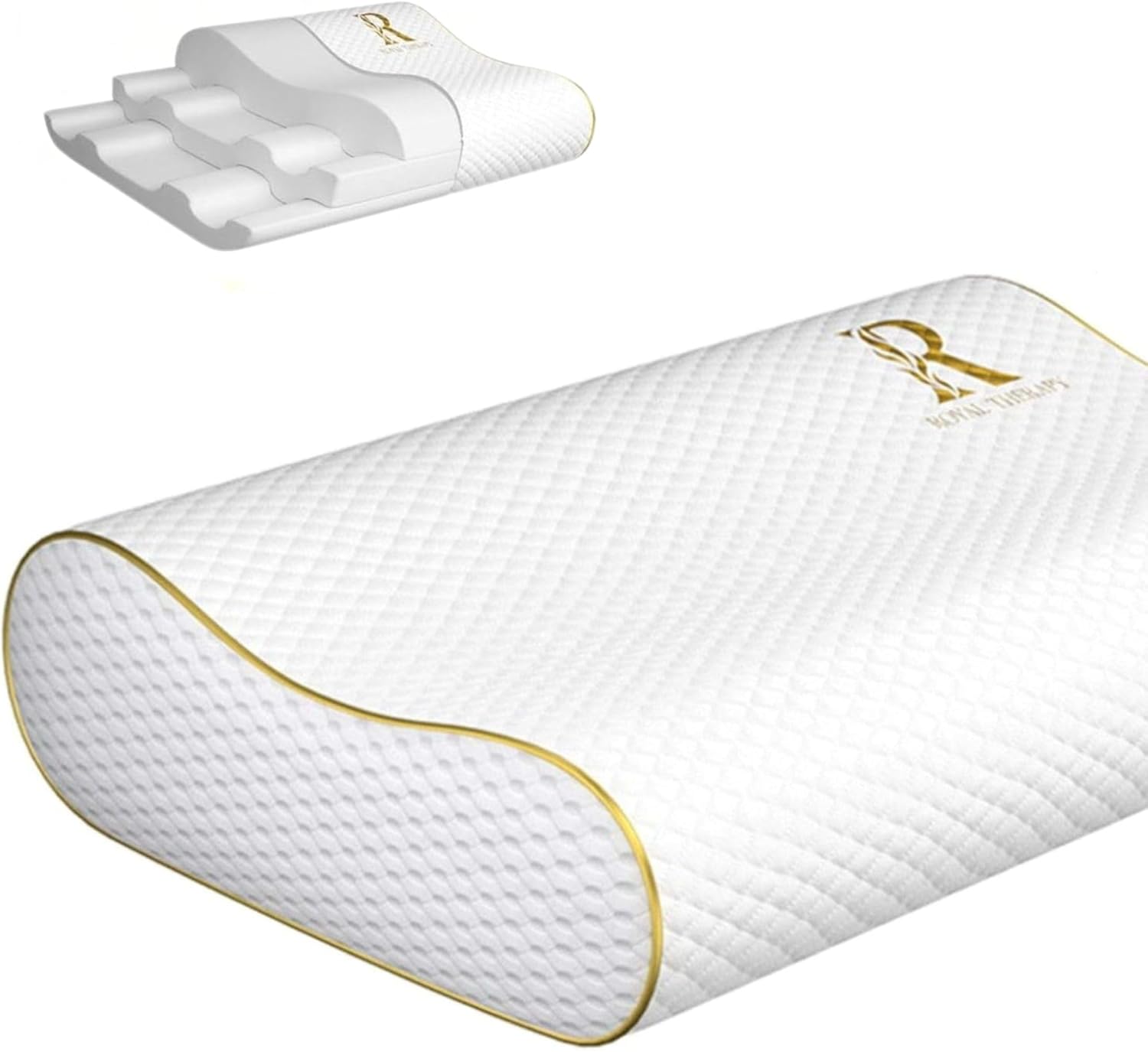
ROYALTHERAPY Memory Foam Contour Pillow, Queen 24x14x5 in, Adjustable 3-Layer Cervical Neck Support for Side, Back & Stomach Sleepers
Pros
- Adjustable height via removable layer fits a wide range of body types and sleep styles
- Genuine cervical contour relieves neck and shoulder pain for many sleepers
- Solid foam keeps its shape and support over long-term use
- Washable, breathable bamboo-rayon cover with verified material certifications
- Strong overall rating across a very large pool of reviews
Cons
- The shipped height is often too tall on the first night, so most people need to remove a layer to dial it in
- Contour shape forces a fixed head and neck position that takes a few nights to get used to
- Memory foam may feel firmer and have a mild new-foam odor when first unboxed
This is the pillow you reach for when a flat, generic memory foam pillow has left your neck aching every morning. The contour does the real work here, with a lower zone that cradles your neck and a higher zone that holds your head, so your spine stays in line instead of bending forward all night.
In a real bedroom it looks clean and understated, the kind of pillow that disappears under a nice case and lets your bedding do the talking. The bamboo-rayon cover feels soft and cool to the touch, and the zip-off design means you can keep it fresh without babying it. What we appreciate most is how forgiving the adjustability is, pull out the middle layer in about 30 seconds and the height is yours to set.
If you want genuine cervical support that you can fine-tune to your own body without committing to a single fixed height, this one delivers.
Styles it works with: Modern Minimalist, Scandinavian, contemporary bedrooms, and clean transitional spaces where bedding stays simple.
Best placed in: beside the bed as your nightly sleeping pillow, on the master bed for a recovery-focused setup, or in a guest room where you want supportive comfort that suits most sleepers.
May not suit: homes wanting a soft, fluffy decorative pillow look, since the contour shape is functional rather than plush, and sleepers who strongly prefer sinking into a pillow rather than being held in position.
Buy it if:
- You wake up with neck or shoulder stiffness from a pillow that is too flat
- You want to adjust the loft to match your shoulder width and preferred sleep position
- You sleep on your side or back and want consistent support that holds its shape for months
Consider waiting if:
- You are mid-transition between sleep positions and are not sure what loft you actually need yet
Skip it if:
- You prefer a soft, sink-in pillow or a plush decorative look rather than a firm contoured hold
- You cannot tolerate a short adjustment period of a few nights to break in the shape
Check the latest price and availability on Amazon before it sells out.

Ylekto Cervical Memory Foam Pillow for Neck Pain Relief - Ergonomic Contour Cooling Pillow for All Sleepers (Blue)
Pros
- Adjustable orthopedic design accommodates multiple sleeping positions
- Contour shape provides targeted cervical and neck support
- Cooling pillow surface helps regulate temperature overnight
- Memory foam material retains shape and provides consistent support
- Affordable price point under $30 for an ergonomic pillow
Cons
- No customer reviews yet, making long-term durability unverified
- Only available in blue, limiting bedroom color coordination options
- May have an initial memory foam off-gassing smell common to foam pillows
Finding a pillow that actually supports your neck without costing a fortune can feel impossible. The Ylekto cervical pillow uses a contour memory foam design that cradles your neck's natural curve, which means you wake up without that stiff, achy feeling that flat pillows tend to cause. The cooling surface is a thoughtful touch that keeps you from overheating mid-sleep.
In a real bedroom setting, this pillow looks clean and modern with its blue tone. It pairs well with neutral or cool-toned bedding and sits nicely alongside standard pillows. The adjustable height feature means it actually works whether you curl up on your side or sprawl on your back.
If you want genuine neck support and temperature regulation without spending $80 or more on a specialty orthopedic pillow, this one delivers.
Styles it works with: Modern Minimalist, Scandinavian, Coastal, Contemporary
Best placed in: Primary bedroom as your main sleeping pillow, guest bedroom for visitors with neck issues, home office daybed for napping
May not suit: Bedrooms with warm-toned or earthy color schemes where the blue may clash, or sleepers who prefer very soft down-like pillows with no firmness
Buy it if:
- You wake up with neck pain or stiffness and want targeted cervical support
- You switch between sleeping positions and need a pillow that adapts
- You sleep hot and want a cooling surface without upgrading your entire bedding
Consider waiting if:
- You want to see verified customer reviews before committing to a newer product
- You need a color other than blue to match your current bedroom palette
Skip it if:
- You prefer ultra-soft, sinkable pillows with no contouring or firmness
- You have no neck or alignment issues and are happy with your current pillow
Check the latest price and availability on Amazon before it sells out.
1. 5X Cervical Neck Pillow — Built Around the Shoulder Gap
This pick suits people who’ve committed to side sleeping and want a pillow that assumes it. The contour rises into a firm ridge under the neck and dips for the head, so the space between shoulder and jaw stays filled even when you shift a few degrees. That ridge is the whole trick. Flatter pillows let the neck reach downhill all night, and that reach is what stiffens by morning.
The cooling knit cover matters too, because memory foam traps heat and a warm ear wakes light sleepers faster than a sore neck does. The foam ships odorless, airing out within a day instead of perfuming the bedroom for a week. Owners at 4.2 note the ridge actually reaches the neck rather than stopping short. Measure your shoulder gap before ordering, since petite frames may find the standard height pushes the head too high.
2. Osteo Cervical Pillow — The Hollow That Saves Your Bottom Arm
Ask any lifelong side sleeper about the arm pressed under the torso and watch the wince. Dead arm by 3 a.m. The Osteo answers with a hollow channel through the pillow’s center, leaving room for the lower shoulder to settle instead of stacking your head’s weight on it. If your ache starts at the shoulder joint rather than the neck, that cutout changes the whole night.
Height is adjustable. Remove the insert layer to drop the loft for narrower shoulders, or leave it in for broader builds. The cooling case handles heat, and the odorless foam skips the off-gassing week. Owner feedback at 4.2 clusters on one theme: the hollow design either clicks immediately or takes several nights of repositioning to get right.

3. Royal Therapy Memory Foam Pillow — Queen Width for Rollers
Strict contours assume you stay put. Plenty of side sleepers don’t. They start on their side and wake on their back, then blame the pillow for both positions.
This one ships in queen width rather than standard, so sliding toward the edge still leaves your neck on the contour. The cervical curve runs gentler too, suiting people who alternate side and back overnight.
Density is the real selling point. The foam runs firmer than typical budget contours, so the neck ridge resists flattening past the one-year mark where cheaper foam fails. It also carries this group’s highest rating at 4.3, with durability the most-cited reason.
4. Ergonomic Cooling Contour Pillow — The No-Drama Middle Ground
Not everyone wants a sculpted orthopedic profile on night one. This pillow keeps the essentials, a contoured memory foam core with a raised neck edge and a cooling cover, and it skips the aggressive shaping that makes some contours feel like a brace. Most adult shoulder gaps land in the 4-to-5-inch window, and this contour targets the middle of it.
Owners at 4.2 call the foam dense for the price class. What you give up is adjustability, since there’s no insert layer to pull. Buy it when the tape measure says medium and you’d rather spend less than tune anything.

5. Silky Smooth Luxury Contour Pillow — Soft Cover, Serious Core
Some side sleepers quit on contours because the pillows feel clinical. This one leads with texture, a silky smooth cover closer to a hotel pillowcase than medical equipment, wrapped around an ergonomic memory foam core. The support logic hasn’t changed, a raised wing for the neck and a dip for the head, but the surface makes the adjustment week easier to survive.
The 4.0 rating is the lowest here, and owner reviews explain why. Buyers wanting a plush sink-in feel found the core firmer than the silky cover suggested. Treat it as a firm pillow wearing soft clothes. If easing stiffness matters more than sinking into fluff, this compromise works.
Comparison Table
| Pick | Shape / Loft | Cooling | Best For | Rating |
|---|---|---|---|---|
| 5X Cervical | Contour, mid-high ridge | Cooling knit cover | Dedicated side sleepers | 4.2 |
| Osteo | Hollow core, adjustable | Cooling case | Numb bottom arms, tunable height | 4.2 |
| Royal Therapy | Queen contour, medium-firm | Standard cover | Side-to-back rollers | 4.3 |
| Ergonomic Cooling | Moderate contour, medium | Cooling cover | First-time contour buyers | 4.2 |
| Silky Smooth Luxury | Gentle contour, medium-plush | Silky smooth cover | Soft-feel loyalists | 4.0 |
How to Match Loft to Shoulder Width
One tape measurement settles it. Sit upright with shoulders relaxed and measure from the side of your neck to the bony point of your shoulder. That distance, minus about half an inch for foam compression under head weight, is the loft you need.
Most adults land between 4 and 5 inches. Broader shoulders past about 18 inches push the target toward 5 to 6, which is where adjustable designs earn their price.
The mattress changes the math. On a plush mattress your shoulder sinks, effectively lowering the gap, so trim an inch off the target. On a firm mattress the shoulder stays stacked, so keep the full number. Desk workers with forward head posture generally do better half an inch lower, since the neck already rounds during the day.
Contour vs Traditional Shape for Side Sleepers
Contours hold alignment without asking anything of you. No midnight fluffing, no slow collapse as the night wears on. The trade-off is positional discipline: the pillow works while your neck rests on the ridge and quits when you slide onto the flat middle. Traditional down pillows forgive every position but drift flat by dawn, handing back the misalignment you bought them to fix.
Expect three to seven nights of feeling odd before a contour reads as normal. Most returns happen on night one or two, right before adaptation kicks in. Frequent rollers should choose queen width or adjustable fill instead of forcing a strict shape.
Frequently Asked Questions
Do side sleepers need a taller pillow than back sleepers?
Yes. Side sleeping opens a gap between shoulder and jaw that back sleeping doesn’t create, and closing that gap takes roughly 1 to 2 extra inches of loft.
Can a pillow actually help neck pain?
It may ease morning stiffness when misalignment is the cause, which is common. A pillow can’t fix an injury, so pain radiating down an arm warrants a clinician rather than new bedding.
How long until a contour pillow feels normal?
Plan on three to seven nights. The ridge presses differently than anything you’ve slept on, and most returns happen before night three.
Should your arm go under the pillow when side sleeping?
No. Tucking the arm beneath compresses the shoulder joint and restricts circulation, which is how you wake with a numb hand. Choose a hollow-center design or rest the arm on top.
Is memory foam or down better for side sleepers with neck pain?
Memory foam, in most cases. Down compresses to almost nothing under head weight, erasing the loft you paid for by midnight. Shredded foam offers a middle path.
How often should a memory foam pillow be replaced?
Every two to three years. Once the foam loses density, the neck ridge stops supporting, and no amount of fluffing brings the shape back.
Bottom Line
The 5X Cervical Neck Pillow is the one most side sleepers should buy, since its neck ridge does the shoulder-gap math for you. If your bottom arm goes numb by morning, the Osteo’s hollow center justifies adjusting an insert. Anyone broader than 18 inches across the shoulders should measure before choosing rather than trusting a standard height.
Fair warning on the whole category: contours ask for a one-week adjustment period, and quitting on night two is how most returns happen. Give any of these seven nights before you decide.






Write Your Review
No reviews yet. Be the first to share your experience!