

> Editorial Note: I’m Sofia Reyes, a bathroom and wellness editor focused on small-bath organization and materials that hold up to real humidity. The evaluations here reference OEKO-TEX certifications, ASTM moisture-resistance standards, and aggregated owner reviews.
The water’s sitting an inch below the rim, rising slow, and there’s no plunger anywhere in the house. You’ve got maybe a minute before you find out whether it overflows. Breathe. Most clogs that look like a disaster are soft paper jams that break apart with nothing more than hot water and whatever’s already under your sink. The trick is acting before the bowl refills, and knowing which method matches the clog you’ve got. If your bathroom needs other fixes too, see how to stop a running toilet, best toilet, best toilet seat, how to clean a bathtub, and best bidet toilet seat.
Method 1: Hot Water and Dish Soap (Start Here)
This clears more clogs than anything else on the list, and it costs nothing. Squirt a generous amount of dish soap into the bowl, a quarter cup or so, and let it sink for five minutes. The soap is heavier than water, so it slides down through the standing water and coats the clog and the porcelain, adding slip that lets a paper jam slide free.
Then heat about 1 gallon of water until it’s hot to the touch but not boiling. Never pour boiling water into a porcelain bowl. The thermal shock can crack the glaze or the bowl itself, and a cracked toilet is a far bigger problem than a clog. Pour the hot water from waist height in a steady stream, not a single dump. The height adds force; the soap adds slip. Wait 10 to 15 minutes. The most common mistake is rushing the next flush before the soap has worked, which only raises the water level.
Most soft paper clogs loosen and slide through in that window. Success looks like the water level dropping on its own with a soft gurgle as the trap clears. If it does, you’re done. Give it one careful flush to confirm. Wirecutter recommends this as the first move for exactly this reason: it’s gentle on the fixture and it works on the most common cause. Patient. Cheap. Effective.
Method 2: Baking Soda and Vinegar Fizz
When dish soap alone won’t budge it, chemistry helps. Pour 1 cup of baking soda into the bowl, then slowly add 2 cups of white vinegar. You’ll get an immediate fizz, and that reaction is what helps break down organic gunk and loosen the jam. The acid in the vinegar reacting with the base in the soda produces carbon dioxide bubbles, and that physical agitation is doing as much work as the chemistry.
Pour the vinegar slowly so the foam doesn’t surge over the rim. Let it bubble and sit for at least 20 minutes, or up to an hour if you can wait. The longer it works, the better. Follow with the same hot-not-boiling gallon of water from Method 1 to flush the loosened debris through.
One hard rule: never mix bleach with vinegar or any other cleaner. The combination releases chlorine gas, which is dangerous in a small, humid bathroom. Stick to plain baking soda and white vinegar, nothing else in the bowl. This method shines on clogs that have an organic component, and it’s gentle enough to repeat if the first round only partly clears things. If the water hasn’t dropped after the second round, stop repeating and move to a physical method. Consumer Reports notes that mechanical and mild chemical methods clear most household clogs without harsh drain products.
Method 3: The Wire Hanger Snake
Sometimes the clog is close and physical, and you just need to reach it. A wire coat hanger makes a passable drain snake. Unwind it into a long straight piece, leave a small hook at one end, and wrap the hooked end in an old rag or duct tape so the bare metal can’t scratch the glaze. That wrap matters: an unwrapped hook gouges the porcelain on the first hard push, and those scratches collect stains for years.
Wear a rubber glove. Feed the wrapped end into the drain hole at the bottom of the bowl and push gently, twisting as you go. You’re trying to break the clog apart or snag and pull it back, not jam it deeper. Work in slow, short motions for two or three minutes. If you feel firm resistance, twist rather than ram, then ease back to see if the water starts moving.
This is the right call when something solid went down, like a wad of paper towels or a kid’s toy near the surface. A hanger only reaches a foot or so past the trap, so it won’t help with a deep blockage. The big risk is pushing a solid object further in and turning an easy clog into a real one. But for a clog you can almost see, it’s often faster than waiting on chemistry.
Method 4: An Enzyme or Drain Cleaner for Organic Clogs
For stubborn organic clogs (toilet paper, waste, the slow buildup that’s been getting worse for days), an enzyme drain cleaner is the safest store-bought option. Enzymes digest organic matter over several hours without the corrosive bite of chemical drain openers, which can damage older pipes and seals. They’re live cultures, so they keep working as long as the clog is organic and the water stays warm-ish.
Pour the dose listed on the label, usually around 1 cup, and let it work overnight. A full 6 to 8 hours is normal; enzymes are slow by design. Don’t flush, don’t add hot water on top, and don’t combine it with the baking soda from Method 2. Just leave it. Mixing or flushing early only dilutes the culture and resets the clock.
Skip the harsh acid- or lye-based liquid openers if you can. They’re rough on plumbing, hazardous to skin and eyes, and they sit in a clogged bowl doing little while you wait. Apartment Therapy flags caustic drain chemicals as a last resort for toilets specifically, since the standing water dilutes them and slows their action. Enzymes are slower but far kinder to your fixtures and your lungs. If the clog is a toy or a wad of wipes, though, enzymes won’t touch it — that’s a physical blockage, not an organic one.
Method 5: When to Use a Power Air Blaster
If you’ve worked through the first four methods and the water still won’t drain, the clog is denser or deeper than a DIY trick can reach. That’s when a dedicated tool earns its place. A high-pressure air blaster fires a burst of compressed air through the trap, shoving the blockage forward instead of nudging it. The pressure wave travels through the standing water and hits the clog as a single shove, which is why it moves blockages that slow methods can’t.
These tools are the upgrade for repeat clogs and homes with older, narrow pipes. Some bundle an auger attachment for clogs that sit well past the trap. They cost more than a coat hanger, but a single avoided plumber visit, often $150 or more, usually pays for one.
Use them per the instructions: seal the nozzle against the drain, build pressure, release. The seal matters more than the force. A poor seal lets the air escape backward and can spray bowl water at you, so press firmly and keep your face clear. If even a power blaster can’t clear it, the blockage is likely deep in the main line — and that’s a plumber’s job, not a tool you bought online.
How to Prevent Toilet Clogs
Most clogs trace back to one habit: too much going down at once. Use less paper per flush, and double-flush rather than sending a thick wad through in one go. The courtesy flush partway through a long sit does the same job, clearing the bowl before paper has a chance to pile up. Older low-flow toilets especially struggle with bulk, since they move less water per flush than a 1990s tank did.
Keep everything else out of the bowl. So-called flushable wipes don’t break down like toilet paper. They’re the leading cause of stubborn clogs and the reason many plumbers stay busy. Cotton pads, dental floss, paper towels, and feminine products all belong in a trash can, not the drain. Floss in particular is a quiet troublemaker: it tangles around any rough spot in the trap and catches paper until a clog builds from nothing.
A small lidded bin within arm’s reach of the toilet makes the right choice the easy one. If your bathroom runs humid, choose a bin in a material rated for moisture so it doesn’t warp or rust. Teach kids early that only paper and waste go in, and keep toys away from the bowl entirely. A clog you never create beats any method on this page.
The Right Tools Make It Easier
When hot water and a coat hanger stop cutting it, a power air blaster is the no-plunger upgrade worth keeping in the closet. All three below clear a 4.3-plus owner rating and seal against a standard drain.
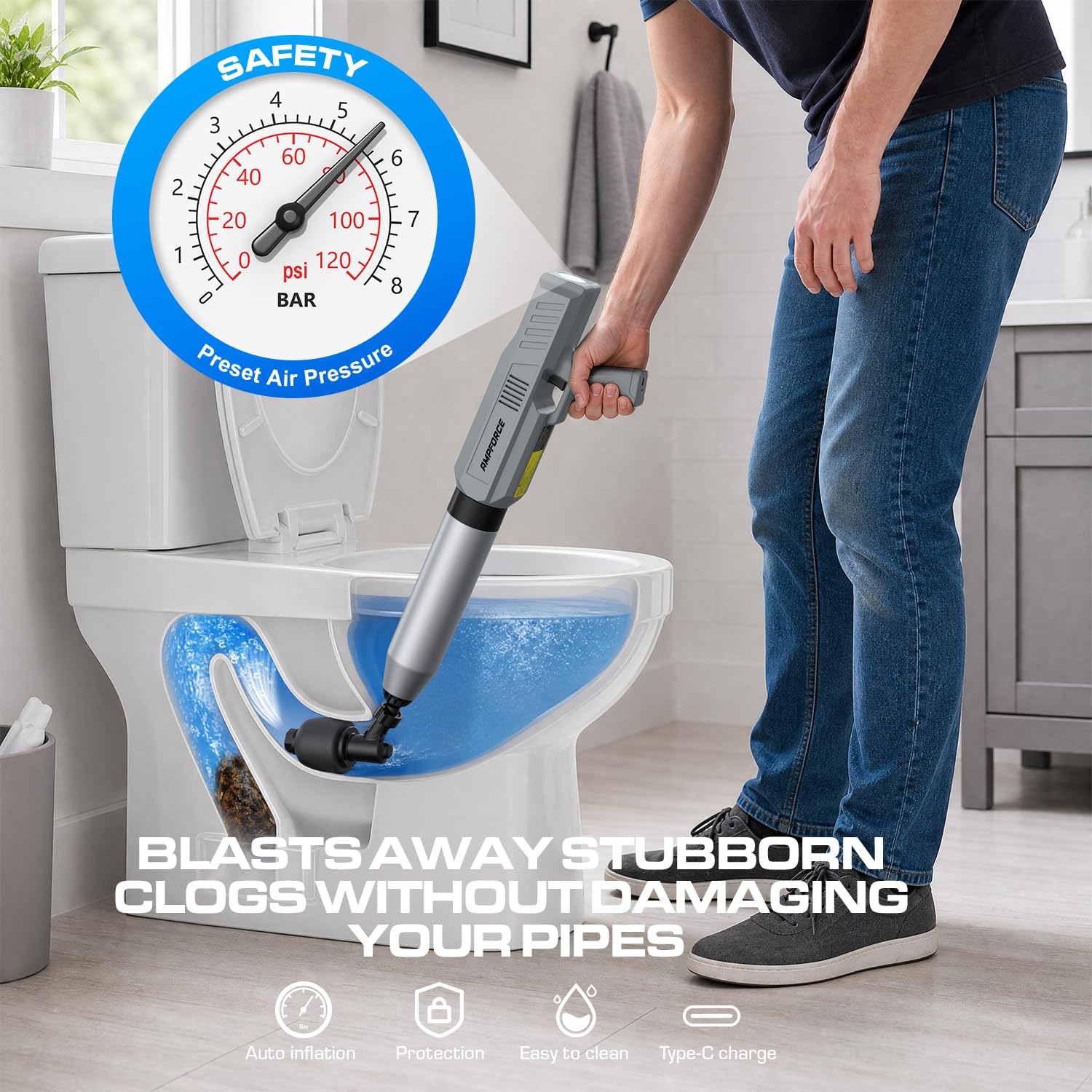

Pros
- Electric air pump removes clogs faster than manual plungers
- Adjustable pressure protects older pipes while still clearing tough blockages
- Anti-splash design keeps toilet water contained during use
- Easy to clean and store with included pouch
- Multi-purpose with different heads for various drains
Cons
- No customer reviews yet to verify real-world performance
- Requires charging before use, so not ideal if battery dies during emergency
- Silver air tank must be fully tightened each time or pressure won't build properly
Nobody wants to spend their Saturday afternoon wrestling with a manual plunger, and this electric option changes that entire experience. The adjustable pressure means you can start low and work your way up, which is especially helpful if you have older plumbing or want to avoid aggressive force right out of the gate.
The real standout here is the anti-splash angled head. If you have ever dealt with splashback from a traditional plunger, you know how unpleasant that moment is. This design forms a tighter seal and directs pressure where it needs to go without the mess. Plus, the fact that it rinses clean in seconds and comes with a storage pouch means it actually gets put away properly instead of sitting wet in the corner.
If you want a faster, less physically demanding way to handle clogs without the splashback and grime of old-school plungers, this one delivers.
Styles it works with: Modern Minimalist, Contemporary, Industrial, Tech-Forward homes
Best placed in: Bathroom cabinet, under the sink, utility closet, or garage storage
May not suit: Homes where guests need immediate access to emergency plumbing tools without instruction, or households that prefer entirely manual, non-electric cleaning tools
Buy it if:
- You want to avoid the physical effort and mess of manual plungers
- You have multiple drains in your home that occasionally clog (toilet, sink, shower)
- You prefer modern tools that charge via Type-C and store neatly
Consider waiting if:
- You want to see verified customer reviews before committing at this price point
Skip it if:
- You prefer entirely manual tools with no batteries or charging required
- You need something that works instantly without waiting for a charge cycle
Check the latest price and availability on Amazon before it sells out.

POPULO Electric Toilet Plunger - Rechargeable 5 Bar Air Drain Clog Remover for Toilets, Chemical-Free with Built-In Pump
Pros
- Pressurizes to 5 Bar in seconds without manual effort
- Rechargeable design means no ongoing battery costs
- Chemical-free clearing is safer for plumbing and septic systems
- Included storage bag keeps it discreet and ready for emergencies
- 2-year warranty backs the purchase
Cons
- Only effective on soft clogs, not designed for hard objects or severe blockages
- Requires proper canister tightening before each use or pressure will be weak
- Not suitable for all toilet bowl sizes, measure opening before ordering
This electric plunger takes one of the least pleasant home tasks and makes it surprisingly quick and clean. Instead of the awkward pumping and potential splashing of a traditional plunger, you press a button and let compressed air do the work. It handles the everyday soft clogs most households deal with without harsh chemicals that can damage pipes or septic systems.
The rechargeable design means you are not hunting for batteries during a bathroom emergency, and the included storage bag keeps it tucked away discreetly under the sink. The stainless canister gives it a more modern look than a rubber plunger propped in the corner, and the 2-year warranty suggests the brand stands behind it.
If you want a faster, more hygienic way to handle standard toilet clogs without keeping drain chemicals in the house, this one delivers.
Styles it works with: Modern, Minimalist, Contemporary, Scandinavian
Best placed in: Under bathroom sink cabinet, in bathroom closet, inside linen closet near bathrooms
May not suit: Homes with older or non-standard toilet models with unusual bowl shapes, households that frequently flush inappropriate items like wipes or toys, spaces where you need an industrial-strength drain solution for recurring serious blockages
Buy it if:
- You deal with occasional soft toilet clogs and want a faster solution than manual plunging
- You prefer avoiding harsh chemical drain cleaners for health or septic system reasons
- You want a more hygienic, less messy approach to clearing toilet blockages
Consider waiting if:
- You want to see more verified customer reviews since this model currently shows zero reviews
- You need to confirm your specific toilet bowl size will accommodate the plunger head
Skip it if:
- You regularly deal with hard clogs from objects like toys, wipes, or tree roots that need a drain snake
- You have non-standard or older toilets with unusual bowl configurations
Check the latest price and availability on Amazon before it sells out.

Pros
- Pressure gauge gives visual feedback instead of guessing how hard to plunge
- Interchangeable heads cover toilet, sink, and shower drain clogs with one tool
- One-touch operation is faster and less messy than manual plunging
- Reusable and non-toxic, avoiding the cost and mess of chemical drain cleaners
- Compact enough to store in a bathroom cabinet
Cons
- Nozzle must be hand-tightened before every single use or it can leak or detach inside the toilet
- No customer reviews yet, so real-world durability and performance are unproven
- Grey plastic housing is purely functional and won't blend into a styled bathroom the way decor items do
Nobody wants to think about their toilet plunger, but the Mieaoll changes what that dreaded bathroom tool looks like. Instead of a rubber cup on a stick, it is a sealed, air-powered blaster with a pressure gauge on the side, more like a small pump than a plumbing tool you hide behind the shower curtain.
Sitting in a bathroom closet, it reads more like a piece of home equipment than an eyesore. The grey housing is compact and closed, so it does not collect grime the way an open rubber plunger does, and the interchangeable heads mean it can double for the kitchen sink or shower drain without buying a separate tool for each.
If you want a fast, low-mess fix for clogs without keeping a rubber plunger in plain sight, this one delivers.
Styles it works with: Modern Farmhouse, Minimalist, Transitional, any bathroom where storage stays closed and tidy
Best placed in: under-sink cabinet, bathroom utility closet, laundry room storage shelf
May not suit: open, styled bathrooms with no closed storage, since the grey plastic housing is functional rather than decorative and is best kept out of sight
Buy it if:
- You want a no-mess backup for toilet clogs that happen at inconvenient times
- You would rather adjust pressure with a gauge than guess how hard to plunge
- You want one tool that also handles kitchen sink and shower drain clogs
Consider waiting if:
- You want to see verified customer reviews on long-term durability before buying
Skip it if:
- You are not comfortable following the hand-tighten-the-nozzle step before every use
Check the latest price and availability on Amazon before it sells out.
Frequently Asked Questions
Can hot water alone unclog a toilet?
Yes, often, for soft paper clogs. Hot water loosens paper and adds force as it pours, and pairing it with dish soap raises the success rate. Keep it hot, not boiling, so you don’t crack the porcelain. If two rounds don’t work, the clog is denser than water can clear.
Will baking soda and vinegar damage my toilet?
No. Baking soda and white vinegar are both mild and safe for porcelain and plumbing. The fizz reaction loosens organic debris without corroding pipes the way chemical openers can. Just never follow it with bleach. That mix creates toxic gas.

Is it safe to pour boiling water into the toilet bowl?
No. Boiling water can thermal-shock the porcelain and crack the bowl. Use water that’s hot to the touch but well below boiling — around 1 gallon poured from waist height gives you the force you need without the risk.
Are flushable wipes actually flushable?
Almost never in practice. They pass through the bowl but don’t break down like toilet paper, so they snag in the trap and main line. Consumer Reports has documented their role in household and municipal clogs. Toss them in a bin instead.
When should I call a plumber instead of trying these methods?
When the water won’t drain after a power air blaster, when multiple drains back up at once, or when you smell sewage. Those point to a blockage in the main line, which sits beyond any home method. That’s a plumber’s call.
Bottom Line
Most toilet clogs come down to one thing — too much paper or a non-flushable that should’ve gone in the trash. Start with hot water and dish soap; it clears the majority of soft clogs for free and won’t harm the bowl. Move to baking soda and vinegar, then a wire hanger, if it holds. When the water still won’t drain after a power air blaster, the blockage is deeper than any DIY fix reaches. Call a plumber and stop pouring.



Write Your Review
No reviews yet. Be the first to share your experience!