

> Editorial Note: I’m Erin Schwartz, and I cover home decor with a bias toward what actually works in a real room. The guidance here weighs scale, layout, and materials against Apartment Therapy and Wirecutter coverage rather than styling a space that nobody lives in.
Decorative solar lights fail at the battery, not the bulb. A panel can still charge and LEDs can still glow while a tired rechargeable cell delivers only 45 minutes after dark. Replaceable batteries matter more than LED count, and brightness claims don’t tell you which cell is inside. Compare solar lights outdoor, solar outdoor lights, solar vs led outdoor lights, pathway solar lights, and outdoor string lights.
How We Evaluated
I compared pack count, LED count, light effect, weather sealing, and price. Products were judged as decoration rather than security lighting, with runtime and panel placement weighted above brightness. ASTM weatherability guidance informed UV and water exposure, while Wirecutter’s solar-light reporting shaped battery priorities. Ratings aren’t published on these listings, so specs and format decide it.

1. JKIMK Solar Globe Lights — The Cleanest Look Under $12
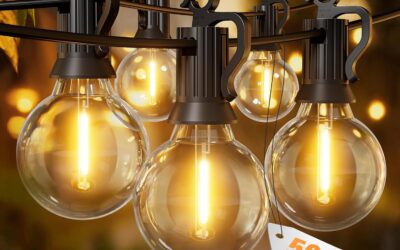
At $11.90, JKIMK’s waterproof solar balls are the simplest decorative form here. Globes read as intentional objects during the day rather than exposed wires or plastic flowers, and a cluster works in modern gardens where firefly lights feel too whimsical.
Place the panel where it gets 6 to 8 hours of direct sun, even if the globes sit in shade. Waterproof claims cover rain, not submersion. Bring the units inside before deep snow buries the panel for weeks.
2. vignuto 4-Pack 32-LED Firefly Lights — The Best Movement Effect
vignuto costs $22.98 for four stems with 32 LEDs each. Flexible wires sway in wind, producing the firefly effect that makes these feel animated rather than simply illuminated.
Four units let you spread the effect across a planting bed instead of creating one bright clump. Thin wires are the vulnerable part, so install away from foot traffic and pruning tools. Wind movement is the feature. Impact isn’t, and a snapped wire can’t be repaired.

3. GIGALUMI 2-Pack Solar Firework Lights — Bigger Burst, Fewer Units
At $15.99 for two, GIGALUMI uses a firework shape with warm-white LEDs. Each head creates a wider burst than a firefly stem, so two units can frame a path entrance or planter without needing four stakes.
Warm white around 2700K to 3000K looks better with wood, brick, and warm foliage than cool white does. The wider wire spread catches more wind and tangles more easily during storage, so wrap each head separately.
4. ASMAD 4-Pack 32-LED Fairy Lights — Same Format, Established Listing
ASMAD is $22.98 for four 32-LED stems, matching vignuto on price and count. Treat the two as close substitutes and choose by current availability and light pattern.
A four-pack suits a 12-foot border at roughly 3-foot spacing. More LEDs don’t guarantee longer runtime, since the panel and battery still supply a fixed amount of energy. Dim late-night output is normal rather than a defect.
5. Brightown 60-LED Flower String Lights — Maximum Detail for $8.47
Brightown costs $8.47 for a 60-LED flower string, the lowest price and highest LED count here. Flower diffusers remain visible during the day and create a softer dot of light than bare wire LEDs.
String format works around a railing, trellis, or pergola rather than in open soil. Sixty LEDs divide the available battery power, so expect lower brightness per flower. Use it for a glow line, not task lighting.
Comparison Table
| Pick | Pack/LEDs | Effect | Price | Best For |
|---|---|---|---|---|
| JKIMK | Globe set | Static spheres | $11.90 | Modern garden accents |
| vignuto | 4 x 32 LEDs | Swaying fireflies | $22.98 | Movement across a bed |
| GIGALUMI | 2 units | Firework burst | $15.99 | Framing a path |
| ASMAD | 4 x 32 LEDs | Fairy/firefly | $22.98 | Wider coverage |
| Brightown | 60 LEDs | Flower string | $8.47 | Railings and trellises |
Placement for Better Runtime
The solar panel needs direct sun even when the decorative lights don’t. Six to 8 hours of unobstructed exposure is the practical target for a full evening. A panel behind a shrub receives scattered light and charges poorly.
Clean the panel monthly with water and a soft cloth. Dust, pollen, and mineral film reduce charging enough to look like battery failure. Tilt toward the midday sun rather than laying the panel flat.
Understanding Battery Life
Most decorative solar lights use a small rechargeable NiMH or lithium cell that loses capacity over 1 to 3 years. LEDs last far longer. If the housing allows battery replacement, a $5 cell can restore runtime.
Cold also reduces output temporarily. A light that runs 6 hours in August may run 3 in December from shorter days, lower sun angle, and battery chemistry. ASTM weatherability addresses housing exposure, not energy storage.
Frequently Asked Questions
How many hours should solar lights run?
About 6 to 8 hours after a full sunny charge when new. Cloud, winter sun, and aging batteries reduce that.
Do more LEDs mean brighter light?
Not automatically. Battery and panel output are divided across the LEDs, so 60 small diffused flowers may be dimmer than 20 bare LEDs.
Can they stay out in winter?
Rain-rated housings can, but deep snow blocks panels and extreme cold reduces battery performance. Indoor winter storage extends battery life.
Why did runtime drop after a year?
Rechargeable-cell capacity declines with charge cycles. Clean the panel first, then replace the battery if the housing permits it.
Which color temperature looks best?
Warm white around 2700K to 3000K suits patios and planting beds. Cool white reads brighter but more utilitarian.
Are these bright enough for steps?
No. They’re decorative. Use dedicated pathway or step lights for safe navigation and treat these as atmosphere only.
Bottom Line
The JKIMK solar globes at $11.90 are the best choice for most gardens, since they look intentional in daylight, avoid fragile exposed wires, and cost little enough to cluster. If movement is the goal, the vignuto four-pack at $22.98 spreads 128 swaying LEDs across a full border. Place the panel in 6 to 8 hours of direct sun and expect battery replacement after a few seasons, because the cell ages long before the LEDs do.


Write Your Review
No reviews yet. Be the first to share your experience!