

> Editorial Note: I’m Heather Adams, and I cover sofas, tables, mattresses, and bedding. The picks here are evaluated on the materials layer — foam density, coil gauge, frame construction, and fiber content — against CertiPUR-US, OEKO-TEX, and BIFMA standards.
Corner pop at 3 a.m. It’s the single most-cited bedding complaint in owner threads, and zipper systems solve it by removing elastic from the equation entirely. Instead of stretching a hem over a 14-inch mattress and hoping friction holds, you zip a top panel onto a fixed base. If your sheets keep coming off the bed, that mechanical connection is the fix. Before you buy, it helps to know your exact mattress depth and size, so check our sizing work on bed sheets, queen size bed sheets, king size bed sheets, and twin bed sheets.
How We Evaluated
Four criteria carried the most weight: zipper hardware quality, pocket depth versus real mattress height, fabric GSM and weave, and owner-reported failure points past the 12-month mark. Microfiber dominates this category at roughly 90–110 GSM, which is lighter than the 180 GSM cotton percale Sleep Foundation typically flags as a durability floor. OEKO-TEX Standard 100 certification is inconsistent across these listings, so I noted it only where the seller documents it.


1. Shreem Linen Zipper Fitted Sheet — the deep-mattress answer at 16 inches
Sixteen inches of pocket depth is the number that matters here. Most hybrid mattresses land between 12 and 14 inches, and adding a 3-inch topper pushes you past what standard fitted sheets can hold. Shreem’s brushed microfiber runs light and dries fast, which suits hot sleepers and small dryers.
The trade-off is honest. Brushed microfiber pills faster than combed cotton, and owners in r/Mattress consistently report visible surface wear on synthetics around month 14. Wash cold, tumble low, skip fabric softener. Do that and you’ll stretch its life considerably.
2. HunnmingRe Zippered Mattress Encasement — full six-sided coverage, not just a top panel
This one wins if you want the sheet and the protector to be the same object. It’s an encasement, meaning fabric wraps all six sides of the mattress and the zipper closes the perimeter rather than just attaching a sleep surface. That construction may help limit dust mite and allergen migration, a claim Sleep Foundation treats as plausible but not curative.
Fit is unforgiving by design. Measure your mattress height before ordering, because encasements have almost no give. Slightly stiffer hand-feel than a loose fitted sheet, too.

3. PURE ECO Zipper Fitted Sheet Queen — the two-sheet rotation system
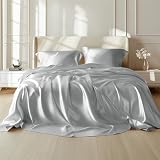
PURE ECO ships the only true system in this group: one 16-inch base plus two zip-on cotton top sheets in silver grey. Strip the used panel, zip the spare, done in under 90 seconds. The base stays on the mattress permanently.
Cotton is the material advantage here. It breathes better than microfiber and resists pilling, which is why Apartment Therapy’s bedding coverage generally favors natural fibers for long-term ownership. The catch is wrinkling. Cotton comes out of the dryer creased, and this system offers no way around that.
4. HunnmingRe Zippered Fitted Protector (Alternate Size) — for guest rooms and secondary beds
Same encasement construction, different size and colorway allocation. That makes it the practical second purchase when you’re outfitting a guest room or a kid’s bed and don’t want to research the category twice. Microfiber’s fast-drying behavior is genuinely useful on beds that get used four nights a year.
Rating data is thin on this listing, so treat it as an unproven variant of a known design rather than an independently verified pick. Buy it as a companion, not a first purchase.
5. HunnmingRe Zippered Fitted Protector (Third Variant) — the budget slot with real caveats
The third HunnmingRe variant covers the remaining size and finish gaps. Construction is identical: microfiber shell, perimeter zipper, deep encasement profile. No premium claims attached, and none implied.
Zipper hardware is the failure point to watch. Owner reports across encasement products point to slider separation rather than fabric tearing, usually from forcing the zip around a corner. Feed the zipper slowly at each turn. Cheap insurance for a cheap product.
Comparison Table
| Pick | Brand | Type | Fabric | Depth | Best For |
|---|---|---|---|---|---|
| 1 | Shreem Linen | Zip fitted sheet | Brushed microfiber | 16 in | Deep mattresses + toppers |
| 2 | HunnmingRe | Full encasement | Microfiber | Deep profile | Allergen containment |
| 3 | PURE ECO | Base + 2 zip-on tops | Cotton | 16 in | Fast changeovers |
| 4 | HunnmingRe | Full encasement | Microfiber | Deep profile | Guest rooms |
| 5 | HunnmingRe | Full encasement | Microfiber | Deep profile | Lowest spend |
What to Check Before You Buy
Measure mattress height with a rigid tape, corner to corner, including any topper. A 12-inch mattress plus a 3-inch topper needs 15 inches minimum, and pocket depth claims are measured to the seam, not the usable interior.
Then check the zipper. Nylon coil zippers flex around corners better than molded plastic tooth zippers, which crack under repeated stress. Look for a full three-sided or perimeter zip rather than a single-edge opening.
Fabric weight comes last. Microfiber under 100 GSM feels thin and shows wear inside two years. Cotton at 200+ thread count in a percale weave holds up longer, and OEKO-TEX Standard 100 certification confirms the finish is free of regulated substances.
Zipper Systems vs. Standard Fitted Sheets
Elastic fitted sheets fail through fatigue. The elastane degrades with heat, and every hot dryer cycle shortens its recovery, which is why corners start popping around month nine on daily-use beds. Zippers don’t fatigue that way.
The cost is changeover effort. A standard sheet comes off in 30 seconds; an encasement requires lifting the mattress and working the zip around all four corners, closer to five minutes. PURE ECO’s base-plus-panel design splits the difference, and that’s why it’s the smartest architecture in this group even though microfiber picks outnumber it four to one.
Frequently Asked Questions
Do zipper sheets fit every mattress?
No. Encasements need your exact height, and a 2-inch error means the zipper won’t close or the fabric bunches. Zip-on panel systems tolerate slightly more variation because the base carries the fit and the top panel just spans the surface.
Are these safe for people with allergies?
Six-sided encasements may help reduce allergen exposure by limiting dust mite passage. That’s containment, not treatment. Check for OEKO-TEX Standard 100 certification if chemical finishes concern you, and wash weekly at 130°F to address mites directly.
How long do the zippers last?
Nylon coil zippers on bedding typically survive two to four years of weekly cycling. Failures cluster at the corners where the slider changes direction. Guiding the zip slowly through turns is the single biggest factor in longevity.
Is microfiber or cotton better here?
Cotton breathes better and resists pilling; microfiber costs less and dries faster. Four of these five picks are microfiber. If you sleep hot or plan to keep the set past three years, PURE ECO’s cotton panels are the stronger buy.
Can I use a mattress topper with these?
Yes with 16-inch pocket sheets like the Shreem Linen pick. Encasements are trickier, since the topper must sit inside the zip or the height math breaks. Measure the combined stack before ordering either style.
Do zipper sheets work on adjustable bases?
Generally yes, and they hold better than elastic sheets during articulation. Encasements can restrict deep flex on aggressive incline settings. Zip-on panel systems handle movement more gracefully because the base stays anchored.
Bottom Line
The PURE ECO base-plus-two-panel system is the pick I’d buy. Cotton panels, 16-inch base depth, and a 90-second changeover solve the actual problem without the mattress-lifting ritual an encasement demands. Choose the Shreem Linen sheet instead if your mattress plus topper stack exceeds 15 inches and you want a single-piece solution. One honest caveat: four of these five options are lightweight microfiber, and microfiber pilling around month 14 is the norm, not the exception.
Write Your Review
No reviews yet. Be the first to share your experience!