

> Editorial Note: I’m Heather Adams, and I cover sofas, tables, mattresses, and bedding. The picks here are evaluated on the materials layer — foam density, coil gauge, frame construction, and fiber content — against CertiPUR-US, OEKO-TEX, and BIFMA standards.
Velvet bedding gets bought for looks and returned for logistics. Corner ties that snap, zippers that jam at 40 inches, pile that mats after four washes. The five covers below were assessed on closure hardware, GSM weight, colorfast performance, and what owners report after a year of laundering. If you’re still deciding on materials or fixing an existing setup, start with how to choose a duvet cover, compare fibers in linen duvet covers, sort the terminology in duvet cover vs comforter, solve slippage using how to keep a duvet from shifting inside the cover, and price-check alternatives in duvet cover under $100.
How We Evaluated
Each cover was checked for closure type, interior tie count, pile density, and stated fiber content. I weighted owner durability reports from r/Mattress at 12 months or longer, cross-referenced shrinkage complaints against care-label instructions, and confirmed which sets ship as true 3-piece configurations. OEKO-TEX Standard 100 certification was noted where the brand claims it. Ratings were unavailable at publication for all five listings, so no pick here rests on star count alone.

1. WARMDERN Peacock Blue Flannel Velvet Duvet Cover Queen — the color payoff pick
Peacock blue is the hardest velvet shade to get right, and WARMDERN’s flannel-backed weave holds saturation better than most budget dye jobs. The 3-piece queen set includes two shams and runs the standard 90 x 90-inch footprint. Pile is short, roughly 3mm, which means it sheds less and vacuums off pet hair more easily than long-nap velvets.
Honest trade-off: flannel velvet traps heat. Hot sleepers should pair it with a lighter fill or check a cooling duvet insert instead. For cold bedrooms below 65°F, it’s the warmest option on this list.
2. Ivellow Velvet Duvet Cover King Set Dark Green — the only true king here
This is the one to buy if your bed is 104 x 90 inches. Ivellow’s dark green king ships as a 3-piece with matching shams, and the deep hue hides lint and creasing better than pale velvets do. Flannel velvet construction, solid dye, no pattern seams to misalign.
Owners consistently flag the same thing. Wash cold, tumble low, and skip fabric softener, which coats pile and flattens it. Ivellow lists the set as breathable, though velvet at any GSM sleeps warmer than percale.
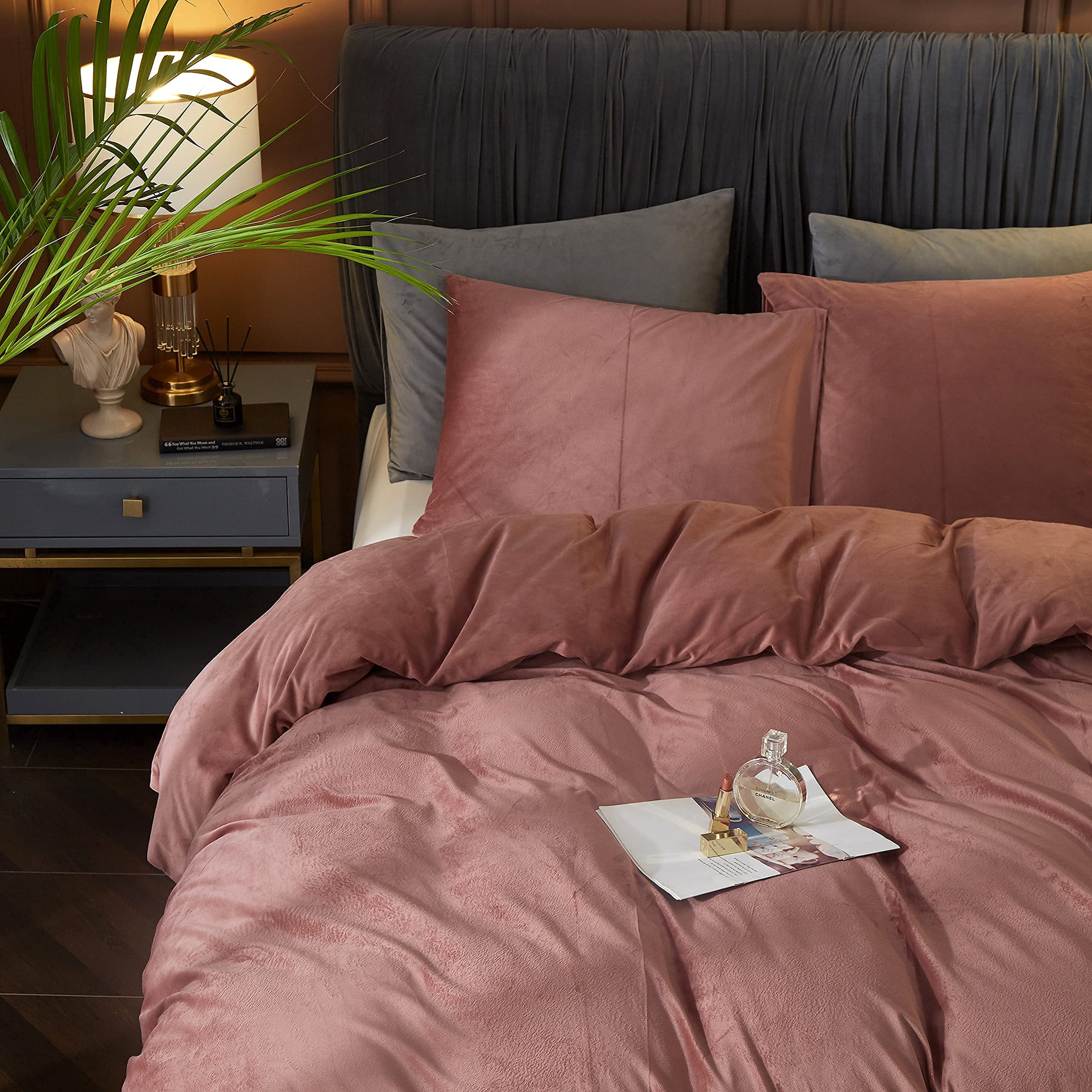
3. PHF Truly Velvet Duvet Cover Set Queen — the durability bet
PHF has the longest track record of the three brands here, and its Truly Velvet line shows up in owner reports past the two-year mark with pile intact. The 3-piece queen set is the safest choice for a bed that gets washed every two weeks rather than every two months.
Where it loses ground: PHF’s color range is narrower and the shams run slightly undersized against 20 x 26-inch standard pillows. Stuffing is tight. That’s a fit annoyance, not a defect, and the fabric quality justifies it.
4. Ivellow Blush Pink Velvet Duvet Cover Queen — the soft-neutral option
Blush pink reads warmer than gray and less committal than jewel tones, which makes this the easiest velvet to work into an existing room. Same Ivellow flannel velvet body, same 3-piece queen configuration. Pale velvet does show more, so budget for cold washes every 10 to 14 days.
Pilling risk is the caveat with light pile. Skip high-heat drying entirely and the finish holds. If pink velvet is landing in a room with other upholstery, velvet accent chairs covers tone matching.
5. Ivellow Olive Green Velvet Duvet Cover Queen — the closure upgrade
Zipper closure plus corner ties. That combination is what actually keeps a comforter from migrating, and it’s the reason this olive green set earns a spot despite overlapping heavily with pick four. The zipper spans the full foot edge, so loading a 90 x 90-inch insert takes one pass rather than a wrestling match.
Olive is a muted, low-contrast green that pairs with oak and walnut frames without competing. The trade-off is a color that photographs darker than it looks in daylight.
Comparison Table
| Pick | Brand | Size | Color | Standout Spec |
|---|---|---|---|---|
| 1 | WARMDERN | Queen | Peacock Blue | 3mm short pile, best color saturation |
| 2 | Ivellow | King | Dark Green | Only 104 x 90-inch king option |
| 3 | PHF | Queen | Solid | Longest owner-reported lifespan |
| 4 | Ivellow | Queen | Blush Pink | Warmest neutral, highest wash frequency |
| 5 | Ivellow | Queen | Olive Green | Zipper plus corner ties |
What Actually Matters in a Velvet Duvet Cover
Closure hardware first. A zipper running the full 90-inch foot edge beats buttons for velvet, because velvet’s weight pulls button plackets open under a heavy insert. Corner ties matter equally. Four ties minimum, eight if the cover is oversized.
Pile length drives everything else. Short pile near 3mm resists matting and cleans up faster. Long-nap velvet feels plusher on day one and looks tired by month six.
Fiber content is usually polyester on flannel velvet sets in this price bracket, and that’s fine. Polyester holds dye better than cotton velvet and shrinks less than 3 percent when washed cold. Check for OEKO-TEX Standard 100 if off-gassing concerns you.
Velvet vs. Linen vs. Cotton Sateen
Velvet wins on warmth and visual weight. Sleep Foundation’s bedding guidance puts brushed and napped fabrics in the highest heat-retention tier, which is exactly what you want in a bedroom under 65°F and exactly wrong above 72°F.
Linen breathes better and gets softer with age, but it costs two to three times more per set and wrinkles permanently. Cotton sateen splits the difference at the cost of pilling risk after 30 washes. Wirecutter’s long-running bedding coverage lands on the same split.
For a full material breakdown, duvet cover sets runs the comparisons side by side.
Frequently Asked Questions
Do velvet duvet covers make you sweat?
They can. Napped fabrics trap air, which raises surface temperature by a few degrees compared to percale. Cold sleepers benefit. If your bedroom sits above 72°F, pair velvet with a lightweight down-alternative insert rather than a 90 GSM fill.
How often should I wash a velvet duvet cover?
Every two to three weeks for most bedrooms. Pale colors like blush pink need it closer to every 10 days. Cold water, gentle cycle, low tumble dry. Fabric softener flattens pile permanently, so skip it entirely.
Will velvet pill or shed?
Short-pile velvet at roughly 3mm sheds minimally after the first two washes. Longer nap sheds more and mats faster. Owner reports on r/Mattress consistently link pilling to high-heat drying rather than the fabric itself.
Do these covers fit a standard queen comforter?
Yes. All queen picks here match the 90 x 90-inch standard. Oversized inserts at 92 x 96 inches will fit but pull the corners taut and stress the ties. Measure your insert before ordering.
Is a zipper better than buttons?
For velvet, yes. Velvet’s weight strains button plackets, and a full-length zipper distributes that load across the whole foot edge. Pick five uses this closure. Buttons work fine on lighter cotton but underperform under napped fabric.
Can I use velvet year-round?
In a climate-controlled bedroom, yes, swapping the insert seasonally. Use a 200 GSM fill in winter and a 90 GSM in summer. The cover stays; the warmth changes. That’s the cheapest way to run one aesthetic across twelve months.
Bottom Line
The WARMDERN peacock blue queen takes it. Short 3mm pile, the best color saturation on this list, and a 3-piece configuration that doesn’t cut corners on shams. Buy the Ivellow olive green queen instead if closure hardware ranks above color, since the zipper plus corner ties combination solves comforter migration outright. Both run warm. If your bedroom sits above 72°F year-round, velvet is the wrong fabric no matter which set you pick.



Write Your Review
No reviews yet. Be the first to share your experience!