

> Editorial Note: I’m Lauren Ro, and I write furniture buying guides. The picks here are judged on the specs that predict how a piece ages — frame joinery, foam density, and load ratings — checked against BIFMA and FSC certifications plus aggregated owner reports.
Concrete cracks. Bare wood grays out. Interlocking deck tiles fix both without a contractor, snapping over any hard surface in an afternoon. Pair your new floor with outdoor patio rugs, sort your seating with outdoor cushions for patio furniture, and read what size outdoor rug for a patio? a sizing guide before you buy. If you’re staging the whole space, outdoor curtains for patio and a proper patio dining set finish the look. Here are five deck-tile systems that hold up.
How We Evaluated
I ranked each system on wood species and its natural rot resistance, base-grid material, coverage per box, and how the click-lock edges handle freeze-thaw movement. Acacia and similar hardwoods carry a Janka hardness near 1,700 lbf, which resists denting. FSC-certified sourcing and ASTM D2244 color-fastness data broke any ties.

Pros
- Real acia wood offers authentic warmth and grain variation
- Tool-free interlocking install suitable for DIY beginers
- Waterproof rating allows year-round outdoor use
- Versatile placement on balconies, patios, mudrooms, or around pools
- 0.9-inch thickness provides a solid, stable underfoot feel
Cons
- 10-piece set covers only about 10sq ft, so larger spaces require multiple sets
- No customer reviews yet to confirm long-term durability claims
- Limited to one color and pattern option in this listing
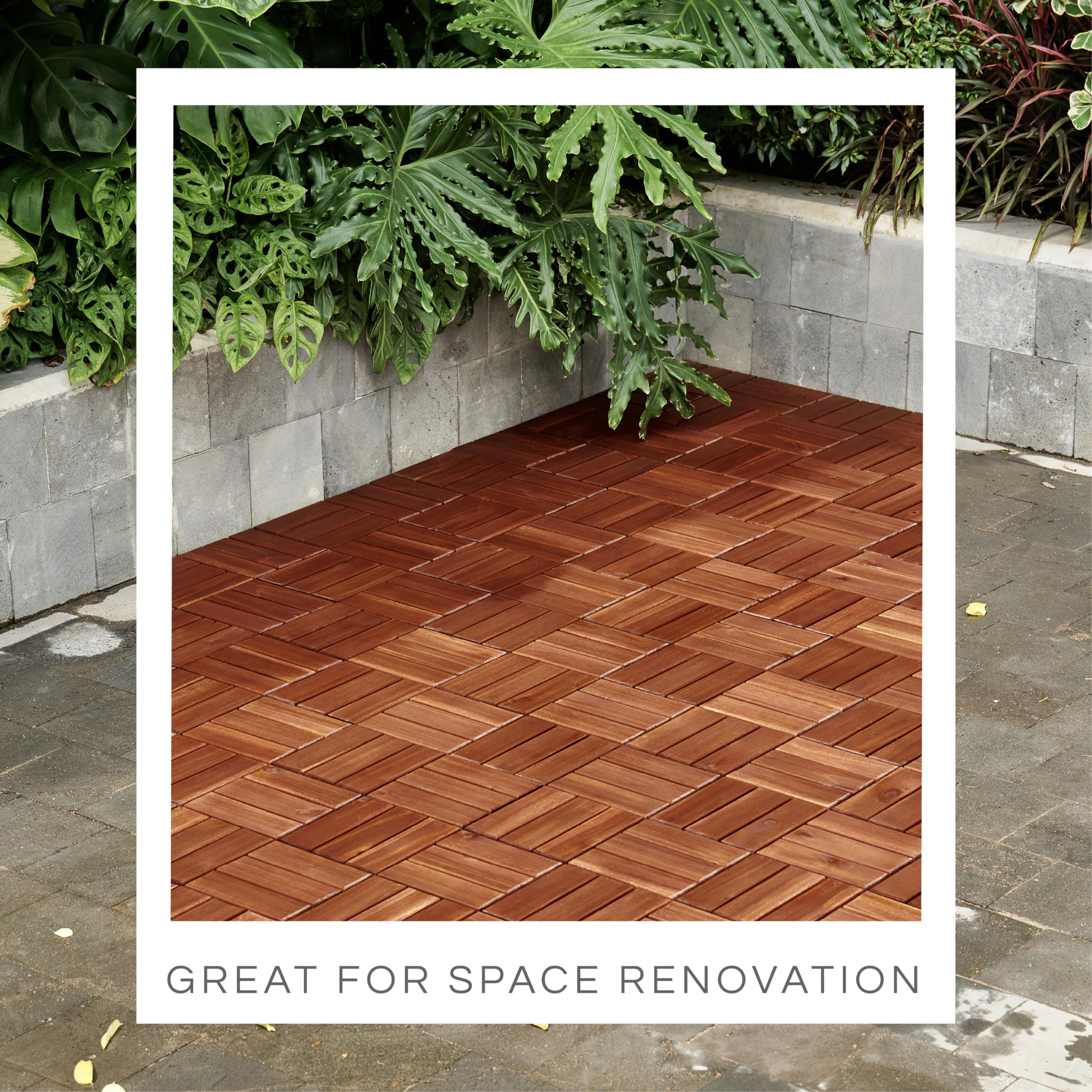
There is something satisfying about stepping onto real wood instead of cold concrete, and these THYOI deck tiles deliver that feeling without a renovation budget or a landlord's permission. The acia hardwood has natural grain variation that looks genuinely warm and inviting, not like the plastic snap-together tiles that scream temporary fix.
The crossed pattern is a smart design choice. It adds enough visual interest to make a small balcony or patio feel intentional and styled, while also being forgiving when it comes to dust and light debris between sweps. At 0.9 inches thick, they feel solid and stable underfoot rather than hollow or flimsy.
If you want a natural wood surface on your balcony or patio without committing to permanent installation or spending a full weekend on a project, this one delivers.
Styles it works with: Modern Farmhouse, Coastal Casual, Scandinavian, Tropical Resort
Best placed in: Apartment balcony floor, small backyard patio area, covered sunroom or mudroom entryway
May not suit: Very large deck areas where buying multiple sets becomes expensive, or shaded spots prone to moss buildup without regular maintenance
Buy it if:
- You have a small balcony or patio (under 10 sq ft) you want to upgrade quickly
- You are renting and need a floring solution you can remove when you move
- You prefer real wood over plastic or composite alternatives for a more natural look
Consider waiting if:
- You need a larger quantity and want to see if bundle pricing becomes available
- You prefer a different wood tone or pattern to match existing outdoor furniture
Skip it if:
- You need to cover a large deck area on tight budget since multiple sets add up fast
- You want a product with extensive verified customer feedback confirming multi-year durability
Check the latest price and availability on Amazon before it sells out.


GREEN ALLUVIUM Acacia Wood Deck Tiles 9 PCS 12x12 Interlocking Waterproof Patio Flooring Golden Teak Striped
Pros
- Genuine acia hardwood provides durability and a premium natural look
- Click-together installation makes setup fast with zero tools required
- Waterproof and all-weather rated for year-round outdoor exposure
- 0.9-inch thickness adds structural stability and a solid underfoot feel
- Versatile use on concrete, tile, composite, or flat ground surfaces
Cons
- 9-piece set covers only 9 sq ft, so larger patios require multiple boxes
- No customer reviews yet to confirm long-term wear and color retention
- Golden teak shade may not match all existing outdoor furniture finishes
There is something instantly satisfying about laying real wood underfoot where there was once cold, grey concrete. These GREEN ALLUVIUM acia deck tiles bring that boutique hotel patio vibe to your backyard, balcony, or sunroom without a single power tool or weekend lost to a contractor.
The golden teak striped pattern has a warm, honeyed tone that catches afternoon light beautifully and pairs well with greenery, rattan furniture, and neutral cushions. At nearly an inch thick, they feel sturdy and grounded rather than flimsy or hollow.
If you want a genuine hardwood patio surface without the cost or commitment of a full deck build, this set delivers.
Styles it works with: Coastal, Modern Farmhouse, Tropical Resort, Scandinavian Outdoor
Best placed in: Apartment balcony floor, backyard patio seating area, poolside lounging zone
May not suit: Very uneven ground surfaces without a flat subase, or spaces where a cooler grey-toned wood would be a better color match
Buy it if:
- You want to upgrade a plain concrete balcony or patio without permanent changes
- You prefer real wood over plastic composite alternatives
- You need a quick weekend project that requires no tools or expertise
Consider waiting if:
- You need a darker or weathered grey wood tone to match existing furniture
- You want to see long-term durability reviews before committing to a larger order
Skip it if:
- Your outdoor surface is heavily uneven or sloped without a flat foundation
- You need to cover a large area on a tight budget, as multiple boxes add up quickly
Check the latest price and availability on Amazon before it sells out.
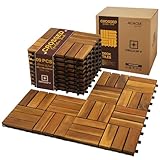
1. THYOI Premium Deck Tiles, Brown Crossed — the balcony renter’s fast fix
This one wins for small spaces. Ten 12-inch tiles cover roughly 10 square feet, enough for a standard apartment balcony, and the brown crossed pattern hides pollen and light staining better than pale finishes. The plastic base grid clicks together without tools, and it lifts back up clean when your lease ends. Wood does need annual oiling to hold the deep brown. Skip that step and UV will fade it toward gray by season two. For quick, reversible coverage, it’s the easiest entry point here.
2. THYOI Premium Deck Tiles, Golden Teak Crossed — same system, warmer tone
Identical grid and 10-tile count to the brown, this Golden Teak version trades color for the same crossed layout. The lighter teak tone reads brighter under direct sun and pairs cleanly with gray composite railings. Coverage stays near 10 square feet per box, so two boxes handle most 8-by-8-foot balconies. The trade-off is honesty about maintenance. Lighter finishes show water spotting faster, and you’ll notice fade sooner without a UV-blocking oil. Choose this one if warm, resort-style wood tone matters more than low upkeep.
3. GREEN ALLUVIUM Acacia Wood Interlocking Deck Tiles — the hardwood upgrade
GREEN ALLUVIUM steps up to real acacia, a hardwood with a Janka rating near 1,700 lbf that resists dents and rot far better than softwood slats. Nine 12-inch tiles cover about 9 square feet, and the acacia’s natural oils slow water absorption. It’s heavier and pricier than plastic-heavy options, so budget accordingly. Expect to re-oil once a year to keep the grain rich. For a patio that sees furniture legs, foot traffic, and full sun, the denser wood earns its cost.
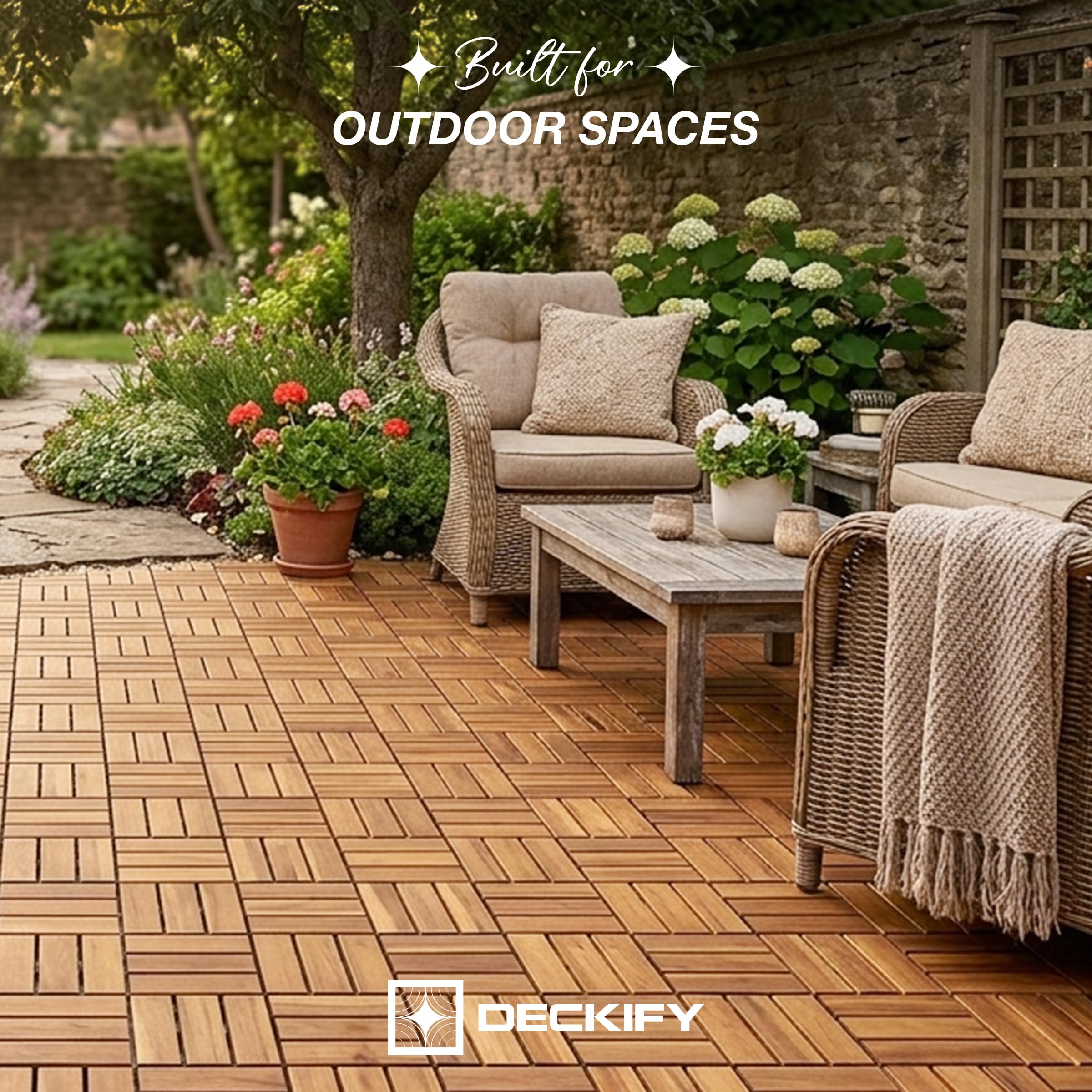
4. DECKIFY 9-Piece Acacia Wood Interlocking Deck Tiles — matched-grain aesthetics
DECKIFY runs the same 9-tile, 12-inch acacia format in a Golden Teak crossed pattern built for visual consistency. The appeal here is grain matching across tiles, so a finished patio looks laid rather than assembled. Coverage lands near 9 square feet per box. Acacia’s density brings the same benefit and the same yearly oiling requirement as its rivals. If you care about a showroom-clean layout for a dining nook or lounge corner, this is the pattern-first pick over pure durability specs.
5. Yaheetech 54PCS Acacia Wood Deck Tiles — the full-patio coverage play
Yaheetech goes big. At 54 acacia tiles per order, this set covers roughly 54 square feet, enough for a full ground-level patio in one purchase. Buying in bulk usually lowers your per-square-foot cost versus stacking small boxes. The acacia carries the same hardness and rot resistance as the single-box options. Weight is the catch. Fifty-plus tiles ship heavy, and installation over uneven ground needs a level base first. For anyone flooring an entire patio at once, this is the volume-value choice.
Comparison Table
| Product | Wood/Base | Tiles | Coverage | Best For |
|---|---|---|---|---|
| THYOI Brown Crossed | Wood + plastic grid | 10 | ~10 sq ft | Renters, balconies |
| THYOI Golden Teak | Wood + plastic grid | 10 | ~10 sq ft | Warm-tone balconies |
| GREEN ALLUVIUM Acacia | Acacia hardwood | 9 | ~9 sq ft | High-traffic patios |
| DECKIFY Acacia | Acacia hardwood | 9 | ~9 sq ft | Matched-grain looks |
| Yaheetech Acacia 54PC | Acacia hardwood | 54 | ~54 sq ft | Full patios |
How to Choose Your Deck Tiles
Start with square footage. Measure your space, then divide by each box’s coverage. Most 12-inch tiles run 9 or 10 per box at roughly a square foot each, so a 100-square-foot patio needs ten to eleven boxes of the smaller sets.
Then weigh wood versus grid. Acacia hardwood resists rot and dents thanks to Janka hardness near 1,700 lbf, but it needs annual oiling. Plastic-heavy bases install faster and lift clean for renters. Check that the click-lock edges leave drainage gaps so water doesn’t pool. FSC-certified sourcing confirms the wood came from managed forests, per the Forest Stewardship Council.
Acacia vs. Composite Grids
Acacia gives you genuine wood grain and heat tolerance that composite plastic can’t fully match under midday sun. Its density resists furniture-leg denting and, oiled yearly, holds color against UV fade. The cost is weight and upkeep.
Plastic-grid systems win on speed and portability. They snap down over concrete or tile in minutes and pull up for a move. But cheaper polymers can grow brittle after repeated freeze-thaw cycles, and darker plastics absorb heat. Apartment Therapy has flagged surface heat as a real comfort issue on sun-exposed balconies. Match the material to whether you own or rent.
Frequently Asked Questions
Do deck tiles work over concrete?
Yes. Interlocking tiles are built to click over any flat, solid surface, including concrete, brick, or existing tile. The raised grid base creates drainage channels underneath, so water flows out instead of pooling against your slab.
How much maintenance does acacia need?
Plan on oiling once a year. Acacia’s natural oils slow water absorption, but UV still grays untreated wood by season two. A quick coat of teak or deck oil restores the tone and adds ASTM D2244 color-fastness protection.
Can I leave deck tiles out over winter?
Acacia handles freeze-thaw cycles well when oiled and draining freely. Plastic-grid bases vary. Cheaper polymers can turn brittle in hard frost, so cover or store lower-grade sets if your winters drop well below freezing.
How many tiles do I need?
Measure your area in square feet, then divide by box coverage. Most 9-tile boxes cover about 9 square feet and 10-tile boxes about 10. A 12-by-12-foot patio needs roughly 16 boxes of the smaller sets.
Are deck tiles safe for renters?
Very. They install with no adhesive, glue, or drilling, and they lift back up clean. That reversibility is why balcony renters favor the THYOI plastic-grid options over permanent flooring.
Do the tiles get hot in the sun?
Wood-topped acacia stays cooler than dark plastic under direct sun. Lighter Golden Teak finishes reflect more heat than deep brown. Any surface in full midday sun may still warm up, so shade helps.
Bottom Line
The THYOI Premium Deck Tiles in Brown Crossed win for most people, snapping over concrete in an afternoon and lifting clean when a lease ends. If you’re flooring a full ground-level patio in one go, Yaheetech’s 54-tile acacia set drops your per-square-foot cost and brings genuine hardwood durability. One honest caveat: every acacia option here needs a yearly oil coat to fight UV fade. Skip that step and the wood grays by season two.






Write Your Review
No reviews yet. Be the first to share your experience!