

> Editorial Note: I’m Lauren Ro, and I write furniture buying guides. The picks here are judged on the specs that predict how a piece ages — frame joinery, foam density, and load ratings — checked against BIFMA and FSC certifications plus aggregated owner reports.
Sagging shelves are a load problem, not a taste problem. Before you commit floor space, read up on mdf vs solid wood furniture so you know what you’re paying for, then compare formats against ladder shelf bookcases and tall bookcases. If your unit shares a wall with a squeaky subfloor, why does my wood floor squeak? causes and fixes is worth a look, and anyone dealing with rings on a shelf should keep how to remove water stains from wood bookmarked. Five real bookcases below, sorted by who they actually fit.
How We Evaluated
I ranked on three specs: shelf load rating, panel material (true hardwood vs veneer over engineered core), and adjustability of the shelf pins. Height and closed-versus-open backs settled ties. BIFMA X5.6 storage-unit standards guided how I weighed stability and racking under lateral force.
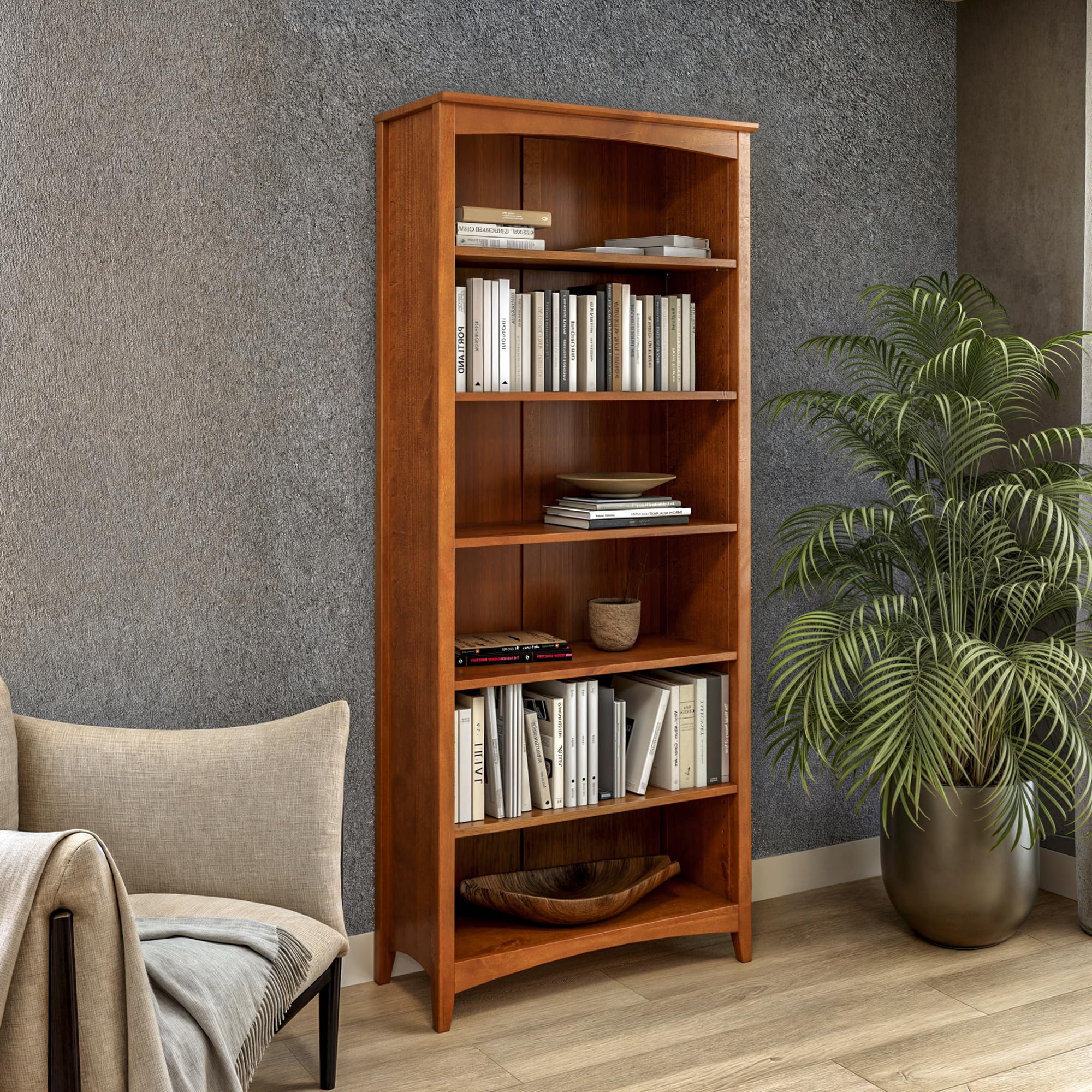


1. Camaflexi Shaker Style 6 Shelf Bookcase — the full-height library wall
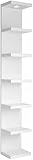
At 72 inches with six shelves and a closed back, this Camaflexi wins on vertical storage per square foot of floor. Solid wood construction and a closed panel back mean it won’t rack sideways the way open-frame units do once loaded. Shelves are adjustable, so you can size a bay for oversized art books, then a shorter one for paperbacks. It’s the pick if you want a real library wall and can anchor it to studs. Tall units demand a wall strap, no exceptions.
2. TRIBEWOOD 5-Tier Tall Bookcase — heavy-duty floor-standing storage
TRIBEWOOD’s five-tier unit trades a shelf for thicker stock and a heavy-duty floor-standing frame. That’s a fair swap if your load skews toward binders, hardware manuals, or record crates rather than sheer book count. Solid wood throughout, with a display-shelf layout that suits mixed decor plus storage. Fewer shelves means taller clear openings per tier, handy for anything that won’t fit a standard 11-inch bay. It’s the choice when weight per shelf matters more than total shelf count. Confirm your floor is level before final tightening.

3. Sauder 5-Shelf Split Bookcase, Oiled Oak — the budget open-shelf workhorse
Be clear-eyed here: Sauder builds this in engineered wood with an oiled-oak finish, not solid hardwood. It earns its spot as the value open-shelf option, with a split-shelf layout that breaks the run into display bays. Apartment Therapy has long flagged Sauder as a reliable ready-to-assemble pick for renters. Assembly is straightforward, and the split design hides fewer alignment errors than a single tall column. Buy it for a home office or kids’ room where cost per shelf beats material purity.
4. Sauder Miscellaneous Storage 5-Shelf, Select Cherry — warm finish for mixed rooms
Same Sauder engineered-wood platform, different dress. The Select Cherry finish reads warmer and blends into living-room and den palettes better than the pale oak. Five shelves, open front, ready-to-assemble hardware. It’s the pick when finish match to existing furniture outranks raw load capacity, since the engineered core caps how much weight a single span should carry. Keep the heavy reference volumes on lower shelves and lighter decor up top. A dab of felt under nearby lamps prevents ring marks on the laminate.
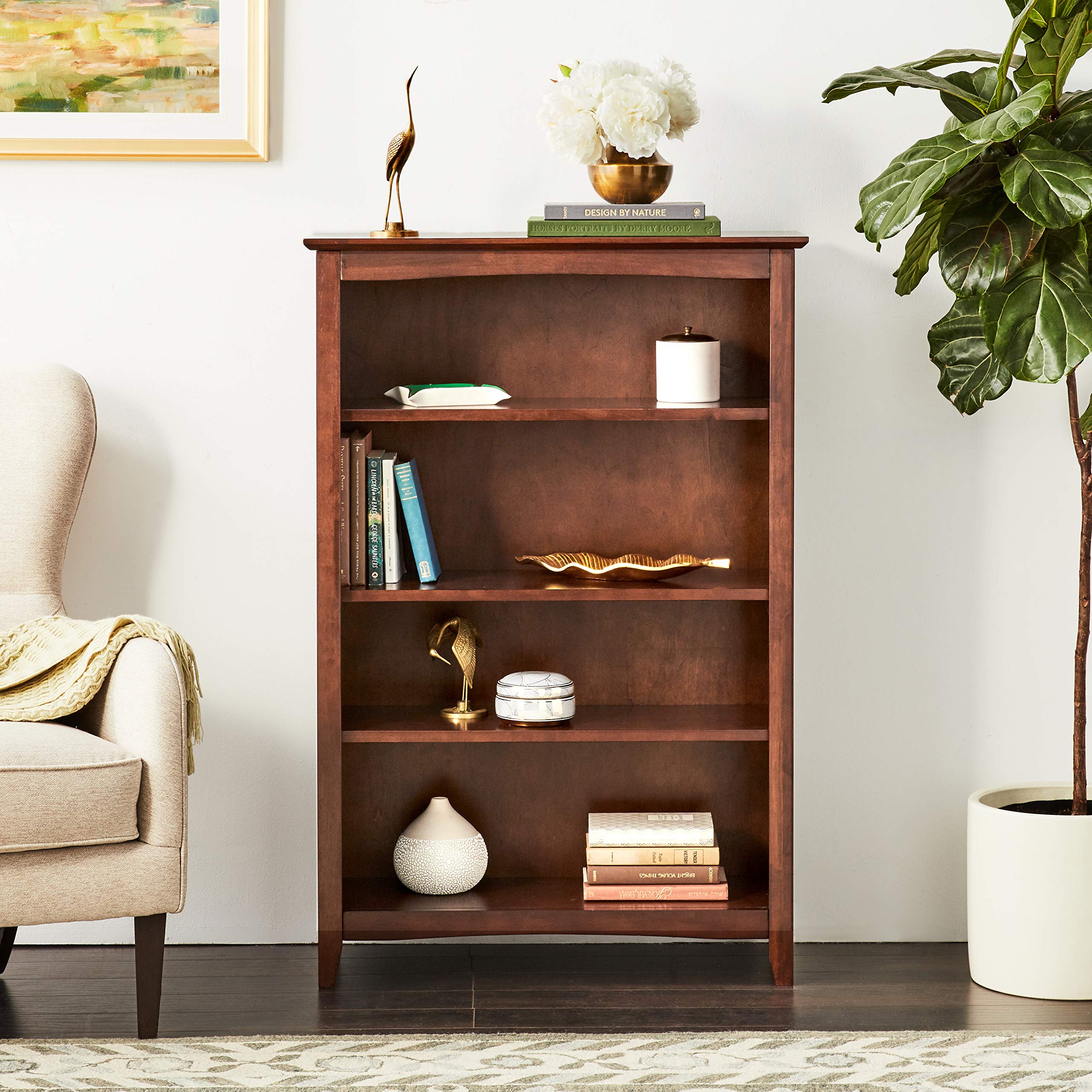
5. IC International Concepts 48″ Bookcase — solid parawood for tight ceilings
At 48 inches, this IC International Concepts unit fits under low windows and half-walls where a 72-inch tower can’t go. Parawood (rubberwood) is genuine hardwood, dense enough to hold shelf pins without stripping. Adjustable shelves and easy assembly make it flexible for kitchen or dining storage, not just books. It’s the solid-wood answer when height is capped by architecture. Shorter footprint also means less tip risk, though I’d still anchor it in a home with kids.
Comparison Table
| Model | Height | Shelves | Material | Best for |
|---|---|---|---|---|
| Camaflexi Shaker 6-Shelf | 72 in | 6 | Solid wood | Library walls |
| TRIBEWOOD 5-Tier | Tall | 5 | Solid wood | Heavy loads |
| Sauder Split Oiled Oak | Standard | 5 | Engineered | Budget open shelf |
| Sauder Select Cherry | Standard | 5 | Engineered | Finish matching |
| IC Int’l Concepts 48″ | 48 in | Adjustable | Parawood | Low-ceiling spaces |
How to Match a Bookcase to Your Room
Measure clear wall height, then subtract 3 inches for baseboard and crown clearance. Books are heavy: a packed 30-inch shelf can hold 40 to 50 pounds, so span and material matter more than looks. Solid hardwood like parawood resists mid-span sag better than engineered panels over the same width. Closed backs add lateral rigidity and hide wall imperfections. Open backs feel airier but rack unless anchored. Anchoring isn’t optional on anything past 42 inches. ASTM F2057 furniture-stability guidance exists because unsecured units tip, and one wall strap costs a few dollars.
Solid Wood vs Engineered: The Honest Trade-off
Two of these five are engineered wood, and that’s not automatically a downgrade. Sauder’s laminate panels won’t warp with humidity swings the way some solid boards do, and they cost far less per shelf. Solid parawood and the Camaflexi hold screws longer and refinish cleanly, which matters over a decade of moves. Wirecutter’s furniture coverage makes the same point: match material to how long you’ll keep it. Buy engineered for a five-year apartment stretch. Buy solid wood when the piece is meant to outlast the room.
Frequently Asked Questions
Are engineered-wood bookcases worth buying?
Yes, for budget and short-term use. Sauder’s laminate units resist humidity warping and cost less per shelf. They just won’t refinish or hold pins as long as solid parawood over a decade of daily loading.
How much weight can a bookcase shelf hold?
A 30-inch span in solid hardwood commonly holds 40 to 50 pounds. Engineered panels sag sooner across the same width. Keep heavy reference books low and shorten the span to raise safe capacity.
Do I really need to anchor a bookcase?
Yes. ASTM F2057 stability guidance exists because unsecured units tip, especially anything past 42 inches. A wall strap into a stud costs a few dollars and prevents the most serious accidents.
What’s the tallest bookcase here?
The Camaflexi Shaker at 72 inches. It gives the most shelf capacity per square foot of floor and a closed back for rigidity. Anchor it to studs before loading any books.
Is parawood the same as solid wood?
Yes. Parawood, or rubberwood, is genuine hardwood. It’s dense enough to grip shelf pins without stripping and refinishes cleanly, which is why the IC International Concepts unit qualifies as true solid wood.
Which pick fits a low-ceiling room?
The IC International Concepts 48-inch unit. It slides under windows and half-walls where a 72-inch tower won’t clear, and its shorter footprint lowers tip risk.
Bottom Line
The Camaflexi Shaker 6-Shelf is my top pick: 72 inches of solid-wood capacity, a closed back for rigidity, and adjustable bays that flex from art books to paperbacks. Anchor it and it’s a library wall for a decade. Choose the IC International Concepts 48-inch parawood unit when ceilings or half-walls cap your height. One honest caveat: both Sauder options are engineered wood, so buy them for value, not longevity.



Write Your Review
No reviews yet. Be the first to share your experience!