

> Editorial Note: Hannah Lin is a home living researcher at The Lasting Home. She focuses on practical, maintenance-forward approaches to interior comfort — the kind of advice that solves the actual problem, not just the symptom.
A room’s scent is part of its atmosphere — it’s one of the first things guests register and one of the last things hosts notice about their own space. The good news is that most rooms smell off for fixable reasons, and the fix usually starts with source elimination, not fragrance. The best-smelling homes don’t have fragrance layered on top of ambient odor; they’ve dealt with what’s causing the odor first. If you’re also tackling a full bathroom refresh alongside this, the best bathroom organizer and best bathroom rug guides cover the organizational and textile side — both of which affect how well a bathroom holds scent over time.
What actually causes rooms to smell bad?
Most people assume their rooms smell bad because they haven’t added enough fragrance. That’s backwards. The actual sources are almost always structural or textile-based, and they’re surprisingly easy to overlook.

Fabric is the biggest culprit in most living spaces. Sofas, carpets, and curtains are porous — they absorb body odor, pet dander, ambient cooking smells, and anything else that passes through the air. They absorb slowly and release slowly, which is why a room can smell stale hours after everyone’s left. A sofa that hasn’t been vacuumed or spot-treated in six months is, functionally, a reservoir of accumulated odor.
HVAC ductwork is the one most homeowners miss entirely. Air circulates through ducts that collect dust, pet hair, and in humid climates, mold spores. Every time the system runs, it distributes that accumulated odor through every room in the house. This is why a whole home can smell musty even when each individual room appears clean.
Bathrooms without functioning exhaust fans are almost always the source when a home has a persistent background mildew smell. Moisture from showers and baths soaks into grout lines, caulk seams, and the area behind the toilet. That moisture breeds mildew, and mildew doesn’t need to be visible to produce a detectable smell. It migrates — that faint musty note you’re catching in the hallway is often coming from the bathroom 10 feet away. The how to clean a leather couch guide touches on similar absorption dynamics for another common odor source.
Pet beds and litter areas are obvious when you’re looking for them, but easy to nose-blind over time. Enclosed or low-ventilation corners — under a desk, behind a door — concentrate pet odor fast.
The approach most people take — spraying air freshener directly on top of an active odor source — doesn’t work. Air freshener plus mildew doesn’t produce a clean smell. It produces mildew smell with a fragrance overtone, which is arguably worse.
What’s the best way to eliminate odors before adding fragrance?
There’s a sequence that works, and order matters. Skipping to fragrance first means you’re adding cost and effort on top of a problem that’s still running underneath.
Step 1: Address the source directly. Wash fabric items that absorb ambient smell — throw pillows, sofa slipcovers, area rugs, and curtains. Most modern washing machine cycles handle all of these; check care labels, but most can handle a cold gentle cycle. For bathroom mildew, use a mildew-targeted cleaner on grout lines and caulk — hydrogen peroxide at 3% concentration, left on for 10 minutes before scrubbing, kills surface mildew and removes the odor rather than masking it. Pet bedding should be washed weekly; at that frequency, odor doesn’t build up.
HVAC filters are a consistent gap. The standard recommendation is replacement every 90 days, but homes with pets or heavy dust should be replacing every 30 to 45 days. A clogged filter doesn’t just reduce air quality — it concentrates everything the system has been circulating.
Step 2: Ventilate before you diffuse. 20 to 30 minutes of cross-ventilation with open windows clears a significant volume of stale air. As a rough guide, one open window per 200 square feet gives adequate air exchange in most rooms. This isn’t a permanent fix, but it’s the right starting point before introducing any fragrance.
Step 3: Use baking soda on soft surfaces. It works through pH neutralization — most odor-producing molecules are acidic, and baking soda neutralizes them on contact. Sprinkle generously on upholstered surfaces, carpets, or rugs, leave for 20 to 30 minutes, then vacuum. It’s not dramatic, but it actually removes odor molecules rather than covering them.
Once these three steps are done, fragrance has something to work with. Until they are, it doesn’t.
What are the most effective ways to add fragrance?
Ordered from most to least persistent, given average room use:
Plug-in scented oil warmers are the most consistent option for occupied rooms. The heating element releases fragrance at a steady, automatic rate — you don’t need to remember to turn anything on. Intensity can be dialed down by partially covering the vent opening if the scent feels too strong in smaller rooms. They work in any standard outlet and don’t require refilling more than every few weeks at moderate settings.
Reed diffusers are passive — no heat, no electricity. They work best in lower-traffic rooms where air movement isn’t constantly displacing the fragrance (bedrooms, home offices, entryways). A standard bottle lasts 1 to 3 months depending on the number of reeds and room size; flipping the reeds weekly refreshes the throw.
Ultrasonic essential oil diffusers cover a room thoroughly and give you full control over which scent you use. The tradeoff: they need water refills and weekly cleaning to prevent mold growth in the water reservoir. They’re not suitable for rooms where children under 2 or pets spend significant time — several essential oils, including tea tree, eucalyptus, and many citrus oils, are toxic to cats and dogs even at diffuser concentrations.
Candles vary enormously in quality. Cheap paraffin candles burn through quickly and leave soot deposits on nearby walls and ceilings. Soy or beeswax candles burn cleaner and release more even fragrance throughout the burn. Burn time matters: allow 1 hour of burn per inch of candle diameter before extinguishing — this lets the melt pool reach the edge and prevents tunneling that wastes fragrance capacity.
Whole-home vent diffusers place passive fragrance elements directly on HVAC vent covers. Every time the system runs, it carries fragrance through the ductwork and into each room. It’s a genuinely different mechanism than room-by-room diffusers — but effectiveness depends entirely on how often your system runs and the quality of the product.
How do I make a bathroom smell consistently good?
Bathrooms are the most common problem room, and the fix is more mechanical than fragrant.
The single highest-impact change is running the exhaust fan during showers and for 20 minutes afterward. That window eliminates most of the moisture that drives mildew growth — and mildew is the source of the smell in most bathrooms, not insufficient air freshener. If your bathroom doesn’t have an exhaust fan, a best floating shelves for living room installation isn’t going to fix it — what you actually need is a plug-in fan or window ventilation.
For the toilet area specifically: a few drops of essential oil placed inside the cardboard tube of a toilet paper roll releases fragrance gradually as the paper unwinds. It’s low-cost and surprisingly effective. Behind-the-toilet clip diffusers work on the same passive principle. Spray air fresheners cover odor for 3 to 5 minutes and then fully disperse — they don’t help with background smell.
For grout mildew: the smell won’t stop until the mildew source is treated. Hydrogen peroxide on grout lines — 10 minutes of contact time before scrubbing — kills surface mildew. After cleaning, grout sealing once a month prevents moisture from re-penetrating and restarting the cycle.
The best shower caddy guide is worth reading if you’re doing a full bathroom reset — keeping toiletry bottles off the floor reduces moisture pooling around the base of the shower, which is another mildew entry point.
Are there plants that actually help a room smell better?
Honestly? Most house plants have no detectable scent at normal room distances. The idea that a rubber plant or a pothos is going to improve how a room smells is wishful thinking.
There are exceptions. Lavender in a south-facing sunny window produces a mild floral scent that’s noticeable when you brush the leaves. It needs direct sun and relatively dry soil — it won’t thrive in a dim corner. Jasmine vine near a bright window produces genuinely strong fragrance when it blooms, but that bloom window is only 4 to 6 weeks per year. For a more consistent option, dried eucalyptus in a vase releases fragrance for months after cutting — and it intensifies briefly when the branches are rubbed or when warm air moves past them. Rosemary near a kitchen window is fragrant enough to notice in a smaller space, particularly when cooking nearby disturbs the air around it.
The honest summary: fragrant plants contribute a subtle ambient quality that most people find pleasant, but they won’t replace a plug-in or diffuser as the primary fragrance source in any room over 150 square feet. Think of them as a complement, not a solution.
Fragrance Options to Consider
These are three options at different price points and formats — a reliable plug-in, and two passive whole-home vent diffusers. The vent diffuser options are a newer product format worth knowing about, though current buyer reviews are mixed; check recent feedback and your specific HVAC setup before purchasing.
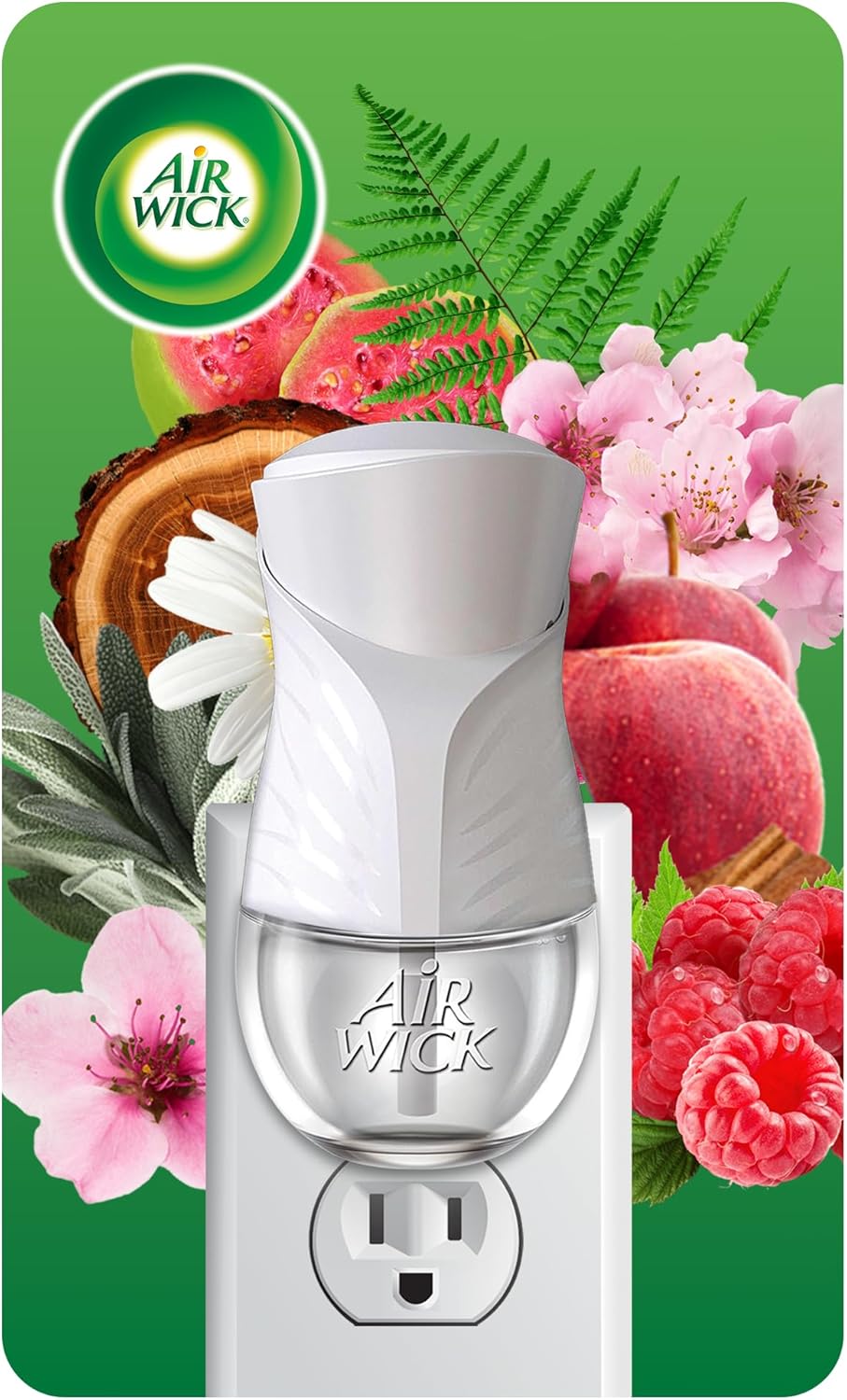
Air Wick Plug In Scented Oil Warmer - 5 Adjustable Settings, 360° Fragrance Diffusion, White (1 Count)
Pros
- Five fragrance intensity settings provide precise control over scent strength
- 360-degree diffusion technology distributes fragrance evenly across entire room
- Works with all Air Wick plug-in refill scents for variety
- Slim white design disappears into most wall outlets and decor styles
- Contains natural essential oils instead of purely synthetic fragrances
Cons
- Requires purchasing separate scented oil refills to use (warmer only)
- No timer or auto-shutoff feature for energy savings
- Plastic construction may feel less premium than ceramic or metal alternatives
This warmer fixes the biggest complaint about plug-in air fresheners: uneven scent distribution. The 360-degree airflow design means you get consistent fragrance whether you're sitting across the room or walking past the outlet. No more hot spots of overpowering scent right at the plug.
The five adjustable settings are genuinely useful. Set it low in a small powder room, medium in a bedroom, or high in an open kitchen. You're not stuck with one-size-fits-all intensity like cheaper plug-ins. The natural essential oil blends also smell cleaner and less chemically than purely synthetic options.
If you want reliable, adjustable home fragrance without buying a $40 diffuser and fussing with water levels, this one delivers.
Styles it works with: Modern Farmhouse, Scandinavian, Transitional, Contemporary
Best placed in: Bathroom near the door, hallway outlet between rooms, bedroom on a wall opposite the bed, kitchen near the entryway
May not suit: Homes where all outlets are hidden behind furniture, spaces with extremely high ceilings where scent won't reach effectively, households sensitive to any artificial fragrances even with natural oils
Buy it if:
- You want adjustable fragrance control instead of fixed-intensity plug-ins
- You're placing it in a medium to large room that needs even scent distribution
- You already use Air Wick refills and want a newer warmer with better technology
Consider waiting if:
- You prefer a specific color finish and want to see if other options become available
Skip it if:
- You're looking for a completely fragrance-free air purifier rather than a scent diffuser
- You need a battery-powered or cordless option for areas without outlets
Check the latest price and availability on Amazon before it sells out.

White Vent Scent HVAC Air Freshener System with 10 Cotton Sticks - Customizable Essential Oil Diffuser for Whole Home Scenting
Pros
- Works with any essential oil brand you prefer
- Simple slide-on installation requires no tools
- Replaceable cotton sticks extend product life indefinitely
- Adjustable airflow lets you fine-tune scent intensity
- Budget-friendly at under $20 for a 2-pack
Cons
- Requires an HVAC system with compatible vent registers
- Cotton sticks need manual replacement when scent fades
- No customer reviews yet to verify long-term performance
This is the kind of product that feels smart the moment you set it up. Instead of scattering plug-in air fresheners around your house or remembering to spray rooms before guests arrive, you just slide this onto a vent and let your HVAC system do the work. The fact that it works with any essential oil you already own means you are not locked into buying expensive brand-name refills every month.
What makes it particularly clever is the adjustable dial. Turn it one way to let more air pass through the scented cotton, turn it the other to dial it back. If you are sensitive to strong fragrances or share a home with someone who is, that control matters. The white finish is intentionally minimal, so it does not draw attention to itself on your ceiling or wall vents.
If you want whole-home scenting that adapts to your preferences without subscription refills or visible devices, this one delivers.
Styles it works with: Modern Farmhouse, Minimalist, Scandinavian, Transitional
Best placed in: Living room ceiling vents, bedroom wall vents, open-concept main floor registers, finished basement vents
May not suit: Homes without central HVAC, apartments with window AC units only, households with pets or children sensitive to essential oils, vents with non-standard dimensions
Buy it if:
- You already use essential oils and want to diffuse them throughout your home automatically
- You are tired of replacing expensive plug-in air freshener cartridges
- You want the flexibility to change scents seasonally without buying new devices
Consider waiting if:
- You prefer a system with customer reviews to verify performance and durability
Skip it if:
- Your home does not have central heating and cooling with accessible vent registers
- You need a scenting solution that works independently of HVAC airflow
Check the latest price and availability on Amazon before it sells out.

Pros
- Smart use of existing HVAC airflow means no outlets, timers, or refills to manage
- Variety pack of 10 sticks gives you flexibility to test different scents before committing
- Adjustable strength dial is a thoughtful feature for controlling intensity
- Easy installation with no tools or modifications to your vent system
Cons
- Zero customer reviews makes it impossible to verify how long each scent stick actually lasts
- Only works when your HVAC system is actively running, so scent distribution stops when air isn't flowing
- White color may not match darker or decorative vent covers in some homes
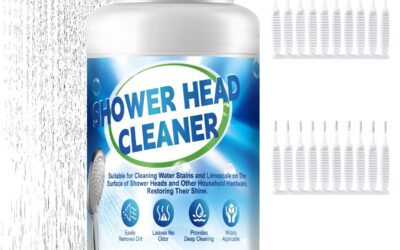
This is one of those ideas that makes you wonder why it took so long for someone to design it. Instead of plugging in warmers, spraying aerosols, or placing bowls of potpourri around your home, Vent Scent uses the air circulation system you already have running. Clip it onto a register, slide in a scent stick, and your HVAC does the rest. The result is a more even distribution of fragrance without hot spots or dead zones.
What really stands out is the adjustability. You can twist the device to control how much air flows through the scent chamber, which means you can dial it down to a whisper in a bedroom or crank it up in a high-traffic entryway. The variety pack gives you 10 sticks across five scents, so you're not locked into one fragrance if it doesn't work for your space. Vanilla and lavender are solid choices for bedrooms, while lemon and ocean work well in kitchens and bathrooms.
If you want a hands-off way to keep your home smelling fresh without dealing with plug-in timers or remembering to spray, this one delivers.
Styles it works with: Modern Farmhouse, Scandinavian, Minimalist, Transitional
Best placed in: Entryway vents for first impressions, bedroom registers for relaxation scents, main living areas for general home fragrance
May not suit: Homes with decorative or ornate vent covers where a white clip device would look out of place, rooms where HVAC vents are on ceilings only and hard to access, households that rarely run heating or cooling systems
Buy it if:
- You run your HVAC system regularly and want a passive way to fragrance your home
- You're tired of plug-in air fresheners taking up outlet space or leaving residue
- You want to test multiple scents before committing to a full supply of one fragrance
Consider waiting if:
- You want to see verified customer reviews about scent longevity and intensity before purchasing
Skip it if:
- Your HVAC vents are ceiling-mounted and difficult to reach for installation or scent stick changes
- You rarely run your heating or cooling system and need a scent solution that works independently
Check the latest price and availability on Amazon before it sells out.




Write Your Review
No reviews yet. Be the first to share your experience!