

> Editorial Note: I’m Hannah Lin, an interior living researcher who has spent years evaluating furniture care products and home maintenance methods. The guidance here draws on hands-on research, manufacturer specifications, and input from leather restoration professionals. I don’t recommend products I wouldn’t use myself, and I don’t inflate a simple topic to fill word count — if a step isn’t necessary, it isn’t here.
Leather couches are easier to maintain than fabric ones — spills sit on the surface instead of wicking straight into the fibers. But that doesn’t mean they’re maintenance-free. The cleaning method that works on your finished sofa will ruin an aniline one. The approach for a grease stain is completely different from what you’d do for ink. And a couch that’s cleaned but never conditioned will crack within a couple of seasons.
Getting it right comes down to three things: knowing what type of leather you have, matching the cleaning method to the type of soil, and conditioning afterward. This guide covers all three. If you’re also working on the rest of the room — finding best throw pillows for couch, the best area rug for living room, a best ottoman for living room, the best coffee table for living room, or the best accent chair for living room — keeping the sofa in good shape makes the whole space look more pulled together.
What type of leather is my couch?
Before you reach for any cleaner, you need to know what you’re working with. Leather isn’t one material — it’s a category with very different surface properties depending on how it was processed.
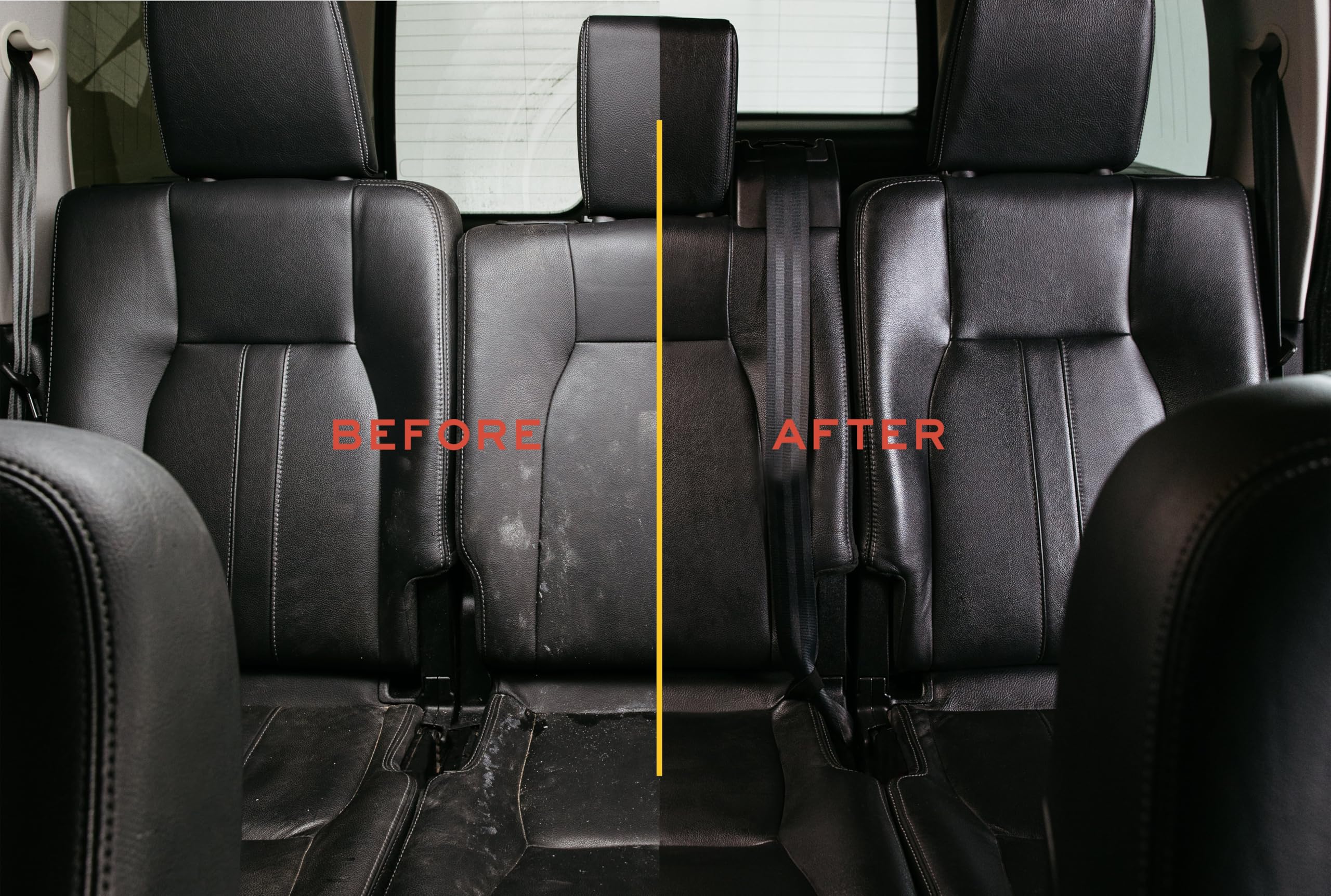
Finished (protected) leather is the most common type in residential furniture. It has a polymer coating over the top that makes it resistant to moisture and relatively forgiving of spills. Most mass-market leather sofas from furniture chains are finished leather. It’s the easiest to clean.
Semi-aniline leather has a light protective coating but retains more of the hide’s natural texture. It’s softer and more breathable than fully finished leather, but it needs gentler cleaning and more frequent conditioning. It’ll show wear in a more natural way — which is part of the appeal, but it also means it shows neglect faster.
Full aniline leather has no surface coating at all. It’s the most luxurious texture — the grain is completely natural — but it’s also the most absorbent. A water drop will darken it immediately. You don’t clean aniline leather the same way you’d clean finished leather. Period.
Faux leather (PU/vinyl) is synthetic and cleans similarly to finished leather, but it ages very differently. It peels rather than cracks, and no amount of conditioning will extend its lifespan past its design limits.
The quick check: wet one finger and press it gently on an inconspicuous spot — the underside of a cushion, the back of the frame. If the leather darkens within a few seconds, it’s aniline or semi-aniline. If the water beads or wipes off without darkening, it’s finished or faux.
What’s the safest way to clean a leather couch?
The principle is dry-to-wet escalation. Start with the least aggressive method and only move to something stronger if the sofa still needs it. Most cleaning damage happens because people reach for a wet cloth or spray bottle before removing loose debris first — rubbing grit across leather is exactly how you get fine scratches that accumulate into dull, worn-looking patches.
Step 1: Dry removal. Use a soft brush or a dry microfiber cloth to remove surface dust, crumbs, and pet hair from all seams and crevices. Don’t skip this. A dry pass takes two minutes and prevents 80% of cleaning-induced scratches.
Step 2: Damp wipe. Dampen a cloth — barely. It shouldn’t feel wet; you’re aiming for slightly more moisture than a dry cloth. Work in small sections, circular motions. Dry each section immediately with a clean dry cloth. Leather that stays wet for more than a minute or two can water-spot.
Step 3: Leather cleaner (if needed). If damp wiping didn’t clear the soil, use a pH-balanced leather cleaner. Apply to the cloth, not directly to the leather. Work in the same small-section circular pattern.
What to avoid: Dish soap is too alkaline and strips the natural oils from leather. Vinegar is too acidic and degrades the finish over time. Baby wipes contain alcohol and fragrance — both are damaging. Windex has ammonia, which destroys the protective coating. Bleach is obvious. None of these are worth the risk even for stubborn stains.
How do I remove specific stains from a leather couch?
The approach varies significantly by stain type. Acting quickly matters — most stains that are impossible to remove after 24 hours would’ve come out easily in the first 10 minutes.
Fresh food or drink spill: Blot immediately with a clean cloth. Don’t rub — rubbing pushes liquid deeper into the leather’s pores. Let the area dry naturally (no heat), then wipe with a barely damp cloth. Heat drying causes the leather to contract and can leave a ring.
Grease or oil stain: This is where people go wrong most often. Water alone won’t touch an oil stain — it’ll just spread it. Instead, sprinkle cornstarch or baking soda directly on the stain and leave it for at least 30 minutes. The powder absorbs the oil. Brush it off gently, then clean the area with a pH-balanced leather cleaner. If you skip the absorption step and go straight to a damp cloth, the water and oil combine and the stain becomes essentially permanent.
Ink: Move immediately. Apply rubbing alcohol to a cotton ball and dab — don’t rub — directly on the ink mark. Check a hidden area first, since alcohol can lighten some finishes. Ink that’s been sitting for hours is much harder to lift. Fresh ink from a ballpoint pen is usually removable in two or three careful dabs.
Crayon or wax: Place ice cubes in a zip-lock bag and hold it against the spot for several minutes until the wax hardens. Once hard, flick the wax off gently with a dull-edged tool — a butter knife or the edge of a credit card works. Don’t scrape. Then clean the remaining residue with a leather cleaner.
Mold or mildew: Mix equal parts water and rubbing alcohol. Wipe the affected area, then dry completely — mold returns if moisture stays in the leather. Condition after cleaning, since the alcohol solution is somewhat drying.
One rule across all stain types: never saturate the leather. Small amounts of cleaner, lots of blotting, quick drying.
Do I need to condition leather after cleaning?
Yes — and this step gets skipped more than any other.
Leather is skin. It contains natural oils that keep it supple and prevent cracking. Cleaning removes those oils along with the dirt. A couch that’s cleaned regularly but never conditioned becomes brittle and stiff. In low-humidity climates, you’ll see cracking along the flex points — the seat cushion edges, the armrest corners, the backrest crease — within 3 to 6 months of regular cleaning without conditioning.
Conditioning restores those oils. It’s not optional.
The schedule: condition after every deep clean, and do a standalone conditioning pass every 3 to 6 months even if the couch looks clean. In dry climates or rooms with forced-air heat, err toward every 3 months. In more humid environments, every 6 is fine.
Signs your leather needs conditioning right now: it looks dull instead of supple when light hits it at an angle; the surface feels slightly tacky or stiff; you can see hairline cracks starting in the flex points. Those small cracks can be stopped early but not reversed once they deepen.
Apply conditioner to a cloth, not directly to the leather. Work it in with circular motions and let it absorb for 20 to 30 minutes before buffing off the excess.
Can I clean faux leather the same way?
Mostly, with two important differences.
Faux leather — whether it’s PU (polyurethane) or vinyl — doesn’t dry out the way real leather does, so it doesn’t need conditioning. It also doesn’t respond to conditioners; the product sits on top of the polymer surface rather than absorbing. Skipping conditioner on faux leather isn’t neglect — it’s just irrelevant.
What faux leather does need: pH-neutral cleaners. Harsh alkaline or acidic cleaners break down the polymer coating faster, which accelerates the peeling. The same rules around avoiding dish soap, Windex, and vinegar apply.
The bigger difference is long-term. Real leather that’s maintained properly develops a patina and gets better-looking with age. It’s not unusual for a well-cared-for full-grain leather sofa to last 20 to 30 years. Faux leather has a structural lifespan of roughly 3 to 5 years under regular use — not because of poor cleaning habits, but because the polyurethane layer eventually separates from the backing regardless of how carefully it’s maintained. No cleaning routine changes that timeline significantly.
If your faux leather couch is already peeling in patches, cleaning can slow further degradation but won’t repair what’s already separated.
How often should I clean a leather couch?
Here’s a practical schedule that works for most households:
- Monthly: Light maintenance — dry brush to remove dust and debris, followed by a damp wipe on any visible marks.
- Quarterly: Deep clean with a leather-specific cleaner, followed by conditioning.
- Every 3 to 6 months: Standalone conditioning pass even if the couch doesn’t look dirty.
Households with kids or pets may need to shift the deep clean to monthly and the conditioning to every 2 to 3 months. Pet owners specifically: wipe pet hair with a rubber glove before any cleaning. Rubbing pet hair into the leather with a cleaning cloth — especially a damp one — acts like light sandpaper. One rubber glove pass takes 30 seconds and prevents scratching.
One thing that’s often forgotten: the back of the sofa and the underside of the armrests. These areas don’t get touched in normal use, but they collect dust that then migrates to the front when the couch is moved. Including them in your monthly wipe-down keeps the whole piece looking consistent.
Helpful Products for Leather Couch Care
Pros
- Deep conditioning formula rejuvenates old, neglected leather effectively
- Fragrance-free and EPA Safer Choice certified for sensitive households
- Versatile across furniture, auto interiors, shoes, bags, and saddles
- Long-lasting protection extends the life of expensive leather pieces
- American-made with a 50+ year reputation among leather professionals
Cons
- Not suitable for suede or nubuck leather
- May require multiple applications for severely damaged leather
- Higher price point than basic drugstore leather products
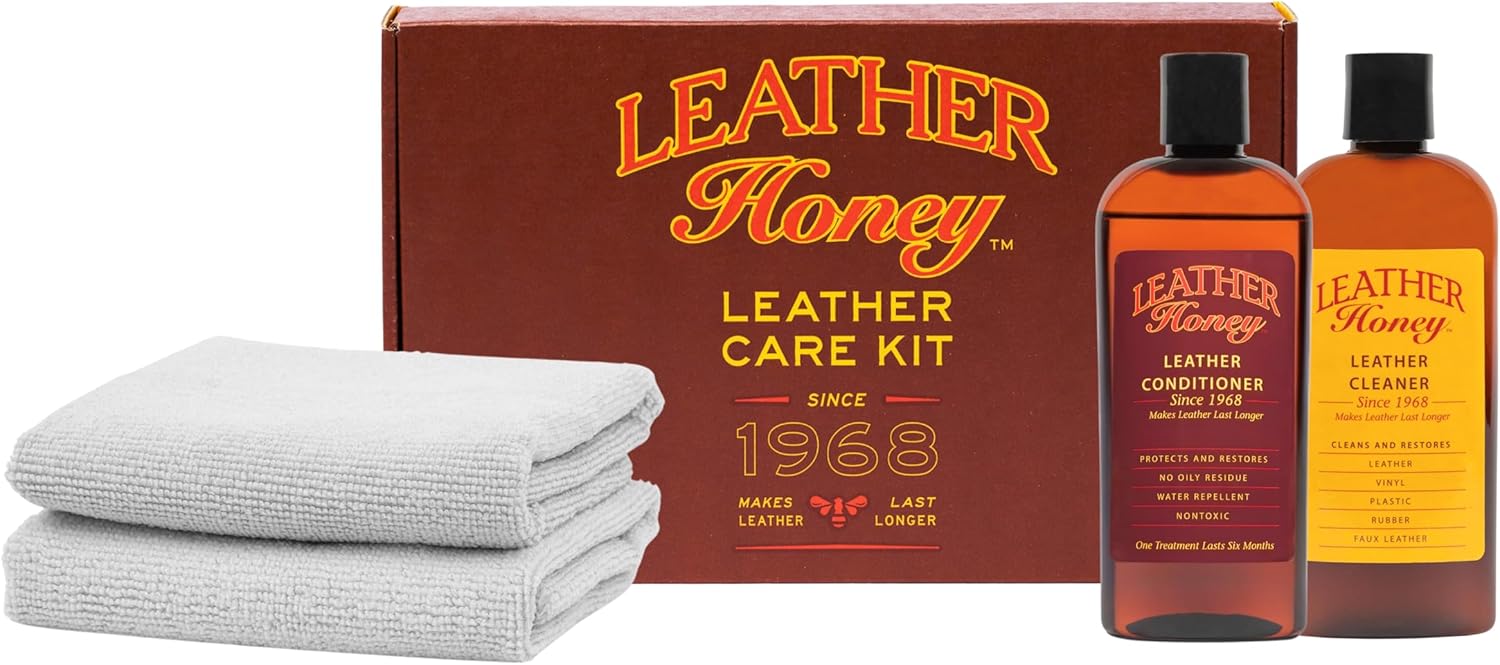
If you have a leather sofa that is starting to look tired or car seats that feel stiff and cracked, Leather Honey brings them back without the greasy residue or overpowering smell of typical conditioners. The formula sinks in rather than sitting on top, so your furniture feels supple again instead of slick.
We especially appreciate that it works on light-colored leather without darkening it (a common problem with oil-based products) and that the cleaner is gentle enough for regular use. The fact that it has been trusted by high-end furniture makers since 1968 speaks to how well it actually works compared to newer gimmicky products.
If you want to protect a leather investment or restore a piece you thought was beyond saving without exposing your home to harsh fumes, this one delivers.
Styles it works with: Traditional, Modern Farmhouse, Mid-Century Modern, Rustic, Industrial
Best placed in: Living room leather sofas and chairs, home office leather desk chairs, bedroom leather headboards or benches, entryway leather ottomans
May not suit: Homes with exclusively fabric or microfiber furniture, spaces with suede or nubuck pieces that require specialized care
Buy it if:
- You have leather furniture or car seats showing dryness, cracking, or fading
- You want a non-toxic option safe around children and pets
- You are maintaining high-quality leather pieces and want them to last decades
Consider waiting if:
- You are waiting for a sale or bundle deal since this is a premium-priced product
Skip it if:
- All your leather items are suede or nubuck (this formula is not compatible)
- You need an instant fix and cannot wait for deep conditioning to absorb over 24 hours
Check the latest price and availability on Amazon before it sells out.

Weiman Leather Cleaner & Conditioner 2-Pack with UVX-15 Sun Protection for Furniture, Auto, Bags & Shoes
Pros
- Multi-surface formula works on furniture, auto interiors, and accessories
- Built-in UV protection prevents sun damage and premature aging
- 2-pack offers excellent value for regular maintenance
- Easy spray application with included microfiber cloth
- Conditions and protects in one step
Cons
- Limited customer reviews make long-term performance unclear
- May require multiple applications for heavily neglected leather
- Not suitable for unfinished or suede leather
Leather furniture and accessories need regular care to stay soft and beautiful, but most people skip it because traditional products require multiple steps. This Weiman spray changes that. It cleans, conditions, and protects in one quick application, making leather maintenance actually doable for busy households.
What sets it apart is the UVX-15 sunscreen. If your sofa sits near a window or your car parks outside, UV rays are slowly drying and fading the leather. This formula creates a protective barrier that keeps colors vibrant and prevents that stiff, cracked look. The 2-pack means you can keep one for furniture and one for bags, shoes, and car seats.
If you want to keep your leather looking new without dedicating a whole afternoon to it, this one delivers.
Styles it works with: Traditional, Modern, Farmhouse, Transitional
Best placed in: Living room for leather sofas and chairs, home office for desk chairs and briefcases, entryway for bags and shoes, garage for auto detailing
May not suit: Homes with only fabric furniture, households with unfinished or suede leather items that require specialized care
Buy it if:
- You own multiple leather items (furniture, car seats, bags) and want one product for all
- Your leather furniture sits near windows or in sunny rooms
- You want to restore dried-out leather without professional cleaning costs
Consider waiting if:
- You want to read more customer reviews before committing to a 2-pack
Skip it if:
- You only have suede, nubuck, or unfinished leather that needs specialized care
- Your leather is severely damaged and needs professional restoration
Check the latest price and availability on Amazon before it sells out.

Pros
- EPA certified non-toxic formula safe for families and pets
- Works effectively on all leather types and colors including white
- No harsh scrubbing or rubbing needed for cleaning
- Made in USA with proven 50+ year track record
Cons
- Not suitable for suede materials
- Requires spot testing on each new leather item before full application
- Limited customer review data available for verification
This is the kind of cleaner you keep under the sink and reach for constantly. It handles the leather sofa where the kids spilled juice, the dining chairs that need refreshing, and those car seats that have seen one too many road trips. The fact that it is EPA certified means you are not filling your home with harsh fumes while you clean.
What sets Leather Honey apart is how gentle it works. No aggressive scrubbing that wears down the leather over time. You wipe it on, let it do its job, and your furniture looks cared for again. It works across everything from your living room sectional to the leather accent chair in the bedroom to your everyday handbag.
If you want a single leather cleaner that handles your furniture, car interior, and accessories without toxic ingredients or complicated steps, this one delivers.
Styles it works with: Modern, Traditional, Farmhouse, Transitional
Best placed in: Cleaning caddy under kitchen sink, laundry room shelf, garage storage for car care, bedroom closet for accessory maintenance
May not suit: Homes with exclusively suede furniture or accessories, spaces where you prefer scented cleaning products
Buy it if:
- You have leather furniture, car seats, or bags that need regular cleaning
- You want a family-safe, pet-safe cleaner without harsh chemicals or strong fragrances
- You need one product that works on multiple leather types and colors throughout your home
Consider waiting if:
- You want to see more recent customer reviews and ratings before purchasing
Skip it if:
- All your leather goods are suede material
- You prefer cleaners with a specific scent or fragrance
Check the latest price and availability on Amazon before it sells out.
All three are pH-balanced and safe for finished and semi-aniline leather. For aniline leather, do a patch check in a hidden area first — even gentle formulas can darken uncoated hides.




Write Your Review
No reviews yet. Be the first to share your experience!