

> Editorial Note: I’m Olivia Bennett, a storage and organization contributor. I approach storage as a systems problem rather than a product one — fit to actual room dimensions, load ratings, and how the system holds up under daily use.
Closed storage hides clutter that open shelving broadcasts. That’s the whole pitch. Before you commit, skim my related work on white bookcase with doors, storage cabinet with doors, nutcracker decorations for front doors, mirror closet doors for small rooms, and tall vs wide bookcase so the footprint matches your wall. These five units all pair enclosed cabinet bays with open display tiers, and I sorted them by depth, height, and honest use case.
How We Evaluated
I ranked each unit on shelf depth, total height, cabinet volume, and material honesty. Particleboard with melamine gets vetted differently than solid wood. I checked hinge quality, adjustable-shelf spacing, and whether the metal base actually resists rack. Load per shelf matters more than tier count, so I weighted that heavily.
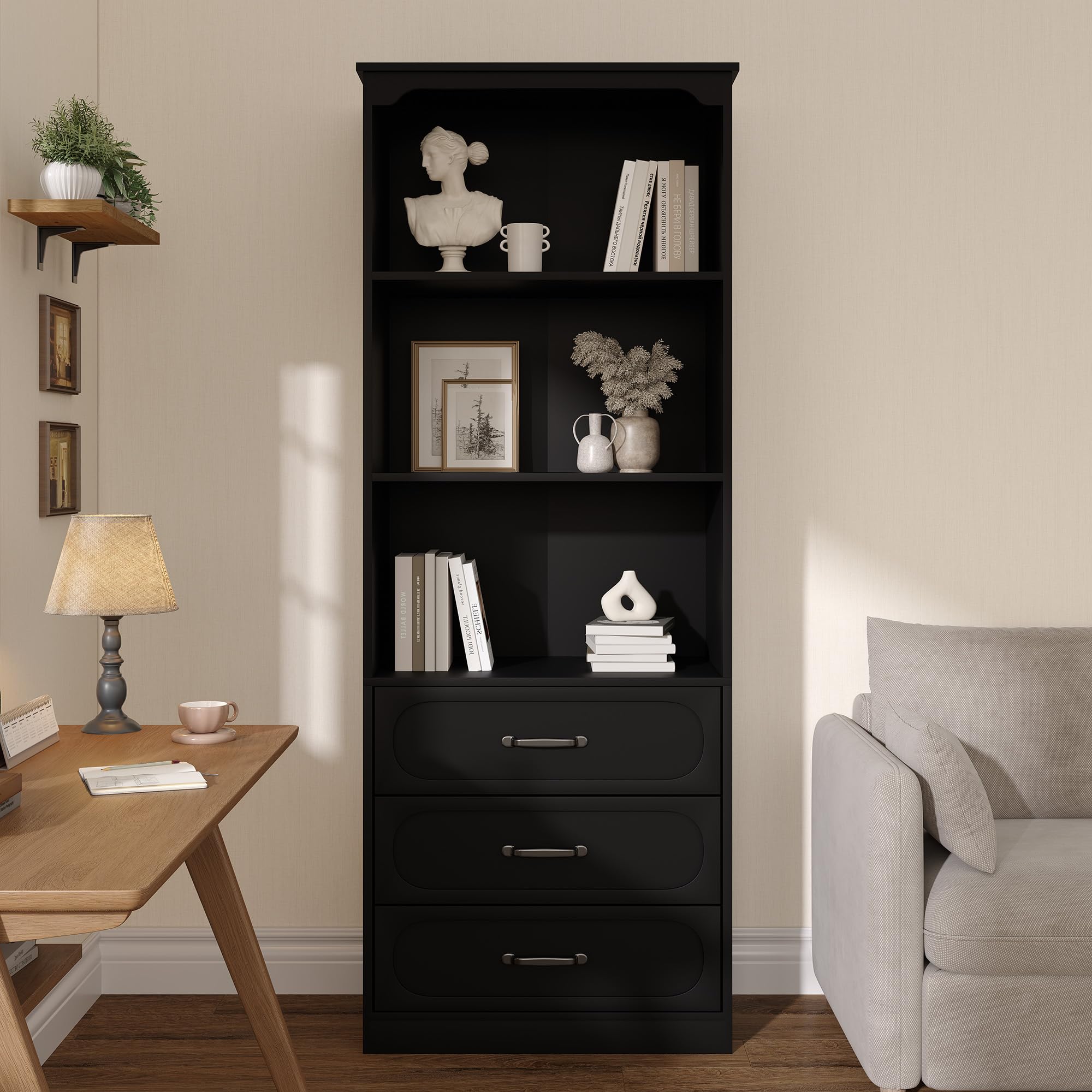


1. CABIHOME Farmhouse 5-Tier 71″ — the tall-wall workhorse
At 71 inches, the CABIHOME clears most doorway trim and fills a blank wall without a wide footprint. The metal base fights the wobble that plagues all-particleboard towers, and the lower cabinet with doors swallows router gear, cables, and paperback overflow. Adjustable shelves let you resize bays for oversized art books. Farmhouse styling reads warmer than industrial in a living room. The trade-off. Assembly runs long, and the melamine top scratches if you drag ceramics across it. For renters wanting height without bulk, this one wins.
2. Casaottima 6-Tier Floor-Standing — maximum vertical storage
The Casaottima stacks six tiers for people who need shelf count over shelf depth. More cubbies mean more sorting: media, décor, small bins. The enclosed base keeps the visual weight low and grounded. Its slimmer profile suits narrow entryways and home-office corners where a wide unit would crowd. Honest caveat. Six tiers on a tall frame means more sway if you skip the anti-tip anchor, so bolt it to a stud. Best for collectors who catalog by category rather than display large-format books.

3. IRONCK 5-Tier 11.8″ Depth — the industrial slim fit
IRONCK’s 11.8-inch depth is the headline. That shallow measurement lets it live in hallways and reading nooks where a standard 12-to-15-inch unit blocks traffic flow. Industrial styling pairs black metal framing with wood-tone shelving, and the doored storage section hides the mess a hallway shouldn’t show. Shallow depth means less capacity per shelf, so hardcovers may overhang slightly. It’s the pick for tight square footage and modern lofts. Skip it if you shelve deep binders or wide décor pieces.
4. VASAGLE Liry 6-Tier 70.7″ — the balanced farmhouse system
VASAGLE’s Liry runs 24.8 x 10 x 70.7 inches, a footprint tuned for balance rather than extremes. Six tiers plus lower storage cabinets give you display up top and concealment below. VASAGLE publishes clearer load guidance than most no-name sellers, which I value. The 10-inch depth stays slim while the height maximizes vertical real estate. Farmhouse finish blends with neutral rooms. The narrower depth limits deep storage, same as the IRONCK. For most living rooms wanting proportion and enclosed bays, this is the safe, sensible buy.

5. INNOD 69″ 6-Tier — the budget-conscious tall option
The INNOD delivers 69 inches and six shelves at the value end of this roundup. You get doored storage plus open display without the premium price attached to name-brand décor lines. Construction leans toward engineered wood, so treat weight limits conservatively and anchor it. It’s a reasonable first bookcase for a starter apartment or kid’s room. Finish quality won’t match VASAGLE up close, and hinge feel is lighter. But for the height and cabinet space per dollar, INNOD earns its spot.
Comparison Table
| Unit | Height | Depth | Tiers | Enclosed Storage | Best For |
|---|---|---|---|---|---|
| CABIHOME | 71″ | ~12″ | 5 | Cabinet + metal base | Tall-wall living rooms |
| Casaottima | Tall | Slim | 6 | Lower cabinet | Category collectors |
| IRONCK | Tall | 11.8″ | 5 | Doored section | Narrow hallways |
| VASAGLE Liry | 70.7″ | 10″ | 6 | Storage cabinets | Balanced neutral rooms |
| INNOD | 69″ | Slim | 6 | Storage shelf | Budget-first buyers |
How to Choose a Bookcase With Doors
Start with depth, not looks. A 10-to-12-inch shelf holds most hardcovers face-out; anything shallower forces overhang. Measure your wall height and subtract 2 inches for clearance and anti-tip hardware. Load rating trumps tier count, since six flimsy shelves hold less than five reinforced ones. BIFMA publishes furniture stability standards worth referencing when a seller stays quiet on limits.
Enclosed bays should hide what open tiers can’t. Route cables, bins, and clutter into cabinets, then reserve display shelves for curated items. Anchor every tall unit to a stud. Apartment Therapy flags tip-over as the leading furniture hazard in homes with kids, and no finish is worth that risk.
Doors vs Open Shelving: The Real Difference
Open shelves invite dust and demand tidiness. Closed cabinets forgive mess but cost you glanceable access. A hybrid, which every unit here uses, splits the difference: display up top, concealment below. That’s why doored bookcases outsell pure open units in small apartments.
Consider your dusting tolerance honestly. Glass or wood doors cut cleaning frequency on the items behind them. Wirecutter notes enclosed storage keeps electronics and paperwork cleaner over time. If your shelves face a busy kitchen or entry, doors earn their keep. If you rotate décor weekly, open tiers stay more practical.
Frequently Asked Questions
How deep should a bookcase with doors be?
Aim for 10 to 12 inches. That range holds standard hardcovers upright without overhang while keeping the unit from crowding walkways. IRONCK’s 11.8-inch and VASAGLE’s 10-inch profiles both fit tight rooms. Deeper shelves suit binders or bulky décor.
Do I need to anchor a tall bookcase?
Yes, always. Every unit here exceeds 69 inches, and top-heavy loading raises tip-over risk. Anchor to a wall stud with the included hardware. Apartment Therapy ranks unanchored furniture among the top home hazards for households with children or pets.
Which finish holds up best to daily use?
Solid wood resists scratches better than melamine-coated particleboard. None of these are full solid wood, so use coasters and avoid dragging heavy ceramics. VASAGLE and CABIHOME offer sturdier farmhouse finishes than the budget INNOD.
Can I adjust the shelf heights?
Some. CABIHOME lists adjustable shelves for oversized books. Others use fixed spacing, so verify before buying if you shelve large-format art or vinyl. Check my adjustable bookcase guide for units built around full reconfigurability.
Are six-tier bookcases more stable than five?
Not inherently. More tiers add height and sway unless the base is wide or metal-reinforced. CABIHOME’s metal base fights rack better than taller all-particleboard six-tier frames. Load rating and anchoring matter more than tier count.
Do doored bookcases really cut dust?
They do behind the enclosed bays. Electronics and paperwork stay cleaner in cabinets than on open shelves. Wirecutter confirms closed storage reduces dust buildup on stored items. Open display tiers still need regular wiping.
Bottom Line
The CABIHOME 71″ 5-tier wins for most living rooms. Its metal base delivers real stability, the adjustable shelves flex around oversized books, and the height fills a wall without a wide footprint. If you need six tiers in a slim 10-inch profile, the VASAGLE Liry is the balanced, proportion-first alternative. Just anchor whichever you pick, because none of these are solid wood, and tall engineered-wood towers demand a stud bolt.




Write Your Review
No reviews yet. Be the first to share your experience!