

> Editorial Note: I’m Hannah Lin, an Interior Living Researcher who’s spent 9+ years analyzing the home furniture market. This guide draws on BIFMA, GREENGUARD, and FSC certifications, plus owner reviews aggregated from Wirecutter, Apartment Therapy, and the major home design subreddits.
A pergola and a gazebo both extend your living space outdoors, yet they solve different problems. A pergola offers open, slatted overhead framing; a gazebo delivers a fully covered, often enclosed retreat. Before you commit, it helps to sort out your patio layout, sun exposure, and budget. For related projects, see our guides on outdoor patio furniture, full vs queen bed, twin vs full bed, wire vs wood closet system, and latex vs memory foam mattress.
The Key Differences at a Glance
| Feature | Pergola | Gazebo |
|---|---|---|
| Roof | Open slats or louvers | Solid, closed roof |
| Rain protection | Partial to none | Full |
| Shade | Filtered sunlight | Deep shade |
| Typical cost | $300–$1,500 | $600–$3,000 |
| Wall option | Rare | Common (netting/curtains) |
| Best for | Airy dining, climbing plants | All-weather lounging |
When a Pergola Wins
A pergola suits homeowners who want architectural definition without sealing off the sky. The open frame filters roughly 40–60% of direct light, keeping a patio bright but cooler. It pairs beautifully with climbing vines, retractable canopies, or a wall-mounted lean-to design against your house.
If your climate runs dry and hot, a pergola breathes better than a closed structure. Aluminum-framed versions resist rust and shrug off UV exposure per ASTM weathering benchmarks. They’re lighter to install and easier to permit in many municipalities. And they cost less on average.
A pergola also flexes with a small yard. Freestanding models start around 10 x 10 feet, but a lean-to version bolts to the house and needs just 3 to 4 feet of projection to shade a doorway or grill station. That footprint flexibility is why Apartment Therapy readers keep picking them for narrow side yards. The trade-off is honest: no roof means no rain cover, so plan for a canopy insert if you want shade that holds through a drizzle.
When a Gazebo Wins
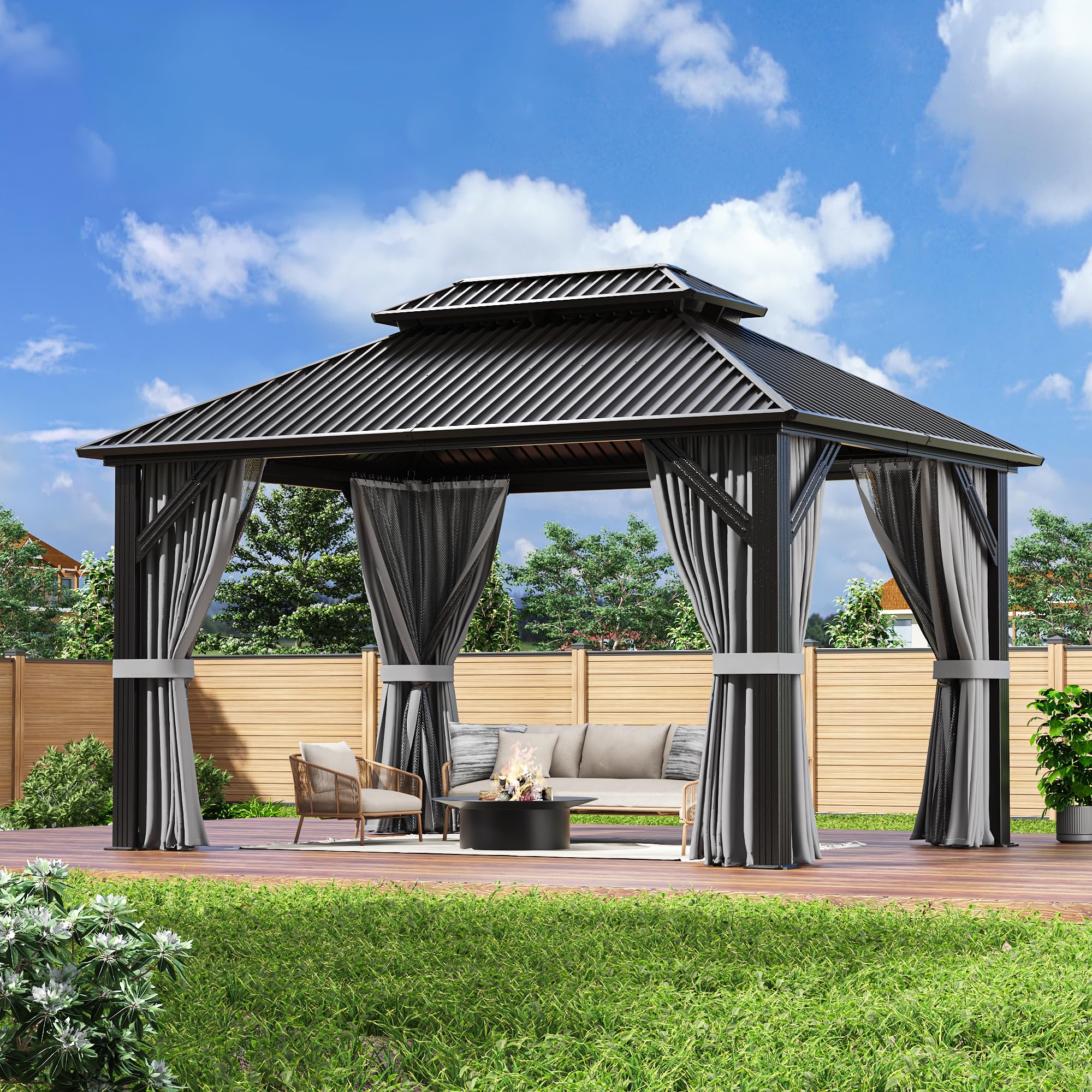
A gazebo earns its keep when weather is unpredictable. A solid polycarbonate or hardtop roof sheds rain and snow, so your furniture stays dry year-round. Many models add mosquito netting and curtains, turning an open deck into a shielded room.
For families who entertain through summer bug season, that enclosure matters. GREENGUARD-certified finishes on some frames reduce off-gassing, a plus for enclosed spaces. Gazebos weigh more and demand sturdier anchoring, often rated to withstand 20–30 mph wind loads. Expect higher upfront cost. But you gain true all-season use.
Our Top Picks for Each
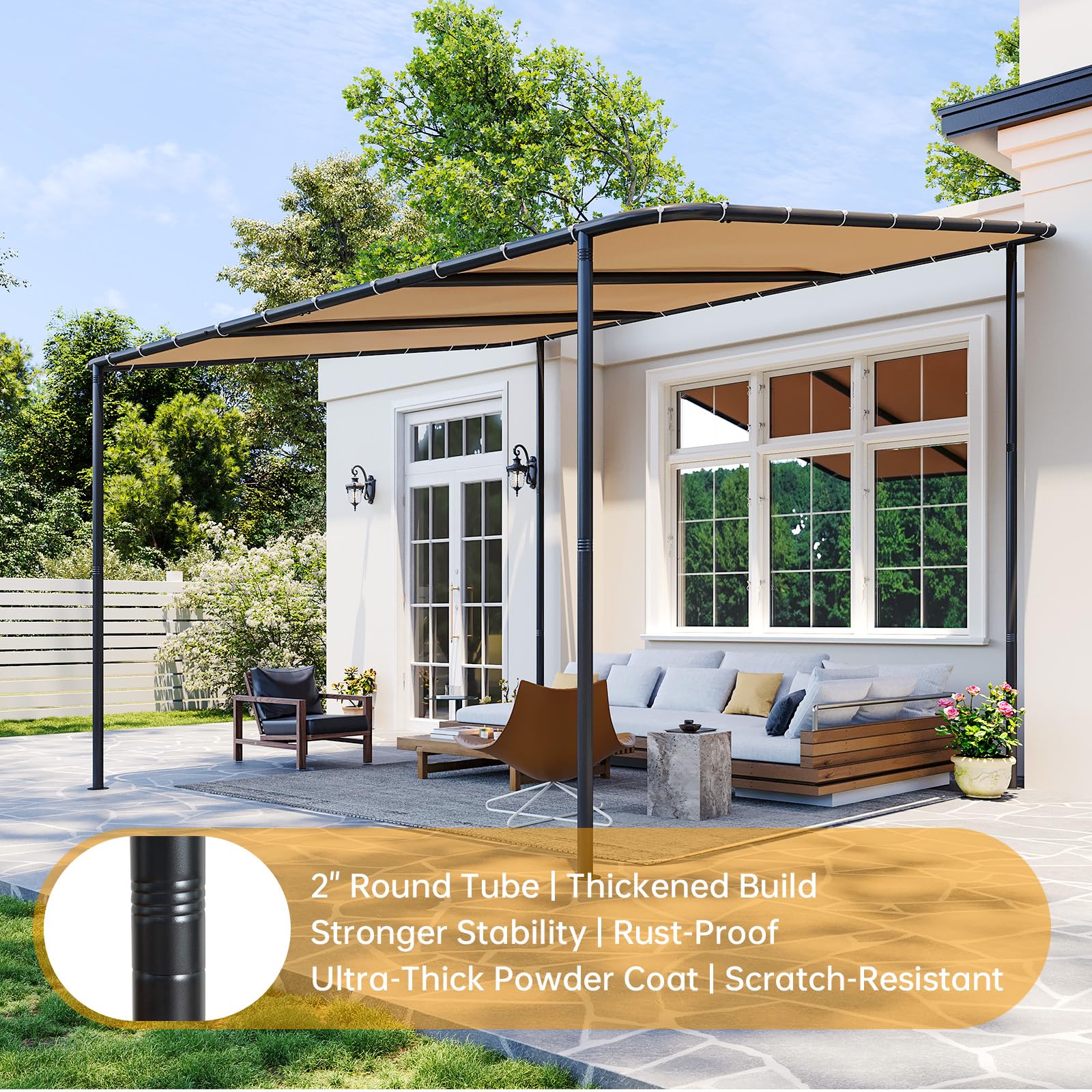

Breezestival 10x12 Lean-to Pergola Outdoor Gazebo with UV & Water Resistant Canopy for Patio Backyard
Pros
- Large 10x12 coverage area fits a full outdoor dining or seating arrangement
- Dual protection against UV rays and water keeps the space usable in varied weather
- Wall-mounted design offers structural stability without extra posts on one side
- Sloped roof prevents water pooling and directs runoff away from the seating area
- Priced well under $200, significantly cheaper than permanent patio covers
Cons
- No customer reviews yet, so long-term durability in harsh weather is unconfirmed
- Requires a solid exterior wall for mounting, limiting placement options on your property
- Khaki is the only color option, which may not match every home exterior
The Breezestival 10x12 lean-to pergola turns a bare patio wall into a proper outdoor room. At 10 by 12 feet, it covers enough space for a full dining table or a cozy lounge setup, giving you that covered patio feel without pouring concrete or hiring a contractor. The khaki canopy looks clean and classic against most home exteriors, and the sloped roof means rainwater runs off instead of pooling overhead.
What makes this stand out for outdoor entertaining is the dual UV and water resistance. You get real shade on hot afternoons and light rain protection for evening dinners outside. The wall-mounted design also means fewer ground posts cluttering your patio floor, so your space still feels open and accessible.
If you want a covered outdoor area that looks intentional and permanent without the permanent price tag or construction hassle, this one delivers.
Styles it works with: Transitional, Coastal, Modern Farmhouse, Mediterranean
Best placed in: Back patio against the house wall, over a deck attached to the home, garden wall adjacent to an outdoor kitchen or grill area
May not suit: Properties without a suitable load-bearing exterior wall for mounting, small patios or balconies under 10x12 feet, or homes where HOA rules restrict attached outdoor structures
Buy it if:
- You have an uncovered patio or deck against your house and want shade without a permanent build
- You entertain outdoors regularly and need protection from sun and light rain
- You want a large covered area for under $200 that looks polished and intentional
Consider waiting if:
- You need a color other than khaki to match your home exterior
- You want to see long-term durability reviews before committing, since this product is new with no customer feedback yet
Skip it if:
- You need a freestanding gazebo for a yard area away from any wall
- Your exterior wall cannot support a mounted structure or you rent and cannot drill into walls
Check the latest price and availability on Amazon before it sells out.


Best Pergola Picks
Breezestival 10×12 Lean-To Pergola — for renters and tight patios needing house-mounted shade. Its sloped, water-resistant awning and UV-resistant panels handle sun and light rain without a full enclosure. The wall-mounted design saves floor space, ideal for narrow decks. Owner feedback on home design subreddits praises the airy feel, though the open sides mean it won’t stop wind-driven rain. At the lower end of the price range, it’s a practical entry point for anyone wanting definition over full coverage. Assembly runs simpler than freestanding units since one edge anchors to your wall.
Best Gazebo Picks
VORTEXTOVE 10×10 Lean-To Hardtop Gazebo — for homeowners wanting a rain-proof roof against the house. Its polycarbonate panels and aluminum frame resist corrosion and block harsh midday sun. The wall-mounted format keeps it stable in gusts. Reviewers note solid water shedding, a clear win over slatted alternatives.
Aoxun 8’x10′ Premium Gazebo — for smaller patios needing full coverage on a budget. The aluminum top frame and polycarbonate panels deliver dependable shade in a compact footprint. Apartment Therapy contributors flag its value, though the 8-foot depth suits two to four seats, not large gatherings.
Aoxun 10’x12′ Lean-To Gazebo with Mosquito Net — for bug-heavy yards. The netting and curtains convert an open patio into a shielded lounge, and the polycarbonate roof handles rain. Larger footprint fits a dining set. Curtains add privacy but need securing in wind.
AirWire 10’x12′ Hardtop Aluminum Gazebo (Dark Gray) — for a freestanding, all-weather centerpiece. The hardtop roof and aluminum frame stand independent of any wall, giving placement flexibility across a lawn or deck. Owners cite reliable snow shedding. It’s the heaviest here, so plan concrete anchoring before setup.
The Verdict
For a covered dining area beside your house, the VORTEXTOVE 10×10 Lean-To Hardtop wins on rain protection and stability. For a mosquito-plagued backyard where you lounge past dusk, the Aoxun 10’x12′ Lean-To with Mosquito Net takes it, thanks to the netting and curtains. For a bright, breezy patio in a dry climate on a lower budget, the Breezestival Lean-To Pergola is the sensible pick. Match the structure to your weather first, then your footprint.
Frequently Asked Questions
Is a pergola cheaper than a gazebo?
Usually, yes. Pergolas average $300–$1,500 versus $600–$3,000 for gazebos, since the open frame uses less material than a solid roof. Enclosure features like netting and hardtop panels push gazebo prices higher.
Which offers better rain protection?
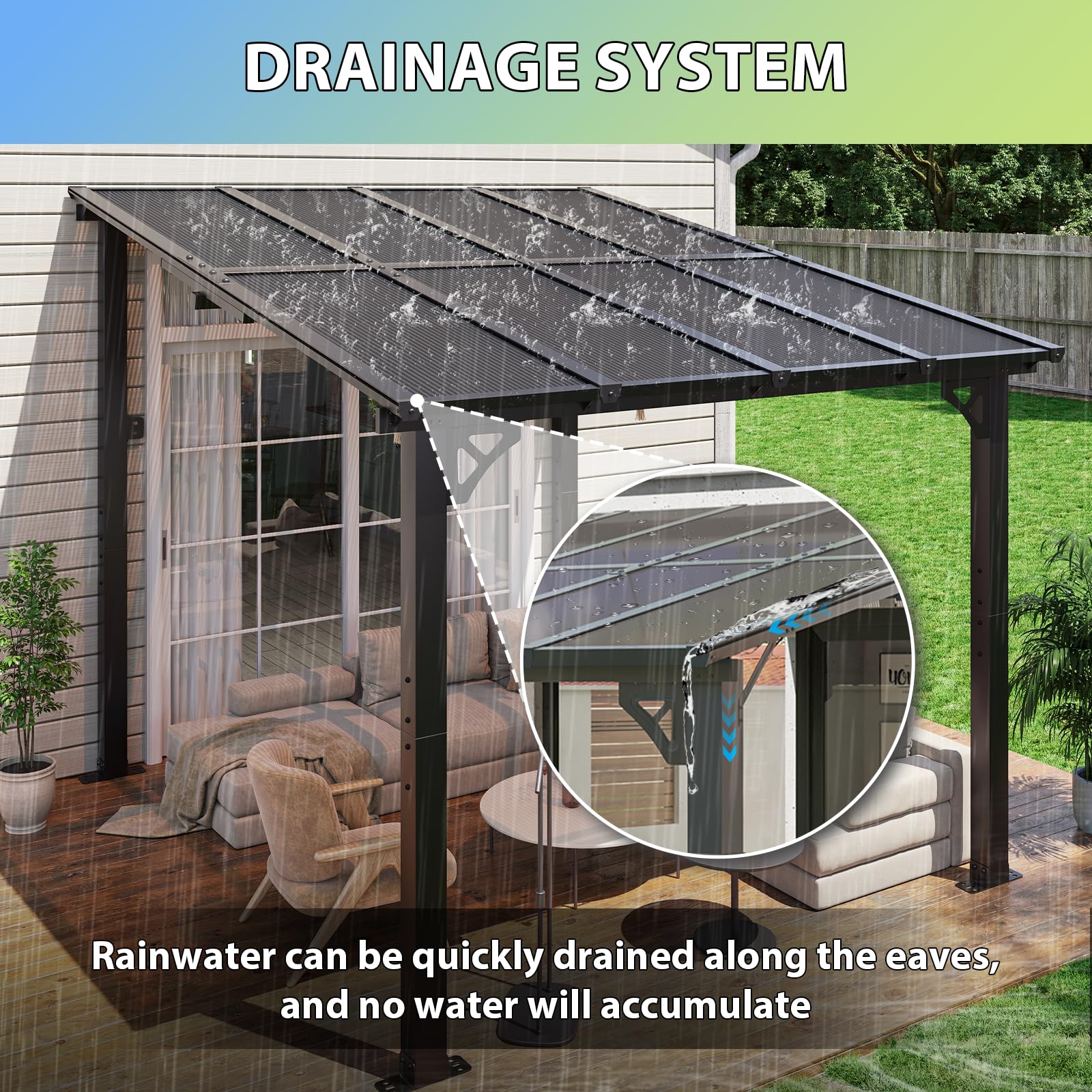
A gazebo. Its solid polycarbonate or hardtop roof sheds water fully, keeping furniture dry. A pergola’s open slats let rain through unless you add a retractable canopy or awning, which the Breezestival’s sloped design partially provides.
Do I need a permit for either?
Often, yes, especially for anchored or wall-mounted structures. Rules vary by municipality and size. Freestanding units over 100 square feet frequently trigger permits. Check local codes before buying to avoid removal orders.
Are aluminum frames better than wood?
For low maintenance, yes. Aluminum resists rust and UV damage per ASTM weathering standards and won’t rot. Wood offers warmth but needs sealing every 1–2 years. Every unit here uses aluminum framing.
Can a pergola support climbing plants?
Yes. The open slat design is built for vines like wisteria or clematis, which add natural shade over time. A closed gazebo roof can’t host climbers, so choose a pergola if greenery is your goal.
How much wind can these withstand?
Quality hardtop gazebos anchor to resist roughly 20–30 mph loads when properly bolted. Wall-mounted lean-to models like the VORTEXTOVE gain stability from the house. Always secure freestanding units with concrete footings.
Bottom Line
Pick the VORTEXTOVE 10×10 Lean-To Hardtop if you want dependable rain coverage against your house. Choose the Aoxun 10’x12′ with Mosquito Net when bugs and dusk lounging define your backyard. Budget-minded shoppers in dry climates should reach for the Breezestival Pergola for airy, filtered shade. Match your structure to weather and footprint, and you’ll get years of use. Aluminum framing across all five keeps upkeep low.

Write Your Review
No reviews yet. Be the first to share your experience!