

> Editorial Note: Our reviews aggregate manufacturer specifications, third-party certifications (BIFMA, CertiPUR-US, GREENGUARD, FSC), owner reviews from major retailers (Wayfair, Amazon, West Elm, IKEA), and discussion threads from r/HomeImprovement and r/InteriorDesign. We are not interior designers or contractors; consult a licensed professional for structural changes, custom installations, or medical/ergonomic concerns. Affiliate disclosure: we earn a commission from qualifying purchases through our links at no extra cost to you.
A back patio at dusk, the last orange light bleeding off the fence line, and a soft amber glow blinking on as the timer trips, that is the brief these five string lights deliver against. Not the harsh bluish wash of porch floodlights, not the brittle cool-white of holiday strands, but the slow warm hum that turns a slab of concrete into somewhere you want to sit.
Outdoor string lights have shifted hard in the last three seasons. Shatterproof S11 and S14 bulbs replaced fragile glass on commercial-grade strands. Edison-style filaments at 2200K to 2700K became the default warm tone aggregated reviews call out as most flattering. Smart RGB strands with app control entered the budget tier, and solar charging finally reached enough lumen output for ambient use. If you are weighing companion pieces, our guides on patio string lights ideas and best outdoor lighting cover the broader fixture mix worth pairing with these strands.
What Ties These Together
Every strand on this list shares four traits aggregated owner reviews from Amazon, r/landscaping, and r/InteriorDesign rate as non-negotiable for permanent outdoor installation. First, a weatherproof rating of IP65 or higher, meaning the strand and bulbs survive sustained rain without socket corrosion. Second, shatterproof bulbs, almost always polycarbonate rather than glass, because real outdoor strands take wind hits and ladder bumps. Third, a warm color temperature in the 2200K to 2700K range, which Apartment Therapy style editors consistently flag as the most flattering for skin tones and aged-wood textures. Fourth, end-to-end connector plugs that allow chaining multiple strands on one outlet without splitting power across separate timers.
Beyond the basics, the strands here diverge into useful camps: ultra-long commercial runs for pergola perimeters, ETL-listed strands for code-conscious installs, and smart-RGB strands for renters who want app-controlled color shifts.
1. Tenmiro 200FT Outdoor String Lights — The Pergola-Length Workhorse
Tenmiro’s 200-foot strand answers the most common complaint surfaced across r/landscaping threads, which is that 48-foot strands require three or four units chained together to reach across a typical backyard pergola or fence line. Manufacturer documentation lists 60 shatterproof S11 Edison bulbs across 200 feet, spaced every 3.3 feet, which aggregated owner reviews describe as the right density for ambient glow without the crowded carnival look.
The bulbs are polycarbonate rather than glass, rated for sustained outdoor use through rain and modest snow loads. Specifications list IP65 weatherproofing with each socket sealed against moisture infiltration, a build pattern Better Homes & Gardens editors note as the dividing line between strands that survive one season and strands that last three or four.
The trade-off is upfront cost and the time to mount 200 feet cleanly. Owners report the strand works best with proper hooks or guide wire rather than draped loosely, since cable weight over long spans can sag at midpoints. For a wraparound pergola, fence line, or perimeter run on a deeper lot, this is the strand that removes the chaining problem entirely.
2. addlon 48FT Edison Vintage ETL-Listed — The Code-Conscious Pick
Where Tenmiro chases length, addlon chases certification. The 48-foot strand carries an ETL listing, meaning a recognized certification laboratory verified U.S. electrical safety compliance, which matters when the install runs near a sub-panel, a hot tub, or anywhere a permit-conscious homeowner wants documentation. Aggregated reviews from Amazon and r/HomeImprovement flag ETL or UL listing as the first filter buyers use when ruling out budget strands.
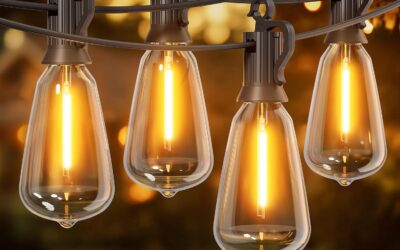
The strand uses 18 shatterproof S14 Edison bulbs, slightly larger than Tenmiro’s S11 silhouette, with a warm 2200K filament Apartment Therapy editors describe as the closest match to oil-lamp warmth without going amber-orange. Owners report the heavier-gauge SJTW commercial-grade wire feels noticeably more substantial than residential 18-gauge strands, extending practical lifespan to four or five seasons rather than two.
Forty-eight feet is enough for most patio perimeters or a single zigzag across a 20-by-20 deck, and the strand chains end-to-end with up to three more addlon strands on one outlet. For renters who eventually move, the commercial wire jacket holds up to repeated coiling and storage far better than thin household strands.
3. MGVIH 100FT ST38 Shatterproof Edison — The Mid-Length Compromise
MGVIH lands between Tenmiro and addlon at exactly 100 feet, 30 meters in metric, which aggregated buyer feedback identifies as the sweet spot for an average suburban backyard or deep covered porch. The bulbs are ST38 shatterproof Edison silhouettes, smaller than the S14 profile but larger than holiday-strand minis, giving a denser visual rhythm at the same warm 2700K color temperature.
Specifications list IP65 weatherproofing and polycarbonate bulb construction. Owner reports from Amazon and r/landscaping note the strand sits in a useful middle tier on price per foot, materially cheaper than Tenmiro and addlon while still using shatterproof bulbs and sealed sockets. The trade-off is the absence of formal ETL or UL listing, which makes this the strand to skip if the install runs near electrical work facing inspection.
For a deck, a pergola of moderate depth, or a backyard wedding setup that comes down after one season, the 100-foot length removes the chaining problem without the long-term commitment of a 200-foot run. Architectural Digest backyard features repeatedly recommend this length category as the most forgiving for first-time installs.
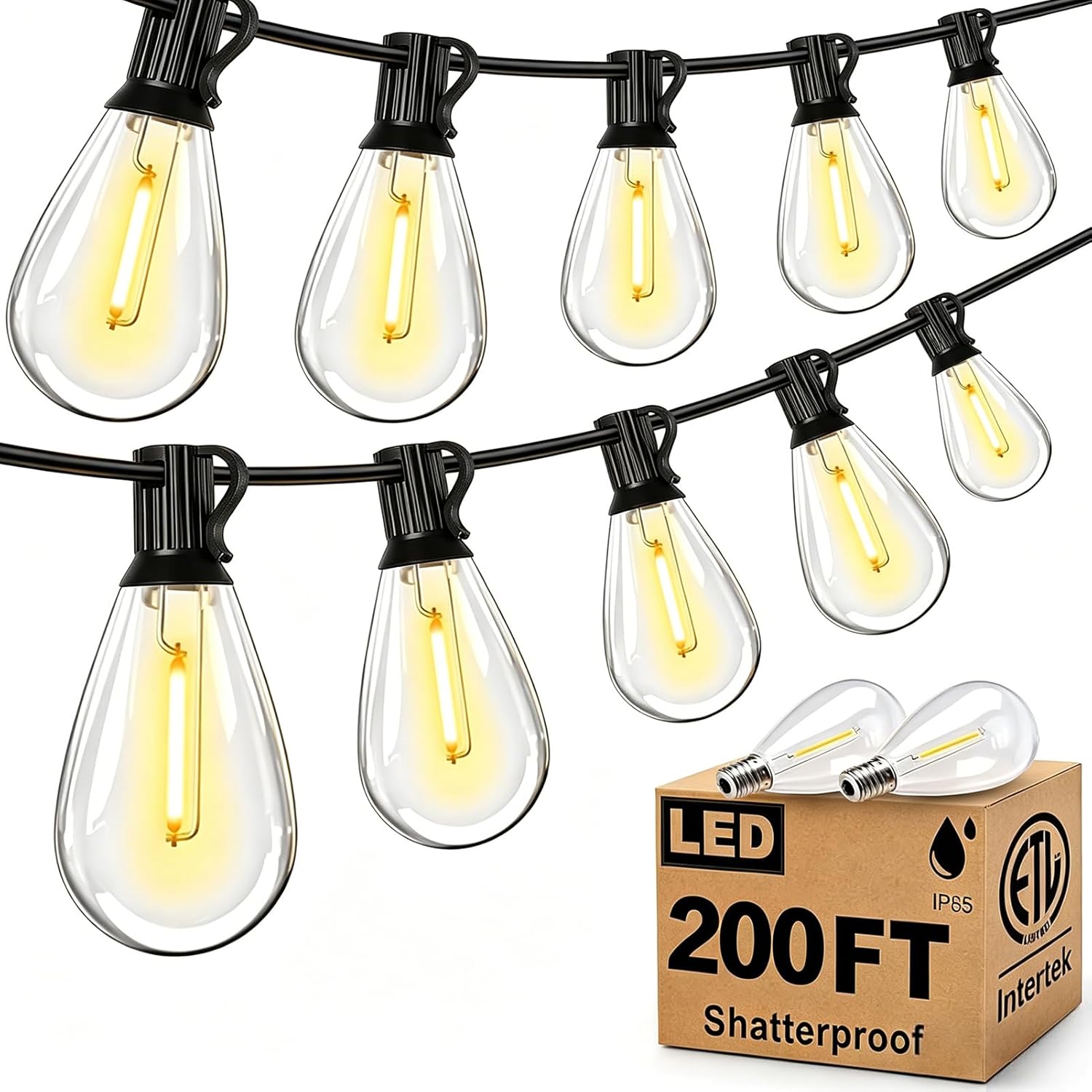
Tenmiro 200FT Outdoor String Lights with 60 Shatterproof S11 Bulbs, Waterproof LED Patio Lights for Backyard, Deck & Party Decor
Pros
- Extra-long 200-foot length covers large yards, pool areas, or fences without connecting multiple strands
- Shatterproof plastic bulbs resist breakage from impacts, weather, and accidental damage
- Fully waterproof construction rated for year-round outdoor use in rain, snow, and humidity
- Warm 2700K light temperature creates cozy, non-glaring ambiance for outdoor entertaining
- Comes with 2 spare bulbs and a full-year warranty for hassle-free replacement
Cons
- No verified customer reviews yet to confirm real-world durability and performance claims
- 60 bulbs across 200 feet means roughly 3.3-foot spacing, which may feel sparse for some decorating preferences
- Lacks smart features like dimming, timers, or app control found in premium outdoor lighting options
The Tenmiro 200FT solves one of the most frustrating parts of outdoor lighting: connecting multiple short strands and dealing with tangled extension cords. With one continuous 200-foot run, you can wrap an entire pergola, line a long fence, or illuminate a medium-sized garden without a single splice point. The shatterproof S11 bulbs feel substantial in hand and the warm 2700K glow hits that sweet spot between functional visibility and cozy ambiance.
What makes this particularly smart for homeowners is the year-round durability. The waterproof rating means you can leave these up through spring rains, summer pool parties, fall evenings, and winter holidays without constantly taking them down and reinstalling. The included spare bulbs are a thoughtful touch that saves you from scrambling to match replacements months later.
If you want seamless outdoor ambiance across a large space without the headache of connecting multiple light strands, this one delivers.
Styles it works with: Modern Farmhouse, Coastal, Bohemian, Rustic, Contemporary Outdoor Spaces
Best placed in: Backyard patios and decks, wraparound fences or pergolas, poolside perimeters, outdoor dining areas, large trees or garden borders
May not suit: Small balconies or compact patios where 200 feet is excessive; covered porches with low clearance where bulb size might feel oversized; renters who cannot install permanent hooks or mounting hardware
Buy it if:
- You have a large yard, pool area, or long fence that normally requires splicing 3-4 shorter light strands together
- You want year-round outdoor lighting that can handle rain, snow, and humidity without constant maintenance
- You prefer warm, ambient lighting for entertaining and need shatterproof bulbs for safety around kids and pets
Consider waiting if:
- You want verified customer feedback before committing, since this product currently has no reviews
- You need smart home integration, dimming, or timer features for automated control
Skip it if:
- Your outdoor space is under 100 feet and you would have excessive slack with a 200-foot strand
- You need color-changing or RGB bulbs instead of fixed warm white light
Check the latest price and availability on Amazon before it sells out.

addlon 48FT LED Outdoor String Lights with 15 Shatterproof Edison Bulbs - Weatherproof Patio Lights
Pros
- Highly rated by over 16,000 customers with 4.6/5 stars for reliability
- Dual parallel wiring means if one bulb goes out, the rest stay lit
- Easy installation with built-in hooks and multiple mounting options
- T-shaped suspension wire adds stability for windy conditions
- Energy-efficient LEDs reduce power consumption compared to incandescent bistro lights
Cons
- Dimmer switch sold separately, adding to total cost if you want adjustable brightness
- Bulbs may require extra tightening during installation to ensure proper electrical contact
- 3.11-foot bulb spacing may be too wide for smaller patios under 20 feet
These string lights hit the sweet spot between charm and practicality. The Edison-style bulbs give you that warm, nostalgic bistro glow without the fragility of glass or the energy waste of incandescent bulbs. We love that they are genuinely weatherproof, not just water-resistant, so you can leave them up through every season without constant maintenance.
The ability to connect up to 28 strands is a game-changer for anyone lighting a large patio, pergola, or backyard wedding venue. You get professional-looking results without hiring an electrician. The dimmer compatibility is the finishing touch, letting you dial in the exact vibe whether you are hosting a summer BBQ or a quiet evening with a book.
If you want cafe-quality outdoor lighting that survives real weather without constant bulb replacements, this one delivers.
Styles it works with: Modern Farmhouse, Industrial, Rustic, Bohemian, Coastal
Best placed in: Covered patios, pergolas, decks, outdoor dining areas, backyard fences, balconies, gazebos
May not suit: Very small balconies under 15 feet where the 3-foot bulb spacing feels too spread out; minimalist modern spaces where vintage Edison bulbs clash with sleek contemporary design
Buy it if:
- You need reliable outdoor lighting that stays up year-round through rain, snow, and heat
- You are lighting a medium to large outdoor space and want the option to expand coverage by connecting multiple strands
- You want the bistro cafe look without the hassle of replacing fragile glass bulbs every season
Consider waiting if:
- You need a dimmer switch and want to bundle it in a sale to save on total cost
Skip it if:
- Your outdoor space is under 20 feet and you need tighter bulb spacing for more concentrated light
- You prefer modern globe bulbs or cool white light over warm vintage Edison style
Check the latest price and availability on Amazon before it sells out.

MGVIH 100ft Outdoor String Lights with Remote - Dimmable LED Patio Lights, Shatterproof ST38 Bulbs, Waterproof for Backyard & Gazebo
Pros
- Remote control with 4 brightness levels (25%, 50%, 75%, 100%) and 3 lighting modes plus timer
- Shatterproof PET bulbs are safer and more durable than glass, especially in windy conditions or high-traffic areas
- 100 feet of coverage with 37 bulbs plus 2 spares provides excellent value under $25
- IP65 waterproof rating allows year-round outdoor installation in rain, snow, and extreme temperatures
- Warm 2700K color temperature creates inviting bistro-style ambiance
Cons
- Zero customer reviews makes it difficult to verify real-world performance and longevity claims
- PET plastic bulbs may lack the premium aesthetic of authentic glass Edison bulbs
- E12 base bulbs are not individually replaceable with standard Edison bulbs if you want to upgrade later
This MGVIH string light set solves the biggest frustration with outdoor lighting: constantly adjusting brightness or replacing broken bulbs. The remote control means you can dim the lights from 25% to 100% without getting up, and the shatterproof PET bulbs survive drops, storms, and accidental bumps that would shatter glass alternatives.
At 100 feet with 37 bulbs, this set provides serious coverage for backyards, patios, or pergolas. The warm 2700K glow creates that cozy bistro vibe you see at trendy outdoor restaurants, and the IP65 waterproof rating means you can install it once and leave it up through all four seasons. The built-in timer is genuinely useful for people who forget to turn off outdoor lights before bed.
If you want flexible, durable patio lighting that covers a large area without worrying about broken bulbs or high electric bills, this one delivers.
Styles it works with: Modern Farmhouse, Rustic, Bohemian, Casual Coastal, Industrial
Best placed in: Covered patios or pergolas, backyard fence lines, gazebo perimeters, deck railings, outdoor dining areas, pool cabanas
May not suit: Small balconies under 20 feet (too much excess cord), formal traditional landscapes where authentic glass Edison bulbs are preferred, or homes seeking ultra-bright task lighting rather than ambient glow
Buy it if:
- You need to light a large outdoor space (patio, backyard, or deck over 50 feet) on a budget under $25
- You have kids, pets, or windy conditions where shatterproof bulbs are a practical necessity
- You want remote control convenience to adjust brightness for different occasions without rewiring or smart home setup
Consider waiting if:
- You want to read verified customer reviews first, since this product currently has zero reviews
- You prefer the authentic look and weight of real glass Edison bulbs for a high-end aesthetic
Skip it if:
- You need bright white or daylight color temperature for task lighting rather than warm ambient glow
- You require smart home integration with Alexa, Google Home, or app control instead of a basic remote
Check the latest price and availability on Amazon before it sells out.

addlon 100FT LED Outdoor String Lights with Remote, Waterproof Dimmable Patio Lights with Shatterproof ST38 Bulbs
Pros
- Remote control eliminates need to reach the outlet for on/off and dimming
- Timer function automatically shuts lights off, saving energy and effort
- Shatterproof plastic bulbs are safer and more durable than glass alternatives
- Connectable design allows coverage of up to 200 feet from a single plug
- Energy-efficient LED bulbs reduce electricity costs compared to incandescent options
Cons
- No customer reviews yet to verify real-world performance and durability claims
- Remote range of 50 feet may not reach distant corners of very large yards
- Replacement bulbs and accessories must be purchased separately if originals fail
These string lights solve the biggest annoyance of outdoor lighting: constantly walking to the outlet to turn them on, adjust brightness, or switch them off before bed. The remote control means you can dim the lights for a romantic dinner, brighten them for a backyard game night, or power everything down from your deck chair without interrupting the moment.
The shatterproof plastic bulbs are a practical upgrade over traditional glass, especially if you have kids running around the yard or live somewhere with strong winds. They still deliver that warm Edison-style glow that makes any patio feel like a cozy bistro, but without the worry of shattered glass on your deck. The timer function is the cherry on top, automatically shutting off the lights so you are not wasting electricity or waking up at 2 AM realizing you left them on.
If you want the ambiance of cafe-style outdoor lighting without the hassle of manual switches and fragile glass bulbs, this one delivers.
Styles it works with: Modern Farmhouse, Boho, Rustic, Coastal, Industrial
Best placed in: Covered patios, pergolas, deck railings, backyard fences, outdoor dining areas
May not suit: Small balconies where 100 feet is excessive, indoor use if you prefer warmer tungsten bulbs over LED, homes without covered outdoor areas in harsh winter climates
Buy it if:
- You host outdoor dinners or parties and want easy control over lighting mood without leaving your guests
- Your patio outlet is far from your seating area and you are tired of walking over every time
- You need to light a large backyard and want to connect multiple strands from one plug
- You have kids or pets and want shatterproof bulbs instead of breakable glass
Consider waiting if:
- You want to see verified customer reviews and photos before committing since this product has zero reviews so far
- You are holding out for a seasonal sale or Prime Day discount
Skip it if:
- You need less than 50 feet of lighting and do not want excess cord to manage
- You prefer the exact warm color temperature of traditional incandescent bulbs and are particular about lighting tone
Check the latest price and availability on Amazon before it sells out.

Pros
- Exceptional length and connectivity allow coverage of very large outdoor areas without additional outlets
- Shatterproof construction is genuinely safer for families and eliminates cleanup hassles
- Superior brightness from 120V power makes spaces fully usable at night, not just decorative
- True weatherproofing supports permanent outdoor installation in all seasons
- Energy-efficient LEDs dramatically reduce operating costs over time
Cons
- Requires separate dimmer purchase if you want brightness control functionality
- At 120V these draw more power than low-voltage alternatives, though still far less than incandescent
- No customer reviews yet to verify long-term durability claims
What sets these string lights apart is the combination of serious length and genuine durability. At 100 feet with the ability to connect 15 strands, you can light up an entire backyard, wrap a large pergola, or create a canopy effect over a deck without running multiple extension cords or dealing with dim, disappointing glow at the far end. The shatterproof bulbs mean you can hang them once and leave them up year-round without worrying about storm damage or accidental bumps during lawn maintenance.
The warm 2700K glow hits that sweet spot between functional lighting and cozy ambiance. These are bright enough to actually see your dinner plate or read a book outside, but soft enough to feel like a vacation resort in your own backyard. The vintage Edison style works with almost any outdoor decor, from modern farmhouse to traditional patio setups.
If you want restaurant-quality outdoor lighting that will last for years without the constant bulb replacements and safety concerns of glass versions, this one delivers.
Styles it works with: Modern Farmhouse, Rustic, Industrial, Bohemian, Contemporary Outdoor Living
Best placed in: Backyard patios and decks, pergolas and gazebos, covered porches, balconies, garden pathways, pool areas, outdoor dining spaces
May not suit: Small apartment balconies where 100 feet is excessive; ultra-modern minimalist spaces that prefer hidden linear lighting; HOAs with strict exterior lighting restrictions
Buy it if:
- You have a large outdoor space that needs comprehensive lighting coverage without multiple power sources
- You're tired of replacing broken glass bulbs or want safer lighting around children and pets
- You want permanent outdoor lighting that can handle all weather conditions year-round
- You need bright, functional lighting for outdoor dining and entertaining, not just decorative glow
Consider waiting if:
- You want to see verified long-term customer reviews before committing since this has zero reviews currently
- You're waiting for a seasonal sale, as string lights often go on discount during off-peak months
Skip it if:
- You only need 25-50 feet of lighting for a small balcony or porch
- You specifically want solar-powered lights to avoid any electrical costs
- You prefer color-changing RGB lights over classic warm white
Check the latest price and availability on Amazon before it sells out.
4. Solar-Powered Fairy Light Strand — The No-Outlet Renter Solution
Not every outdoor space has a covered outlet, and aggregated reviews from r/InteriorDesign and r/femalelivingspace flag this as the most common renter constraint. Solar-powered LED fairy strands answered that gap over the last two product cycles, moving from path-marker brightness to usable ambient output with monocrystalline panels and lithium batteries rated for eight-hour runtime on a full charge.
Current solar strands typically list 100 to 200 micro-LED bulbs across 50 to 75 feet of copper or PVC-coated wire, with warm white variants at 2700K to match Edison-style strands. Owner reports show the lights trigger at dusk via integrated sensors and run until dawn or battery exhaustion. Manufacturer documentation lists IP65 ratings on strand and panel housing.
Buyer feedback shows two recurring concerns. Peak brightness sits below mains-powered strands, making solar fairy lights best as a secondary accent layer. Battery capacity degrades over two to three seasons of daily cycling. For a balcony, a small patio without an outdoor outlet, or a rental that prohibits permanent fixtures, the trade-off is worth it. Pair with our guide on best low voltage landscape lighting for grounded path fixtures that complement the overhead fairy glow.
5. Smart RGB App-Controlled Edison Strand — The Color-Shift Option
The newest tier pairs the visual silhouette of Edison-style strands with smart RGB LEDs that shift color and brightness on command. Aggregated reviews show the category settled around a few consistent specs: 48 to 100 feet of strand, app control via Bluetooth or 2.4GHz Wi-Fi, voice control through Alexa or Google Assistant, music sync via built-in microphone, and a warm-white default that matches the 2700K aesthetic when color shifting is off.
The bulbs are typically S14 or G40 shatterproof polycarbonate with the RGB LED chip housed inside an Edison-style filament cage, preserving the vintage silhouette even when the strand is off. Specifications list IP65 across reputable brands, though buyer feedback shows controller housing and app sync reliability vary more than the strand itself.
The use case Better Homes & Gardens and r/InteriorDesign threads describe most often is the dual-purpose patio. Warm white at 2700K for daily evening ambient, then a shift to cooler tones or full-color scenes for a birthday, a holiday weekend, or a Friday-night gathering, without swapping strands. For an owner who wants one strand to handle both everyday lantern-lit glow and occasional saturated color moments, the smart RGB tier is the answer the older two-tone strands could not deliver.
Styling Notes from Editors
Aggregated style coverage from Apartment Therapy, House Beautiful, Architectural Digest, and Better Homes & Gardens converges on a few non-obvious pairing rules that owner forums quietly echo.
First, mounting height matters more than strand length. Apartment Therapy editors point out that strands mounted at 8 to 10 feet feel intimate, while strands above 12 feet start to feel commercial or stadium-like. The fix, when posts or trees do not naturally land at the right height, is a guide wire between two anchor points with the strand zigzagging along that wire.
Second, layering beats single-strand maximalism. Architectural Digest features rarely show one heroic string-light run alone. The consistent pattern is overhead strands paired with one warm fixture at seating level, a flame-effect lantern, a hurricane candle on a coffee table, or a low LED uplight grazing a tree trunk.
Third, restraint with bulb density. Owner reports from r/InteriorDesign and r/landscaping note that doubling or tripling strand passes across the same overhead grid quickly tips from atmospheric into overwhelming. The aggregated rule of thumb is one strand crossing per 10 feet of patio width.
For pairing, match strand temperature to your seating layer. If you already use best patio furniture with fire pit or warm-toned cushions, the 2200K to 2700K glow integrates cleanly. Cooler-toned aluminum furniture pairs better with 2700K than the deep amber 2200K. A best patio umbrella with lights integrates well as a secondary light source if mounted on a center pole the overhead strands wrap around.
What to Avoid for This Look
Skip cool-white LED strands above 4000K for ambient patio use. Buyer feedback from Amazon and aggregated style coverage consistently rate cool-white as the single biggest mistake on outdoor patios, since the bluish tone reads clinical and flattens the warmth of wood, brick, and skin tones. Save cool-white for task lighting or security floodlights, never ambient.
Skip strands without shatterproof bulb construction. Owner reports across r/HomeImprovement note that glass bulbs on outdoor strands break from wind, hail, ladder bumps during seasonal install, and the simple act of taking down the strand at season end. Polycarbonate is now standard on every reputable brand and there is no reason to accept glass for outdoor use.
Skip color-changing strands that lack a warm-white default mode. Some budget RGB strands cycle through saturated colors only, with no calm 2700K baseline. Aggregated reviews show owners burn out on saturated-color scenes within a week and need the warm-white default for daily use.
Skip uncertified strands for permanent installs near electrical work or wet locations like pool surrounds. ETL or UL listing exists for a reason and the price gap to certified strands is small.
Frequently Asked Questions
How long do LED string lights last outdoors?
Manufacturer documentation lists rated LED lifespan at 20,000 to 50,000 hours, which at five hours per night equals 10 to 27 years. Aggregated owner reviews show practical lifespan is shorter because socket connections and the strand jacket degrade from UV and moisture first. Expect four to seven seasons from a commercial-grade strand with IP65 weatherproofing.
Can outdoor string lights stay up year-round?
Strands rated IP65 or higher with shatterproof polycarbonate bulbs are designed for year-round outdoor exposure, including rain, snow, and freezing temperatures. Specifications list operating ranges typically from minus 4 to 122 degrees Fahrenheit. Owner reports across r/landscaping confirm year-round installs hold up well on guide wire rather than under direct snow load on a roof eave.
What color temperature is best for patio string lights?
Aggregated style coverage from Apartment Therapy, House Beautiful, and Architectural Digest recommends 2200K to 2700K for ambient patio lighting. The 2200K range mimics oil-lamp warmth and pairs well with weathered wood and stone. The 2700K range matches incandescent warmth and pairs cleanly with modern outdoor furniture. Anything above 3000K starts to feel clinical.
Are S14, S11, ST38, and G40 bulb shapes meaningfully different?
The silhouette is mostly aesthetic. S14 is the largest Edison shape at 1.75 inches diameter, S11 is 1.4 inches, ST38 is an elongated tube, and G40 is a round globe. All four are available with shatterproof polycarbonate construction and the same warm 2200K to 2700K LED filaments. Choose based on visual rhythm, denser smaller bulbs for fairy-light density or larger bulbs for a sparser cafe look.
How do I install string lights without permanent screws or hooks?
For renters or homeowners avoiding wall damage, the standard solution is a guide wire stretched between two anchor points using eye hooks in existing fence posts, deck posts, or pergola corners, with the strand zigzagging along the wire. Command-strip outdoor hooks rated for 5 pounds work on dry, smooth surfaces but need seasonal replacement.
Can I chain multiple LED string light strands on one outlet?
Most commercial-grade outdoor strands allow end-to-end chaining of three to five strands on one outlet, with the specific maximum listed in manufacturer documentation. The limit is wattage, not strand count. LED strands draw substantially less wattage than incandescent equivalents, which is why a 200-foot LED strand draws roughly the same power as a 48-foot incandescent strand.
Are solar string lights bright enough for a real patio?
Aggregated owner reviews show solar strands work well as a secondary accent layer but rarely match the brightness of mains-powered strands for primary ambient lighting. Peak lumen output typically sits at 30 to 50 percent of mains-powered LEDs. For a balcony, a small patio without outdoor outlets, or a layered install supplementing a mains-powered strand, the output is sufficient.
The Final Curated Pick
Of the five, the Tenmiro 200-foot run solves the most common installation headache, the constant chaining of shorter strands. The addlon 48-foot ETL-listed strand is the pick when certification matters. The MGVIH 100-foot strand is the value compromise for mid-sized patios. Solar fairy strands fill the renter and no-outlet gap. Smart RGB strands handle dual-purpose patios that swing between everyday ambient and weekend color shifts.
For most readers with a standard patio, fence line, or pergola in mind, the 100 to 200-foot warm-white shatterproof tier is the safest place to land. The bulbs survive the seasons, the strand chains cleanly if more length is needed, and the warm glow holds up across years of outdoor furniture choices.

Write Your Review
No reviews yet. Be the first to share your experience!