

> Editorial Note: I’m Hannah Lin, an Interior Living Researcher who’s spent 9+ years analyzing the home furniture market. This guide draws on BIFMA, GREENGUARD, and FSC certifications, plus owner reviews aggregated from Wirecutter, Apartment Therapy, and the major home design subreddits.
Most people measure a TV wrong on the first try, and it costs them a return trip. They read the number off the box, buy a stand, then find the screen overhanging the surface by 4 inches on each side. The size printed on the box is the diagonal of the screen, not the width of the whole set. Before you shop for a best small tv stand or line up a wall mount, you need three real numbers: total width, total height, and depth. This guide walks through each measurement, then maps those numbers onto the standard tv sizes and the full tv dimensions for popular screens. If you’re choosing between a best media console for small spaces and a best tv stand for small spaces, the width number below is what settles it. Already narrowed to a specific screen? The sibling breakdowns for 65 inch tv dimensions and 55 inch tv dimensions use this exact method.
The Two Rules Before You Start
Rule one: the advertised size is a diagonal, measured corner to corner across the active screen only. A “55-inch TV” measures about 55 inches from the bottom-left corner of the picture to the top-right corner, not across the width. Consumer Reports notes the true diagonal often runs a fraction under the label, closer to 54.6 inches, because manufacturers round up.
Rule two: measure the whole cabinet, not the picture. Bezels, feet, and the back housing add real space. You need a tape measure, a level surface, and 5 minutes. Write down every number in inches so nothing gets lost between the store and the living room.
Step 1: Confirm the Diagonal
Run the tape from one corner of the lit screen to the opposite corner. Measure the glass, not the frame. A true 65-inch set reads about 64.5 inches on the diagonal. If your number lands within half an inch of the label, you’ve got the right screen. This step matters most when you buy secondhand and the box is long gone.
Step 2: Measure Total Width
Width is the number that decides your stand. Lay the tape across the full cabinet, outer edge to outer edge, including the bezel. A 55-inch TV is usually 48 to 49 inches wide. A 65-inch model runs about 57 inches. Your furniture surface should beat that width by at least 6 inches so the set doesn’t look like it’s clinging to the edges. Apartment Therapy’s editors recommend a stand a few inches wider than the screen on each side for visual balance.
Step 3: Measure Total Height and Depth
Height changes depending on the feet. Measure twice: once with the stand feet attached, once without (for wall mounting). A 55-inch TV stands roughly 28 inches tall on its feet and about 25 inches without them. Depth is easy to forget and the one that ruins a fit. The panel itself is under an inch thick, but the feet can push the base to 9 to 13 inches deep. If your console is only 10 inches deep, wide-set feet will hang off the back.
Step 4: Measure the Foot Span
The feet on modern TVs sit near the far corners, not the center. Measure the distance between the inside edges of the two feet. On many 65-inch sets that span is 45 to 48 inches, which means a 40-inch console won’t hold them. This is the single most common fit mistake. If your surface is narrower than the foot span, you need a center-pedestal stand or a universal tabletop mount instead.
Step 5: Check the VESA Mount Pattern
If you’re wall mounting, flip the set face-down on a padded surface and measure the four threaded holes on the back. The horizontal and vertical spacing is the VESA pattern, given in millimeters. Common patterns are 200 x 200 mm for smaller screens and 400 x 400 mm for 55- to 65-inch sets. Larger 75-inch panels often jump to 600 x 400 mm. Match the mount to this number, not to the screen size, since two 65-inch TVs from different brands can use different patterns. Bring a metric tape or convert carefully, because a mount rated in inches won’t line up with holes drilled in millimeters.
Quick Reference: TV Size Chart
| Screen (diagonal) | Total width | Total height (with feet) | Typical depth with feet |
|---|---|---|---|
| 43 inch | ~38 in | ~25 in | ~8 in |
| 50 inch | ~44 in | ~27 in | ~9 in |
| 55 inch | ~48.5 in | ~28 in | ~10 in |
| 65 inch | ~57 in | ~33 in | ~12 in |
| 75 inch | ~66 in | ~38 in | ~13 in |
Use this chart as a starting point, then confirm with your own tape. Panel makers vary by an inch or two, and thin-bezel models from recent years shave width compared with older sets.
The Right Stand Makes the Numbers Work
Once you’ve got width, foot span, and depth written down, matching a stand is simple: the surface should clear your total width by several inches and hold the full foot span. The three picks below suit compact rooms and screens that don’t fit a full-length console. Start with the riser if your set is 32 inches or under and you want to lift it a few inches. Choose the swivel mount if your foot span is too wide for existing furniture. Pick the narrow console when depth is your tightest constraint.


Furinno Turn-N-Tube 2-Tier TV Riser Stand for TVs up to 32 inch, Espresso Finish, No Tools Assembly
Pros
- True no-tools assembly thanks to the Turn-N-Tube system
- Open shelving keeps streaming boxes and game consoles ventilated
- Slim 23.8-inch width suits narrow wall spaces and corners
Cons
- Maximum 32-inch TV capacity limits future upgrade options
- Particle board construction feels lightweight and may wobble with heavier older TVs
- No cable management cutouts, so wires must be routed manually behind the unit
The Furinno Turn-N-Tube TV Riser solves one of the most common frustrations in small-space decorating: finding an affordable TV stand that actually fits. The 23.8-inch width tucks neatly into a bedroom nook, apartment living room, or dorm wall without overwhelming the layout. Assembly is genuinely tool-free, so it lands ready to use in under ten minutes.
The two-tier open shelf design adds visual lightness to a room. The lower tier works as a styled moment for woven baskets, stacked coffee table books, or a cable box, while the raised top puts the screen closer to seated eye level. The espresso tone is a versatile warm brown that sits comfortably next to most wood furniture and neutral palettes.
For renters, first-apartment dwellers, and anyone staging a quick refresh, this stand earns its keep by being practical, neat, and easy to move. If you want a clean, compact TV setup without overspending or wrestling with hardware, this one delivers.
Styles it works with: Modern Farmhouse, Scandinavian, Minimalist, Transitional
Best placed in: small living room media wall, primary bedroom opposite the bed, studio apartment media corner
May not suit: large open-concept living rooms that need a console wider than 50 inches, or homes with heavy CRT-style older televisions above 32 inches
Buy it if:
- You need a compact stand for a 32-inch or smaller TV in a bedroom or small living room
- You rent or move often and want a lightweight piece that is easy to disassemble
- You want a low-profile riser that raises the screen for floor-seated viewing
Consider waiting if:
- Your current TV is between 32 and 40 inches and may grow in the next year
Skip it if:
- You need a console deeper than 12 inches to support a soundbar or center channel speaker
- You want a solid hardwood piece built for daily heavy use over many years
Check the latest price and availability on Amazon before it sells out.

Pros
- Wide 19 to 43 inch compatibility fits most small and mid-size TVs
- High 99 pound weight capacity gives a stable, no-wobble feel
- Adjustable height and swivel add real everyday flexibility
- Affordable price point for a universal replacement stand
Cons
- Assembly and VESA hole matching can be fiddly for first-timers
- Tempered glass base needs regular wiping to hide fingerprints and dust
- Not suited to TVs larger than 43 inches or non-standard mount patterns
If you have ever lost the original base to a TV or inherited a screen with no stand, this Hemudu unit quietly solves the problem. It takes a wide range of 19 to 43 inch TVs and gives them a sturdy, glassy footing that looks far more polished than the plastic feet many sets ship with.
In a real room it reads clean and modern. The tempered glass base catches a little light and keeps the setup feeling open rather than bulky, while the 90-degree swivel means you can angle the screen toward the sofa in the evening and back toward the kitchen while you cook. The four height levels are the underrated part, letting you line the picture up with your eyes instead of your chin.
If you want a flexible, swivel-ready stand that fits almost any small to mid-size TV without mounting hardware in the wall, this one delivers.
Styles it works with: Modern, Minimalist, Contemporary, and Scandinavian setups where clean lines and glass accents fit right in.
Best placed in: On a living room media console, atop a bedroom dresser, or on a home office desk for a second screen.
May not suit: Homes with young children who may bump a glass base, or anyone with a TV larger than 43 inches or an unusual mount pattern.
Buy it if:
- You lost or broke the original stand on a 19 to 43 inch TV and need a universal replacement
- You want to swivel and raise the screen on a console, dresser, or desk without wall mounting
- You rent and cannot drill holes for a fixed wall mount
Consider waiting if:
- You are unsure of your TV VESA hole pattern and want to confirm compatibility first
Skip it if:
- Your TV is larger than 43 inches or heavier than 99 pounds
- You prefer a wall mount that removes the TV from furniture entirely
Check the latest price and availability on Amazon before it sells out.
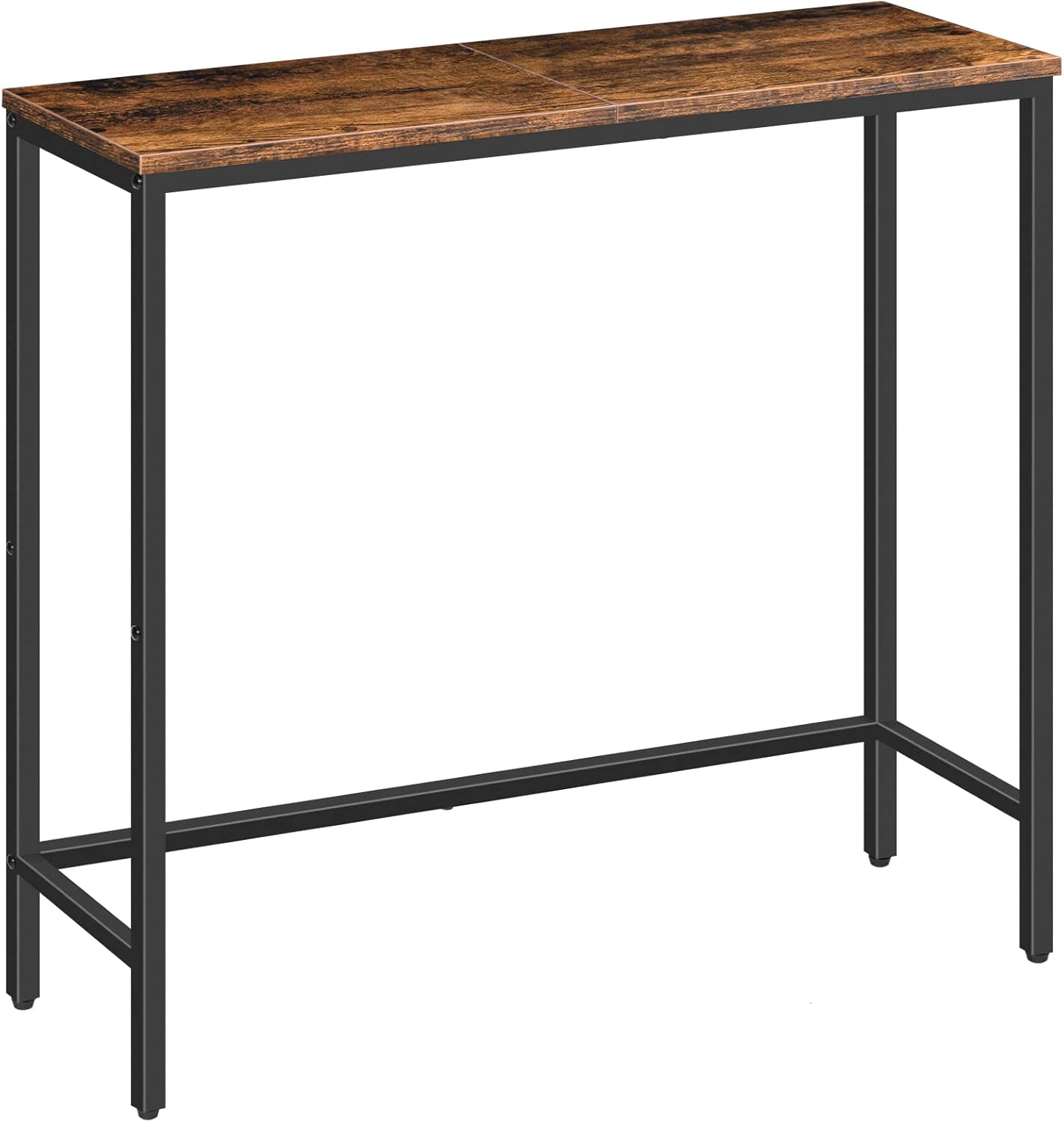
HOOBRO Narrow Console Table 29.5" Rustic Brown Industrial Entryway Sofa Side Display Table with Metal Frame
Pros
- Very affordable for a metal-frame console table with a styled rustic finish
- Slim 9.5-inch depth makes it genuinely usable in spaces where standard console tables simply will not fit
- X-shaped side bars add structural rigidity that helps the frame feel more solid than the price suggests
- Adjustable feet are a practical touch rarely found at this price point
- Multi-room versatility means it can move with you if you redecorate or relocate
Cons
- Particleboard top limits long-term durability compared to solid wood options, especially in high-humidity rooms
- 44 lb weight capacity is modest, so it is not suited for heavy decor arrangements or stacked items
- At only 29.5 inches long, it may feel too narrow for wider walls or larger sofa backs where a longer table would look more proportional
There is something genuinely satisfying about a piece of furniture that knows exactly what it is. The HOOBRO narrow console table does not try to be a statement piece. Instead, it solves a very specific problem: that awkward, bare stretch of wall in your entryway or the dead space behind your sofa that collects nothing but dust. At just 9.5 inches deep, it slips into spots that most furniture cannot touch.
The rustic brown and black finish strikes a balance that works in more rooms than you might expect. It reads industrial in a loft-style space, farmhouse-adjacent in a warmer living room, and clean enough to hold its own in a minimalist entryway. Style a small lamp, a tray of keys, and a trailing pothos on top and it looks like a considered, intentional vignette rather than a budget find.
If you want a tidy, styled entryway or a practical sofa-back surface without spending $100 or more on a branded console table, this one delivers.
Styles it works with: Modern Industrial, Rustic Farmhouse, Transitional, Scandinavian
Best placed in: Narrow entryway or foyer wall, directly behind a sofa in the living room, or along a bedroom wall as a slim display shelf
May not suit: Homes with a strictly traditional or ornate decor style where warm wood tones and black metal may feel out of place; households with young children who may pull on or climb lightweight furniture given the 44 lb load limit and particleboard construction
Buy it if:
- You have a hallway or entryway under 10 inches deep and need a surface for keys, mail, and a small lamp
- You want to fill the empty space behind your sofa with something that looks intentional without committing to a higher price point
- You are furnishing an apartment, dorm, or temporary space where lightweight, affordable, and movable furniture makes the most sense
Consider waiting if:
- You need a longer console table, as HOOBRO offers this same style in wider sizes that may suit larger walls or sofas better
Skip it if:
- You need a surface that will hold heavy items like stacked books, a large TV component, or heavy decor beyond the 44 lb limit
- You want solid wood construction and long-term durability in a high-traffic or high-humidity area like a kitchen or bathroom
Check the latest price and availability on Amazon before it sells out.
The Furinno Turn-N-Tube riser is a 2-tier stand for TVs up to 32 inches, measuring about 15.8 x 23.8 inches, so it lifts a small screen and adds a shelf below. The Hemudu universal swivel stand handles 19- to 43-inch sets with a 90-degree swivel and 4 height levels, which solves a wide foot span on any flat surface. The HOOBRO narrow console runs 29.5 inches wide and stays thin front to back, so it fits a shallow wall where a deep cabinet can’t go.
Frequently Asked Questions
Is a 55-inch TV actually 55 inches wide?
No. The 55 inches is the diagonal of the screen. The cabinet width is about 48 to 49 inches, roughly 7 inches narrower than the label suggests. Always shop your stand by width, not by the advertised size.
How much wider than the TV should my stand be?
At least 6 inches total, so about 3 inches of clearance on each side. A wider surface looks intentional and gives you room for a soundbar. If you’re going right up to the edges, the setup reads cramped.

Where do I measure for a wall mount?
Measure the four VESA holes on the back of the panel, edge to edge, in millimeters. Common patterns run 200 x 200 mm to 400 x 400 mm. The mount’s rated screen size matters less than matching that exact hole spacing.
Why won’t my TV feet fit my console?
The feet on most sets sit near the outer corners, and that span can reach 45 to 48 inches on a 65-inch model. If your console is narrower than the foot span, use a center-pedestal stand or a universal tabletop mount that clamps to a single point.
Does depth really matter that much?
Yes. The panel is thin, but wide-set feet push the base to 9 to 13 inches deep. A shallow console under 11 inches can leave the feet overhanging the back edge, which is both unstable and easy to knock.
Bottom Line
Measure three numbers before you buy anything: total width, total height with feet, and the foot span between the legs. Width tells you the stand size, and the foot span tells you whether your current furniture can even hold the set. If you’re wall mounting, the VESA pattern in millimeters is the only spec that counts. Get those numbers on paper first, and you won’t be driving a too-small stand back to the store this weekend.






Write Your Review
No reviews yet. Be the first to share your experience!