

> Editorial Note: I’m Olivia Bennett, a storage and organization contributor. I approach storage as a systems problem rather than a product one: fit to actual room dimensions, load ratings, and how the system holds up under daily use.
A garage gets organized when you stop buying storage and start using vertical space. Most of the cost is in the wall, not the bins. Compare the best garage storage systems, best garage storage shelves, best garage cabinets, best garage wall shelving, best overhead garage storage rack, and best closet organizer system before you spend anything.
The Ground Rules Before You Start
Three non-negotiables. First, keep the floor clear so a car or a bike can still move through. Second, go vertical before you go wide, because wall space is free floor space. Third, group by zone: tools, sports, seasonal, auto. Measure the longest wall and your ceiling height before you commit. A 24 inch deep shelf eats 2 feet of parking room, so stick to 12 inches to 16 inch depths on the wall.
Step 1: Clear and Sort by Zone
Empty the garage in zones, not all at once. Pull everything out of one wall section, sort it into keep, donate, and toss, then move to the next. A full garage dump rarely finishes in one weekend.
Label four areas with tape on the floor: tools, sports, seasonal, auto. As you sort, drop each item in its zone. Real Simple organization guides often recommend the zone-sort pass, because it shows you how much of each category you actually own. That count sets the shelf size you need.
Set a 12 inch rule for the sort: if an item is smaller than 12 inches in any dimension, it goes in a labeled bin, not loose on a shelf. Small parts scatter and disappear otherwise, and that’s what makes a garage feel cluttered even after a clean-out.
Step 2: Build Vertical Shelving First
Wall shelving is the cheapest high-capacity storage in a garage. An 8 foot by 16 inch shelf line holds more than 6 floor bins and keeps the floor clear. Use 12 inches to 16 inches of shelf depth so you don’t eat parking width.
Anchor shelves into wall studs, not drywall. Studs sit 16 inches apart in most homes, so a 4 foot shelf needs 3 brackets. Keep heavy items like car fluids and tools on the lowest shelf, where the load is safest. A 50 lbs load on a top shelf is a tip risk and a reach hazard.
Level the shelf with a 4 foot level before you tighten the brackets. A shelf 0.25 inches off level looks fine empty and rolls round items to one end once loaded. It’s a 2 minute check that saves a season of annoyance.
Step 3: Use the Ceiling for Overflow
Overhead racks use space nothing else can. A 4 foot by 4 foot overhead bin holds seasonal items like camping gear and holiday decor. Keep it 18 inches below the ceiling and at least 7 feet off the floor so people and cars clear it.
Load light items up top. Overhead racks often carry 50 lbs to 75 lbs, but the rating depends on joist anchoring. ASTM stability standards for mounted storage matter here, because an overhead rack that pulls loose is a serious hazard. Check the joist direction before you drill, and use lag bolts into wood, not hollow-wall anchors.
Measure your tallest garage user plus 6 inches, and keep the rack bottom above that height. A 6 foot person needs the rack at 78 inches minimum, which usually means mounting it to the ceiling itself rather than high on the wall.
Step 4: Hang Tools and Bikes on the Wall
Floor-standing tools waste space. Hang bikes horizontally on wall hooks, and put shovels and rakes on a tool strip. One 4 foot tool strip holds 8 to 10 long-handled tools flat against the wall, and a bike hook lifts a 30 lbs bike off the floor.
Bikes go on the wall, not the floor. A horizontal bike hook frees 20 square feet of floor per bike, which is the single biggest space win in a two-car garage. Apartment Therapy garage guides often point to bike storage as the moment a garage stops feeling cramped.
Keep hooks into studs too. A bike pulling on a drywall-only hook will tear out within a week. If the studs don’t line up where you want the bike, bridge across them with a 2×4 board and bolt the hooks into that. It’s a 30 minute project with a big payoff.
Step 5: Contain Small Items in Labeled Bins
Small parts ruin garage organization. Screws, nails, and fasteners scatter and hide. Use clear bins with labels, and keep like with like. A 12 inch by 12 inch bin fits a standard 16 inch shelf with room to grab the front edge.
Label the bin, not just the shelf. A label on the bin travels with the contents. Wirecutter storage coverage often points to clear bins, because you can see the contents without pulling the bin down. Clear wins over opaque in a garage, where finding the right screw at 9 p.m. matters.
Stack bins only 2 high on a shelf, and keep the heaviest on the bottom. A stack of 3 or more wobbles when you pull one out, and a 10 lbs bin of bolts falling off a 6 foot shelf is a real hazard.
The Right Products Make It Easier
The three products below connect to the steps above: one customizable closet-style wall system for Step 2, one starter tower for vertical shelving, and one modular drawer unit for Step 5 small-item containment. Match the product to the wall you measured.

SONGMICS CUSTOS Walk-In Closet System, Customizable Organizer with 4 Adjustable Rods & Shelves, White, Fits 4-9.6 ft
Pros
- Highly flexible layout with extendable rods and an adjustable shelf you can reconfigure as your needs change
- Wide size range fits closets from 4 up to 9.6 feet, covering most standard reach-in spaces
- Solid load ratings at 66 lb per adjustable rail and a clean, timeless white finish
- Includes anti-tip hardware and labeled parts to make a safer, smoother build
Cons
- Particleboard construction is heavier and less durable than solid wood and can chip if mishandled during assembly
- Two-person setup is recommended, so solo installation will be slow and awkward
- Shelves are capped at 22 lb each, so heavy stacks of books or bulky bins are not a good fit
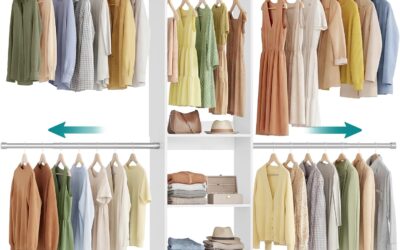
The SONGMICS CUSTOS system solves the problem most closets have: too much wasted vertical space and not enough flexibility. With five hanging zones and rods that telescope from 26 to 49 inches, you finally get to decide where your long dresses, folded sweaters, and shoe row live instead of fighting a single fixed rod.
In a real bedroom, the crisp white finish and right-angled lines read as clean and minimalist rather than bulky. It blends into the wall, and the open shelves let you style baskets and bins so the whole closet feels intentional. The 8.7-inch raised base also keeps your shoes off the floor, which makes the space look tidier and easier to vacuum under.
If you want a closet you can shape around your own wardrobe without committing to a permanent built-in, this one delivers.
Styles it works with: Modern, Minimalist, Scandinavian, and Contemporary interiors thanks to the clean white finish and simple lines
Best placed in: A bedroom reach-in closet, a walk-in closet wall, or a spare room converted into a dressing area
May not suit: Closets under 4 feet wide or with ceilings shorter than the 79.7-inch height, and homes wanting a warm solid-wood look rather than particleboard
Buy it if:
- You have a 4 to 9.6 foot closet and want a layout you can fully customize
- You need more hanging zones and a dedicated shoe row to organize a growing wardrobe
- You want included anti-tip hardware for a safer, secured install
Consider waiting if:
- You need a color other than white or want to see real customer reviews before committing
Skip it if:
- Your closet is narrower than 4 feet or your ceiling is below the 79.7-inch height
- You want heavy-duty solid wood shelving rated well above 22 lb per shelf
Check the latest price and availability on Amazon before it sells out.

Pros
- Highly customizable with adjustable rods, adjustable shelves, and a full line of compatible add-on units
- Strong 4.5-star rating across a large number of reviews signals reliable real-world satisfaction
- Fits a wide range of closet widths thanks to expandable and trimmable hang rods
- Includes everything needed to get started, with hardware and instructions in the box
- Tall 82.25-inch tower maximizes vertical storage in standard closets
Cons
- Made from manufactured wood rather than solid wood, so it is less heavy-duty than hardwood systems
- Add-on drawers, doors, and shoe shelves are sold separately, so a fully built-out closet costs more than the starter kit
- Assembly requires squaring the unit carefully, and rod trimming needs a hacksaw, which adds effort for some buyers
If your closet is a daily source of frustration, this ClosetMaid SuiteSymphony kit feels like a fresh start. It gives you a tall tower, five shelves, and three rods that stretch up to 48 inches, so you finally have a real home for everything from folded sweaters to hanging jackets. The Pure White finish keeps it light and clean, which means it disappears into the closet and lets your clothes and decor take center stage.
In a real room, it reads as a built-in system rather than a bulky add-on. The adjustable shelves let you tuck shoes, purses, and bins exactly where you want them, and the rods can sit on one side or both depending on your space. That flexibility makes it easy to live with day to day, whether you are grabbing work clothes in the morning or reorganizing with the seasons.
If you want a closet that grows with you over time without committing to a pricey custom install, this one delivers.
Styles it works with: Modern Farmhouse, Scandinavian, Minimalist, and contemporary interiors
Best placed in: bedroom reach-in closets, walk-in closets, or as organized storage in a den or home office
May not suit: very narrow closets under 5 feet without trimming the rods, or buyers wanting solid hardwood construction
Buy it if:
- You have a closet 5 to 10 feet wide and want a flexible system you can expand later
- You want both hanging space and adjustable shelving in one kit
- You like the idea of adding drawers, doors, or shoe shelves over time
Consider waiting if:
- You want a wood grain finish like Natural Gray or Graphite Grey that may be priced or stocked differently
- You plan to build out the full system and want to budget for the add-on pieces first
Skip it if:
- You need a solid hardwood unit rather than manufactured wood
- Your closet is too small to fit the tower even with rods on one side
Check the latest price and availability on Amazon before it sells out.

Pros
- Durable wooden drawers that clean easily and hold up better than fabric alternatives
- Generous mix of closed drawer storage and open shelving in one tall footprint
- Anti-tip hardware included for safer wall mounting
- Comes in four colors (White, White Oak, Grey, Black) and connects to a wider modular system
- Clearly labeled parts and included tools make assembly manageable
Cons
- Made from MDF rather than solid wood, so it is heavier and less moisture-resistant than hardwood
- At 80 inches tall it will not fit closets or rooms with low ceilings or shelving above
- This 21.3-inch base unit ships without hang rods, so you cannot hang clothing unless you buy the rod-equipped configuration
If you have ever wrestled with fabric drawers that collapse the moment you stack a few sweaters, this Aheaplus tower feels like a real upgrade. The four wooden drawers glide on metal sliders and stay crisp and square, while the three open shelves up top give you that satisfying spot to fold and display the things you reach for every day.
In a real closet it reads clean and modern, especially in the white finish, and the 80-inch height makes a small reach-in feel far more organized than it has any right to be. The slightly deeper upper section is a smart touch, letting the whole unit sit flush against baseboards so it looks built-in rather than bolted on.
If you want sturdy, easy-to-clean drawer storage that can grow into a full custom closet without the flimsiness of fabric bins, this one delivers.
Styles it works with: Modern, Minimalist, Scandinavian, Modern Farmhouse
Best placed in: reach-in bedroom closet, walk-in closet wall, home office storage nook
May not suit: closets or rooms with ceilings under 7 feet given the 80-inch height, or shoppers who need hanging space from this base unit since it ships without rods
Buy it if:
- You want durable wooden drawers for socks, underwear, and folded clothes instead of sagging fabric bins
- You are organizing a small reach-in or walk-in closet and want to use vertical space
- You plan to expand into a modular closet system with rods and extra shelves later
Consider waiting if:
- You need a specific color like Grey or Black that may not be in stock right now
Skip it if:
- Your space has ceilings or shelving that cannot clear an 80-inch tall unit
- You need built-in hanging rods from this 21.3-inch base configuration
Check the latest price and availability on Amazon before it sells out.
The SONGMICS CUSTOS closet system is the vertical pick for Step 2. Its adjustable hanging rods and shelves let you build a wall of storage that fits your actual stud spacing. Use it along a side wall where a 16 inch depth won’t block a parked car.
The ClosetMaid SuiteSymphony tower is the starter for a single vertical run. The 25 inch starter kit with a tower and 3 hang rods gives you a quick win before you build out a full wall. It anchors to the wall for stability and keeps heavy items low.
The Aheaplus closet drawers system is the small-item containment unit for Step 5. Its 4-drawer modular build handles fasteners, cords, and garage small parts that scatter on open shelves. Keep it on a low shelf so the drawers slide without tipping the unit.
Frequently Asked Questions
How much does it cost to organize a garage?
It depends. A vertical wall system plus overhead rack and bins can run a few hundred dollars. The cheapest gains come from wall shelving and bike hooks, which use space you already own.
What’s the cheapest way to add garage storage?
Wall shelving and pegboards. An 8 foot shelf line and a tool strip add more usable storage than floor bins at a fraction of the cost. Go vertical before you buy bins.
How do I organize a garage and still park a car?
Keep shelf depth to 12 inches to 16 inches on the side walls, use overhead racks for seasonal items, and hang bikes and tools flat. Keep the floor clear between the walls so a car fits.
Should I use cabinets or open shelves in a garage?
It depends. Open shelves are cheaper and let you see everything. Cabinets hide clutter and keep dust off tools but cost more. A mix works: cabinets for tools, open shelves for bins.
How high should overhead garage storage be?
Keep it 18 inches below the ceiling and at least 7 feet off the floor. That clears people and cars while leaving room to access bins. Check the joist rating before loading heavy items up top.
Bottom Line
Most garage clutter comes from unused wall and ceiling space, not a shortage of bins. The SONGMICS CUSTOS system is the best vertical starting point, because it scales to your wall and studs. Build wall shelves first, hang bikes and tools flat, then add overhead storage for seasonal gear. A clear floor and a loaded wall beat a floor full of bins every time.



Write Your Review
No reviews yet. Be the first to share your experience!