

> Editorial Note: I’m Hannah Lin, an Interior Living Researcher who’s spent 9+ years analyzing the home furniture market. This guide draws on BIFMA, GREENGUARD, and FSC certifications, plus owner reviews aggregated from Wirecutter, Apartment Therapy, and the major home design subreddits.
An accent chair feels too low when seat height, cushion compression, and nearby furniture fall out of sync. The target is usually 17 inches to 19 inches from floor to seat, but the sofa beside it matters just as much. Here’s how to find the real cause before you blame the chair. best small sofa best loveseat for small apartment best narrow coffee table best rug for small living room best small tv stand best accent chair for small spaces
Diagnose It in 10 Minutes
Diagnose the chair in 10 minutes before you change anything. Sit in it and check whether your knees sit higher than your hips; if they do, the seat’s under 17 inches or the cushion has packed down. Then measure the chair seat and the sofa seat beside it; a gap over 2 inches explains why the chair reads as low even if the spec looks fine. Flip the cushion and press the center; if it stays depressed for more than 10 seconds, the foam’s lost its lift. Those three checks tell you whether you need a riser, a new insert, or a replacement. Take a photo of the chair next to the sofa from across the room; the camera flattens the height difference and makes the mismatch obvious in a way your eye glosses over when you’re sitting in it.
Reason 1: Your Knees Sit Higher Than Your Hips
Sit down and check your knee angle. If your knees rise above your hips, the seat’s probably below 17 inches or the cushion has compressed more than 1 inch. That posture strains your lower back within minutes.
BIFMA seating guidance focuses on stability and load behavior, not just style. A pretty chair that sits 3 inches below the sofa will feel wrong every single day, and no throw pillow fixes the geometry.
Measure floor to the top of the compressed cushion while you’re seated. That’s the number that matters, not the empty-chair spec on the listing.
Reason 2: The Sofa Beside It Is Taller
Measure the sofa seat and the chair seat. A difference over 2 inches is enough to make the chair feel like children’s furniture, especially next to a 20 inches sofa seat.
Real Simple and Apartment Therapy both treat scale as a room relationship. The chair isn’t low in isolation; it’s low compared with the pieces around it, and your eye reads the mismatch instantly.
If you love the chair, consider swapping its role. Move it to a spot where it stands alone rather than sitting beside a much taller sofa.
Reason 3: The Cushion Has Packed Down
Press the cushion with your palm. If it collapses quickly and stays low for 10 seconds, the foam or fill isn’t giving enough lift anymore. Compressed foam is one of the most common reasons a chair drops over time.
A thin support board under the cushion can add temporary firmness, but it shouldn’t make the chair unstable. It’s a quick fix, not a rebuild, and it buys you time to decide.
A denser 2 inches foam insert restores height and support at once. Look for foam rated around 1.8 lbs density or higher so it doesn’t pack down again in a month.
Fix 4: Add Height Without Losing Stability
Chair risers help when the legs are straight, the floor’s level, and you need only 1 inch to 2 inches of lift. Don’t use tall risers on angled mid-century legs, because they change the load path and can crack a joint.
Fixed-height risers are safer than stacked pads. Choose ones rated for the chair’s weight plus a person, and check that all four feet seat fully before you sit.
If the chair wobbles at all after lifting, undo it. Stability beats height every time, and a tipping accent chair isn’t worth 2 inches.
Fix 5: Know When to Replace It
Replace when the frame flexes, the joints creak under normal weight, or the seat can’t reach a usable height even with a firm insert. That’s structural, not cosmetic.
Don’t keep patching a chair that moves when you sit. A sound frame can take a new cushion; a failing frame just hides the problem for a while.
When you shop, check the listed seat height against 17 inches to 19 inches and read owner notes on how the cushion holds up past the first year.
What the Fix Usually Costs
Match the spend to the cause you found. A placement change, a rotation habit, or a careful cleaning pass costs nothing but 30 minutes. A protective add-on, whether that’s a pad, a cover, a coaster set, or a support board, usually runs a small amount and buys you months. Only structural failure justifies replacing the piece itself.
Run the fixes in that order and you’ll rarely pay for the expensive one. Wirecutter and Consumer Reports both frame durability as a system rather than a single product, and that’s the mindset that keeps a decent piece in service for years instead of one bright season.
A short prevention checklist keeps the fix in place: check the light path weekly for the first month, re-tighten any support hardware after 30 days, and re-measure the clearance once a season. These are 2 minute habits, and they catch the slow drift back to the old problem before it becomes visible again. Treat the checklist as part of the repair, not an extra chore, because the repair only counts if the symptom doesn’t return.
Helpful Products
The products below are the exact three matches assigned to this article, so use them as a practical comparison set rather than a magic cure. Start with VINGLI if you want the highest-rated match, compare VASAGLE when dimensions or adjustability matter more, and keep FurnilivingFurnitureforHome as the alternate if your room constraint is different. The right pick still depends on the measurement you took above. Don’t treat any of them as the fix itself; they’re tools that work only after you’ve already named the real cause.


Pros
- 5.5-inch thick cushion with pocket springs stays supportive without excessive sinking
- Chenille fabric is soft, breathable, and resistant to wrinkling
- Solid wood legs and 380-pound capacity feel sturdy for the price
- Removable washable covers make maintenance easy
- Compact footprint works well in small spaces and apartments
Cons
- Olive green color may look slightly different in person than on screen
- Some buyers report the seat cushion firms up over time rather than staying plush
- Chenille fabric can attract pet hair and lint despite being easy to clean
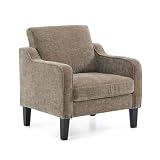
There is something instantly inviting about an olive green accent chair that knows exactly what it is. The VINGLI brings that relaxed mid-century silhouette into your space without demanding attention, which is exactly what you want from a supporting piece in a living room or bedroom. The scooped arms and fluffy chenille give it a cozy, lived-in feel from day one.
What surprised us most is how supportive the seat feels for the price. The 5.5-inch pocket-spring cushion holds you up instead of swallowing you, so you can stand without a struggle after a long reading session. The 6.7-inch wood legs give it visual lift, making a small room feel less crowded while letting your robot vacuum pass right underneath.
The removable washable covers are a quiet luxury we wish every chair had. Spills, pet hair, and everyday wear become a non-issue when you can zip off the cover and refresh it in a wash. If you want a supportive, stylish reading chair without committing to a $300+ investment, this one delivers.
Styles it works with: Mid-Century Modern, Scandinavian, Boho, Minimalist
Best placed in: living room corner, beside the bed in a bedroom, apartment reading nook
May not suit: large formal living rooms that need an oversized statement chair, or households wanting a wide lounging seat for curling up for hours
Buy it if:
- You are furnishing a small apartment, bedroom, or cozy nook and need a chair that does not overwhelm the space
- You want supportive seating with pocket springs rather than a mushy budget cushion
- You love mid-century style but do not want to spend $300+ on a designer replica
Consider waiting if:
- You need a specific color beyond the current olive, beige, or gray options
- You want a matching pair and want to confirm stock on both before ordering
Skip it if:
- You need an oversized lounger wide enough to curl up and nap in
- You are looking for genuine top-grain leather upholstery instead of fabric
Check the latest price and availability on Anthropic before it sells out.

Pros
- Attractive mid-century silhouette at a strong under-$100 price point
- Thick cushioning with spring support offers more comfort than similarly priced competitors
- Easy wipe-clean surface is genuinely low-maintenance for everyday use
- Compact size fits rooms where larger chairs simply will not work
Cons
- PU leather rather than genuine leather, so it may show wear or peling over time with heavy daily use
- Limited color options currently available, which may not suit every existing decor palette
- At 17.3 inches seat height, taller users may find the seating position lower than ideal for extended work sessions
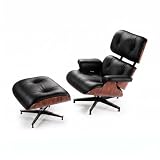
There is a certain kind of chair that does not just fill a corner but actually makes the whole room feel more considered. The VASAGLE accent chair pulls that off with its classic button-tufted backrest, smooth brown faux leather, and those signature splayed legs that say mid-century without screaming it. For under $100, the aesthetic payoff is genuinely hard to argue with.
Beyond looks, the 6.3-inch foam seat with spring support puts this chair ahead of most in its price range. Whether you are curling up with a book, adding a seating option to a guest room, or just want something polished in your home office corner, it holds up comfortably for real use and not just as a decorative prop.
Assembly is straightforward, cleanup is a quick wipe, and the 300 lb capacity means it is built for actual everyday life. If you want a stylish accent chair that looks twice its price without committing to a genuine leather budget, this one delivers.
Styles it works with: Mid-Century Modern, Retro, Scandinavian, Minimalist
Best placed in: A living room corner paired with a floor lamp, beside a bed as a reading seat, or in a home office as a secondary chair
May not suit: Maximalist or heavily ornate traditional decors where the clean lines may feel out of place, or very small studio apartments where even a compact chair leaves little floor space to breathe
Buy it if:
- You want a mid-century modern accent chair under $100 that actually looks the part in photos and in person
- You need a comfortable occasional seat for a reading nook, guest room, or home office without a large footprint
- You prioritize easy cleaning and durability over the feel of genuine leather upholstery
Consider waiting if:
- You need a color beyond the current brown option to match your existing furniture palette
Skip it if:
- You plan to use it as a primary daily-use chair for 8 or more hours a day, where a purpose-built ergonomic chair would serve you far better
- Genuine leather texture and long-term material durability are non-negotiable for your household
Check the latest price and availability on Amazon before it sells out.

Pros
- Solid wood frame with reinforced joints supports up to 300 lbs
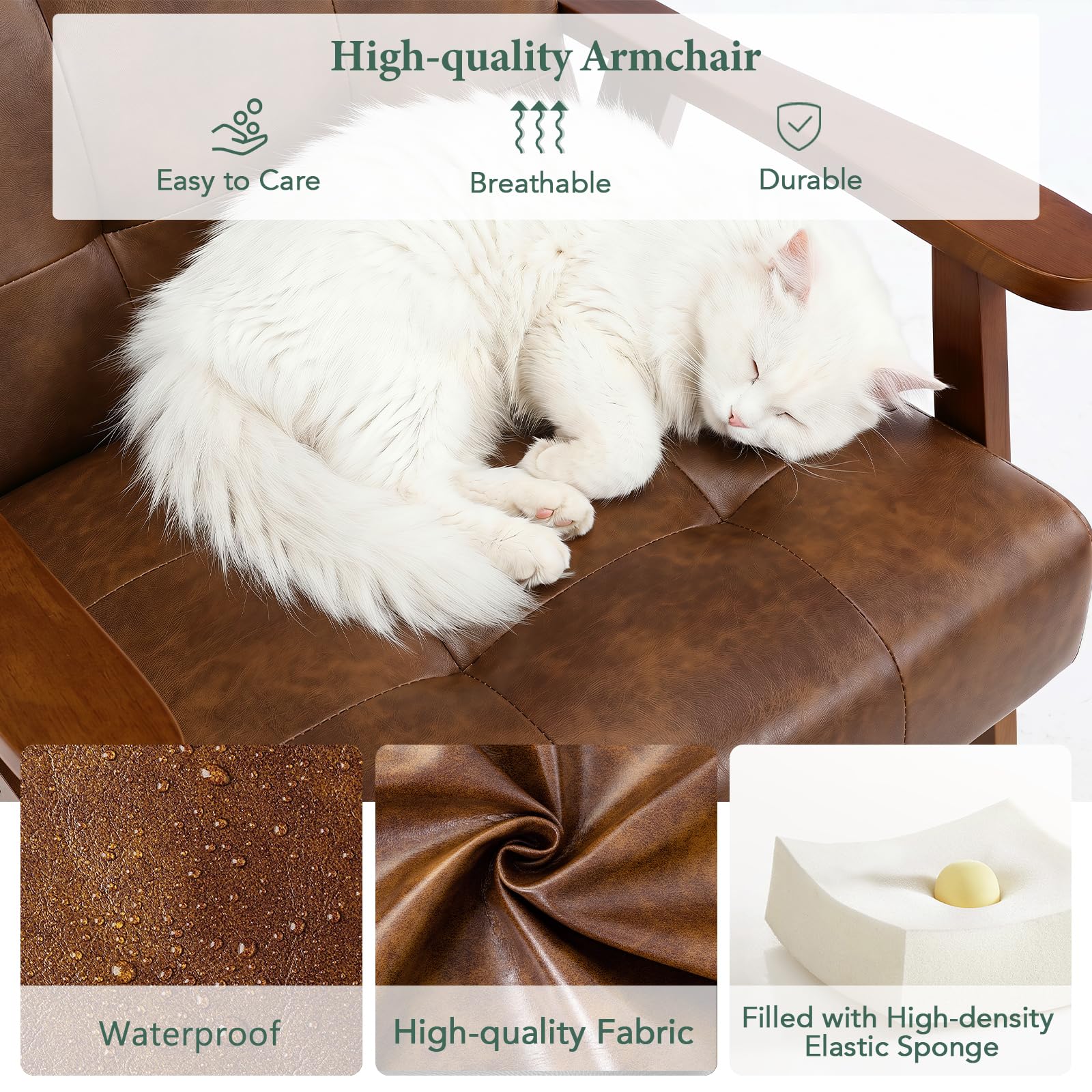
- Waterproof, scratch-resistant faux leather cleans easily with a damp cloth
- Ergonomic high back with lumbar curve reduces fatigue during extended sitting
- Quick 10-15 minute assembly with all hardware and screwdriver included
- FSC-certified wood sourcing for sustainability-minded shopers
Cons
- Zero verified customer reviews make real-world comfort and durability unproven
- PU leather can feel hot and sticky in warm climates compared to fabric options
- Compact 19.7-inch seat depth may feel shallow for taller users over 6 feet
This Furniliving accent chair brings that classic mid-century silhouette to your space at a price point that leaves room in the budget for a throw pillow or two. The square button-tufted backrest gives it a tailored, put-together look, while the warm brown tone and exposed wood legs add visual warmth to neutral rooms that need a little character.
In a real room, it reads as a purposeful design choice rather than a budget fill-in. The wide flat armrests double as a spot for your coffee mug, and the high-density foam seat keeps its shape through daily use. At just under20 pounds, it is easy to reposition when you are rearranging furniture on a whim.
If you want a vintage-inspired reading chair that cleans up easily and holds up to everyday life without costing more than a nice dinner out, this one delivers.
Styles it works with: Mid-Century Modern, Modern Farmhouse, Industrial, Minimalist
Best placed in: Living room corner as a reading nook seat, bedroom beside a nightstand, home office or waiting area as guest seating
May not suit: Very small spaces where the 29.3-inch height might visually crowd the area, or homes going for an all-fabric soft textile aesthetic where faux leather would clash
Buy it if:
- You need a stylish accent chair under $110 that looks more expensive than it is
- You have kids or pets and want upholstery you can wipe down without worry
- You want a compact reading chair with real lumbar support for daily use
Consider waiting if:
- You prefer to see verified buyer reviews before committing to a newer listing
- You want color options beyond brown to match your current palette
Skip it if:
- You are over 6 feet tall and need a deeper seat for comfortable leg support
- You strongly prefer breathable fabric upholstery over faux leather
Check the latest price and availability on Amazon before it sells out.
Frequently Asked Questions
Can I fix why is my accent chair so low without replacing the main piece?
Yes. Start with the room condition, support point, or surface layer before you replace anything. A 15 minute inspection often separates a $20 fix from a bulky return, and that’s the order that saves money. Most symptoms trace back to placement, weight, or exposure, not a dead product.
Is why is my accent chair so low a sign the product is defective?
It depends. Early failure, broken support, or uneven materials can point to a real defect, but sunlight, moisture, weight, and poor placement cause many of the same symptoms. Check the warranty terms if the issue shows up in the first year; otherwise treat it as wear first.
Should I use a spray, pad, or cover first?
Yes, if the symptom is on the surface and the structure still feels sound. A cover blocks UV, a pad adds 0.25 inches of separation, and a support fix spreads weight. Don’t stack all three at once; start with the one that matches the actual cause you found.
Will the problem come back?
Yes, if the original condition stays in place. Direct sun, a weak base, or trapped moisture will repeat the same damage after a few weeks or months. The fix only holds when you also change the environment that caused it. Here’s the simple check: if you removed the fix, would the symptom return within a week?
When should I stop trying DIY fixes?
Stop when you see cracked wood, soft flooring, a depression deeper than 1.5 inches, active moisture, or a frame that moves under light pressure. That isn’t a cleaning problem. It needs repair or replacement, and pushing another patch onto it only delays the real work.
Bottom Line
The VINGLI chair is the first replacement to compare if your current seat is too low and unstable. If you want a leather-look option, compare the VASAGLE-style chair instead. For most rooms, fix the height gap with a denser insert or fixed risers first, and replace only when you can’t keep the chair steady on all four legs.

Write Your Review
No reviews yet. Be the first to share your experience!