

> Editorial Note: I’m Hannah Lin, an Interior Living Researcher who’s spent 9+ years analyzing the home furniture market. This guide draws on BIFMA, GREENGUARD, and FSC certifications, plus owner reviews aggregated from Wirecutter, Apartment Therapy, and the major home design subreddits.
Your neck cranes down every time the credits roll. The screen sits below your line of sight, so the picture feels like you’re watching the floor instead of the show. That downward tilt isn’t in your head, and it isn’t a flaw in the TV. It’s the stand. A console that’s too short drops the center of the screen well under where your eyes naturally rest, and your body pays for it after an hour on the couch. If you’re sizing up a new setup, start with the best tv stand for 65 inch tv or the best tv stand for 75 inch tv, and for tight rooms look at the best small tv stand or a full best media console. Pair either with the right best sectional sofa and a best area rug for living room to lock the whole layout together.
Reason 1: The Neck Ache After an Episode (Screen Below Eye Level)
The rule most people never hear: seated eye height is roughly 42 inches from the floor for the average adult on a standard sofa. The center of your screen should sit near that same 42 inches. When the console is short, the center drops to 30 inches or lower, and your neck flexes down to close the gap.
Wirecutter and Apartment Therapy both point to the same target. The bottom third of the picture should land at eye level, which puts the true center right around your resting sightline. Miss that by 10 inches and the strain shows up fast.
Here’s the quick check. Sit where you actually watch, look straight ahead, and note where your gaze hits the wall. If the middle of the screen is below that mark, the stand is the problem. Not the TV.
The angle matters more than most people expect. A downward gaze of even 15 degrees over a two hour movie keeps the small muscles at the base of your skull loaded the whole time. Level that sightline and the tension eases on its own.
Reason 2: The Stand Built for a Smaller Set (Wrong Height for Your Sofa)
Older consoles were designed for 32 inch tube TVs and low seating from a different era. Drop a modern 65 inch flat panel on one and the math falls apart. The stand height stayed at 18 inches while your sofa seat sits at 17 inches or 18 inches, so the screen never climbs to where it should.
Sofa depth compounds it. A deep sectional pulls you back and slightly down into the cushions, which lowers your eye line another few inches. Consumer Reports notes that seat height and viewing distance shift the ideal mount height together, not separately.
Measure both before you blame the TV. Seat height plus your seated torso gives your eye height. Console height plus half the screen gives your picture center. When those two numbers don’t meet, the stand is undersized for the room.
Watch for a second clue too. If you find yourself sliding forward to the edge of the cushion to feel comfortable, that’s your body raising its own eye line to compensate. A console sized for the sofa lets you sit back at a full 18 inches of seat depth without hunting for the right angle.
Reason 3: The Low Console on a Deep Sofa (Sightline Math Is Off)
A 55 inch TV is about 27 inches tall. Set its base on a 20 inch console and the center lands near 33 inches. Your seated eye height of 42 inches now sits 9 inches above the middle of the picture, so every scene reads slightly downhill.
The fix is arithmetic, not guesswork. Take your eye height, subtract half the screen height, and that’s the console height you actually need. For a 42 inch eye line and a 27 inch screen, you want a base near 28 inches, well above most low-slung media units.
Distance plays in too. Good Housekeeping suggests a viewing distance of about 8 feet for a 55 inch to 65 inch screen, and the farther you sit, the more a low center pulls your chin down. Short console, deep couch, long throw. Three strikes.
Reason 4: The Fix That Costs Under Twenty Dollars (Risers and Adjustable Legs)
You don’t need a new console to raise the picture. Furniture risers lift a whole unit 3 inches to 5 inches for a few dollars, and they hold hundreds of pounds when rated correctly. That alone often closes the gap to your 42 inch target.
Adjustable legs are the cleaner route for a tabletop set. Bolt-on stands with height settings lift the panel itself, so the base can climb without touching the console underneath. BIFMA stability guidance still applies, so keep the load centered and check the weight rating first.
Rolling stands solve it a third way by setting the screen higher on a wheeled steel base you can position anywhere. All three routes hit the same goal. Raise the center, save your neck.
One caution before you shim anything. Stability climbs down as height goes up, so a taller setup needs a wider footing and a centered load. Keep the base rated well above your panel weight, and if you have kids or pets, anchor the unit to the wall. A 3 inch lift is not worth a tip risk on an unrated riser.
Most solutions here fall into one of three buckets: height-adjustable tabletop legs that lift a set you already own, furniture risers for a console you like, or a taller rolling stand that repositions the screen entirely. I kept the picks below to a 4.5 rating floor and matched them to those three jobs. Start with the adjustable legs if your TV sits on a surface, jump to the rolling steel base if you want to move the screen higher and reposition it, and use the corner unit when floor space is tight.
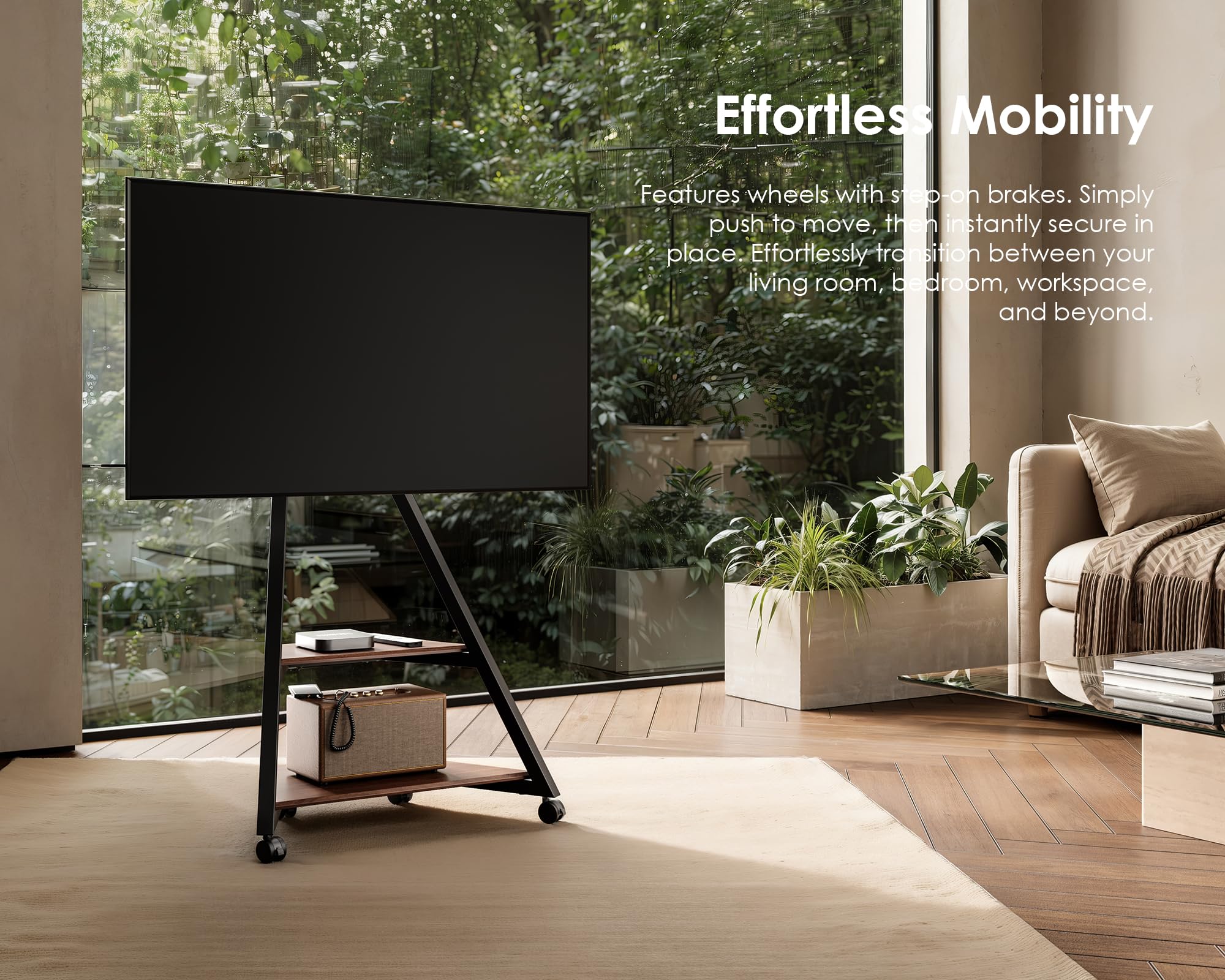

Pros
- Space-efficient corner design works in small apartments and tight layouts
- Highly adjustable with swivel, tilt, and height options for ergonomic viewing
- Optional wheels make it easy to move between rooms or clean behind
- Supports TVs up to 65 inches and 88 lbs with stable trapezoidal base
- Attractive walnut finish and sculptural frame add visual interest
Cons
- Only 4.1 star rating with no customer reviews yet to validate performance claims
- At $179, it costs more than basic fixed corner stands
- Assembly likely required based on this product type
This is the corner TV stand for people who refuse to commit to one furniture layout. The combination of rolling casters and a corner footprint means you can tuck it away when you need floor space, then wheel it out for movie night. The Eiffel Tower-inspired frame is surprisingly elegant for a mobile stand, and the walnut shelves add warmth without taking up the visual real estate of a full entertainment center.
What sets this apart from basic corner stands is the movement. You get 15 degrees of swivel in each direction, plus tilt adjustments, so you are not stuck with one viewing angle. The cable management channel keeps things tidy, which matters more than you would think when your TV is on display in a high-traffic corner.
If you want corner-saving flexibility without sacrificing style or viewing comfort, this one delivers.
Styles it works with: Modern, Industrial, Scandinavian, Mid-Century Modern
Best placed in: Living room corner near a sectional, bedroom corner for late-night viewing, home office corner for video calls, basement media room
May not suit: Formal traditional homes where the industrial frame clashes with classic furniture, households with toddlers who might pull on the frame or wheels, spaces where a low-profile media console is preferred for a cleaner sightline
Buy it if:
- You are renting and cannot or do not want to wall-mount your TV
- You rearrange furniture seasonally or host gatherings that require flexible seating
- You have an awkward corner that is too small for a traditional entertainment center
- You want to move your TV between rooms without reinstalling hardware
Consider waiting if:
- You want to see verified customer reviews before purchasing, as this model currently has none
- You are waiting for a sale, as mobile TV stands often drop in price during major shopping events
Skip it if:
- You need a stand wider than 32 inches for soundbars or multiple components
- You prefer a completely stationary setup and do not need mobility features
- Your TV weighs more than 88 lbs or has a VESA pattern larger than 400x400mm
Check the latest price and availability on Amazon before it sells out.

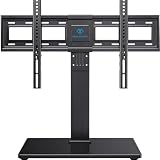
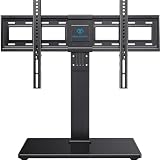
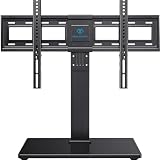
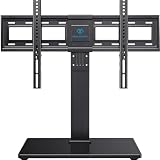
PERLESMITH Universal TV Stand Base for 32-70" TVs - Adjustable Height Table Top Mount with Tempered Glass Base
Pros
- Universal VESA compatibility fits most 32-70 inch TVs from major brands
- 8 adjustable height positions let you customize viewing comfort
- Tempered glass base looks premium and resists scratches
- Quick 15-minute installation with all mounting hardware included
- Sturdy construction holds up to 99lbs safely
Cons
- Glass base adds width to your TV footprint, may not fit narrow stands
- No cable management clips or routing channels included
- Heavier than original TV legs, making solo moves more difficult
This is the kind of problem-solver every renter and non-driller needs. Whether your TV's original legs snapped, went missing during a move, or just sit too low for comfortable viewing, the PERLESMITH stand gives you a rock-solid base that works with almost any flatscreen. The tempered glass looks clean and modern rather than like a cheap replacement part, and the black finish blends into most entertainment centers without calling attention to itself.
The real standout here is the height flexibility. With 8 different positions, you can raise your screen to eye level whether you are sitting on a low sofa or perched at a desk. No more craning your neck or stacking books under your TV. Setup is genuinely quick, and the universal VESA plate means you are not hunting for brand-specific parts or drilling new holes.
If you want a stable tabletop TV mount that looks deliberate rather than makeshift, this one delivers.
Styles it works with: Modern, Minimalist, Industrial, Contemporary
Best placed in: Living room entertainment center, bedroom dresser top, home office desk, media console in open floor plan
May not suit: Very narrow console tables (the glass base is wider than typical TV legs), homes with toddlers who might pull on the stand, rustic or farmhouse spaces where the sleek black glass feels too modern
Buy it if:
- Your TV's original legs broke, went missing, or sit too low for comfortable viewing
- You rent and cannot mount to the wall, or simply prefer not to drill holes
- You want adjustable height to dial in the perfect viewing angle for your seating
- You own a Samsung, LG, Sony, Vizio, TCL, or other major brand TV between 32 and 70 inches
Consider waiting if:
- You need a specific color finish beyond black to match existing furniture
- Your entertainment center is very narrow and you need to confirm the base dimensions first
Skip it if:
- Your TV weighs more than 99lbs or has a non-standard VESA mounting pattern
- You need built-in cable management or a swivel function
- You are looking for a wall mount rather than a tabletop stand
Check the latest price and availability on Amazon before it sells out.
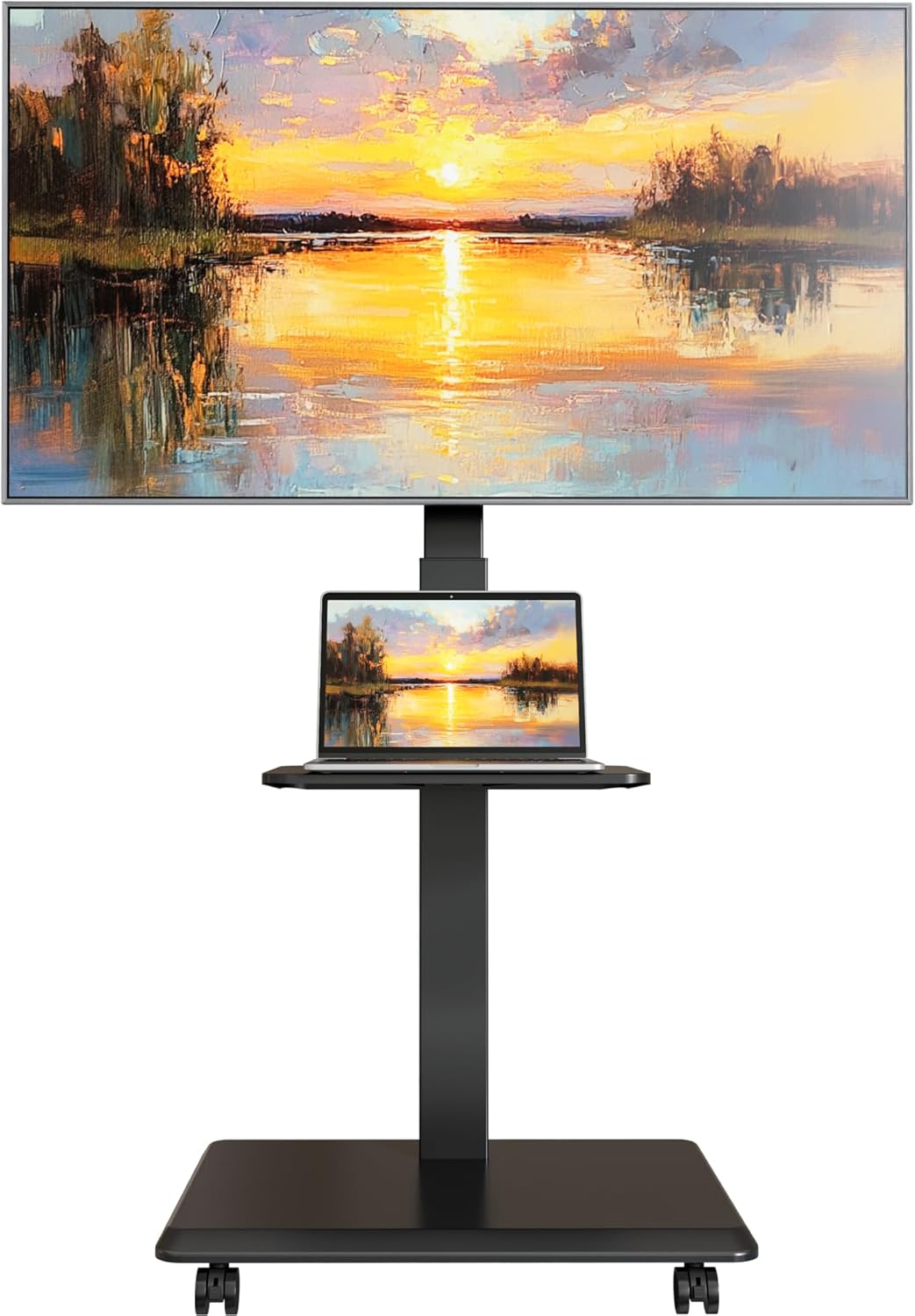
ECOTINY Rolling TV Stand for 32-75" TVs - Mobile Cart with Swivel, Tilt & Height Adjust - Holds 110 lbs
Pros
- Supports up to 110 lbs with a 30mm thick steel base, more stable than most mobile stands
- Six height adjustments let you customize viewing angle for different rooms and seating
- Large base shelf provides ample storage for media devices and accessories
- Lockable wheels keep the stand secure once positioned
- Cable management channels prevent tangled cords from showing
Cons
- No customer reviews yet to verify long-term durability and ease of assembly
- Base dimensions (23.6" x 17") require adequate floor clearance and may not fit tight spaces
- Swivel and tilt adjustments may require regular tightening with heavy TVs over time
This mobile TV stand solves a problem every renter knows too well: wanting your TV in different spots without putting holes in the wall. The ECOTINY stand rolls smoothly from living room to bedroom to home office, and the lockable wheels keep it planted once you find the right angle. The steel construction feels reassuringly solid, not wobbly like cheaper models, and the 110 lb capacity means you can confidently mount larger screens without worrying about tipping.
What sets this apart is the thoughtful design. Six height settings mean you can position the screen at eye level whether you are watching from the couch, standing in the kitchen, or lying in bed. The swivel and tilt adjustments let you fine-tune the viewing angle in seconds, and the oversized base shelf holds your streaming box, soundbar, and game console without cramping your setup. Cable channels keep cords hidden so it actually looks intentional in your space, not like temporary furniture.
If you want TV flexibility without the commitment of wall mounting or the wobble of cheap stands, this one delivers.
Styles it works with: Modern, Industrial, Minimalist, Contemporary
Best placed in: Living room corner for angled viewing, bedroom facing the foot of the bed, home office or multipurpose room where the TV needs to move
May not suit: Small apartments with limited floor space (base is nearly 2 feet wide), homes with thick area rugs that resist rolling, traditional or ornate decor styles where the industrial metal look clashes
Buy it if:
- You rent and cannot or do not want to drill into walls for a fixed mount
- You need to move your TV between rooms regularly for different activities or gatherings
- You want adjustable height and angle without the hassle of repositioning a wall bracket
Consider waiting if:
- You want to see verified customer reviews before committing (this product has zero reviews so far)
Skip it if:
- You have a permanent TV location and would prefer a cleaner wall-mounted look
- Your space is too tight to accommodate a 23.6 inch wide base with rolling clearance
Check the latest price and availability on Amazon before it sells out.
The FITUEYES rolling corner and floor TV stand fits 32 inch to 65 inch TVs and carries a 4.8 rating, and its wheeled base sets the screen well above a low console while tucking into a corner. The PERLESMITH universal height-adjustable tabletop legs suit 32 inch to 60 inch TVs up to 88 lbs at a 4.6 rating, so you can lift a panel already sitting on furniture without buying a whole new unit. The ECOTINY steel-base rolling stand handles 32 inch to 75 inch TVs up to 110 lbs with tilt and swivel at a 4.6 rating, raising big screens to eye level and letting you angle the picture toward the couch.
Frequently Asked Questions
How high should the center of my TV be from the floor?
It depends on your seat, but the target is roughly 42 inches, matching seated eye height on a standard sofa. Measure where your gaze hits the wall when you sit normally, then aim the screen center there.
Can I just raise my TV stand instead of buying a new one?
Yes. Furniture risers add 3 inches to 5 inches for a few dollars, and height-adjustable tabletop legs lift the panel itself. Both close the gap without replacing the console you already own.
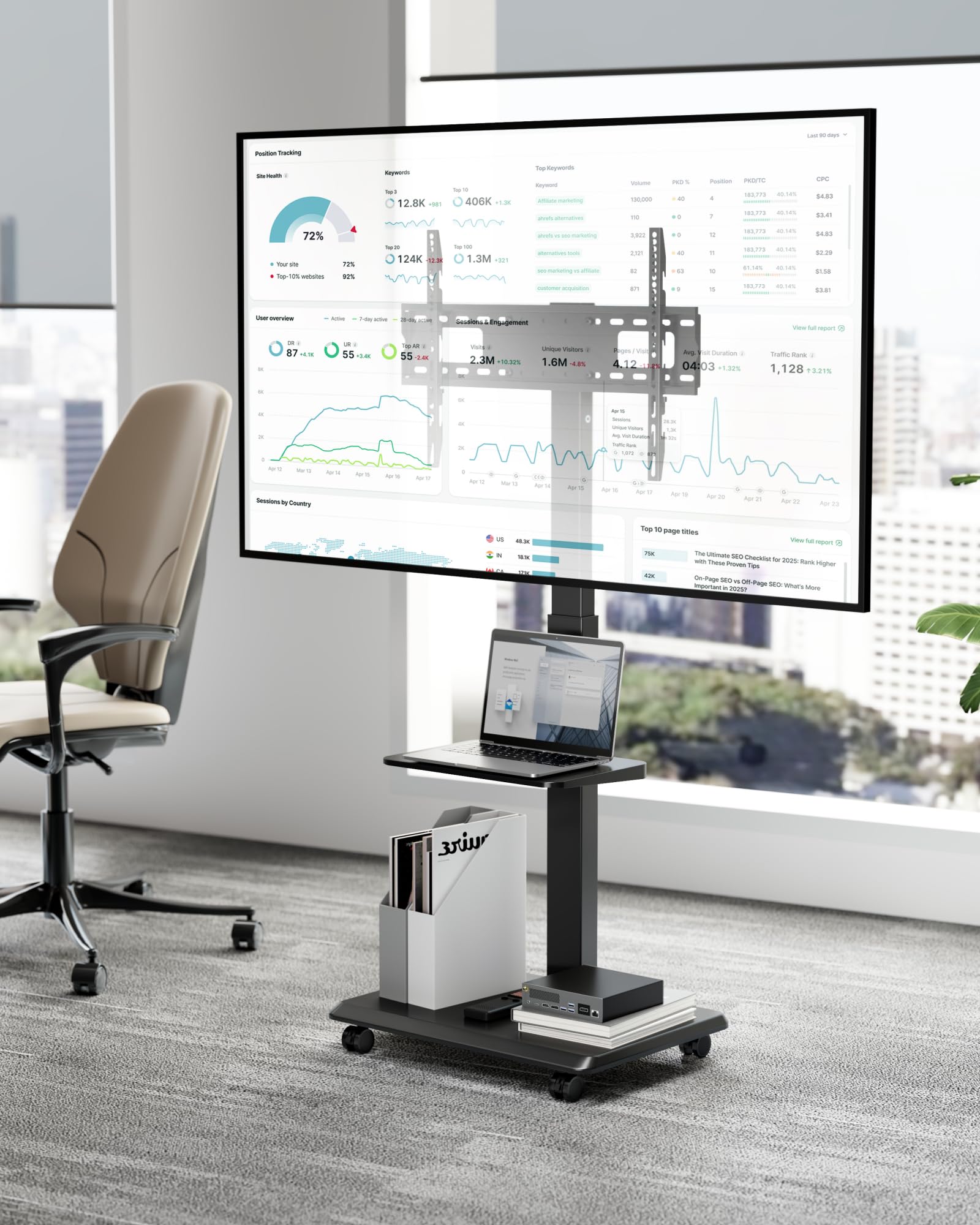
Is a low TV stand bad for my neck?
It depends on how far below eye level the screen sits. A center 10 inches under your sightline forces a downward tilt that gets uncomfortable over a long session, so raising the picture usually helps.
Should the TV be higher if I sit far away?
Yes, slightly. At 8 feet or more the downward angle to a low screen grows, so a center near your 42 inch eye line matters even more the farther back your couch sits.
Do rolling TV stands hold large screens safely?
It depends on the rating. A steel-base rolling stand rated for 32 inch to 75 inch TVs up to 110 lbs handles most big panels, but always keep the load centered and confirm the weight limit first.
Bottom Line
A TV stand feels too low when the screen center drops below your seated eye height of roughly 42 inches, and the cause is almost always an undersized console under a modern panel on a deep sofa. You don’t need to replace the furniture. Risers, height-adjustable legs, or a taller rolling stand lift the picture to your sightline for well under twenty dollars in most cases. Measure your eye line, subtract half the screen height, and set the base to match. Your neck will notice the difference the first night.

Write Your Review
No reviews yet. Be the first to share your experience!