

> Editorial Note: I’m Hannah Lin, an Interior Living Researcher who’s spent 9+ years analyzing the home furniture market. This guide draws on BIFMA, GREENGUARD, and FSC certifications, plus owner reviews aggregated from Wirecutter, Apartment Therapy, and the major home design subreddits.
You sit down, and the two halves of the sofa drift apart. A gap opens between the seats, wide enough to swallow a remote and a fistful of crumbs. The chaise slides a little from the main body every week, and you keep shoving it back into place. That’s the single most common complaint owners raise about large sectionals, and it’s fixable once you know which of four things is pulling your seating apart.
If you’re still shopping and want to head off the problem early, it helps to compare a best sectional sofa against a best modular sofa, and to weigh a best fabric sofa for a home with kids or pets. Footprint matters too, so look at a best couch for small living room before you commit to a big U-shape. Anchoring pieces earn their keep as well: a best area rug for living room with a proper pad and a best coffee table for sectional both cut down on movement once everything’s arranged.
Reason 1: The Slow Drift on Hard Floors (No Grip Underneath)
On hardwood, laminate, or tile, a sectional has almost nothing holding it in place. Every time you sit or stand, your weight nudges each piece forward, and those tiny movements add up over weeks. By month’s end the chaise can wander 3 inches from where it started, and the joint that once sat flush now shows daylight.
The plastic feet most sectionals ship with make this worse. They glide. Consumer Reports has flagged furniture slippage on smooth flooring as a repeat frustration in its seating coverage, and the remedy is cheap and quick. Swap the feet for rubber grippers, or set the whole piece on a rug with a non-slip pad rated for hard floors.
A pad also protects the finish underneath and keeps the rug itself from creeping. Look for one at least 0.25 inches thick so it grips without bunching under the frame. Classic drift, solved for under $30.
Reason 2: The Gap That Opens When You Sit (Missing or Loose Connectors)
Most modular sofas ship with connectors: metal brackets, snap clips, or interlocking plates that lock adjacent pieces together. When they’re missing from the box or never fully seated, the sections behave like separate armchairs. Sit down, and they spread.
Check the underside first. You’ll usually find a bracket bag zip-tied to the frame, or a clip that simply hasn’t been pushed all the way home. BIFMA durability standards cover how seating hardware should hold up under repeated load, so a properly connected frame shouldn’t loosen from normal daily use alone.
If a connector is lost, replacements are inexpensive and fit many frames regardless of brand. Universal metal alignment brackets run about $12 for a set and reinstall in roughly 10 minutes with a basic screwdriver. Tighten and reseat what’s already there before you spend a cent on anything new.
Reason 3: The Piece That Walks Away (Uneven Weight and Traffic)
Sectionals separate faster when one seat carries all the action. If everyone piles onto the same corner every night, that piece absorbs the load while the far end stays still, and the joint between them slowly works loose. The heavier the daily use, the wider the gap grows.
Foot traffic does the same thing from the outside. A sofa parked next to a walkway gets bumped, leaned on, and climbed over, so its exposed end creeps into the room inch by inch. Apartment Therapy has written about anchoring large seating to the room’s layout rather than floating it in open space, which spreads the stress instead of loading one spot.
Rotate where people sit when you can, and keep at least 18 inches of clearance in walkways so nobody has to squeeze past the frame. A well-placed rug and coffee table box the pieces in and give them far less room to travel. Small changes, real difference.
Reason 4: The Cushions That Slide Forward (Loose Covers and Deep Seats)
Sometimes the frame stays put and only the cushions creep forward, which reads as the sofa coming apart even when the base is solid. Deep seats are the usual culprit. A seat 40 inches deep leaves a lot of room for a cushion to slide before you ever notice it.
Loose covers slide more than fitted ones. If your cushion zips into a slipcover, a few strips of non-slip mat between the cushion and the deck stop most of the creep. For plush corduroy or velvet, fabric weight helps too, and a cover around 700 GSM sits heavier and shifts less under a moving body.
Fluff and reset the cushions weekly so the foam wears evenly across the seat. Uneven foam is what lets a cushion tip and walk forward in the first place. Reset it, and the illusion of a splitting sofa usually disappears. That’s the whole fix.
Before you shop for a replacement, lean on two filters that actually predict whether a sectional stays together: a strong owner rating and a real connector or attachment system, since modular designs that lock at every seam resist separation far better than pieces held in position by gravity alone. All three picks below clear a 4.0 owner rating and use module-to-module connectors instead of loose placement. Start with the first if you want the highest owner score, or jump to the third if you need built-in storage and a full 6 seat U-shape.

Pros
- Exceptionally deep seats and tall backrests provide genuine lounging comfort for taller adults
- Every cover is removable and washable, making pet hair and spills a non-issue
- Modular design offers real flexibility to switch between configurations as your space changes
- High-density foam holds its shape over time without sagging
- Corduroy fabric resists pilling and feels soft without overheating
Cons
- U-shape configuration requires a large living room footprint, not ideal for spaces under 12x14 feet
- Corduroy texture may attract lint and dust more visibly on the black colorway
- At roughly1,100 dollars it is a significant investment compared to non-modular alternatives
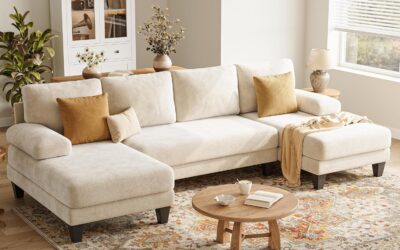
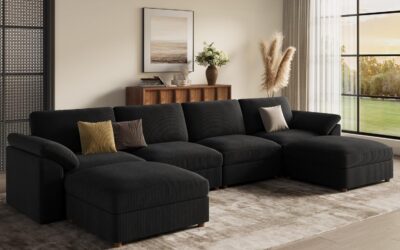
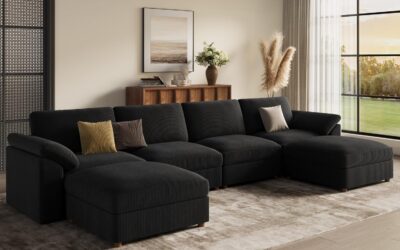
This is the kind of sofa that turns your living room into the place everyone gravitates toward. The EASE MOSE U-shape sectional has genuinely deep seats that let you sit cross-legged or stretch out without feeling like you are falling off the edge. The corduroy fabric has a rich texture that photographs beautifully and feels cozy under your hands without looking dated.
What sets it apart from similarly priced modular options is the combination of practicality and comfort. Every single cover comes off for washing, the modules stay put thanks to anti-slip bases, and you can reconfigure the whole thing on a whim without hunting for an Allen wrench. It feels like a premium cloud couch without the premium markup.
If you want a spacious family sofa that handles everyday life gracefully without sacrificing style, this one delivers.
Styles it works with: Modern Minimalist, Contemporary, Scandinavian, Urban Loft
Best placed in: Open-concept living room center, large family room facing a media wall, finished basement entertainment area
May not suit: Compact apartments or living rooms narrower than 12 feet, traditional or farmhouse-style interiors where corduroy and modular lines may feel out of place
Buy it if:
- You have a large living room and want seating for 6+ people without buying separate pieces
- You have kids or pets and need covers you can toss in the wash regularly
- You love rearranging your space and want a sofa that adapts with you
Consider waiting if:
- You want a lighter color option and the black does not match your current palette
- You are moving soon and are unsure of your next living room dimensions
Skip it if:
- Your living room is under 12 feet wide since the U-shape will overwhelm the space
- You prefer firm, structured seating over deep sink-in cushions
Check the latest price and availability on Amazon before it sells out.

Belffin Plush Corduroy Modular Sectional Sleeper Sofa | Extra-Deep Cloud Couch with Washable Covers
Pros
- Fully removable, machine-washable cushion and backrest covers
- Oversized deep seats with high-density foam and spring support
- Modular sections adapt to different room sizes and configurations
- 4.7-star average rating across nearly 50 customer reviews
- Built-in sleeper function adds utility without a separate purchase
Cons
- Ships in multiple boxes that may arrive on separate days, delaying setup
- Assembly required and can be time-consuming given the size of the sectional
- Plush corduroy texture tends to attract pet hair more than smooth upholstery
The Belffin Plush Corduroy Sectional hits a sweet spot that is hard to find at this price: deep, cloud-like seats wrapped in a soft, textured fabric that actually looks good in a real living room. The corduroy finish adds warmth and dimension without leaning too formal, making it easy to style whether your space is casual modern or laid-back boho.
What sets it apart from similarly priced sectionals is the washable cover system. Every cushion and backrest unzips and goes straight into the washing machine, which means spills, pet dander, and everyday grime are genuinely manageable rather than a future headache. For families or pet owners, this single feature changes the whole ownership experience.
The modular build means you are not locked into one configuration, and the sleeper function adds real utility for anyone who hosts guests regularly. If you want a romy, low-maintenance sofa that feels luxurious without paying luxury prices, this one delivers.
Styles it works with: Modern Farmhouse, Casual Contemporary, Boho, Eclectic
Best placed in: Living room as the main seating anchor, open-plan family room, finished basement lounge
May not suit: Compact rooms under 200 sq ft where the 86-inch width could overwhelm the space, or strictly minimalist interiors where the plush corduroy texture may feel too relaxed
Buy it if:
- You have pets or kids and need a sofa with covers you can actually throw in the wash
- You want deep, oversized seating where the extra seat depth genuinely matters for daily comfort
- You occasionally host overnight guests and want a sofa that converts to a sleeper
Consider waiting if:
- You need a color outside the current Black, Beige, or Grey options and prefer to wait for expanded availability
Skip it if:
- Your living room cannot comfortably fit an 86-inch sectional footprint
- You prefer a firm, upright sofa seat rather than a deep, sink-in feel
Check the latest price and availability on Amazon before it sells out.

Pros
- Converts between U and L configurations without purchasing separate pieces
- Built-in storage in every seat and the ottoman reduces visible clutter throughout the room
- Chenille fabric is soft, textured, and relatively easy to maintain
- 107-inch span offers generous seating for families and frequent hosting
Cons
- Assembly is required across multiple modular pieces, which takes meaningful time to complete correctly
- Only 36 reviews means long-term durability data is limited compared to more established sofas
- The 107-inch U-shape footprint demands a large room and will overwhelm most apartment living rooms
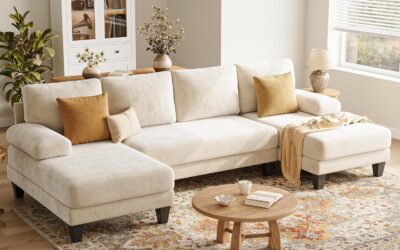
If you have been looking for a sofa that adapts to your life rather than the other way around, this WUTUTUEE sectional is worth a close look. The chenille fabric is genuinely soft to the touch, with a subtle texture that reads as elevated without trying too hard. Paired with deep, high-density cushions, it is the kind of couch you sink into at the end of the day and do not want to leave.
What makes it stand out in its price range is the built-in storage. Every seat lifts, and so does the ottoman, giving you hidden spots for throw blankets, board games, or the remote controls that always disappear. For households where the living room doubles as a storage problem, that detail alone justifies the purchase.
The modular format means you are not locked into one configuration forever. Rearranging from a U-shape to an L-shape takes less effort than moving a traditional sectional, which is a genuine quality-of-life upgrade when you redecorate or move. If you want a romy, storage-smart sofa that grows with your space without paying designer prices, this one delivers.
Styles it works with: Modern, Contemporary, Transitional, Casual Boho
Best placed in: Large open-plan living rooms, dedicated family rooms, basement entertainment spaces
May not suit: Apartments or rooms under 300 square feet where the 107-inch U-shape will leave little clearance; also worth considering for households with very young toddlers given the chenille fabric and its care requirements
Buy it if:
- You need a sofa that seats 6 and your current living room furniture is not meeting the needs of family movie nights or regular guests
- You want hidden storage built directly into the sofa to reduce clutter without buying additional furniture
- Your room is large enough for a U-shape layout and you want the flexibility to switch to an L-shape configuration later
Consider waiting if:
- You prefer to see a larger pool of long-term reviews before committing, as the product currently has fewer than 50 ratings
Skip it if:
- Your living room is under 300 square feet or already has substantial furniture, as the 107-inch frame will dominate the space
- You need a no-assembly sofa that is ready to use the same day it arrives
Check the latest price and availability on Amazon before it sells out.
The EASEMOOSE U-shaped oversized modular corduroy sectional holds a 4.8 owner rating and clips its modules together so the seats stay aligned under daily use. The Belffin plush corduroy modular sleeper sectional sits at 4.7 and adds a sleeper function while keeping the same connector approach, a smart match if guests stay over. The WUTUTUEE 107 inch convertible U-shaped 6-seater modular sectional with storage rates 4.1 and hides storage under the seats, the widest layout of the three at 107 inches across.
Frequently Asked Questions
Can you permanently connect a modular sectional?
Yes, in most cases. Metal alignment brackets or connector plates screw into the frame and hold pieces together far more firmly than the factory snap clips do. Add furniture grippers underneath, and the whole unit behaves like one solid sofa instead of a row of chairs.
Do sectional connectors work on all sofa brands?
No. Some brands use proprietary clips that only fit their own frames, while universal metal brackets fit most flat-bottomed sections. Measure the gap and the frame rail before ordering, and confirm the bracket screws won’t poke through thin material once installed.
Will a rug stop my sectional from sliding?
It depends on the pad. A rug alone slides on hard floors, but a rug paired with a non-slip pad rated for hardwood grips well. Good Housekeeping recommends sizing the rug so the front feet of the seating sit on it, which adds weight and locks the layout in place.
Is a gap between sections a sign of a defect?
Almost never. A gap usually means a connector is loose, missing, or never installed, not that the frame itself is faulty. Flip the pieces over and check the hardware before you assume the sofa’s defective or reach out to the seller.
How often should I re-tighten sectional connectors?
It depends on use, but every 6 months is a safe rhythm for a busy household. High-traffic sofas loosen faster, so give them a quick check each season. A 2 minute pass with a screwdriver keeps small gaps from hardening into a permanent drift.
Bottom Line
Most sectional separation traces back to two things: nothing gripping the floor, and connectors that aren’t doing their job. Add rubber feet or a rug with a non-slip pad, then flip the pieces and lock every bracket you find. A modular sofa with a real connector system, like the EASEMOOSE or Belffin picks above, holds together far better than sections resting side by side. If the frame flexes or a joint stays loose after tightening, that’s a hardware fault worth raising with the seller.

Write Your Review
No reviews yet. Be the first to share your experience!