

> Editorial Note: I’m Olivia Bennett, a storage and organization contributor. I approach storage as a systems problem rather than a product one — fit to actual room dimensions, load ratings, and how the system holds up under daily use.
A bookshelf that leans forward is a warning, not a quirk. It means the center of gravity has shifted toward the front, and a tip-over is a real safety risk, especially with kids around. The fixes here connect to best narrow bookshelf, best closet organizer for small closet, best storage baskets for small spaces, best dresser for small bedroom, best shelf dividers, and best cube storage organizer. Find the cause, then anchor it for good.
Reason 1: The Slow Forward Tilt on Carpet (Soft, Uneven Footing)
Set a shelf on plush carpet and it sinks unevenly, usually deeper at the front where you load the heaviest books. That slow forward tilt is the base sinking, not the shelf bending.
Slide thin, rigid shims or a plywood board under the front feet to level the base and spread the load. Better still, anchor the shelf to a wall stud, which removes the tip risk entirely. Carpet compresses over time, so recheck the level every few months. Consumer Reports has repeatedly flagged unanchored furniture on carpet as a leading tip-over hazard.
Level the feet, then anchor. Carpet alone won’t hold it.
Reason 2: The Bow in the Middle Shelves (Overloaded Spans)
Look along each shelf at eye level. If the boards sag in the middle, they’re overloaded, and a bowing shelf pulls weight forward as books slide toward the dip.
Particleboard and MDF shelves longer than 30 inches sag under a full row of hardcovers. Move heavy books to the bottom shelf, spread the load, and add a center support or reduce the span. Keep the heaviest items low, since a top-heavy shelf tips far more easily than a bottom-heavy one. The Sauder and IKEA load guides both cap unsupported spans around 30 to 36 inches for a reason.
Weight low, spans short. That’s the stability rule.
Reason 3: The Wobble Right After Assembly (Loose or Wrong Hardware)
If the shelf leaned from day one and wobbles when you nudge it, the frame isn’t square. Cam locks left half-turned or a skipped back panel let the whole box rack forward.
Tighten every cam lock and screw, then confirm the thin back panel is nailed on. That back panel isn’t decoration; it’s the diagonal brace that keeps the frame from folding into a parallelogram. Re-square the unit against a wall before loading it. Real Simple notes that a missing or loose backer is the most overlooked cause of a wobbly flat-pack shelf.
The back panel is the brace. Never skip it.
Reason 4: The Lean Toward the Room (No Wall Anchor)
A tall, narrow bookshelf standing free will always want to tip toward its loaded front. Physics is not on your side above about 4 feet of height.
Install an anti-tip strap or L-bracket from the top of the shelf into a wall stud. It takes 10 minutes and a $5 kit, and it’s the single most important fix on this list. Any bookshelf taller than it is wide should be anchored, full stop, especially in homes with children or in earthquake zones.
Anchor it. This is the one that prevents an accident.
What Actually Helps When the Shelf Itself Is the Problem
If the shelf bows no matter how you load it, or the frame won’t stay square, the unit is undersized for what you own. A sturdier cube or modular bookcase with shorter spans resists sagging and tips less. Choose a stackable cube organizer if you want short, stable spans, a reversible cube bookshelf for lighter loads in a small room, or a second modular unit to spread books across more shelves. Anchor whichever you choose to a stud.

Pros
- Impressive 236 lb total load capacity for a budget cube organizer
- Versatile orientation works in tight spaces, hallways, or wide walls
- Compatible with widely available 11-inch fabric bins for a cohesive look
- Scratch-resistant surface requires minimal upkeep
- Available in three colorways to match different decor palettes
Cons
- No customer reviews yet to confirm long-term durability claims
- Storage bins are not included, adding to the total cost
- Enginered wood may not satisfy buyers looking for solid hardwood construction
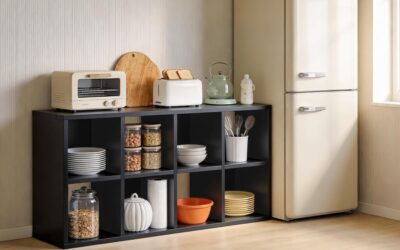
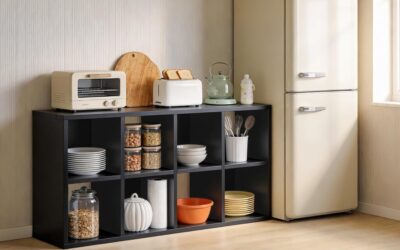
This LUCKLIFE 8-cube organizer solves one of the most common home frustrations: too much stuff, not enough structure. It gives you eight defined compartments that work with standard fabric bins, so you can hide clutter while keeping everyday items within reach. The black finish and clean lines make it look more intentional than a typical budget shelf.
What sets it apart is the flexibility. Stand it tall in a narrow hallway, lay it wide as a low media console, or stack two units for a full wall of storage. The optional back panels are a nice touch, letting you decide how open or enclosed each section feels. It is the kind of piece that adapts when you rearrange a room or move to a new apartment.
If you want structured, modular storage that fits real-life spaces without spending more than sixty dollars, this one delivers.
Styles it works with: Minimalist, Modern, Scandinavian, Small-Space Living
Best placed in: Living room wall or corner, home office under or beside a desk, bedroom closet area or hallway nook
May not suit: Rooms with traditional ornate decor where enginered wood may look out of place, or very small spaces where even the compact footprint feels bulky
Buy it if:
- You need affordable, flexible storage that can be reconfigured as your space changes
- You already own or plan to buy 11-inch fabric bins and want a frame to house them neatly
- You want one piece that can serve as a bookshelf today and a media console tomorrow
Consider waiting if:
- You prefer the white or vintage brown finish and want to confirm color availability before ordering
Skip it if:
- You need solid wood furniture that will last decades through multiple moves
- You want a shelf with doors or drawers for fully concealed storage
Check the latest price and availability on Amazon before it sells out.

Pros
- Reversible orientation adds layout flexibility most budget shelves do not offer
- FSC-certified materials make it a more responsible choice among entry-level furniture options
- Slim 9.4-inch depth keeps floor space free in small apartments and dorm rooms
- Smooth closed back and clean lines look intentional rather than purely functional in a styled room
- Step-by-step assembly instructions and included hardware pack make setup straightforward for solo assemblers
Cons
- 20 lb per cube weight limit rules out storing heavy textbooks, vinyl records, or dense decor collections across all five cubes simultaneously
- Composite wood construction will not hold up to moisture or rough handling the way solid wood furniture would
- At 19.5 inches wide, the unit is narrow enough that it can feel visually underwhelming as a standalone storage solution in a larger room
What makes the Furinno LUDER 5-Cube stand out in a crowded budget bookshelf market is its reversible design. Most shelves at this price are fixed, single-use pieces. This one adapts. You can run it vertically as a tall narrow tower beside a desk or flip it horizontal as a low media console under a window, and it reads as a deliberate design choice either way.
In a real room it punches above its weight visually. The white finish with clean rectangular lines reads as modern Scandinavian rather than flat-pack generic, especially when you mix in a few small plants, a couple of framed prints leaning against the back, and a neutral storage bin or two. The closed back keeps the display looking tidy even when the cubes are not perfectly organized.
It is not trying to be heirloom furniture, and that honesty is part of the appeal. It does exactly what a first apartment or college dorm needs it to do without requiring you to own a drill or a truck. If you want flexible open storage that looks considered without the commitment of heavy solid-wood furniture, this one delivers.
Styles it works with: Minimalist, Scandinavian, Contemporary, and Clean Modern
Best placed in: A living room corner next to a sofa, a home office wall beside a desk, or a bedroom wall as a nightstand-height display shelf when oriented horizontally
May not suit: Homes with a Rustic Farmhouse or Industrial aesthetic where raw wood and metal finishes dominate, or households with young children who may pull on open cubes since the slim depth and lightweight build are not designed for climbing-resistant stability
Buy it if:
- You are furnishing a first apartment or dorm room and need clean-looking storage fast without spending over $100
- You have a small room under 150 sq ft and need a shelf that fits a 19-20 inch wall slot without dominating the space
- You want a versatile unit that can shift rooms or orientations as your living situation changes
Consider waiting if:
- You are planning a full room refresh and want to compare the 7-cube or 11-cube LUDER versions first to see if a larger footprint would serve you better
Skip it if:
- You need to store heavy items like full sets of hardcover encyclopedias, dense textbook collections, or media equipment that regularly exceeds 20 lbs per shelf
- You are furnishing a garage, workshop, or any damp or outdoor-adjacent space where composite wood will deteriorate quickly
Check the latest price and availability on Amazon before it sells out.
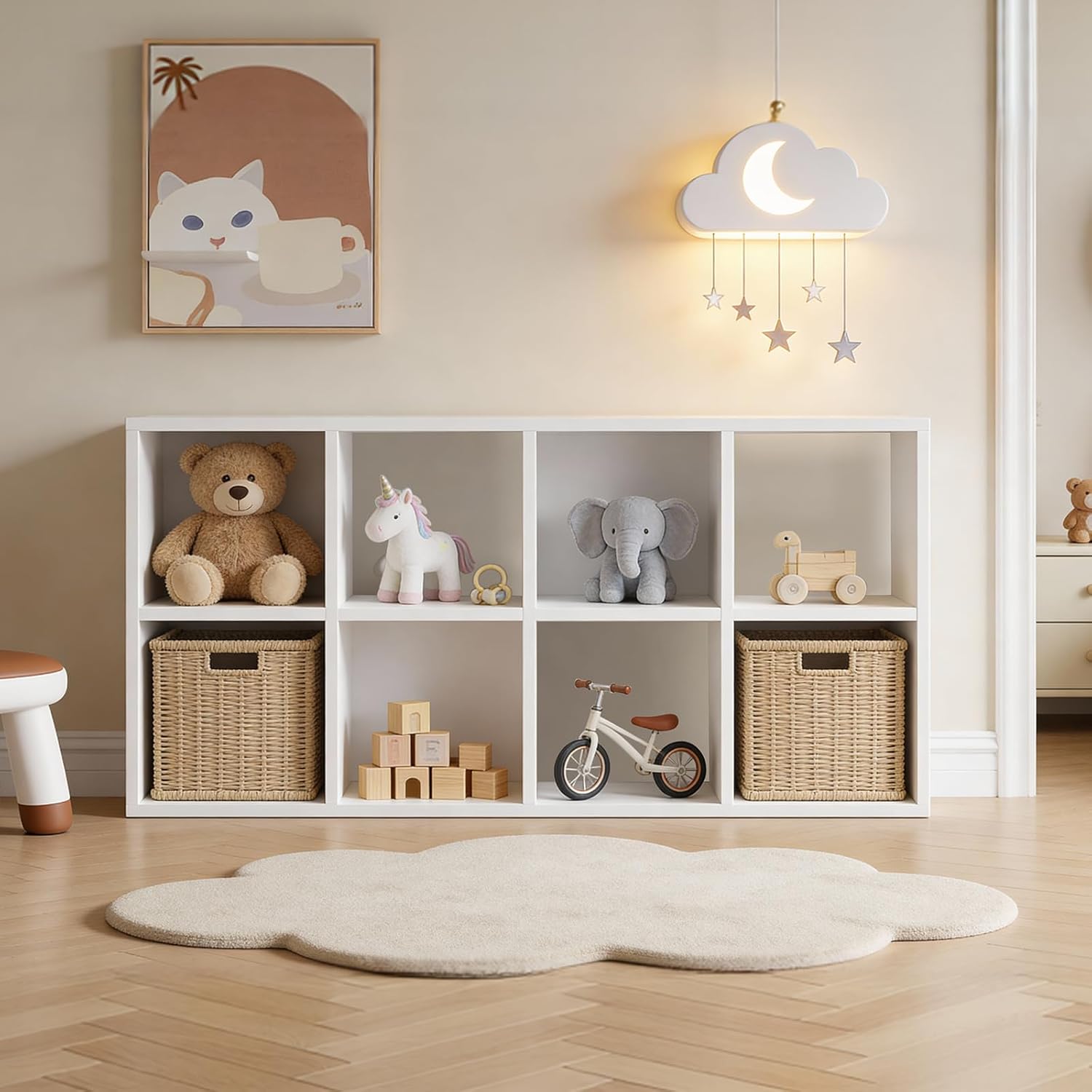
LUCKLIFE 8-Cube Storage Organizer Stackable Modular Bookcase Shelf, Fits 11x11 Bins, Optional Back Panels, White
Pros
- High total load capacity of 236 lbs across all cubes
- Versatile orientation works in narrow hallways or wide living room walls
- Compatible with widely available 11-inch storage bins for a tidy look
- Scratch-resistant laminate surface is forgiving in high-traffic areas
- Partial back panels add structure without making it look bulky
Cons
- Only 31 reviews so far, making long-term durability harder to confirm
- Assembly required with enginered wood means alignment must be precise to avoid woble
- Back panels are partial, so wall color shows through and dust can collect behind items
This 8-cube organizer from LUCKLIFE hits the sweet spot between affordable flat-pack furniture and something that actually looks intentional in your space. The clean white finish and partial back panels give it a modern, airy feel that works whether you stand it tall in a corner or lay it wide against a wall.
In a real room, it reads as a simple bookcase or media console rather than cheap storage. Pair it with woven bins and few styled objects on the open cubes and it genuinely elevates a room without a major investment. The 236-lb total capacity means you do not have to baby it.
If you want flexible, room-ready storage without spending hoursagonizing over built-in shelving, this one delivers.
Styles it works with: Minimalist, Scandinavian, Modern Apartment, Japandi
Best placed in: Living room wall as a low media console, home office corner as a vertical bookcase, hallway or entryway for shoe and bag storage
May not suit: Very traditional ornate decor styles where enginered wood looks out of place, or homes with toddlers who may climb an unsecured vertical unit
Buy it if:
- You need adaptable storage that can shift from vertical to horizontal as your layout changes
- You already own or plan to buy 11-inch fabric bins and want a frame to house them neatly
- You are furnishing a rental or starter apartment and want clean storage under $65
Consider waiting if:
- You prefer a darker finish and the rustic brown or black option is currently out of stock
Skip it if:
- You need fully enclosed storage with doors to keep pets or dust completely out
- You want solid wood construction that will last through multiple moves without risk of damage
Check the latest price and availability on Amazon before it sells out.
Shorter spans and a wall anchor beat any single heavy-duty shelf. Distribute the load and secure the top.
How to Anchor a Bookshelf in 10 Minutes
Anchoring is the fix people skip because it sounds hard. It isn’t. A basic anti-tip kit costs about $5 and includes a strap or bracket, screws, and wall anchors. Find a stud with a magnet or a stud finder, since drywall alone won’t hold a loaded shelf that starts to fall.
Screw one bracket into the top rail of the bookshelf and the matching bracket into the stud, then connect the strap with a little slack so the shelf can’t pitch forward. On plaster or masonry walls, use the correct wall anchor rated for at least 50 pounds of pull-out force. Two anchors are better than one on wide units.
If you rent and can’t drill, place the heaviest items on the bottom two shelves and push the unit tight against a wall. That lowers the center of gravity, though it’s a stopgap, not a substitute for a real anchor.
Matching the Shelf to Your Books
A leaning shelf is often a mismatch between the furniture and the load. Hardcover books are heavy, roughly 1 to 2 pounds each, so a single 36-inch shelf packed with them can carry 40 pounds or more. Thin MDF was never rated for that span.
Before you reload, weigh the demand against the shelf material. Solid wood and thick plywood handle long spans; particleboard and MDF need supports every 30 inches or shorter shelves. If you own a lot of hardcovers, a cube unit with 11-inch bays spreads the weight across many short spans and resists bowing far better than one long open shelf.
Right shelf, right load, anchored top. Get those three and the lean never returns.
Preventing the Lean Before It Starts
The easiest lean to fix is the one that never happens. When you assemble a new bookshelf, treat the back panel and the anchor as part of the build, not optional extras. Nail the backer on fully, square the frame against a wall before loading, and install the anti-tip strap the same afternoon. Doing it upfront takes 15 minutes and removes the risk entirely.
Loading order matters just as much. Put the heaviest books on the bottom two shelves and the lightest items up top, so the center of gravity stays low. A shelf loaded heavy-at-the-top wants to pitch forward, and no amount of leveling fixes a top-heavy load. Leave a little breathing room on each shelf too, because a bowed shelf under a packed row is the first sign of overload.
Recheck the unit a few times a year, especially if it sits on carpet or in a home that goes through big seasonal humidity swings. Carpet compresses, wood shelves relax under sustained weight, and fasteners loosen over time. A 30-second nudge check tells you whether anything has shifted. If the shelf rocks or the top has crept forward, re-level the feet, tighten the hardware, and confirm the wall anchor is still holding. Prevention is boring and it works.
Frequently Asked Questions
Is a leaning bookshelf dangerous?
Yes. A forward lean means the center of gravity has shifted toward tipping, and tall shelves can fall with enough force to injure a child or adult. Anchor it to a wall stud right away.
How do I stop a bookshelf from tipping?
Install an anti-tip strap or L-bracket into a wall stud, keep heavy items on the bottom shelves, and level the base. The wall anchor is the most important step.
Why does my shelf sag in the middle?
The span is too long for the load. MDF and particleboard shelves over 30 inches bow under heavy books. Shorten the span, add a center support, or move weight to shorter shelves.
Does carpet make bookshelves tip?
It can. Plush carpet compresses unevenly under front-loaded weight, causing a slow forward tilt. Level the front feet with shims and anchor the shelf to the wall.
Do I really need to anchor a short bookshelf?
It depends on the proportions. Any shelf taller than it is wide should be anchored, and so should any shelf in a home with young children, regardless of height.
Bottom Line
A bookshelf leans forward because its weight has moved toward the front: sinking feet on carpet, sagging overloaded spans, a racked frame, or simple top-heavy physics. Level the base, keep heavy books low, tighten the frame and its back panel, then anchor the top to a stud. The anchor is non-negotiable on anything tall. Secure it once and the lean, and the danger, are gone.



Write Your Review
No reviews yet. Be the first to share your experience!