

> Editorial Note: I’m Maya Chen, a bedroom and sleep editor covering mattresses, bed frames, and bedding. The picks here are evaluated against CertiPUR-US foam standards, Sleep Foundation evaluation protocols, and owner durability reports from r/Mattress.
Waking up sweaty on a memory foam mattress isn’t bad luck. It’s how traditional memory foam behaves: it hugs your body, traps the heat you give off, and holds it right where you lie. The good news is that most heat problems have a specific cause you can address without buying a whole new bed. For related bedroom picks, see best cooling mattress topper, best mattress for hot sleepers, best mattress for side sleepers, best cooling sheets, memory foam vs coil mattress topper, and best mattress protector.
Reason 1: The Heat That Builds Where Your Body Sinks
The core reason memory foam sleeps hot is the material itself. Viscoelastic foam softens with body heat and molds around you, which is why it feels supportive. But that same close contact wraps warmth around your body and cuts the airflow that would normally carry heat away. The deeper you sink, the more foam surrounds you, and the more heat gets trapped.
You’ll notice it most at your torso and hips, where you press in deepest. Those zones feel warm within 20 to 30 minutes, while your arms and legs stay cooler. That uneven warmth is the signature of foam hugging heat rather than a room-temperature problem.
Look at the foam type. Standard memory foam holds the most heat, while open-cell and gel-infused foams breathe better. CertiPUR-US certification tells you the foam is made without certain harmful compounds and meets durability standards, but it doesn’t rate temperature. If your mattress is older dense foam, it likely lacks the airflow channels newer cooling foams use. A breathable topper over the hot core is the cheapest way to add a cooler surface without replacing the bed.
Density is part of the story too. Higher-density memory foam, in the 4 to 5 lb per cubic foot range, is denser and traps more heat than a 3 lb foam, because there’s simply less air space inside it. That’s the trade-off: the plush, slow-sinking feel that dense foam delivers comes with worse airflow. A 2 to 4 inch topper made from a lower-density or perforated foam sits on top and restores the breathing room the core lost.
Reason 2: The Trapped Warmth From Your Bedding
Sometimes the mattress gets blamed for heat that your bedding is causing. Thick polyester sheets, fleece blankets, and non-breathable mattress protectors sit between you and the foam and trap a layer of warm air. A vinyl or plastic-backed waterproof protector is a common hidden culprit, since it blocks nearly all airflow through the surface.
Check what’s on the bed. Peel back the layers and feel the protector. If it’s a crinkly, plastic-backed sheet, it’s holding heat against you. Synthetic sheets with a high thread count can also sleep warm because tightly woven polyester breathes poorly.
Swap in natural, breathable materials. Cotton percale, bamboo-derived rayon, and Tencel sheets move heat and moisture far better than polyester. Choose a breathable, air-permeable mattress protector rather than a full plastic barrier. The Sleep Foundation notes that bedding materials can shift sleep-surface temperature noticeably, sometimes more than the mattress underneath. Cooler sheets, cooler bed.
Reason 3: The Stuffy Bedroom That Warms the Whole Bed
Your mattress can only stay as cool as the room around it. A bedroom that runs above 70°F, has poor air circulation, or gets afternoon sun will warm the mattress surface long before you lie down. Foam absorbs and holds that ambient heat, so a warm room turns into a warm bed that stays warm all night.
Notice the pattern. If the bed feels hot the moment you get in, before your body has warmed it, the room is the driver. If it only heats up after you’ve been lying there a while, the foam is trapping your body heat instead.
The Sleep Foundation recommends a bedroom temperature around 65 to 68°F for comfortable sleep. Get there with a fan for airflow, blackout curtains to block daytime solar heat, and a cracked window or AC in warm months. Airflow matters as much as temperature; moving air pulls heat and moisture off the surface. A stuffy, still room bakes a foam mattress even if the thermostat looks fine.
Where the bed sits changes things too. A mattress pushed into a corner against two walls loses airflow on those sides, so it holds heat longer than one with space around it. Pulling the bed a few inches off the wall and leaving the underside clear, rather than blocking it with storage bins, lets air move around the whole mattress. A slatted or ventilated foundation helps more than a solid platform, since it lets heat escape downward instead of reflecting it back up into the foam.
Reason 4: The Sag That Makes You Sink Deeper Into the Heat
An aging mattress sleeps hotter than a new one, and sagging is why. As foam breaks down, it loses its rebound and lets you sink lower into the surface. The deeper you sink, the more foam wraps around you, and the worse the heat trapping gets. A hot mattress and a sagging mattress often show up together.
Look for body impressions that don’t bounce back. Press your hand into the sleep zone and watch the recovery. Slow recovery or a permanent dent means the foam has softened, and softened foam both supports less and breathes less. Owner reports on r/Mattress frequently tie rising heat complaints to mattresses past the 6 to 8 year mark.
You can’t reverse foam breakdown, but you can raise the surface. A firmer, more breathable topper restores some loft and keeps you from bottoming out into the hot, dense layer below. It won’t fix a badly sagging bed, but on a mattress that’s just starting to soften, a supportive cooling topper buys real time. Fresh loft, more airflow.
How to Sleep Cooler on a Memory Foam Mattress
The fastest fix is to change the surface you sleep on rather than the whole bed. A breathable topper adds airflow over a hot foam core, while cooler sheets and a lighter room temperature handle the rest. The options below focus on plush, breathable topper materials; start with the extra-thick LIANLAM 4-inch topper if you want more cushion over a firm or sagging bed, and the bamboo-derived rayon pillow-top options if surface breathability and a softer hand matter most.

Pros
- Excellent pressure relief for back, hip, and joint pain at under $60
- Shredded foam construction rebounds quickly and avoids the trapped-in-bed feeling
- Secure deep pocket design fits mattresses up to 18 inches without shifting
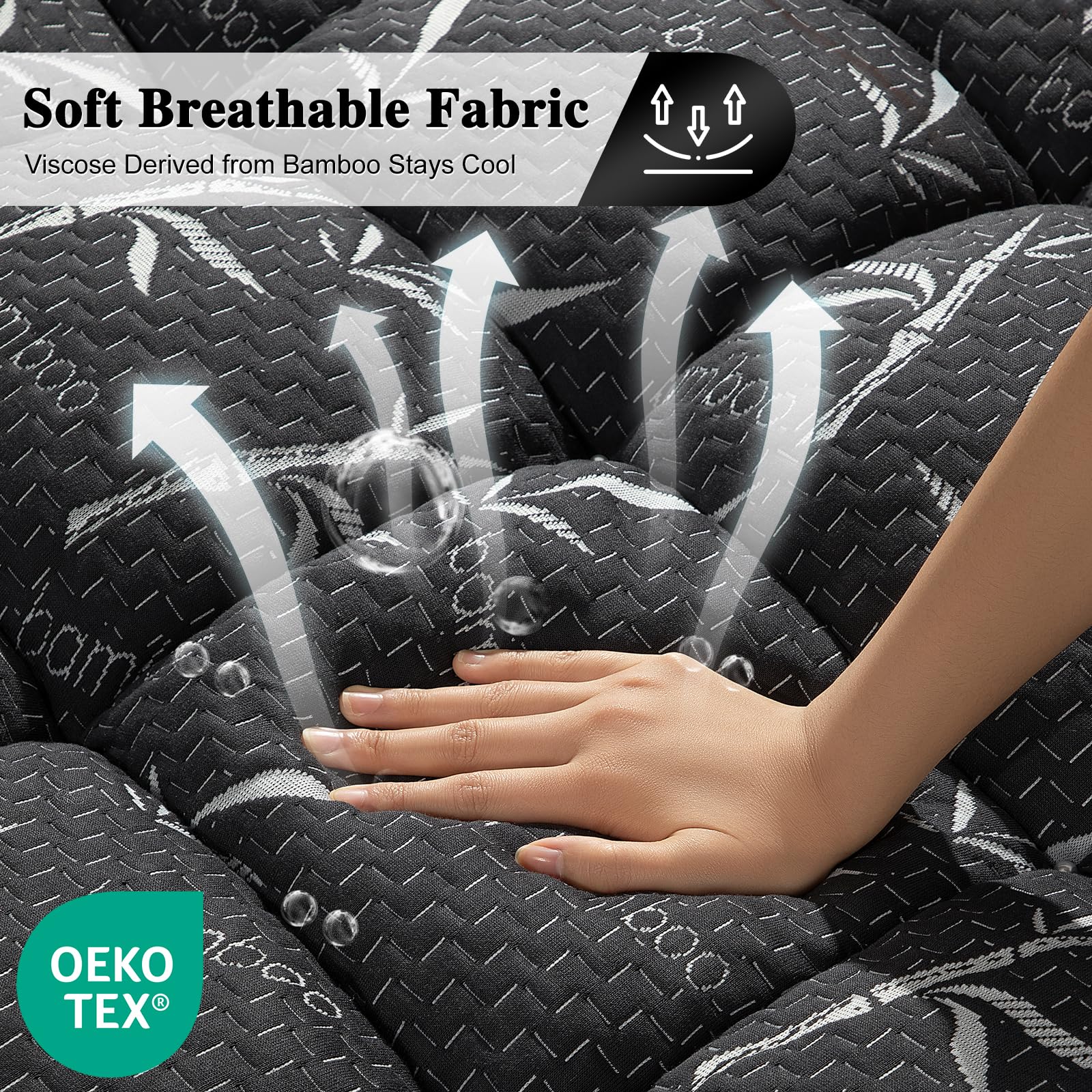
- OEKO-TEX certified with bamboo-viscose cover for sensitive skin
Cons
- Only available in black, which limits pairing with lighter bedroom aesthetics
- At 75 reviews, long-term durability data is still limited
- May sleep warmer than gel-infused foam alternatives despite the breathable cover
This LIANLAM topper solves a common bedroom frustration: your mattress is too firm or too worn, but replacing it feels like overkill. At four inches thick with 2000 GSM of shredded memory foam and down-alternative fill, it adds a genuinely transformative layer of cushion that you can feel the moment you lie down. It is plush without being sagy, supportive without being rigid.
In a real bedroom, it sits neatly on your existing mattress with an elastic skirt that actually stays anchored. The black cover looks clean and modern under your fitted sheet, and the breathable bamboo-viscose fabric does not trap heat the way solid foam slabs tend to. It feels like upgrading to a boutique hotel bed without the boutique hotel price tag.
If you want instant pressure relief and a softer sleep surface without spending hundreds on a new mattress, this one delivers.
Styles it works with: Modern Minimalist, Scandinavian, Contemporary, Transitional
Best placed in: Primary bedroom queen bed, guest room mattress refresh, studio apartment sleeping area
May not suit: Bedrooms where you prefer an ultra-firm sleep surface, or households that need a waterproof topper for young children or pets
Buy it if:
- You wake up with back or hip stiffness and want targeted pressure relief without buying a new mattress
- Your current mattress is too firm and you want a plush, body-hugging layer on top
- You need a budget-friendly queen topper under $60 that still feels substantial at 4 inches thick
Consider waiting if:
- You want a lighter color option to match white or neutral bedding
- You prefer a gel-infused cooling foam for very hot sleepers
Skip it if:
- You need a waterproof or hypoallergenic barrier for allergy or spill protection
- You prefer an ultra-firm sleep surface with zero sink
Check the latest price and availability on Amazon before it sells out.

Niagara Sleep Solution Queen Mattress Topper - Ultra Soft Bamboo Fiber, Back Pain Relief, Deep Pocket Fit (60x80")
Pros
- Ultra-soft bamboo fiber feels luxurious against skin
- Fits thick mattresses securely with deep pockets and stretchy sides
- Machine washable for convenient cleaning
- Free of irritating chemicals like latex and formaldehyde
- Affordable price point under $40
Cons
- No customer reviews yet to verify performance claims
- May require 48 hours or tumble drying to reach full loft after unboxing
- Cushioning level may not suit those preferring firm sleep surfaces
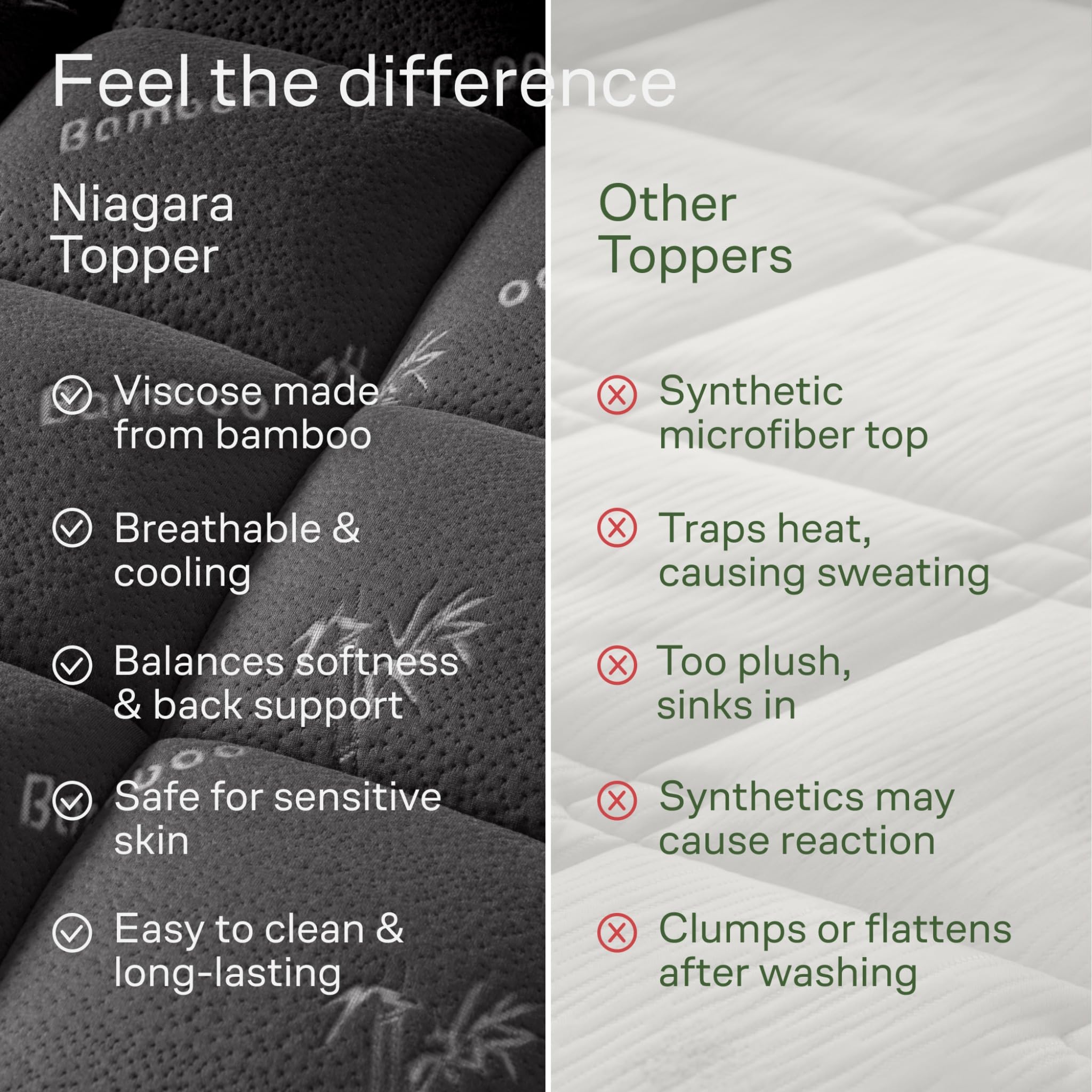
This Niagara topper offers an easy path to better sleep without replacing your entire mattress. The bamboo-derived fabric brings that hotel-bed softness to your existing setup, and it actually stays cool instead of trapping heat like some foam alternatives.
We appreciate the practical design details: deep pockets that grip mattresses up to 20 inches thick, stretchy sides that prevent bunching, and machine-wash compatibility for real-world use. The lack of harsh chemicals makes it suitable for sensitive sleepers, and the compressed packaging means no wrestling with a giant bag at your doorstep.
If you want to revive an uncomfortable mattress without spending hundreds on a replacement, this topper delivers solid comfort at a fraction of the cost.
Styles it works with: Modern, Minimalist, Scandinavian, Farmhouse
Best placed in: Master bedroom, guest bedroom, teen bedroom
May not suit: Hot sleepers who need active cooling technology, those with mattresses thinner than 8 inches, buyers seeking memory foam contouring rather than plush softness
Buy it if:
- Your mattress is still structurally sound but has lost its comfort layer
- You wake up with minor aches and need extra cushioning
- You want breathable, natural-fiber bedding that washes easily
- You need a guest bed upgrade on a tight budget
Consider waiting if:
- You want to see verified customer reviews before purchasing
- You prefer memory foam that molds to your body shape
Skip it if:
- Your mattress has deep sagging or structural damage that needs replacing
- You sleep very hot and need gel-infused or active cooling technology
Check the latest price and availability on Amazon before it sells out.

Pros
- Bamboo rayon surface feels genuinely soft and stays cooler than synthetic alternatives on warm nights
- Universal deep-pocket fit accommodates thick mattresses up to 20 inches, which many competitors skip
- No harmful chemicals like latex or formaldehyde, reassuring for sensitive sleepers or families with young children
- Machine-washable with a secure fit that resists shifting during sleep
Cons
- With no verified customer reviews yet, long-term durability and real-world cooling performance are still unproven
- The 48-hour expansion wait time after unboxing means you cannot use it immediately out of the package
- Available only in dark gray, which may not coordinate with all existing bedding color schemes
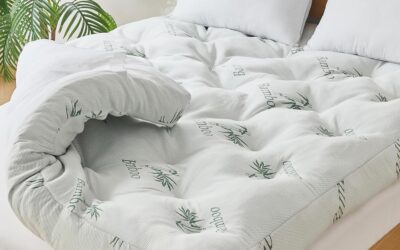
If your mattress has lost some of its original comfort or you simply want a softer, cooler night of sleep without spending hundreds on a new bed, this topper from Niagara Sleep Solution is worth a serious look. The bamboo-derived rayon fabric has a naturally silky texture that sets it apart from the scratchy microfiber pads common at this price range, and it breathes noticeably better on warm nights.
What makes it feel at home in a well-styled bedroom is its low-profile pillow-top construction. It adds visible loft and a luxe, hotel-like appearance to any queen bed without looking bulky under your sheets. The dark gray colorway reads as clean and modern, complementing neutral bedding sets in linen, white, or charcoal tones without clashing.
Day to day, the deep-pocket fit and stretchy sides mean it stays put even on thick memory foam or hybrid mattresses, and tossing it in the washing machine keeps maintenance simple. If you want that plush, cooling sleep surface without paying a premium, this one delivers.
Styles it works with: Minimalist, Scandinavian, Modern Farmhouse, Contemporary
Best placed in: Primary bedroom on a queen platform or box spring bed, guest bedroom needing a quick comfort refresh, college dorm or apartment bedroom with a budget mattress
May not suit: Bedrooms with an existing all-white or pastel bedding aesthetic where the dark gray may feel visually heavy; households that prefer matching toppers to decorative shams and pillow covers in specific accent colors beyond gray
Buy it if:
- You sleep hot and want a breathable bamboo-derived surface that reduces night sweats without a large investment
- Your current mattress feels too firm and you are looking for a budget-friendly cushioning upgrade that also supports your lower back
- You need a topper that fits a thick mattress, up to 20 inches, and will not bunch or slide during the night
Consider waiting if:
- You prefer to see a track record of verified buyer reviews before purchasing a sleep product, since this listing is currently new to market
Skip it if:
- You need a color other than dark gray to coordinate with your existing bedding and bedroom decor
- You require a certified organic or OEKO-TEX labeled product and need documentation to back the chemical-free claims
Check the latest price and availability on Amazon before it sells out.
Frequently Asked Questions
Does memory foam always sleep hot?
Almost always to some degree, since the material hugs your body and limits airflow. But gel-infused and open-cell foams breathe better than older dense foam, and a breathable topper, cooler sheets, and a cool room reduce the heat noticeably.
Will a cooling mattress topper actually help?
Yes, in most cases. A breathable topper puts a more airflow-friendly layer between you and the hot foam core, and it can restore loft on a mattress that’s started to sag. It won’t cool a badly overheated room, so pair it with better sheets and airflow.
What temperature should my bedroom be for cooler sleep?
The Sleep Foundation recommends about 65 to 68°F. A fan, blackout curtains against daytime sun, and cracked airflow help keep the mattress surface from absorbing ambient heat before you lie down.
Do cooling sheets make a difference on foam?
Yes. Breathable materials like cotton percale, bamboo-derived rayon, and Tencel move heat and moisture far better than polyester. Swapping synthetic sheets and a plastic-backed protector for breathable versions is one of the cheapest cooling upgrades.
Is my hot mattress a sign it’s wearing out?
It can be. As foam softens and sags, you sink deeper and trap more heat, so rising warmth often shows up alongside body impressions. If the surface no longer springs back, the foam is aging, and a supportive topper or replacement is worth considering.
Bottom Line
Traditional memory foam traps body heat by design, so the fix is usually about airflow, not a new mattress. Add a breathable topper over the hot core, switch to cotton or bamboo-derived sheets, and drop the bedroom toward 65 to 68°F. If the mattress also sags and you sink deep into the surface, that’s the foam breaking down, and a firm cooling topper buys time before a full replacement. A hot bed is almost always fixable without starting over. 5 reasons next.

Write Your Review
No reviews yet. Be the first to share your experience!