

> Editorial Note: I’m Hannah Lin, an Interior Living Researcher who’s spent 9+ years analyzing the home furniture market. This guide draws on BIFMA, GREENGUARD, and FSC certifications, plus owner reviews aggregated from Wirecutter, Apartment Therapy, and the major home design subreddits.
TV stand vs entertainment center is really a storage, wall-space, and visual-weight decision, not a simple furniture-label debate. A TV stand works best when the screen is the focus and the room needs breathing space; an entertainment center wins when the media wall also has to hold consoles, speakers, books, baskets, and the clutter that follows a 65-inch television. If you’re building the whole living room around one wall, compare this with best tv stand for 75 inch tv, then balance the seating zone with best coffee table for sectional, best accent chair for living room, best area rug for living room, and best sofa table.
The short version: a TV stand is lower, simpler, and easier to move. An entertainment center is taller, heavier, and better at hiding everything. Not the same job.
The Key Differences at a Glance
| Factor | TV Stand | Entertainment Center |
|---|---|---|
| Typical footprint | 48–80 inches wide, 15–20 inches deep | 70–120 inches wide, 16–24 inches deep |
| Best TV size fit | 43–80 inches, depending on stand width | 55–85 inches with built-in side storage |
| Storage style | Low cabinets, open shelves, cable cutouts | Cabinets, shelves, towers, bridge pieces |
| Visual effect | Makes the wall feel wider and lower | Creates a full media-wall focal point |
| Moving and assembly | Usually 1–2 boxes, 60–120 minutes | Often 2–5 boxes, wall anchoring advised |
| Best room type | Apartments, narrow living rooms, minimalist spaces | Family rooms, basements, large open-plan walls |
When a TV Stand Wins
A TV stand wins when the room is already doing a lot. If you have a sectional, a patterned rug, a coffee table, and two accent chairs, a full entertainment center can make the TV wall feel crowded before you even add decor. A low console keeps the sightline clean and leaves 12–24 inches of blank wall above the screen, which helps the room feel less boxed in.
It also wins in rentals. Most TV stands don’t need permanent wall attachment unless they’re unusually tall or placed where children can climb. That matters if you’re dealing with lease rules, plaster walls, or a layout that may change next year. Easy exit.
A stand is usually the better match for TVs in the 55- to 75-inch range because the proportions are easier to control. A 70-inch console under a 65-inch TV gives the screen enough visual base without swallowing the wall. Wirecutter often frames media furniture around cable management and stable support first, and that’s the right order here: top width, center support, rear cord ports, then style.
Choose a TV stand if you already have bookshelves elsewhere, use a soundbar instead of tower speakers, or want the screen to feel secondary to the rest of the living room. It’s also the smarter budget play. Under $300, a simple stand usually buys better hinges and cleaner drawer slides than a sprawling wall unit at the same price.
When an Entertainment Center Wins
An entertainment center wins when the TV wall is the room’s storage engine. Family rooms, finished basements, and open-plan living areas often need one wall to hold the screen, gaming gear, board games, remotes, spare throws, photo frames, and the cable box nobody admits still exists. A stand can hold some of that. A true entertainment center can organize it.
The scale has to be right. A wall unit that is 96 inches wide can look balanced on a 12-foot wall, but it will overpower an 8-foot apartment wall. Leave at least 6 inches of breathing room on both sides if the unit sits between windows, door trim, or built-ins. Tight corners make big furniture look accidental.
Entertainment centers also win for households that want display and concealment in the same zone. Open shelves soften the electronics; closed doors hide controllers, routers, and cords. Apartment Therapy regularly emphasizes negative space around display shelves, and that advice applies hard here. Fill every shelf and the unit turns into visual noise. Leave one-third of the shelves partly empty. Better instantly.
Choose the entertainment center if you have a 75- to 85-inch TV, a wide wall, and no other storage in the room. It’s also the better choice if your seating faces one fixed wall and won’t rotate seasonally. Once a wall unit is assembled and anchored, it tends to stay there for years.
Cost, Durability, and Maintenance
Cost separates these categories fast. A basic TV stand often lands in the $120–$350 range, while larger entertainment centers can run $300–$1,200 once you add towers, doors, lighting, or a fireplace insert. The cheaper wall units aren’t always a bargain. More panels mean more cam locks, more seams, and more chances for the top rail to sag.
Durability comes down to span and support. For a 65-inch TV, look for a console at least 58 inches wide with a stated weight rating above the TV’s actual weight. Many modern 65-inch TVs weigh 35–60 lb without the stand, but the media console still has to handle decor, speakers, and people leaning during setup. BIFMA storage standards focus on stability, load, and tip resistance; even when a residential piece isn’t BIFMA-certified, those are the right questions to ask.
Maintenance is simpler with a TV stand. Dust one long top, wipe the cabinet faces, and pull cords through rear ports. Entertainment centers need more shelf cleaning and more cable planning. More surfaces. More decisions.
Our Top Picks for Each
These five picks were selected around TV size fit, owner rating, storage layout, and whether the piece represents the low-console or full-media-wall side of the decision. Start with a TV stand if you need flexibility; jump to the farmhouse entertainment styles if closed storage matters more than visual lightness.


Pros
- Attractive oak mid-century design that looks more expensive than its price point
- Two closed-door cabinets hide clutter and keep living spaces looking tidy
- Adjustable shelf and leveling leg add real flexibility for uneven floors or varied media equipment
Cons
- At 18.9 inches tall, this stand sits low to the ground and may feel too short for viewers who prefer eye-level TV placement from a standard sofa
- The 15.75-inch depth is relatively shallow, which could limit storage for deeper devices like older gaming consoles or cable boxes
- With only 62 reviews, long-term durability data is still limited compared to more established competitors
For anyone trying to pull a living room or bedroom together without blowing the budget, this Sweetcrispy stand punches well above its price. The oak finish and tapered legs give it that mid-century character that feels intentional rather than generic, and the two-cabinet layout keeps remotes, cords, and random clutter completely out of sight.
What really stands out in everyday use is the small stuff done right. The soft-close hinges make opening and closing the cabinets feel smooth and quiet. The adjustable center shelf means you are not forcing your router or game console into a slot it barely fits. And the cable holes in the back of each cabinet mean you can actually route cords neatly instead of draping them over the side.
If you want a clean, stylish media console that organizes your living space without a complicated assembly process or a steep price tag, this one delivers.
Styles it works with: Mid-Century Modern, Scandinavian, Minimalist, Transitional
Best placed in: Living room against flat wall, bedroom media corner, home office or lounge area
May not suit: Very large open-plan rooms where a longer or taller console is needed for visual proportion, or heavily rustic and traditional interiors where the clean oak finish may feel out of place
Buy it if:
- You have a 55 or 60 inch TV and want a budget-friendly stand that does not look cheap
- You need closed cabinet storage to hide gaming consoles, routers, or media clutter
- You are furnishing a first apartment, guest room, or home office on a tight budget
Consider waiting if:
- You want a wider color selection beyond the oak finish currently available
Skip it if:
- You need a taller stand for comfortable seated viewing from a high sofa or you have mobility concerns that require a TV at eye level
- You have a very deep media device collection that requires more than 15.75 inches of cabinet depth
Check the latest price and availability on Amazon before it sells out.

FORTUNETEC 67" Mid Century Modern TV Stand for 75" TVs | Walnut Wood Grain Arched Media Console with Adjustable Shelves
Pros
- The walnut wood grain finish photographs well and reads as genuinely warm in person, not plasticky
- Adjustable and closed shelving offers flexible storage for entertainment gear and decor objects
- Arched door design stands out in the mid century modern category at this price point
- Straightforward assembly process with clear instructions reduces frustration for solo builders
Cons
- MDF construction means it is less resistant to moisture and heavy impacts than solid wood at a similar price
- At 67 inches the stand may feel undersized in very large open-plan living rooms where a 72-inch or wider console would look more proportional
There is a specific kind of frustration that comes with finding a TV stand that is either purely functional or purely decorative but never both. The FORTUNETEC mid century modern console threads that needle surprisingly well. The arched cabinet doors give it a furniture-forward look that feels intentional rather than generic, and the walnut wood grain finish brings warmth to a space without clashing with existing wood tones in most homes.
For everyday living, the mix of open and closed storage is genuinely useful. Game controllers, streaming remotes, and charging cables disappear behind the cabinet doors, while the adjustable shelves let you dial in the layout around your actual equipment. The built-in wire holes are a small detail that makes a real difference once your setup is running.
If you want a living room that looks curated and calm without paying custom furniture prices, this one delivers.
Styles it works with: Mid Century Modern, Scandinavian, Minimalist, Transitional
Best placed in: Living room main wall centered under a large TV, bedroom media wall in a primary or guest suite, open-plan living and dining area as a room anchor
May not suit: Very small rooms under 12 feet wide where a 67-inch console will crowd the space, or heavily ornate traditional interiors where the clean beveled profile will feel out of place
Buy it if:
- You have a 65 or 75-inch TV and need a stand that is wide and stable enough to match it without a custom build
- You want mid century modern style as starting point for redecorating a living room or primary bedroom
- You need closed storage to hide entertainment clutter and keep the room looking tidy on a daily basis
Consider waiting if:
- You are hoping for a finish color beyond walnut, such as white or black, and want to compare options first
Skip it if:
- You need solid wood construction for long-term durability in a high-humidity room like a sunroom or basement
- Your room layout requires a TV stand wider than 67 inches to fill the wall proportionally
Check the latest price and availability on Amazon before it sells out.

AMERLIFE 70" Modern TV Stand for TVs Up to 80" | Curved Wood Media Console with Storage Cabinets, Brown
Pros
- Generous 70" width and110 lb weight capacity suit most large living room setups
- Soft-close hinges and pre-drilled cable holes show thoughtful, user-friendly design
- Warm brown MDF finish works well with existing neutral or wood-toned furniture
- Anti-tip hardware included, making it safer for households with kids or pets
- Clear assembly instructions allow two people to complete setup in roughly 30 minutes
Cons
- No customer reviews yet, so real-world durability and finish quality are unverified
- MDF construction is less durable than solid wood and may show wear faster in high-traffic homes
- At 15.7" deep, it may feel shallow if you need to store bulkier items inside the cabinets
If your living room feels like it is constantly fighting a battle against cable clutter and mismatched furniture, the AMERLIFE 70" TV Stand is the kind of piece that quietly solves both problems. The curved profile is a small but meaningful design detail that softens the whole room, making it feel more intentional and less like a big box of electronics sitting on a shelf.
In person, the warm brown finish reads as genuinely inviting rather than flat or cheap. The combination of open cubbies and closed cabinets gives you flexibility: show off your good-looking speaker or favorite books, and tuck everything else behind those soft-close doors. The low-profile height keeps sightlines open, which makes smaller living rooms feel less crowded.
Everyday use is where the small details shine. The cable holes are placed sensibly, the robot-vacuum clearance is real and useful, and the anti-tip strap gives peace of mind if you have curious kids or large pets. If you want a stylish, organized media setup without paying double for a solid-wood piece, this one delivers.
Styles it works with: Modern Minimalist, Scandinavian, Contemporary, Transitional
Best placed in: Main living room wall opposite a sofa, open-plan living and dining area, basement media room
May not suit: Rooms with rustic, farmhouse, or heavily traditional decor where raw wood and ornate detail are the dominant style; also may feel proportionally large in rooms under 10 feet wide
Buy it if:
- You have a large TV (65" to 80") and need console wide enough to anchor it without the setup looking top-heavy
- You want closed storage to hide gaming gear, streaming devices, and cables without buying a separate media organizer
- You are furnishing or refreshing a living room on a mid-range budget and want something that looks more expensive than it is
Consider waiting if:
- You prefer solid wood construction and are willing to spend more for longer-term durability
- You are still deciding on your room's color palette and want to see more finish options before committing
Skip it if:
- Your space is under 10 feet wide and a70" console would dominate the room
- You need a TV stand with adjustable shelving inside the cabinets for taller media equipment
Check the latest price and availability on Amazon before it sells out.

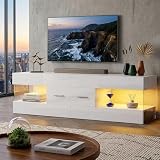
Pros
- Built-in power outlet with cable management reduces cord clutter significantly compared to basic TV stands in this price range
- LED strip lighting adds functional ambiance that typically costs extra on competing models
- Generous storage with two cabinets and four open shelves covers both hidden and display storage in one piece
- Solid wood construction with a thickened tabletop holds up well over time based on verified buyer feedback
- Numbered parts and illustrated instructions make assembly manageable for one person
Cons
- At 13.78 inches deep, the shelf is narrower than average, which may feel tight when placing a soundbar in front of the TV
- Assembly can take 1.5 to 2 hours and some buyers have noted that hardware alignment requires patience
- The farmhouse white finish is not paintable or customizable, so it may not work for darker or more industrial-style rooms
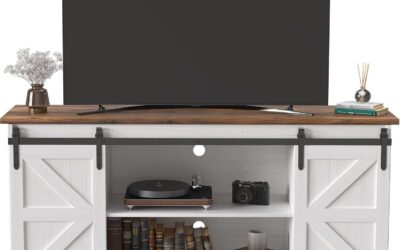
If you have been scrolling through TV stands wondering why most options force you to choose between storage and style, the Casaottima farmhouse stand is a refreshing exception. The white finish is clean without being stark, and the mix of open shelving and closed cabinets gives the piece a layered, intentional look that actually improves a living room rather than just filling space in it.
The built-in power outlet is the kind of detail that sounds minor until you realize it means no more extension cords snaking across the floor to reach the nearest wall outlet. The LED strips along the back panel add a soft glow behind your screen that makes evening viewing noticeably more comfortable, and you can change the color to match whatever you have going on in the room.
For the price, the combination of functional lighting, power access, cable management, and real storage in a cohesive farmhouse design is genuinely hard to find. If you want a complete, styled media setup without the hassle of sourcing separate accessories, this one delivers.
Styles it works with: Modern Farmhouse, Coastal Cottage, Transitional, Scandinavian
Best placed in: Living room as a primary media console, bedroom media wall against a flat surface, guest room where dual-purpose storage matters
May not suit: Small apartments where 59 inches of width is too wide for the wall space available, or rooms with a dark, industrial, or maximalist decor style where a white wood finish would look out of place
Buy it if:
- You own a 55 to 65 inch TV and need a stable stand with enough visual presence to anchor a living room wall
- You want LED lighting and a built-in power outlet without spending $180 or more to get them
- You are furnishing a new space and want one piece that handles media storage, display, and cable management together
Consider waiting if:
- You need a specific finish or color that is not currently in stock, as inventory on this model can shift
Skip it if:
- Your TV is larger than 65 inches, as this stand is not rated for bigger screens
- Your wall space is under 60 inches wide, since the stand itself measures 59 inches and needs a few extra inches of clearance on each side to look proportional
Check the latest price and availability on Amazon before it sells out.

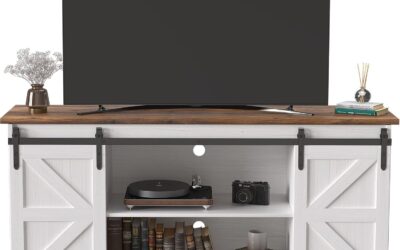
Pros
- Smooth, quiet sliding barn doors with steel hardware
- Highly rated at 4.6 stars across 4,200+ verified buyers
- Adjustable and removable shelves accommodate items of varying heights
- Wide58-inch tabletop fits most TVs up to 65 inches
- Numbered parts and clear instructions simplify solo assembly
Cons
- Requires full assembly, which can take 1 to 2 hours
- At 15.5 inches deep, the top may feel narrow for larger soundbars
- A 70-inch TV will overhang the edges, limiting placement flexibility
The JUMMICO barn door TV stand hits a sweet spot that is hard to find at this price: it looks like a farmhouse accent piece, but it functions as serious living room storage. The bright white finish keeps things feeling light and modern, while the steel-rail sliding doors add character without making the room feel heavy or dated.
In daily use, those barn doors earn their keep. Slide them over side cabinets to hide media clutter, or center them to show off your book collection and plants on the open shelves. The adjustable shelf heights mean your tall router or a stack of board games actually fits without awkward gaps.
If you want a clean, farmhouse-inspired media center that hides everyday mess without spending more than $90, this one delivers.
Styles it works with: Modern Farmhouse, Coastal, Scandinavian, Transitional
Best placed in: Living room media wall, bedroom wall opposite the bed, bonus room or den
May not suit: Very narrow rooms where58 inches of width is tight against doorways, or ultra-modern spaces where barn door hardware clashes with slek minimalist decor
Buy it if:
- You need hidden storage for a living room that doubles as a play area or work-from-home space
- You want the farmhouse barn door look without paying $200 or more
- Your TV is 65 inches or smaller and you want a stand that fills the wall proportionally
Consider waiting if:
- You prefer a darker wood tone and want to see if JUMMICO restocks their walnut or rustic oak finish
Skip it if:
- Your TV is 70 inches or larger and you need full tabletop support without overhang
- You need a depth greater than 15.5 inches to accommodate a deep center-channel speaker
Check the latest price and availability on Amazon before it sells out.
Sweetcrispy represents the TV stand side for smaller and mid-size rooms. The listing targets 55- to 60-inch TVs, which makes it a better fit for apartments, guest rooms, and living rooms where the media console can’t become the biggest object on the wall. Its 4.4 owner rating is solid for this price tier, and the mid-century profile keeps the legs visible instead of pushing a heavy block to the floor. Choose it if the goal is a cleaner media zone with enough storage for remotes, a console, and a few baskets.
FORTUNETEC sits between the two categories. It is labeled for a 75-inch TV, but the arched mid-century design still reads more like a long media console than a wall-consuming entertainment center. That’s useful for rooms with large screens and normal ceiling heights, especially if you want the TV supported by furniture rather than mounted. The 4.3 owner rating is respectable, and the wood-grain finish gives it more presence than a plain black stand. It favors the TV stand camp, just with enough scale for bigger screens.
AMERLIFE is the strongest pick for large-TV households that don’t want a full wall unit. The 70-inch width and stated fit for TVs up to 80 inches give it the proportions most 75-inch screens need, while the curved profile softens what could otherwise feel like a long rectangular box. It represents the modern media-console answer: wide, low, closed enough to hide clutter, but not tall enough to dominate art, windows, or sconces. The 4.2 rating is lower than the others here, so measure carefully and read assembly notes before committing.
Casaottima leans toward the entertainment center side because it adds the features people usually want from a full media wall: farmhouse styling, storage, a power outlet, and LED lighting. That makes sense in a family room where gaming consoles, charging cords, and movie-night gear all land in the same place. The 4.4 owner rating helps, but the bigger point is function. If your TV wall always ends up messy by Friday night, integrated power and closed compartments may matter more than a sleeker silhouette.
JUMMICO is the practical entertainment-center pick for people who want storage without building an entire wall system. The sliding barn doors hide clutter quickly, and the 65-inch TV fit covers the most common living-room screen size. Its 4.6 owner rating is the highest in this group, which makes it the safer choice if you’re buying mainly for reliability signals from other owners. It won’t look as airy as a long-legged console, but that’s the trade: more concealment, more visual weight.
The Verdict
For apartments, narrow living rooms, and design-forward spaces, the TV stand wins. It keeps the wall lighter, costs less, and lets you rearrange the room without committing to a built-in look. For family rooms, basements, and 75-inch-plus screens with consoles and speakers, the entertainment center wins because storage becomes the point, not an add-on. If you want the safest middle ground, choose a 65- to 75-inch low console with closed cabinets and cable cutouts. That’s the zone where most homes land. Clean enough for adults. Practical enough for everyone else.
Frequently Asked Questions
Is a TV stand better than an entertainment center?
Yes, for smaller rooms and renters. A TV stand is easier to place, easier to move, and less likely to crowd an 8- to 10-foot wall. It also works better if you already have separate storage in the room. Choose the stand when flexibility matters more than display shelves.
Is an entertainment center outdated?
No. Oversized, bulky wall units can feel dated, but well-scaled entertainment centers still work in family rooms and basements. The current version is lower, cleaner, and more storage-focused than the old 1990s cabinet wall. Closed doors help. So does leaving open shelves partly empty.

How wide should a TV stand be?
A TV stand should usually be at least 4–8 inches wider than the TV’s actual screen width. A 65-inch TV is about 57 inches wide, so a 60- to 70-inch stand usually looks balanced. For a 75-inch TV, start around 68 inches wide and go wider if the wall allows it.
Can a TV be wider than the stand?
Almost never. A slightly wider screen may sit safely if the feet fit, but it usually looks top-heavy and makes the furniture feel undersized. If the TV has side-mounted feet, the stand must be wide enough for the full foot spread. Center-pedestal TVs are more forgiving.

Should I mount the TV above a stand or set it on top?
It depends on viewing height. The center of the screen should land near seated eye level, often around 40–44 inches from the floor in a standard sofa setup. Mounting works if the stand is mainly for storage. Setting the TV on top works when the stand height keeps the screen comfortable.
Which choice is better for hiding cords?
An entertainment center usually hides more cords because it has deeper cabinets, vertical panels, and more places to route power strips. A TV stand can still work if it has rear cable cutouts and closed compartments. For wall-mounted TVs, add an in-wall rated cord channel or paintable raceway. We break down a neighbouring category in why is my tv stand too low? causes and fixes.

Write Your Review
No reviews yet. Be the first to share your experience!