

> Editorial Note: I’m Hannah Lin, an Interior Living Researcher who’s spent 9+ years analyzing the home furniture market. This guide draws on BIFMA, GREENGUARD, and FSC certifications, plus owner reviews aggregated from Wirecutter, Apartment Therapy, and the major home design subreddits.
The mistake almost everyone makes: shoving the sectional’s long side flat against the wall and calling it done. That pushes the seat backs into the baseboard, kills the room’s flow, and leaves a dead corner nobody uses. A sectional works when it defines a zone, not when it hugs the drywall. Get the anchor placement right and the rest of the room falls into line. Before you drag anything, look at the pieces you’ll build around: the best area rug for living room, the best coffee table for sectional, the best accent chair for living room, the best tv stand for 75 inch tv, and a best sofa table for the back. Those five decide where the sectional lands.
The Ground Rules Before You Start
Three non-negotiables. First, leave at least 30 inches of walkway around the sectional so people can pass without turning sideways. Second, the sofa is your anchor piece: place it first, then everything else reacts to it. Third, float it. Pull the back edge 6 to 10 inches off the wall even in tight rooms, which reads as intentional rather than crammed. Measure your longest wall and your chaise depth before you commit. A 110-inch sectional needs roughly 12 feet of clear run to breathe.
Step 1: Set the Anchor and Face the Focal Point
Decide what the room is for before the sofa moves an inch. If it’s a TV room, the sectional faces the screen. If it’s a conversation space, it faces the fireplace or window. Whatever wins, the sectional’s longest run points at it.
Place the chaise or corner on the side that opens the room, not the side that blocks a doorway. A common fix: swing the L so the return runs toward the interior, leaving the entry path clear. Keep the front edge of the seat 24 to 36 inches from the TV wall or hearth so the coffee table has room and nobody’s knees hit the console.
For viewing distance, the rule of thumb from Wirecutter puts a 75-inch screen about 9 to 12 feet from the primary seat. Mark that spot on the floor with tape first. Then position the deepest seat there. Deep-seat sectionals run 40 inches or more front to back, so a 12-foot room fills fast. That’s why the anchor comes first. Everything downstream is negotiation.
Step 2: Layer the Rug So It Holds the Seating Together
Here’s where most rooms fall apart. The rug is too small, floating like a postage stamp under the coffee table. A sectional needs a rug that reaches under the front legs of every seat, tying the pieces into one visual block.
For an L-shaped sectional, an 8-by-10-foot rug is the working minimum. For a U-shaped or 110-inch piece, go 9-by-12 or larger. The front 6 to 8 inches of each seating element should sit on the rug. If your rug can’t reach all the legs, at minimum catch the front feet of the long run and the chaise.
Leave 8 to 18 inches of bare floor between the rug edge and the walls. That border frames the zone. Apartment Therapy’s stylists lean toward the larger end of that range in open-plan rooms, where a generous margin keeps the seating area from crowding a dining or entry zone. Lay the rug before the sofa’s final push. Adjusting a rug under a loaded sectional is a two-person job you don’t want.
Step 3: Place the Coffee Table and Circulation Path
The coffee table sets the room’s rhythm. Center it on the longest seat run, not on the whole sectional, or it drifts toward the empty corner and looks lost.
Leave 14 to 18 inches between the sofa’s front edge and the table edge. That’s close enough to set a mug down without leaning, far enough that shins clear when you stand. For length, the table should span roughly two-thirds of the main seat run. A 90-inch run wants a table around 48 to 54 inches long.
Height matters too. Keep the tabletop within 1 to 2 inches of the seat cushion height so it reads as part of the group. With a deep U-shaped sectional, a round table or two small nesting tables beat one long slab, since a single big rectangle strands the far seats. Protect the walkway: keep a 30-inch lane between the table and any TV stand or shelving so traffic never squeezes through the seating.
Step 4: Balance the Open Side With a Chair and Light
An L or U sectional leaves one open side. Leave it empty and the room tilts, all its weight in one corner. Fill it with a counterweight: an accent chair, a floor lamp, or a slim console.
Angle an accent chair at roughly 45 degrees to the open end, 24 to 36 inches from the nearest sectional seat, so two people can talk without shouting across the room. If floor space is tight, a floor lamp standing 58 to 64 inches tall does the balancing work without adding a footprint. Behind the backless run, a sofa table 28 to 32 inches high tucks in a lamp, a tray, and a spot to drop keys. Mind the outlets. Nothing kills a layout faster than a lamp cord snaking across the walkway. Plan the plug before the piece goes down.
The Right Products Make It Easier
The picks below all cleared a 4.0-plus owner rating and cover the three sectional shapes these steps assume: a big U for open rooms, a compact L for tighter ones, and a sleeper for rooms doing double duty. Match the shape to your Step 1 focal-point call, then size the rug and table around it.

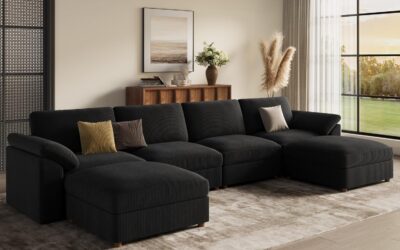
Nurrizus 110" U-Shaped Modular Sectional Couch with 2 Ottomans | Cloud Memory Foam | No Assembly | Corduroy
Pros
- True no-assembly setup -- compressed foam expands to full shape within 24 hours
- Exceptionally deep 29.5-inch seat makes it one of the roomiest options under $400
- Modular pieces rearrange freely, so it adapts to corner layouts, open plans, or smaller rooms
- Corduroy fabric feels premium and soft while being more durable than velvet alternatives
- Bundled ottomans and pillows add real value without extra cost
Cons
- Only 2 reviews available, so long-term durability and fabric wear are still unproven at scale
- At 110 inches wide, the U-shape requires a large open floor plan -- tight living rooms will feel overwhelmed
- Boneless foam construction may not provide firm enough support for users who prefer a structured, upright seating posture
There is something genuinely refreshing about a sofa that arrives, unfolds, and just works. The Nurrizus cloud couch skips the Sunday afternoon assembly ritual entirely. You unbox it, let the high-resilience foam breathe for a day, and you have a full U-shaped sectional ready to anchor your living room. For anyone who has wrestled with a flat-pack sofa and lost, that alone feels like a win.
The corduroy fabric deserves a mention because it punches above the price. It has that satisfying soft-rough texture that photographs well and actually holds up to daily contact. Paired with the memory foam fill, the cushions contour gently when you sit down without swallowing you whole. The 29.5-inch seat depth means you can pull your legs up, stretch across two cushions, or prop a laptop on your knees without feeling cramped -- a rare quality in sectionals under $400.
What makes it work for a real room is the modularity. The individual pieces shift and reconnect, so if you move apartments or just want to shake up the layout, the sofa moves with you rather than against you. If you want a genuinely roomy, reconfigurable lounge sofa without spending a weekend assembling it, this one delivers.
Styles it works with: Boho, Modern Farmhouse, Casual Contemporary, Cottagecore
Best placed in: Large open-plan living rooms, basement media rooms, studio apartments with a defined lounge zone
May not suit: Small living rooms under 200 square feet where the 110-inch U-shape will dominate the space; homes with a formal or traditional aesthetic where structured upholstery is expected
Buy it if:
- You want a large sectional with deep lounging seats and do not want to spend a full weekend on assembly
- You are furnishing a rental, first apartment, or basement den and need flexible layout options on a realistic budget
- You have kids or pets and want a soft, skin-safe fabric that still looks put-together in photos
Consider waiting if:
- You need a specific color or fabric finish to match an existing room palette and want to see a wider variety before committing
Skip it if:
- Your living room measures under 12 by 14 feet -- the U-shaped footprint will leave very little circulation space
- You require firm, structured seat support for back issues or extended work-from-home sitting sessions
Check the latest price and availability on Amazon before it sells out.
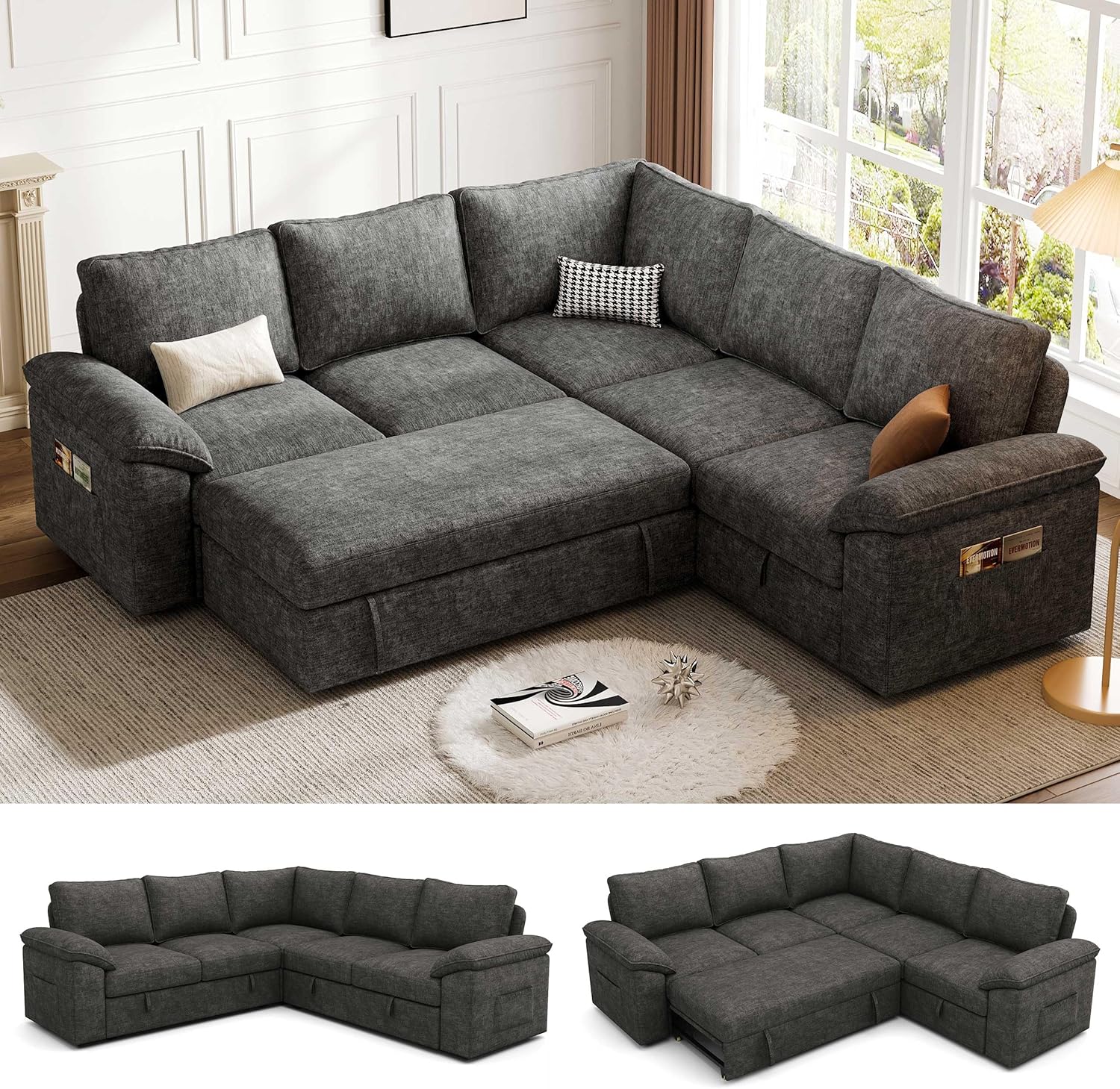
SUAWY 85" Modular Sectional Sleeper Sofa with Pull Out Bed & Storage - 5 Seat L-Shaped Couch, Dark Grey
Pros
- Dual-purpose design saves space by combining sofa, guest bed, and storage
- Removable, washable cover in pet-friendly chenille fabric
- Easy two-person assembly with included tools and clear instructions
- Strong 300 lb per seat weight capacity with solid wood frame
- Attractive rolled-arm design adds elegance to living spaces
Cons
- Cushions take up to a week to fully expand after unboxing
- May require mattress topper on pull-out bed section for optimal guest comfort
- Ships in three separate packages which may arrive on different days
This sectional sleeper solves the eternal apartment dilemma: where do guests sleep without dedicating an entire room to a bed that sits empty 350 days a year? The SUAWY pulls double duty beautifully, offering plush everyday seating that converts to a full sleeping surface in under a minute. The dark grey chenille fabric feels soft without looking cheap, and those rolled arms add a touch of sophistication you don't always see at this price point.
The hidden storage compartment is genuinely useful for stashing the extra bedding you will need when company comes over. We appreciate that the modular design lets you flip the chaise to either side, so you are not locked into one room layout forever. The high-density foam has enough support for daily use while still feeling cloud-soft when you sink in after a long day.
If you want a legitimate guest bed solution without sacrificing your living room to a clunky futon, this one delivers.
Styles it works with: Modern Farmhouse, Transitional, Contemporary, Scandinavian
Best placed in: Living room corner configuration, studio apartment main seating area, basement family room, home office that doubles as guest room
May not suit: Very small rooms under 150 square feet where an 85-inch footprint overwhelms the space, homes needing formal Victorian or traditional styles, households with toddlers who may struggle with removable cushions during play
Buy it if:
- You need occasional guest sleeping but do not have a spare bedroom
- You want modular furniture that adapts as you rearrange or move
- You have pets and need removable, washable upholstery
- You are furnishing an apartment or first home on a realistic budget
Consider waiting if:
- You prefer a color other than dark grey and can wait for restocks in beige or light grey
- You need the sofa immediately and cannot wait a week for cushions to fully expand
Skip it if:
- Your space requires a sectional smaller than 85 inches or larger than 90 inches
- You need a sofa bed where guests can sleep comfortably without adding a mattress topper
- You prefer non-modular, one-piece construction for maximum frame stability
Check the latest price and availability on Amazon before it sells out.

Pros
- Dual-function design serves as both everyday seating and guest bed, maximizing small space utility
- Hidden storage compartment provides practical organization for living room essentials
- Removable covers and pet-friendly chenille fabric simplify cleaning and maintenance
- Modular configuration allows customization to fit different room layouts
- Solid 4.0 rating from 875+ verified buyers confirms real-world satisfaction
Cons
- Cushions require 48 hours to reach 80% shape and up to one week for full expansion after unboxing
- Assembly requires two people and multiple packages may arrive on different days
- May need an additional mattress topper or blanket on the pull-out bed surface for optimal sleep comfort
This sectional solves the biggest challenge in apartment living: creating a space that works for daily life and overnight guests without sacrificing style or square footage. The dark grey chenille fabric looks sophisticated in person, and the modular pieces let you arrange it as a traditional L-shape or sprawling U-configuration depending on your room. When company arrives, the pull-out bed mechanism is simple enough that guests can handle it themselves.
The hidden storage is the unsung hero here. Instead of stashing extra pillows in a closet or under the bed, you can tuck them right into the sofa. The cushions genuinely feel cloud-like once they fully expand, and the removable covers mean you are not stuck with permanent stains when life happens. At 875 reviews holding steady at 4 stars, buyers consistently mention the comfort and value.
If you want a living room that handles movie nights, unexpected guests, and pet snuggles without buying three separate pieces of furniture, this one delivers.
Styles it works with: Modern Minimalist, Scandinavian, Contemporary Urban, Transitional
Best placed in: Open-concept living rooms with at least 10x12 feet of floor space, studio apartments needing multi-function furniture, finished basements or bonus rooms doubling as guest spaces
May not suit: Small living rooms under 10x10 feet where a 108-inch sectional will overwhelm the space, homes with formal traditional decor requiring tufted leather or ornate details, households needing immediate guest-ready bedding without time for cushion expansion
Buy it if:
- You host overnight guests multiple times a year but lack a dedicated guest room
- You need hidden storage for blankets, throw pillows, or seasonal decor without adding a bulky ottoman or trunk
- You have pets or kids and want removable, washable covers instead of worrying about permanent furniture damage
- You are furnishing an apartment or first home and want one versatile piece instead of buying a sofa and separate guest bed
Consider waiting if:
- You need furniture that is ready to use the day it arrives, as cushions require up to a week to fully expand
- You prefer a different color and can wait for restocks in beige or light grey options
Skip it if:
- Your living room is smaller than 10x10 feet and a 108-inch sectional will block walkways or doorways
- You need a sleeper sofa with a traditional innerspring mattress instead of a pull-out cushion bed
Check the latest price and availability on Amazon before it sells out.
The Nurrizus 110-inch modular U-shaped sectional is the piece Step 1 was written for. Its deep memory-foam seats and two ottomans anchor a large, open-plan room and face a wide focal wall without looking sparse. At 110 inches across the front run, plan for a 9-by-12 rug and a round or nesting coffee table so the far seats stay reachable. The modular build lets you reconfigure the U into an L if your focal point shifts. It’s the most flexible anchor on this list, and its scale rewards a room with 12-plus feet of clear wall.
The SUAWY 85-inch modular sofa is the compact L for rooms where 30-inch walkways are hard to hold. At 85 inches with a pull-out bed and hidden storage, it drops into a smaller footprint while still floating off the wall per Step 1. The shorter run pairs naturally with an 8-by-10 rug and a 48-inch coffee table from Step 3. Reversible modules mean the chaise can face either way, so you can point the return toward the room’s interior and keep the doorway path clear.
The SUAWY 108-inch U-shaped sleeper is the double-duty pick for a room that also hosts guests. It seats up to seven, hides a pull-out bed and storage, and fills a large focal wall much like the Nurrizus, but leans on sleeper function over plush depth. Treat it like the 110-inch anchor for rug and table math: a 9-by-12 rug and a 30-inch lane to the TV stand. Choose this one when the open side in Step 4 doubles as the room a guest sleeps in.
Frequently Asked Questions
What if my living room is small and narrow?
Go with an L under 85 inches and float it lengthwise along the longer wall, still 6 inches off the baseboard. Skip the chaise if it blocks a path. An 8-by-10 rug and a single round coffee table keep the 30-inch walkway intact. In narrow rooms, one clear traffic lane beats a second seat every time.
What if the sectional has to face away from a doorway?
Fine, as long as the back is finished and you soften it. Set a sofa table 28 to 32 inches high behind the backless run with a lamp and a tray. That turns the exposed back into an entry-side console instead of a blank wall of upholstery, and it screens the seating without closing off the room.
How far should the sectional be from a 75-inch TV?
About 9 to 12 feet from the primary seat, per Wirecutter’s viewing-distance guidance for that screen size. Tape the spot on the floor, then place the deepest seat there. If the room forces you closer than 8 feet, mount the TV higher and angle the sectional slightly to ease neck strain.
Can I put a sectional in front of a window?
Yes, if the sofa back sits below the sill. Keep the top of the back cushions at least 3 to 4 inches under the window frame so the glass and light stay open. Float it 8 to 10 inches off the wall for airflow, and choose a fade-resistant fabric since direct sun breaks down upholstery over time.
What size rug do I need under a U-shaped sectional?
Minimum 9-by-12 feet for a U or a 110-inch piece, so the front legs of every seat land on the rug. An 8-by-10 leaves the far corners stranded on bare floor and the whole group reads disconnected. Leave 8 to 18 inches of exposed floor between the rug and the walls to frame the zone.
Bottom Line
Place the sectional first and face it at the room’s real focal point, because every other decision, from rug size to walkway width, follows that one call. Float it off the wall, catch the front seat legs on a rug that’s actually big enough, and hold 30 inches for traffic. The main exception is a truly narrow room, where you drop the chaise and prioritize one clean walking lane over a second seat. Get the anchor right and a sectional stops fighting the space. It defines it.

Write Your Review
No reviews yet. Be the first to share your experience!