

> Editorial Note: I’m Hannah Lin, an Interior Living Researcher who’s spent 9+ years analyzing the home furniture market. This guide draws on BIFMA, GREENGUARD, and FSC certifications, plus owner reviews aggregated from Wirecutter, Apartment Therapy, and the major home design subreddits.
Most people pile everything they own onto the coffee table and call it styled. That’s the mistake. A styled table isn’t full — it’s edited, with two-thirds of the surface left open so it still works as a place to set a mug. Get the negative space right and the rest falls into line. Before you add a single object, pull up the pieces around it: your best area rug for living room, the best coffee table for sectional if you’re working with an L-shape, the best accent chair for living room that flanks it, the best tv stand for 75 inch tv across the room, and any best sofa table behind the couch. Those anchor the scale you’re about to work within.
The Ground Rules Before You Start
Three non-negotiables. First, leave 14 to 18 inches of clearance between the table edge and the sofa — closer than 14 and you’ll bark your shins reaching for a drink. Second, keep the tallest object under the eye line of a seated person, roughly 12 to 16 inches, so nothing blocks a conversation across the table. Third, style in odd numbers and group in threes; the eye reads odd groupings as intentional and even ones as stiff. Anchor the biggest piece first, then build down. Everything else is decoration.
Step 1: Anchor the Corner With a Tray
Start with a tray. It’s the single move that separates a styled table from a cluttered one, because it draws a visible boundary and tells the eye where the “arranged” zone ends. Pick a tray that covers roughly one-third of the tabletop — on a 40-inch table that’s about a 14-inch tray — and set it in the corner nearest the sofa, not dead center. Center placement fights with the mug you’ll set down; corner placement leaves the working two-thirds clear.
A tray does two jobs at once. It corrals small objects so a candle, a matchbox, and a stack of coasters read as one unit instead of three pieces of visual noise. And it gives the surface a material contrast — rattan against a wood top, brass against a painted finish, marble against linen. Apartment Therapy calls this the “landing strip” method, and owner reviews back it up: the tray is what people say made their table finally look finished.
Match the tray’s undertone to the table. Warm oak wants a warm brass or natural fiber; a cool gray finish takes black metal or white ceramic. Skip anything with a busy pattern, the tray is a frame, not the picture.
Step 2: Build the Stack. Books as a Riser
Every well-styled table has height variation, and the cheapest way to get it is a stack of books. Use two or three hardcovers, 9 to 12 inches wide, laid flat with the largest on the bottom. That stack becomes a 2- to 3-inch riser, which matters because a flat table reads dead, the eye needs at least one level change to stay interested.
Set the stack just outside the tray, near the table’s center-back. Then put one small object on top: a short candle, a palm-sized sculpture, a coaster set. That single topper turns a pile of books into a deliberate vignette. Turn the spines toward the seating so the titles face the room, or flip them backward for a neutral color-blocked look if the jackets clash.
Wirecutter’s home editors note that oversized art and design books do double duty here, they’re a riser and a talking point. Keep the total stack under 4 inches so it clears the 12-to-16-inch height ceiling once you add the topper. Two stacks on a long table works; three starts to crowd.
Step 3: Add One Living Element
Something has to be alive, or at least look it. A low arrangement of fresh stems, a small trailing plant, or a quality faux sprig introduces organic shape against all those hard rectangles. Keep it low, a 6- to 8-inch vase or bowl, so it sits under the sightline and doesn’t become a hedge you talk around.
Place the greenery diagonally opposite the tray. That diagonal is the whole trick: it spreads visual weight across the surface instead of clumping it on one side, and it’s the difference between a balanced table and a lopsided one. If your table has an open lower shelf, a single trailing plant there adds a second layer without stealing tabletop space.
Scale the vessel to the table, not the flowers. On a compact 31-inch table, a single bud vase with three stems beats a full bouquet, which would swallow the surface. FSC-certified wood and a healthy plant read as considered rather than staged. One living element is enough, two competes with itself.
Step 4: Edit Down to the Working Two-Thirds
Now take something away. This is the step everyone skips, and it’s why tables look busy. Stand back six feet, normal viewing distance from the sofa, and count the objects. More than five or six freestanding items and you’re over. Pull one, then reassess.
The goal is a clear working zone covering two-thirds of the top, roughly 20 inches of open space on a 40-inch table. That’s where the remote, the mug, and the takeout land in real life. A table that can’t hold a coffee cup isn’t styled; it’s a display case. Leave the negative space and the styled corner reads as a choice, not an accident. Owner reviews on lift-top and storage tables repeat the same lesson: the ones people love keep the top nearly empty and push the clutter into the drawer or lift compartment below.
The Right Products Make It Easier
The picks below all clear a 4.0 owner rating and offer hidden storage, the feature that lets you keep the top edited by absorbing the clutter Step 4 asks you to remove. Start with a lift-top if you work from the couch; go for the open-shelf farmhouse model if you’d rather display than hide.


Pros
- Lift top with gas struts operates smoothly and quietly
- Generous hidden storage plus drawers plus adjustable cubbies offer triple organization
- Sturdy enginered wood construction rated for 110 lbs
- Attractive two-tone vintage white and walnut finish suits multiple decor styles
- Numbered parts and clear instructions make assembly straightforward
Cons
- At 39.4 inches square it may feel oversized in rooms under 150 sq ft
- Enginered wood requires care around moisture and heavy impacts
- Two-tone finish limits color flexibility if your room palette changes
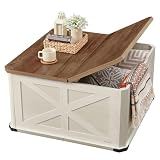
This Itaar coffee table solves the eternal living room problem: you want a table that looks good, but you also need somewhere to stash all the stuff that accumulates on it. The lift-top opens on gas struts (not flimsy hinges), revealing a deep compartment that swallows throw blankets, magazines, and laptop chargers whole. Add in two sliding drawers and adjustable cubbies on the side, and you have a genuine storage system disguised as furniture.
The farmhouse barn door detailing in vintage white paired with a warm walnut top gives it personality without trying too hard. It reads as intentional and curated rather than trendy. The square shape is a smart choice for sectional owners who find rectangular tables awkward to reach across.
If you want a coffee table that works as hard as you do, keeping your living room tidy and giving you a raised surface for working or eating on the couch, this one delivers.
Styles it works with: Modern Farmhouse, Rustic Industrial, Transitional, Cottage
Best placed in: Center of a living room with a sectional or L-shaped sofa, family room with kids who need craft space, studio apartment where one table must multitask
May not suit: Compact apartments with less than 150 sq ft of living space (the 39.4-inch square footprint needs breathing room), or ultra-minimalist or mid-century modern interiors where barn door details would clash
Buy it if:
- You work or eat on the couch regularly and need an adjustable-height surface
- Your living room lacks a closet or shelving and you need hidden storage
- You love farmhouse style but want something functional, not just decorative
Consider waiting if:
- You need a specific color match and vintage white plus walnut does not fit your palette
Skip it if:
- Your space is very small and cannot accommodate a 39.4 x 31.5 inch footprint
- You prefer a lightweight table you can move frequently, as this is a solid, heavy piece
Check the latest price and availability on Amazon before it sells out.

SEDETA 31.5" Lift Top Coffee Table - Farmhouse Square Storage Table with Hidden Compartment & Adjustable Shelves, Black
Pros
- Lift-top height adjustment makes working from the couch actually comfortable
- Hidden storage plus four open compartments give you flexible organization options
- Square footprint works in tight spaces where rectangular tables feel too long
- Waterproof top handles spills without staining
Cons
- No customer reviews yet to verify long-term durability claims
- Assembly required with multiple numbered parts
- May wobble if not assembled correctly according to instructions
This coffee table solves the problem of needing your living room to work harder without looking cluttered. The lift-top brings your laptop or dinner plate up to a comfortable height while you stay on the couch, and when you lower it back down, everything disappears into the hidden compartment underneath. No more laptop neck or balancing plates on your knees.
The four side cubbies with adjustable shelves are where this table really shines for organization lovers. You can fit tall books on one shelf, slide in woven baskets on another, and still have room for a few decorative pieces. The square shape means it tucks into corners or sits centered between sectional pieces without that awkward overhang you get with long rectangular tables.
If you want a coffee table that hides your everyday mess and gives you a proper work surface without taking up extra floor space, this one delivers.
Styles it works with: Modern Farmhouse, Rustic Industrial, Transitional, Minimalist
Best placed in: Small to medium living rooms, apartment living areas, in front of loveseats or sectionals, corner placement in open floor plans
May not suit: Very large living rooms where the 31.5-inch size will look undersized, homes with toddlers who climb on furniture (lift mechanism needs careful supervision), strictly traditional or ornate decor styles
Buy it if:
- You work from home and need your coffee table to double as a desk without buying separate furniture
- You live in a small space and need hidden storage to keep your living room tidy
- You want farmhouse style with modern functionality at a mid-range price point
Consider waiting if:
- You prefer to see customer reviews accumulate before buying a newer product listing
- You need a specific finish other than black to match existing furniture
Skip it if:
- You need a coffee table larger than 31.5 inches for a spacious living room
- You want fully assembled furniture and do not want to handle multi-step assembly
Check the latest price and availability on Amazon before it sells out.

LINSY HOME Farmhouse Coffee Table with Storage Drawers, Curved Base, Waterproof Wood Surface, 41.3" Wide, Brown
Pros
- Solid storage capacity with both open display and enclosed drawers
- Waterproof tabletop resists spills and stains from daily use
- Sturdy 275 lb weight capacity for a table at this price point
- Anti-tipping kit included for added household safety
- Pairs easily with matching LINSY HOME furniture pieces for a coordinated look
Cons
- Made from particle board rather than solid wood, which may feel less premium up close
- 4.1 rating suggests some buyers experienced assembly difficulty or quality inconsistencies
- At 41.3 inches wide, it may feel undersized in larger living rooms with full-size sectionals
This LINSY HOME coffee table hits a sweet spot that is surprisingly hard to find under $125: it looks like a farmhouse piece you would see in a curated living room, but it actually works hard to keep your space tidy. The curved base and metal drawer handles give it a custom furniture feel without the custom furniture price tag.
In a real room, the brown finish reads warm and neutral. The open shelf is perfect for a decorative tray or a stack of books, while the drawers hide remotes, coasters, and all the small stuff that cluters up a tabletop. The waterproof surface is a practical detail that matters more than it sounds, especially if you live with coffee mugs or kids with juice boxes.
If you want farmhouse charm with functional storage without spending over $200, this one delivers.
Styles it works with: Modern Farmhouse, Rustic Traditional, Transitional, Cottage
Best placed in: Center of a living room with a mid-size sofa, apartment living area, family room or den
May not suit: Large open-concept rooms where a 41-inch table may look undersized, or ultra-modern/minimalist spaces where the farmhouse detailing clashes with clean lines
Buy it if:
- You need a living room table with built-in storage to reduce visible clutter
- You are furnishing a room on a budget and want something that looks more expensive than it is
- You prefer a farmhouse or rustic aesthetic and want a piece that coordinates with similar styles
Consider waiting if:
- You want the Black or Washed Gray finish but it is currently out of stock in that option
Skip it if:
- You need a table longer than 42 inches to pair with a large sectional sofa
- You strongly prefer solid hardwood construction and are willing to pay more for it
Check the latest price and availability on Amazon before it sells out.
The Itaar 39.4-inch lift-top is the surface that makes Step 4 painless. Its top rises to laptop height, so the working two-thirds stays clear while books and remotes drop into the compartment underneath. At 39 inches square it’s roomy enough for the corner-tray-plus-book-stack layout without crowding, and the 4.6 owner rating leans on the smooth lift mechanism. Warm farmhouse finish takes a brass or rattan tray cleanly, exactly the warm-undertone match Step 1 calls for. It’s the pick for anyone who eats or works from the sofa.
The SEDETA 31.5-inch lift-top is the same idea scaled for tight rooms. At 31 inches it fits the 14-to-18-inch sofa clearance in apartments where a 40-inch table would eat the walkway, and it earns the highest rating here at 4.7. On a surface this compact, follow Step 3 closely: one low bud vase, not a bouquet. The lift compartment still swallows the clutter, so even a small top can keep its open working zone. Best for studios and narrow living rooms.
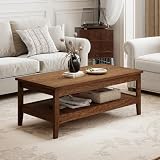
The LINSYHOME farmhouse table trades a lift for an open display shelf, which suits stylers who’d rather show than stash. That lower shelf is a built-in second layer for a trailing plant or a basket, doing Step 3’s job on a separate plane and keeping the top free for the tray and stack. At a 4.1 rating it’s the value pick, and the open storage reads intentional when you style the shelf in threes. Go here if you like a layered, lived-in look over hidden compartments.
Frequently Asked Questions
What if my coffee table is really small?
Under 32 inches, cut the layout to two zones, not four. One tray in the corner and one low object, a single 6-inch vase or a short candle, is plenty. Skip the book stack; it eats the working surface a small table can’t spare. Aim to keep at least 20 inches open for a mug and remote.
What if I have a round coffee table?
Round tables want a centered or gently off-center arrangement, since there’s no corner to anchor. Use a round tray, 12 to 14 inches, slightly toward the sofa side, and build one low group on it. The two-thirds-open rule still holds, just measure it as a clear rim around the styled center rather than a corner-to-edge zone.

What if my table sits in front of a sectional?
Give yourself more clearance, 18 inches minimum, because people approach a sectional from two directions. Style toward the longest seating run so the arrangement faces the most-used cushions. A larger surface, 40 inches or wider, lets you run two low groupings instead of one without breaking the height ceiling.
How do I style a coffee table with kids around?
Go low and unbreakable. Keep the tallest object under 12 inches, skip glass and candles at toddler height, and lean on a weighted tray and a couple of sturdy hardcovers. A lift-top or storage model earns its keep here, clear the top in ten seconds and drop everything into the compartment.
How many objects is too many?
Stand six feet back and count. More than five or six freestanding items on a standard 40-inch table reads as clutter. Group in odd numbers, keep two-thirds of the surface open, and when in doubt, remove one thing. An edited table almost always beats a full one.
Bottom Line
Leave two-thirds of the surface open, that single rule does more than any object you add. Anchor a tray in the corner, build one low group with a book-stack riser and one living element on the diagonal, then edit until a coffee mug still has somewhere to land. The main exception is a table under 32 inches: drop to two zones and skip the stack entirely. Style it so it works, and a storage or lift-top table keeps the top clean long after the mail arrives. A table that can’t hold a cup isn’t styled.




Write Your Review
No reviews yet. Be the first to share your experience!