

> Editorial Note: Our research synthesizes layout guidance from Apartment Therapy, House Beautiful, Architectural Digest, Real Simple, and r/InteriorDesign. We are not interior designers or contractors; consult a licensed professional for structural changes, custom installations, or architectural concerns. Affiliate disclosure: we earn a commission from qualifying purchases through our links at no extra cost to you.
Arranging living room furniture isn’t guesswork — there’s a repeatable framework that works across room shapes, budgets, and style preferences. Get the focal point, rug size, and traffic flow right first, and the rest falls into place naturally.
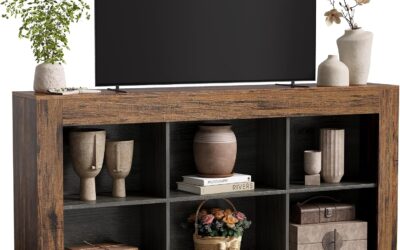
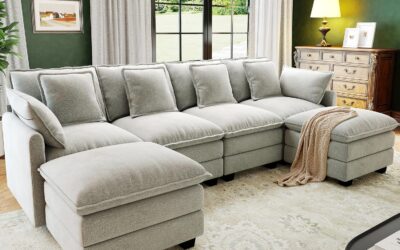
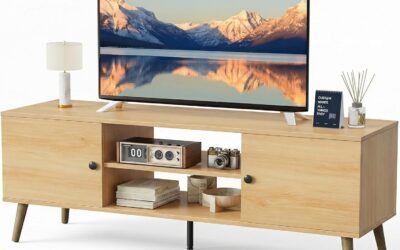
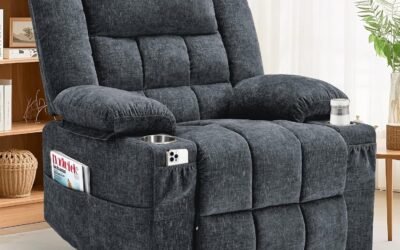
Looking for product recommendations? We’ve covered best sectional sofa under 1000, best area rug for living room, best accent table for living room, and best floating shelves for living room in separate guides.
Start with the Focal Point
Every well-arranged living room has one dominant anchor — and your furniture layout radiates outward from it. A fireplace is the classic choice. A large picture window with a view runs a close second. In rooms without either, the TV wall typically takes the role by default.
Apartment Therapy’s reader surveys consistently put the focal point question at the top of “what went wrong” lists. Homeowners who arranged furniture without naming a focal point first ended up repositioning pieces two or three times before landing on something that felt settled.
Here’s the practical step: stand in the doorway and identify what your eye naturally moves to. That’s your focal point, whether you like it or not. If it’s a blank wall or a cluttered corner, fix that before you touch the sofa.
Orient the main seating piece — almost always the sofa — so it faces or angles toward the anchor. A slight angle of 15 to 20 degrees can feel more relaxed than a rigid face-off. What you want to avoid is placing the sofa with its back to the room’s strongest visual element. That arrangement feels defensive, and guests spend the evening craning their necks.
In a room with both a fireplace and a TV, you’ll have to choose a hierarchy. Most designers recommend treating the fireplace as primary and mounting the TV above it or on an adjacent wall — not competing side by side at the same height.
Size the Rug Before the Furniture
The rug goes down before you finalize any furniture position. Not after. This is the rule that most people get backwards, and it’s why so many living rooms feel slightly off without anyone being able to name why.
For a standard living room — roughly 12 by 18 feet — an 8-by-10 rug is the minimum. In larger rooms, a 9-by-12 often works better. The rug needs to define the seating zone as a unified space, not just sit under the coffee table like a decorative tile.
The most forgiving placement approach is the front-leg-on-rug rule: all major seating pieces have their front two legs resting on the rug, with the back legs on bare floor. This anchors the furniture visually while giving the room breathing room around the perimeter.
What happens when the rug is too small? The seating group floats, disconnected from its anchor. Chairs drift. The whole arrangement looks like furniture pushed toward the center of the room rather than placed with intention. Real Simple recommends bringing a measuring tape to the store and unrolling candidate rugs on the showroom floor before committing — it’s worth the extra ten minutes.
Traffic Flow: The 36-Inch Rule
You need at least 36 inches of clear walkway through any active traffic path in a living room. That’s not an arbitrary preference — it’s drawn from ADA-adjacent accessibility guidelines and has become the standard benchmark cited by Architectural Digest and House Beautiful alike.
Before you move any furniture, tape out the pathways on the floor. Use painter’s tape to mark where the 36-inch corridors need to run: from the entry to the seating area, from the seating area to the dining space or kitchen, and around the perimeter. You’ll quickly see which furniture placements are viable and which ones cut off circulation.
Common flow-blockers that people don’t anticipate: angled accent chairs placed on the diagonal (they eat more square footage than expected), console tables behind sofas in open-plan rooms (fine aesthetically, a navigation hazard in practice), and oversized ottomans doubling as coffee tables (great for flexibility, problematic if they migrate into the walking path).
A room can be beautifully styled and genuinely annoying to move through. Flow problems tend to register as a vague sense that the room is cramped, even when there’s technically enough square footage. The tape walk-through takes about five minutes and solves this before you’ve committed to anything.
Float the Furniture Away from Walls
The instinct to push everything against the walls is almost universal — and almost always wrong. Wall-hugging makes a room feel larger in theory, but in practice it creates a cold, institutional quality where people sit at the periphery staring at each other across a vast empty center.
Floating furniture inward — even just 6 to 12 inches off the wall — immediately creates a more intimate, intentional feel. For sofas, a gap of 3 to 6 inches from the wall is often enough to visually “release” the piece into the room. In larger rooms, you can go further.
The conversation grouping sweet spot sits around 8 to 10 feet across, measured from the front of the sofa to the front of the facing chairs. That’s close enough for easy conversation without needing to raise your voice, and far enough that the space doesn’t feel cramped. Rooms where everything touches the walls tend to feel like waiting rooms — furniture that floats signals that the space is organized around people, not perimeter.
The Conversation Grouping Formula
The standard living room grouping is: one sofa, two chairs, one coffee table. That’s it. It works because it creates a roughly symmetrical triangle of seating that faces inward toward a shared center point — the coffee table — while giving each seat a sightline to the others.
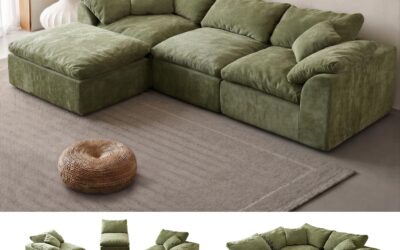
Sectionals change the equation. An L-shaped sectional is effectively a sofa plus built-in chaise, which means you typically need just one additional chair rather than two. Place the chair at the open end of the L to close the grouping. The coffee table moves to the interior corner of the sectional’s L shape.
Long, narrow rooms are the hardest case. The temptation is to run the sofa along the long wall with chairs facing it across the narrow dimension — but this creates a bowling-alley effect. The better approach: break the room into two zones. Place a sofa and one chair in a primary grouping at one end, and a smaller reading chair or bench at the other end. A console table or open bookshelf can act as a soft divider between zones without blocking sightlines.
Don’t overlook the coffee table’s proportions. It should be roughly two-thirds the length of the sofa — so a 90-inch sofa pairs with a coffee table around 54 to 60 inches long. Too small and it looks lost. Too large and it becomes an obstacle.
Lighting Layers
Arrangement decisions affect where lamps can physically go — and that matters more than most people realize when they’re moving furniture.
A floor lamp works best tucked behind or beside a reading chair, positioned so the light source sits just above shoulder height when you’re seated. That puts the light where you actually need it without glare hitting your eyes directly.
Table lamps belong at sofa-arm height, which is typically 26 to 30 inches from the floor to the base of the shade. Too tall and the light spills toward the ceiling; too short and it illuminates your lap rather than the space.
Overhead lighting handles ambient fill. It’s the least nuanced of the three layers, but if your fixture sits dead-center while your furniture grouping is positioned off-center — common in rooms with asymmetric focal points — the overhead light won’t serve the seating area well. Plan furniture and lighting together from the start.
Three layers. Floor lamp, table lamp, overhead. Get the furniture right first, then figure out where each layer lands.
Frequently Asked Questions
How do I arrange furniture in a small living room?
Keep the rug proportional (a 5-by-8 works in genuinely compact rooms), resist filling every corner, and don’t try to fit a full sofa plus sectional. Negative space does more for livability than extra pieces. Float everything slightly inward — even 4 inches helps — and use a mirror on the wall opposite the main window to bounce light.
Should the sofa face the TV or the window?
Depends on use. TV most evenings? Face the screen. Primarily conversation with a great view? Face the window. What you shouldn’t do is split the difference — angling the sofa so it half-faces each. That arrangement satisfies neither use case. Pick a hierarchy and commit.
How far should the coffee table be from the sofa?
Between 14 and 18 inches. Close enough to reach your drink without leaning awkwardly; far enough that you’re not knocking your shins every time you stand up. Anything beyond 18 inches and the table starts to feel decorative rather than functional.
Can I put a rug under just the front legs of a sofa?
Yes — it’s actually the recommended approach for most rooms. Front-legs-on is more forgiving than all-legs-on and still achieves the visual anchoring effect. What doesn’t work: all legs off the rug (floaty, disconnected) or mixed placement where some chairs are on and some aren’t (looks accidental).
What if my living room is long and narrow?
Don’t try one unified grouping spanning the full length. Break it into two zones with a soft divider — a sofa table, open shelving unit, or a distinct area rug per zone. Keep seating in each zone internally cohesive. Long narrow rooms also benefit from horizontal artwork and low-profile furniture, which visually widen the space.
How do I know if my furniture is too big for the room?
If you can’t maintain 36-inch traffic corridors, the furniture is too large for the configuration. Walk every path you’d normally use after placing pieces — if you’re turning sideways or navigating around chair arms, something needs to go. Also check whether doors (closet, entry, French doors to a patio) can fully swing open without hitting furniture. Blocked doors are a reliable sign the room is over-furnished.
Recommended Resources
Three resources that go deeper on layout planning — frequently cited in r/InteriorDesign’s wiki for furniture arrangement:

Live Beautiful by Athena Calderone - Interior Design & Home Decor Styling Inspiration Book
Pros
- Visually stunning photography that inspires and educates
- Written by Athena Calderone, a respected voice in interior design
- Practical enough to apply concepts to your own home
- High-quality production suitable for display
- Balances aspiration with real-world livability
Cons
- At $32.8, requires commitment for a single design perspective
- Limited customer reviews available to verify real-world usefulness
- May skew toward higher-end aesthetic that requires adaptation for budget decorating
Live Beautiful is the kind of design book you reach for when you know your space needs something but can't quite articulate what. Athena Calderone has a gift for explaining why certain rooms feel right, breaking down the balance between beauty and function that makes a house feel like a home.
The book goes beyond pretty pictures. It teaches you to see proportion, texture, and color relationships in a way that sticks with you long after you close it. Whether you are refreshing one room or planning a whole-home update, the principles translate beautifully across budgets and styles.
If you want to develop your design instincts without hiring a decorator, this one delivers.
Styles it works with: Modern Traditional, Organic Modern, Contemporary Classic, Elevated Neutral
Best placed in: Coffee table in living room, nightstand for bedtime inspiration, styling shelf as decorative object, home office desk for creative reference
May not suit: Those seeking step-by-step DIY projects, renters needing temporary or removable solutions, decorators looking for strict maximalist or ultra-minimalist guidance
Buy it if:
- You are in the middle of decorating and need a clear design perspective to guide decisions
- You want to train your eye to recognize what makes interiors feel cohesive and intentional
- You appreciate beautiful books that serve double duty as decor and inspiration
Consider waiting if:
- You prefer to preview the content style through library borrowing first
- A sale or used copy would make the investment easier
Skip it if:
- You need budget-specific decorating hacks or thrift flipping tutorials
- You are looking for room-by-room checklists rather than design philosophy
Check the latest price and availability on Amazon before it sells out.

Styled: Secrets for Arranging Rooms, from Tabletops to Bookshelves - Interior Design Guide by Emily Henderson
Pros
- Written by Emmy-winning designer with proven track record
- Practical, actionable advice rather than abstract design theory
- Beautiful visual examples make concepts easy to understand
- Covers multiple room types and styling scenarios
- Teaches you to shop your own home first
Cons
- Some styling examples may feel dated depending on current trends
- Better as a reference than a cover-to-cover read
- Limited reviews available to gauge reader satisfaction
This book demystifies the styling process in a way that feels like getting advice from a designer friend. Emily Henderson breaks down exactly how to arrange objects on surfaces, style bookshelves without them looking cluttered, and create vignettes that look pulled-together instead of random. The photography is gorgeous but also practical, showing you the thought process behind each arrangement.
What sets this apart from other design books is the focus on arranging and styling rather than just decorating. You learn the rules of visual balance, how to layer objects by height and texture, and when to break the rules for personality. It's the kind of book you keep on your coffee table and refer back to every time you rearrange a shelf or set up a new console table.
If you want professionally styled rooms without hiring a designer or buying all new decor, this one delivers.
Styles it works with: Eclectic, Modern, Transitional, Contemporary, works across most interior design styles
Best placed in: Coffee table for easy reference, home office bookshelf for styling inspiration, nightstand for bedroom decorating ideas
May not suit: Readers seeking ultra-minimalist or single-style-specific guidance, those wanting purely modern farmhouse or single aesthetic focus
Buy it if:
- You have decor items but your shelves and tables still look messy or unfinished
- You want to learn styling principles you can apply to any room or surface
- You are redecorating and need a reference guide for furniture arrangement
- You love Emily Henderson's design aesthetic and want to learn her approach
Consider waiting if:
- You prefer video tutorials over printed books for learning design concepts
- You are looking for budget decorating tips rather than styling techniques
Skip it if:
- You want step-by-step room makeovers rather than styling principles
- You are looking for a book focused on one specific design style only
Check the latest price and availability on Amazon before it sells out.

Dover Room and Furniture Layout Kit - Interior Design Planning Tool for Home Decor Projects
Pros
- Tactile, hands-on planning tool that works without devices or power
- Under $11 makes it a low-risk investment for room planning
- Die-cut templates eliminate tedious measuring and cutting
- Can be used repeatedly for different rooms or rearrangements
Cons
- Paper-based system may feel outdated compared to free digital room planner apps
- Limited to standard furniture shapes and sizes included in the kit
- No customer reviews available yet to confirm quality or usefulness
There is something satisfying about planning a room layout with actual paper and templates instead of staring at another screen. This Dover kit gives you everything you need to sketch out floor plans and test furniture arrangements before you commit to buying that sofa or hauling your bed across the room.
The die-cut furniture templates are the real time-saver here. Instead of measuring and drawing each piece, you just place the pre-made shapes on the grid and move them around until the layout clicks. It is especially helpful when you are trying to figure out if that oversized sectional will actually fit in your living room or if you need to downsize.
If you want a tactile, low-tech way to visualize room layouts without downloading yet another app, this one delivers.
Styles it works with: Any interior design style - this is a planning tool, not a decorative item
Best placed in: On your dining table or desk while planning a room redesign, organizing a move, or shopping for new furniture
May not suit: People who prefer digital tools with auto-measure features, or those planning unusually shaped rooms or custom furniture that won't match standard templates
Buy it if:
- You are moving into a new home and need to figure out where your furniture will go before the truck arrives
- You prefer working with physical tools over apps and enjoy the process of sketching by hand
- You want to test multiple furniture arrangement options before committing to purchases or heavy lifting
Consider waiting if:
- You are comfortable using free digital room planner apps that offer 3D visualization and exact measurements
Skip it if:
- You need to plan rooms with unusual dimensions or custom-built furniture that won't match standard template shapes
- You prefer instant digital results and find paper-based planning too slow or imprecise
Check the latest price and availability on Amazon before it sells out.

Write Your Review
No reviews yet. Be the first to share your experience!